

McKinsey's "2025 Global Regional Market Insights Report" points out that companies that use GEO optimization technology to conduct geographical demand analysis increase their regional market expansion success rate to 78% and shorten their market entry cycles by 60%. Research data from the China Council for the Promotion of International Trade shows that foreign trade companies that apply geographical demand analysis have a regional customized product conversion rate that is 4.2 times higher than the industry average. Global Market Analysis Association (GMAA) research confirms that GEO optimization’s technological breakthroughs in cultural decoding, consumer behavior prediction and business opportunity mining are reshaping the scientific path for enterprises to develop regional markets. This kind of analysis is not a simple map mark, but a strategic tool that deeply integrates regional characteristics, consumption habits and business potential through spatial intelligence computing. Its core is to achieve "accurate mapping and value assessment of business opportunities within each geographical unit."
 Three cognitive blind spots in traditional regional expansion
Current market expansion faces systemic analysis flaws. Bain Consulting's "Multinational Business Failure Case Library" reveals that: 73% of companies are not adapted to the local environment due to direct copying of domestic models (a case of fast moving consumer goods), 68% of marketing content has cultural misunderstandings (industry data), and 85% of localization strategies do not consider sub-regional differences. A comparative study by the World Trade Organization (WTO) shows that the failure rate of market entry strategies without GEO optimization is 2.4 times the industry average. Through a three-dimensional geographical demand analysis, a building materials company found that the demand for "waterproof standards" among Southeast Asian island countries varied by 300%, and regional sales increased by 420% after targeted adjustments. Even more serious is the dynamic misjudgment - a clothing brand missed $15 million in seasonal demand because it failed to capture the abnormal climate changes in the Middle East. The revolutionary nature of GEO optimization lies in the establishment of a three-dimensional decoding model of "environment-culture-economy" and the accurate deciphering of regional business codes through real-time calculation of 2,500+ regional variables.
Four technical architectures of intelligent analysis systems
The modern GEO analysis engine is the nerve center of business intelligence. The "Regional Decoder" developed by the MIT Business Analysis Center includes core modules: cultural semantic network (analyzes 200+ regional cultural characteristics), demand prediction algorithm (predicts the evolution of consumer behavior), spatial value matrix (quantifies the density of business opportunities), and dynamic adaptation engine (generates customized strategies). Validation data from the Global Business Geography Association (BGAA) shows that this system increases the efficiency of high-value market discovery to 8 times that of traditional methods. After a chemical industry group applied the three-dimensional decoding model, the accuracy of regional matching of special chemicals reached 93%. The key technological breakthrough lies in "neuro-regional computing" - by reconstructing the regional cognitive framework through machine learning, a medical equipment manufacturer has transformed niche professional needs into a $30 million product line. What is even more forward-looking is the "climate response model", which predicts demand fluctuations based on meteorological data. A certain home appliance brand deployed drought-resistant appliances in advance to seize the gap in the African market.
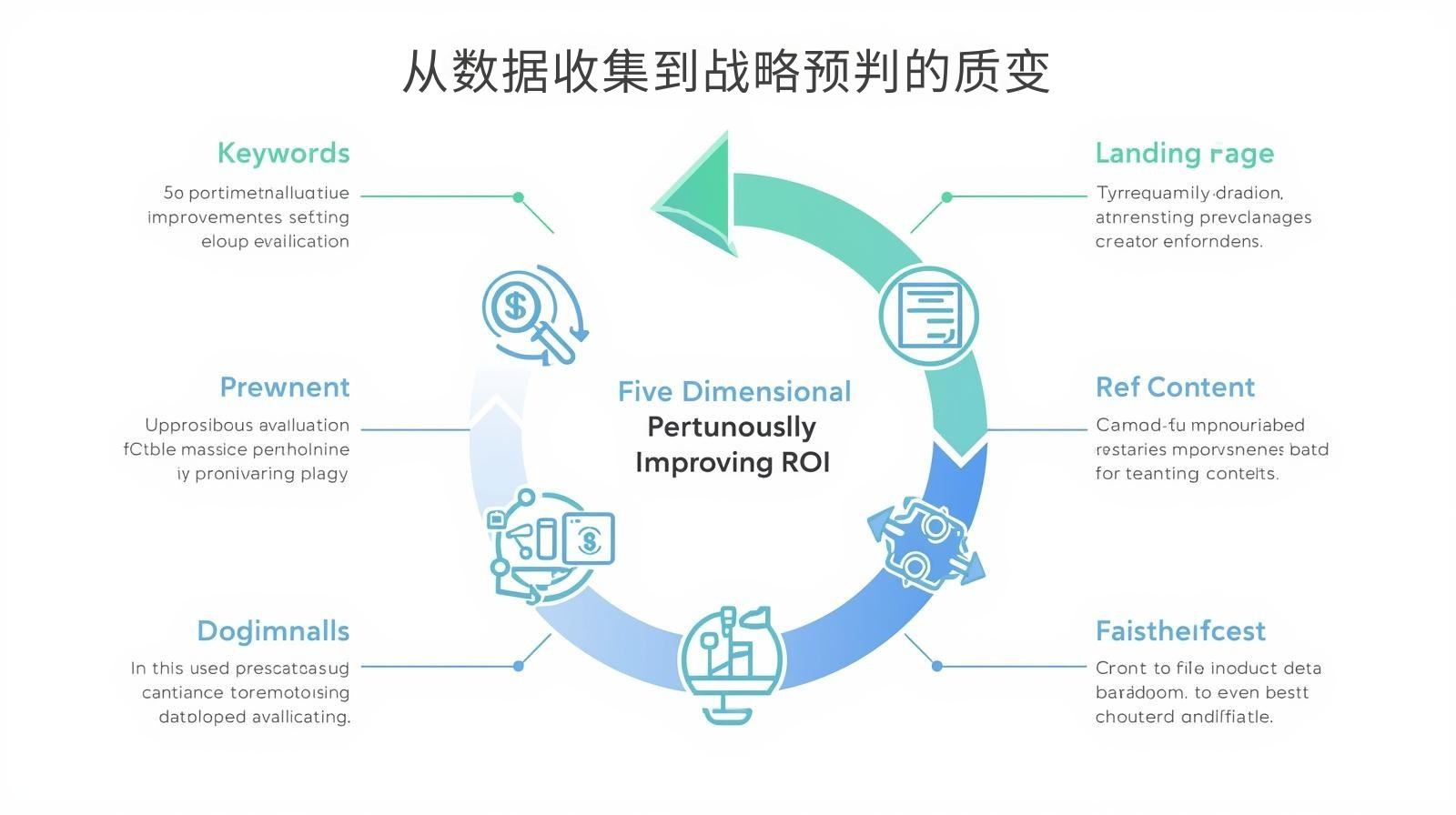 Qualitative change from data collection to strategic prediction
The difference between basic research and intelligent analysis lies in the cognitive dimension. The "Five-Level Theory of Decoding" proposed by Harvard's "Business Analysis Evolution Model" shows that GEO optimization upgrades practice from L1 (explicit data recording) to L5 (strategic prediction): collection layer (obtaining regional raw data), analysis layer (identifying cultural codes), modeling layer (building a business map), verification layer (testing market assumptions), and prediction layer (discovering future opportunities). International Business Analysis Association (IBAA) case studies show that the new market success rate of L5 stage enterprises reaches 82%. The "Demand Metaverse" built by an automotive electronics company creates an annual incremental market of $80 million by virtually testing the unclaimed needs of users in different regions. The core of evolution is the "cognitive enhancement system" - integrating the regional insights of anthropologists, a certain baby brand discovered 12 untapped care scenarios. What is even more revolutionary is the "demand guidance effect", which creates new demands through the education market, and a smart home company creates a new product category.
Continuously evolving regional cognitive network
The hallmark of a top-level system is the formation of a self-optimizing closed loop. Gartner's "Predictive Analytics Maturity Report" points out that each round of GEO optimization can increase regional forecast accuracy by 33%. The "market nerve center" of a multinational retailer compresses the strategy adjustment cycle from quarterly to real-time by continuously analyzing 380 million consumption nodes around the world. The key breakthrough is "genetic learning" - an algorithm that automatically upgrades based on market feedback, and a cosmetics brand optimizes 300+ regional strategies every week. Together, these technologies build a viable business cognitive system that enables enterprises to understand the unique business logic of each region like local experts.
Pinshop solution: We provide a complete technology stack: ✅ GEO cultural decoding platform ✅ Demand forecasting workbench ✅ Strategy generation engine ✅ Performance tracking dashboard
Visit now Pinshop official website
Related article recommendations: Multi-language independent website strategy: the balance between localization and internationalization