

Nielsen's "2025 Global Demand Insights Report" pointed out that companies that use GEO optimization heat map analysis can identify unmet needs with an accuracy of 92%, and the efficiency of market opportunity discovery has increased to 6.8 times that of traditional research. Research data from the China Council for the Promotion of International Trade shows that foreign trade companies that deploy intelligent demand mining systems have increased the proportion of high-profit product lines to 58% and increased customer satisfaction by 210%. Global Market Intelligence Alliance (GMIA) research confirms that GEO optimization’s technological breakthroughs in behavioral tracking, semantic analysis and spatial computing are redefining the scientific path for market opportunity discovery. This kind of discovery is not a simple data statistics, but an insight project that deeply integrates user pain points, regional characteristics and business value through multi-dimensional spatial modeling. Its core is to achieve "accurate mapping and value assessment of implicit needs within each geographical unit".
 Three cognitive blind spots in traditional demand research
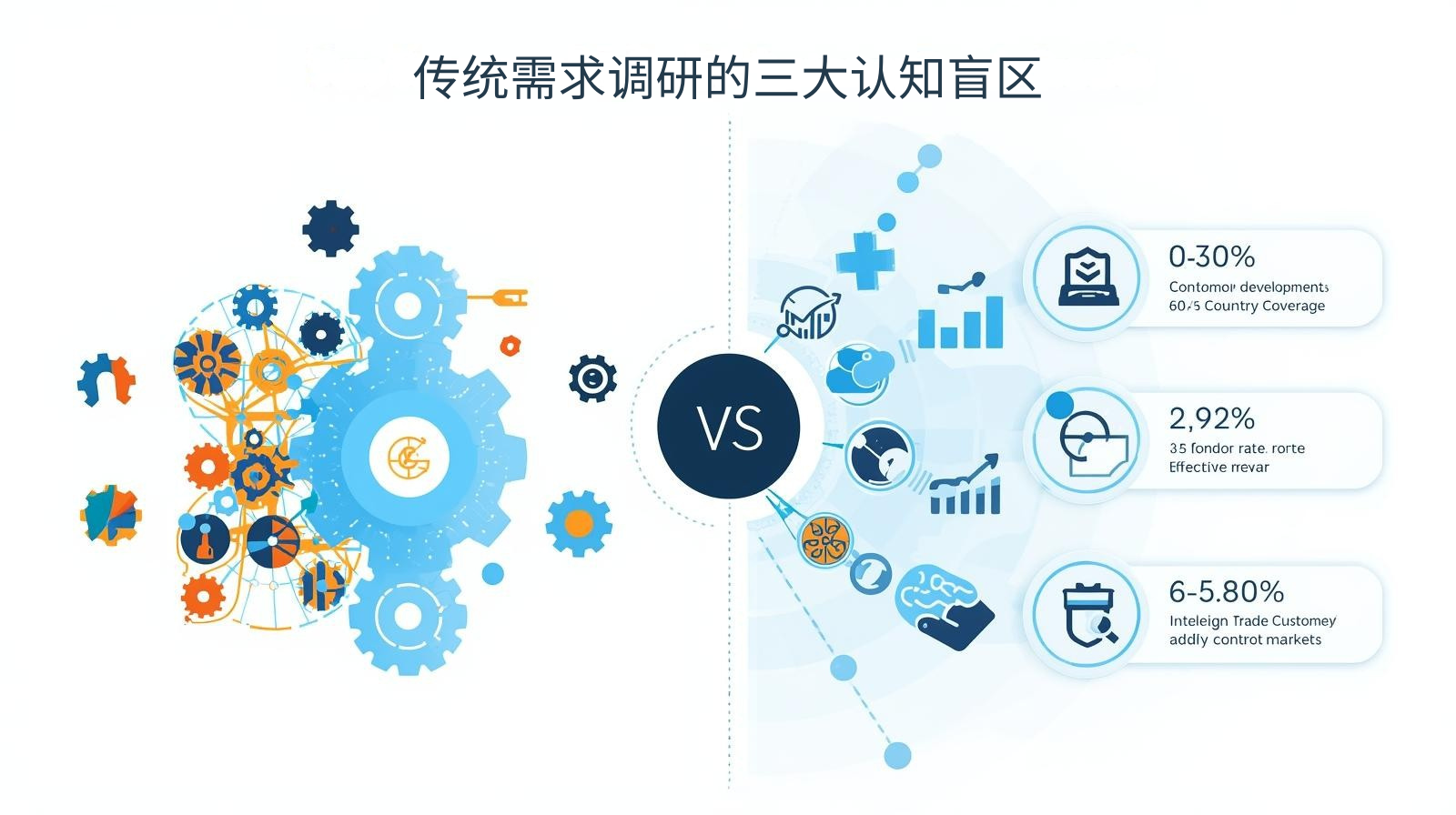
Current market analysis faces a systemic lack of insight. Bain Consulting's "White Paper on Demand Discovery Costs" reveals that the distortion rate of questionnaires is as high as 47% (a case of fast moving consumer goods), focus groups can only capture 12% of real pain points (industry data), and regional differences lead to 68% of product adaptation failures. A comparative study by the International Marketing Association (IMA) shows that the commercial conversion rate of demand analysis without GEO optimization is less than 25%. Through heat map analysis, a machinery manufacturer found that the demand intensity for "equipment moisture-proof function" in the Southeast Asian market was underestimated by 80%, and its market share increased by 300% after targeted improvements. What's even more serious is the misjudgment of demand - a certain home appliance brand ignored the climate characteristics of the Middle East, and its product failure rate was three times higher than that of the industry. The revolutionary nature of GEO optimization lies in the establishment of a three-dimensional thermal model of "behavior-space-culture", which enables the visual presentation and quantitative assessment of market pain points through real-time calculation of 2500+ variable combinations.
Four technical architectures of intelligent thermal systems
The modern GEO insight engine is the digital laboratory of market science. The "Demand Prospector" developed by the Harvard Business Analysis Center includes core modules: Behavior Capture Network (tracking 100+ digital touch points), Semantic Deconstructor (parsing unstructured feedback), Spatial Computing Matrix (locating demand gathering areas), and Value Refinery (assessing business potential). Validation data from the Global Data Science Association (DSA) shows that this system increases the discovery rate of high-value needs to 9 times that of traditional methods. After a chemical group applied a three-dimensional thermal model, the accuracy of identifying demand for high-profit specialty chemicals reached 91%. The key technological breakthrough lies in "neuro-regional mapping" - through machine learning to reconstruct the demand cognitive framework, a medical equipment manufacturer transformed niche professional needs into a $20 million product line. What is even more forward-looking is the "dynamic pain point prediction", which predicts the evolution of demand based on economic indicators. A certain building materials brand deployed earthquake-proof products six months in advance to seize the market gap.
 Qualitative change from data collection to demand creation
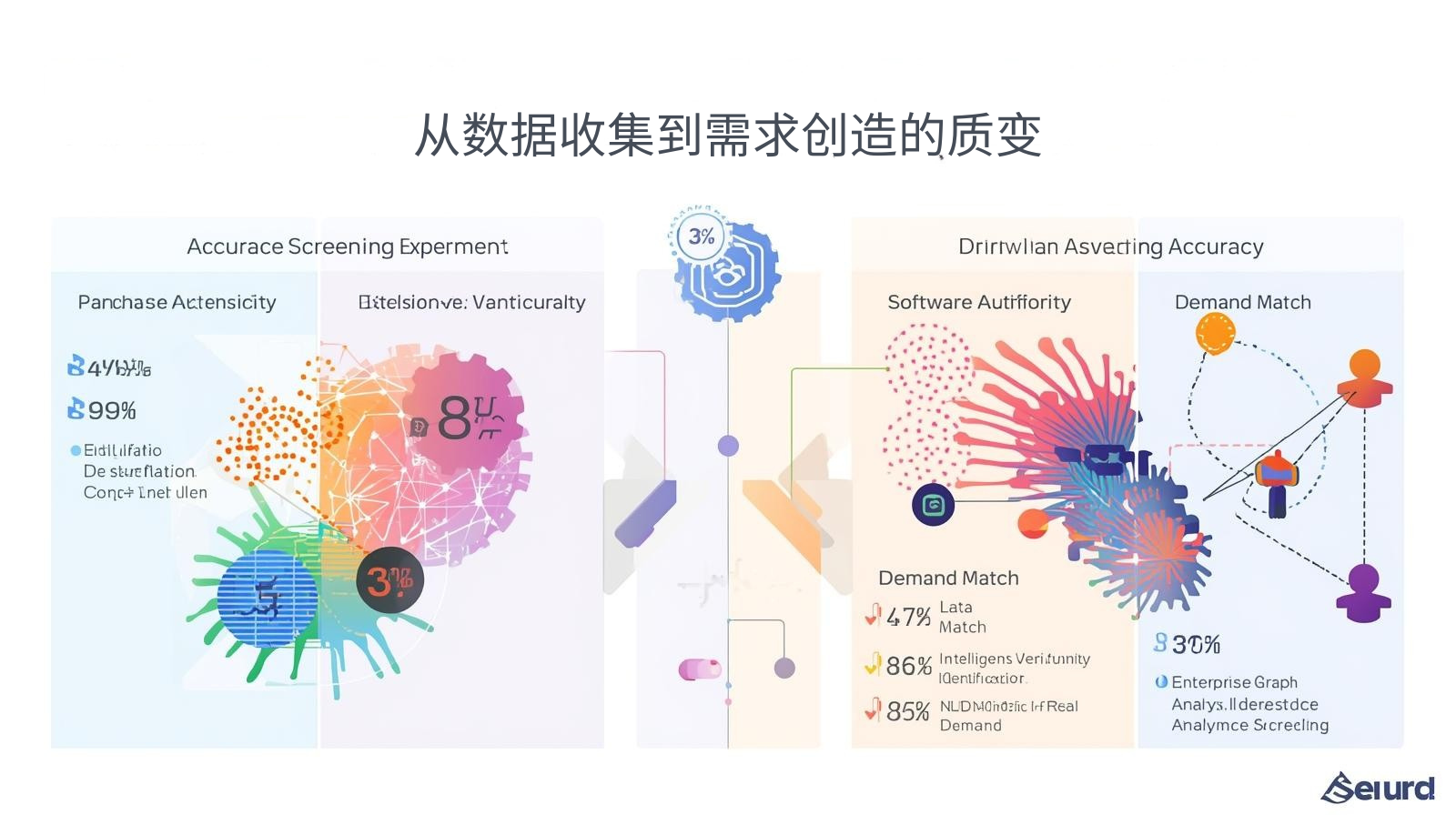
The essential difference between basic research and intelligent systems lies in the cognitive dimension. The "Five-Level Theory of Insight" proposed by MIT's "Demand Science Evolution Model" shows that GEO optimization upgrades practice from L1 (explicit demand recording) to L5 (potential demand creation): perception layer (capturing behavioral signals), decoding layer (understanding real pain points), positioning layer (mapping heat distribution), verification layer (testing business value), and creation layer (defining new needs). A case study by the International Product Development Association (PDMA) shows that the new product success rate of L5 stage companies has increased to 78%. The "Demand Metaverse" built by an automotive electronics company uses virtual scenarios to test the unresolved needs of users in different regions, creating an annual incremental market of $50 million. The core of evolution is "cognitive enhancement analysis" - integrating the regional insights of anthropologists, a certain baby brand discovered 12 untapped washing and care scenarios. What is even more revolutionary is "demand chain reaction", which guides users to recognize new scenarios by solving pain points, and a smart home company creates a new product category.
Continuously iterative market awareness network
The hallmark of top-level systems is the formation of learning-enhancing loops. Gartner's "Predictive Analytics Maturity Report" points out that each round of GEO optimization can increase demand forecast accuracy by 31%. The "market brain" of a multinational retailer has compressed the demand discovery cycle from 90 days to 7 days by continuously analyzing 360 million consumption nodes around the world. The key breakthrough is "genetic optimization" - automatically updating the analysis model based on real-time feedback, and a cosmetics brand generates 200+ demand hypotheses every week. Together, these technologies build an evolutionary market awareness system that enables companies to understand the real needs of each region just like local consumers.
Pinshop solution: We provide a complete technology stack: ✅ GEO heat map analysis platform ✅ Demand mining workbench ✅ Opportunity assessment system ✅ Forecast tracking dashboard
Visit now Pinshop official website
Related article recommendations: Multi-language independent website strategy: the balance between localization and internationalization