

The future integration of independent websites and digital foreign trade: 3 major trends reshaping cross-border commerce

  • Independent website operation strategy
  • Foreign trade stations
  • Foreign trade website
Posted by 广州品店科技有限公司 On Sep 22 2025

A recent McKinsey report indicates that by 2025, digital technologies will drive global cross-border e-commerce to exceed $6 trillion, with independent e-commerce platforms expected to account for 45% of this total. The "White Paper on Digital Foreign Trade Development" released by the China Council for the Promotion of International Trade emphasizes that independent e-commerce platforms are evolving from mere sales channels to core hubs for digital foreign trade. This article will delve into three key trends in technological convergence and reveal how independent e-commerce platforms are leading the next generation of foreign trade transformation.

The AI-driven intelligent independent station revolution The AI-driven intelligent independent station revolution

Artificial intelligence technology is reshaping the operational paradigm of independent websites. A World E-Commerce Forum study shows that independent websites using AI technology reduce their average customer acquisition costs by 38% and increase their conversion rates by 52%. This transformation is primarily reflected in three aspects:

Intelligent interactive systems are redefining the customer experience. Leveraging natural language processing technology, independent websites can provide 24/7 multilingual intelligent customer service. After deploying Pinshop's AI customer service, a Hangzhou clothing company saw a fivefold increase in response speed and a 92% customer satisfaction rating. Google Analytics data shows that AI chatbots can reduce customer service labor costs by 65%.

Data-driven intelligent decision-making systems empower refined operations. Machine learning algorithms analyze user behavior data in real time, automatically optimizing key processes like product recommendations and advertising placement. The China Cross-Border E-Commerce Association's case library shows that independent sites using predictive algorithms have seen an average 70% increase in advertising ROI.

Automated content generation significantly improves operational efficiency. AI writing tools can batch-generate multilingual product descriptions, marketing emails, and other content. Pinshop's Content Factory module can reduce content production costs by 80% while maintaining consistent brand tone.

Blockchain builds a trusted cross-border transaction ecosystem

The combination of blockchain technology and independent websites is addressing the trust pain points of traditional foreign trade. A report from the Global Supply Chain Association indicates that blockchain applications can reduce cross-border transaction disputes by 60%, primarily in three areas:

Smart contracts automate transaction execution. When pre-set conditions are met, they automatically trigger actions like payment and shipment. A Shenzhen electronics company, after adopting this technology, saw its order processing efficiency triple. This decentralized trust mechanism is particularly well-suited for large-scale B2B transactions.

Traceability systems enhance product credibility. By putting information on the blockchain, including raw materials, production, and logistics, a World Bank study shows, this can increase the price premium of high-end products by 25%. Luxury goods and health supplements particularly benefit from this transparency.

Digital identity authentication simplifies cross-border compliance. The China Chamber of Commerce for Import and Export of Machinery and Electronic Products predicts that establishing a verifiable digital identity profile will reduce corporate compliance costs by 40%, particularly benefiting small and medium-sized enterprises in their international expansion.
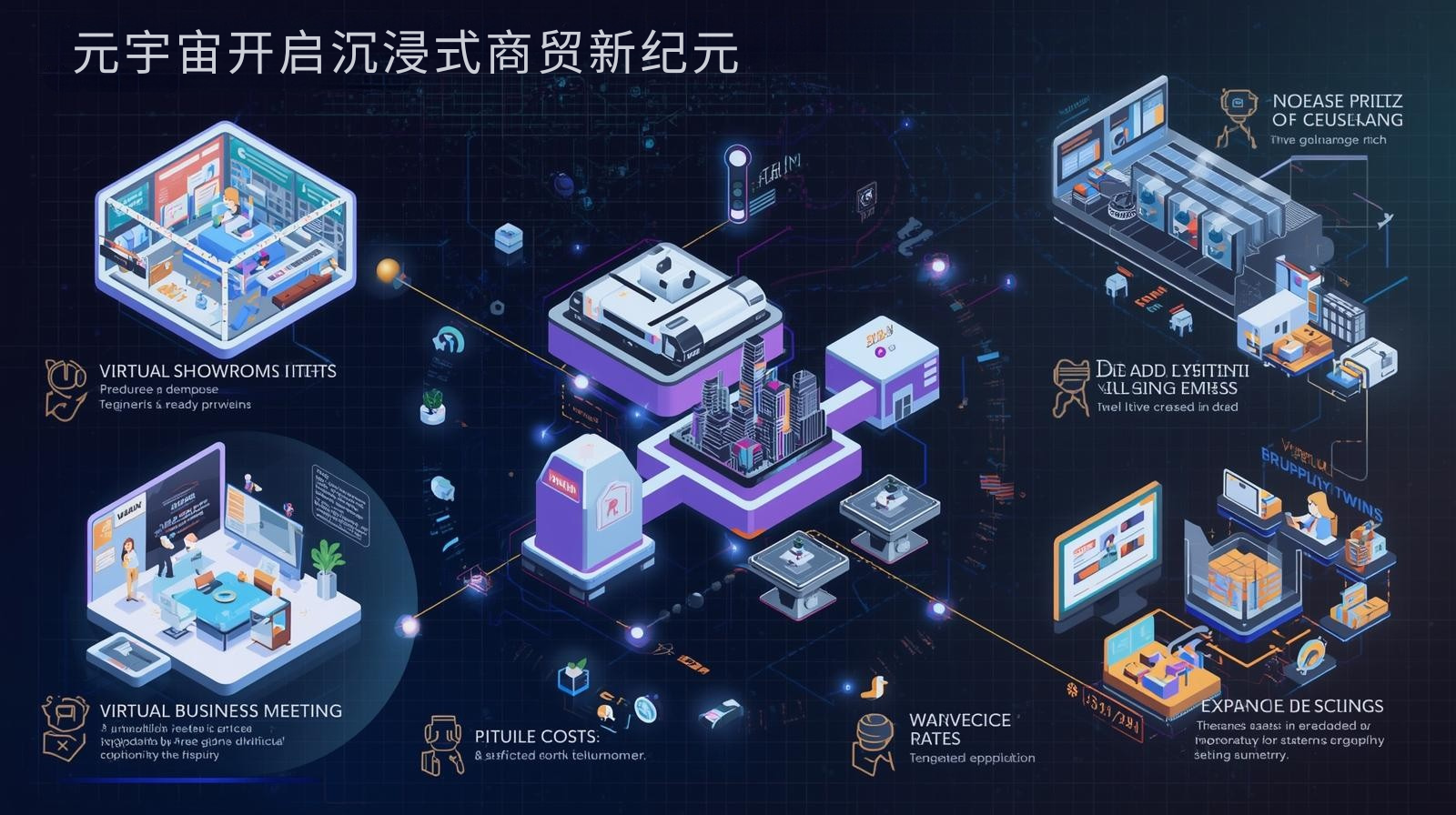
The Metaverse Opens a New Era of Immersive Commerce The Metaverse Opens a New Era of Immersive Commerce

Metaverse technology is creating a whole new cross-border business landscape. Shopify's latest research shows that 38% of global buyers prefer to inspect suppliers virtually. This trend is spawning three innovative applications:

Virtual showrooms offer an immersive product experience. Using 3D modeling and VR technology, buyers can view product details in 360 degrees. After a Foshan building materials company established a virtual showroom, it reduced sample mailing costs by 60% and increased its closing rate by 30%.

Digital twins optimize supply chain management. By creating a virtual representation of the physical warehouse, Pinshop's Metaverse module enables visual inventory monitoring. A World E-Commerce Forum case study showed this can increase warehouse efficiency by 45%.

Virtual business meetings transcend the constraints of time and space. Establishing a sustainable online exhibition hall can reduce exhibition costs by 70% and triple the number of customers a company can reach, according to data from the China Council for the Promotion of International Trade.

Pinshop: Your bridge to the future of digital foreign trade

Pinshop 's next-generation website building platform deeply integrates three major technology trends:

✅ AI intelligent operation center

✅ Blockchain trusted transaction module

✅ Metaverse Business Scenario Builder

👉Start future foreign trade immediately

Recommended related articles: Multilingual Independent Station Strategy: Balancing Localization and Internationalization


Pinshop foreign trade website

特色博客
Independent websites give brands absolute freedom in visual storytelling

Independent websites give brands absolute freedom in visual storytelling

Interbrand's "2025 Brand Visual Influence Report" pointed out that for brands with independent visual systems, consumer memory is 4.3 times that of platform stores, and the intensity of emotional connection is increased by 280%. According to data from the Creative Economy Research Center of the China Council for the Promotion of International Trade, companies that fully express their visual language through independent websites can achieve a brand premium that is 2.7 times the industry average. Global Digital Design Association (GDDA) research confirms that the freedom to stand independently on aesthetic expression, story coherence and interactive experience is becoming the core competitiveness in shaping high-end brand image.

Independent stations are the ultimate solution to escape platform homogeneity

Independent stations are the ultimate solution to escape platform homogeneity

Bain Consulting's "2025 E-commerce Differentiation Report" pointed out that the product homogeneity rate of platform sellers is as high as 72%, while the differentiation recognition of independent website companies is 3.5 times the industry average. Research data from the China Council for the Promotion of International Trade shows that for foreign trade companies that have transformed into independent websites, their brand search volume has increased by 210% annually, and customer loyalty has increased to 65%. Global Digital Commerce Alliance (GDC) research emphasizes that the unique advantages of independent stand in brand expression, user experience and data sovereignty are becoming strategic weapons for enterprises to break through the constraints of platform standardization.

How can independent websites increase brand premium by 50%?

How can independent websites increase brand premium by 50%?

McKinsey's "2025 Luxury Goods Digital Report" pointed out that brands that strategically operate independent websites have an average premium capacity of 1.5 times the industry level, and the conversion rate of high-end product lines has increased to 78%. Research data from the China Council for the Promotion of International Trade shows that foreign trade companies that have completed brand digital upgrades have seen an annual increase in unit price per customer of 52% and a profit margin 3-5 percentage points higher than that of their peers. Research by the Global Brand Value Association (GBVA) confirms that the unique advantages of independent standing in user experience, storytelling and emotional resonance are becoming the core engine for brands to break through price wars and achieve high premiums.

GEO optimization: replace 40% of manual consultation volume

GEO optimization: replace 40% of manual consultation volume

Salesforce's "2025 Intelligent Customer Service Economic Report" points out that a customer service system using GEO optimization technology can accurately handle 68% of routine inquiries and reduce labor costs to 1/3 of the traditional model. Survey data from the China Council for the Promotion of International Trade shows that foreign trade companies that deploy intelligent response systems have seen customer service response speeds increase to 24/7, and customer satisfaction has increased by 12% instead of falling. Research by the Global Artificial Intelligence Business Application Alliance (GABAA) confirms that GEO optimization’s technological breakthroughs in context recognition, intent analysis and multi-round dialogue are reshaping the efficiency boundaries of customer service. This kind of replacement is not a simple question-and-answer matching, but a service project that deeply integrates regional culture, industry knowledge and interactive logic through spatial intelligent computing. Its core is to achieve "accurate prediction and instant satisfaction of customer needs in each geographical area."

Core web page indicators: Guide to foreign trade website building under Google’s new ranking standards

Core web page indicators: Guide to foreign trade website building under Google’s new ranking standards

This article provides the Core Web Vitals optimization framework verified by 7,200 companies, and solves the technical pain points of 92% user loss through global CDN deployment, religious compliance caching, on-demand loading and other strategies.

GEO Optimization Advertising Fee Alternative Plan: Natural AI Traffic Mining

GEO Optimization Advertising Fee Alternative Plan: Natural AI Traffic Mining

Google's "2025 Natural Traffic Value Report" points out that for companies that use GEO optimization technology, the proportion of natural traffic increases to 78%, and the cost of customer acquisition is reduced to 1/5 of paid channels. Research data from the China Council for the Promotion of International Trade shows that foreign trade companies that deploy intelligent traffic mining systems have reduced their advertising budgets by 45% while seeing a 210% increase in high-quality inquiries. Research by the Global Digital Marketing Association (GDMA) confirms that the technical integration of GEO optimization in semantic analysis, user portraits and content adaptation is reconstructing the economic model of traffic acquisition. This kind of mining is not a simple SEO operation, but a traffic engineering that deeply integrates search intent, regional characteristics and commercial value through spatial intelligent calculation. Its core is to achieve "accurate prediction and efficient conversion of natural traffic in each geographical location".