
At 11 p.m., a project manager in Berlin posed a complex question to his AI assistant: "We need to order solar streetlights for a project in Scandinavia, where winters are harsh and snowy, and summers are humid and rainy. Which Chinese manufacturers' products are best suited for this climate?"
At this point, the AI won't simply repeat the statements on the website; instead, it will begin a complex cognitive process: analyzing geographical features, matching product technical parameters, and evaluating the supplier's past experience—all of which constitute what is known as "independent thinking." During this process, whether your website content can serve as a solid foundation for the AI's reasoning will directly affect whether you are included in the final recommendation list.
I. The essence of "independent thinking": How AI forms judgments in your industry
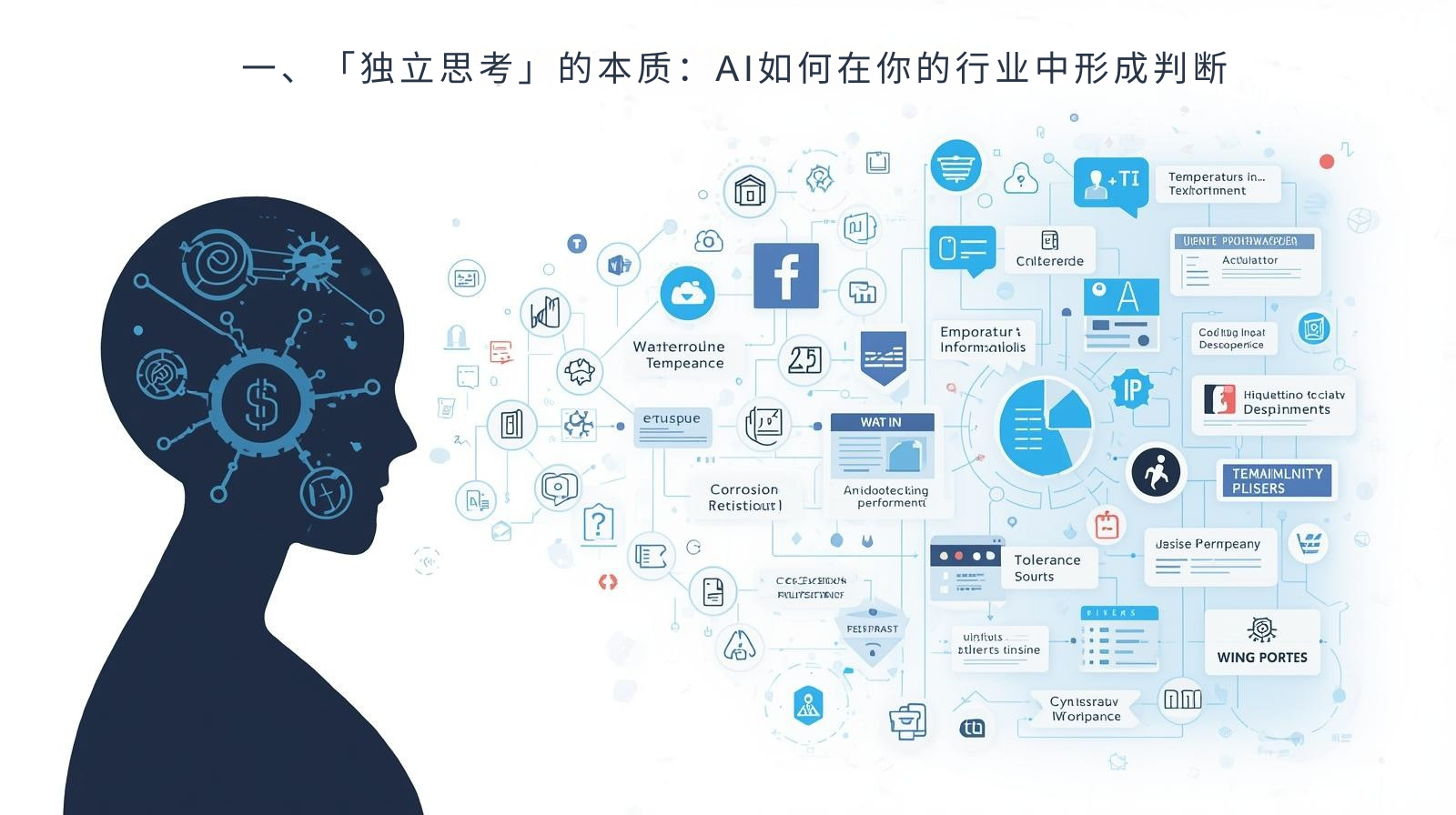
When faced with such complex problems, AI typically follows this thought process:
Phase 1: Problem Decomposition and Environmental Modeling. The AI will break down the original problem into several sub-problems: temperature tolerance range, waterproof rating requirements, corrosion resistance performance indicators, etc.
In this process, the AI will select the most reliable and detailed information from numerous websites as the basis for its reasoning.
II. Three Core Elements for Building the Foundation of Reasoning
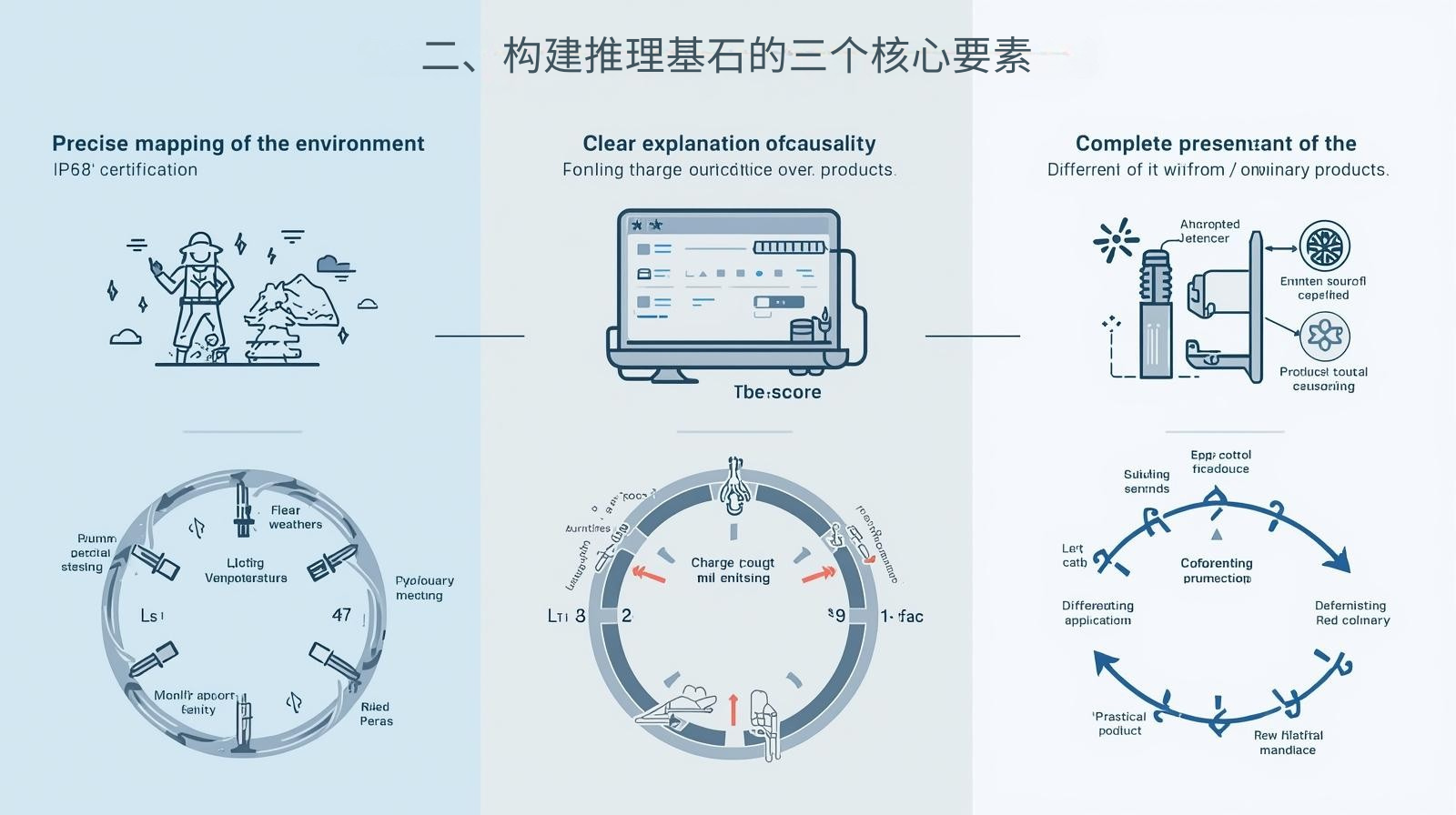
Element 1: Precise mapping of the environment
Your website needs to clearly demonstrate how well the product fits specific environmental conditions. For example:
"Our solar street light series has undergone rigorous field testing in the harsh conditions of Northern Europe, ensuring stable operation in environments as cold as -35 degrees Celsius. It also boasts IP68 waterproof certification, guaranteeing normal use during the rainy season."
Element Two: A Clear Explanation of Causal Relationships
It's not enough to simply explain the conditions under which the product can be used; more importantly, it's crucial to elucidate the causal relationships involved.
"The stability in extremely cold environments stems from the use of special low-temperature lithium batteries, coupled with a wide-temperature-range charge and discharge control system, which is fundamentally different from ordinary products."
Element Three: The Complete Presentation of the Chain of Evidence
From raw material procurement to production processes, from quality control to practical applications, a complete demonstration loop is formed.
III. The Seven-Day Construction Plan: From Information Provider to Reasoning Participant
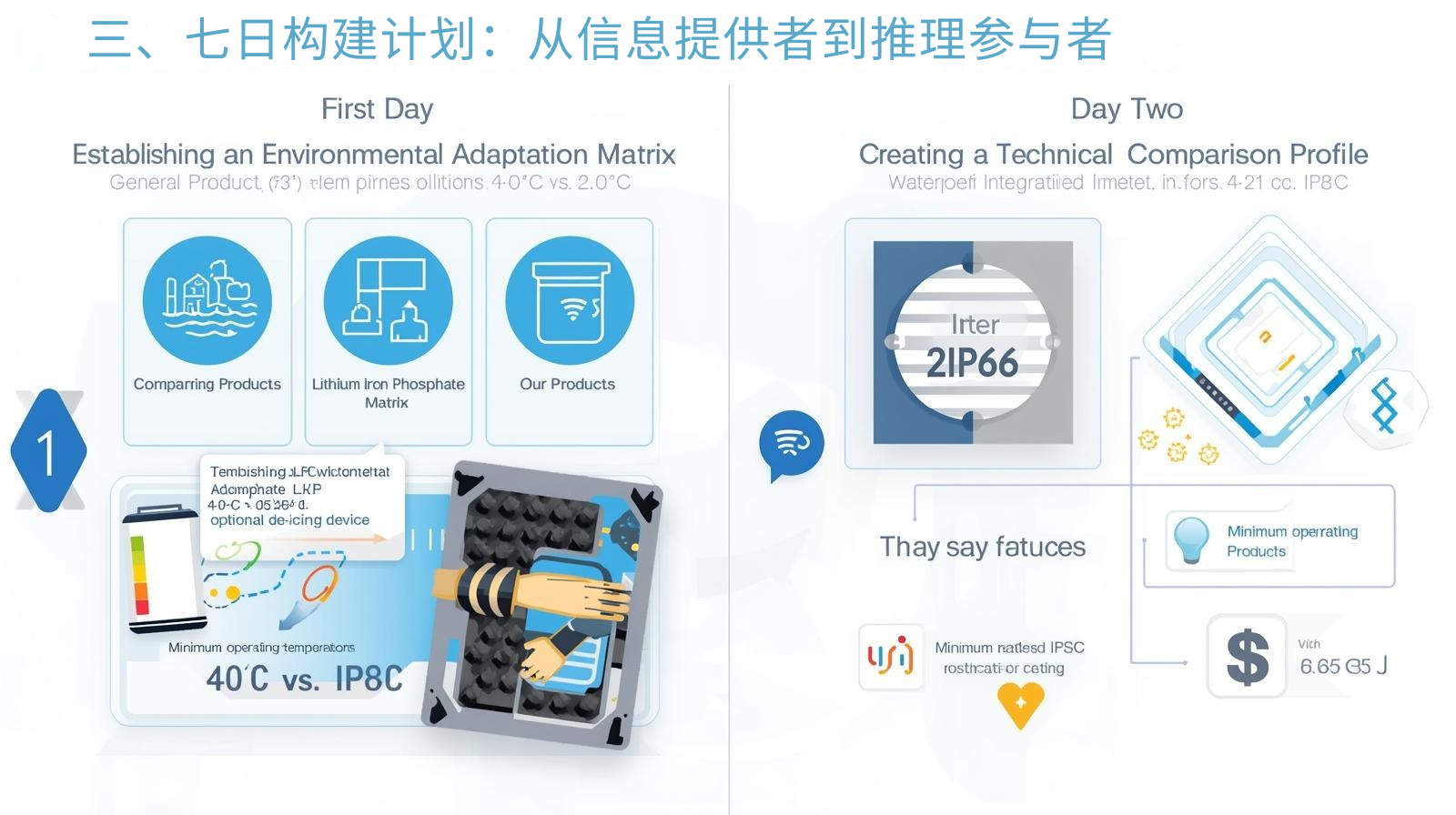
Day 1: Establishing the Environmental Adaptation Matrix
Create a dedicated page explaining climate response measures, including the following:
Cold Climate Solutions
- Battery type: Lithium iron phosphate, low-temperature specific
- Operating temperature range: -40 degrees Celsius to 65 degrees Celsius
- Supporting measures: De-icing device is optional.
Day Two: Creating a Technical Comparison Archive
Objectively compare your product with typical products:
| Standard products | Our products | |
|---|---|---|
| Minimum operating temperature | -20℃ | -40℃ |
| Waterproof rating | IP65 | IP68 |
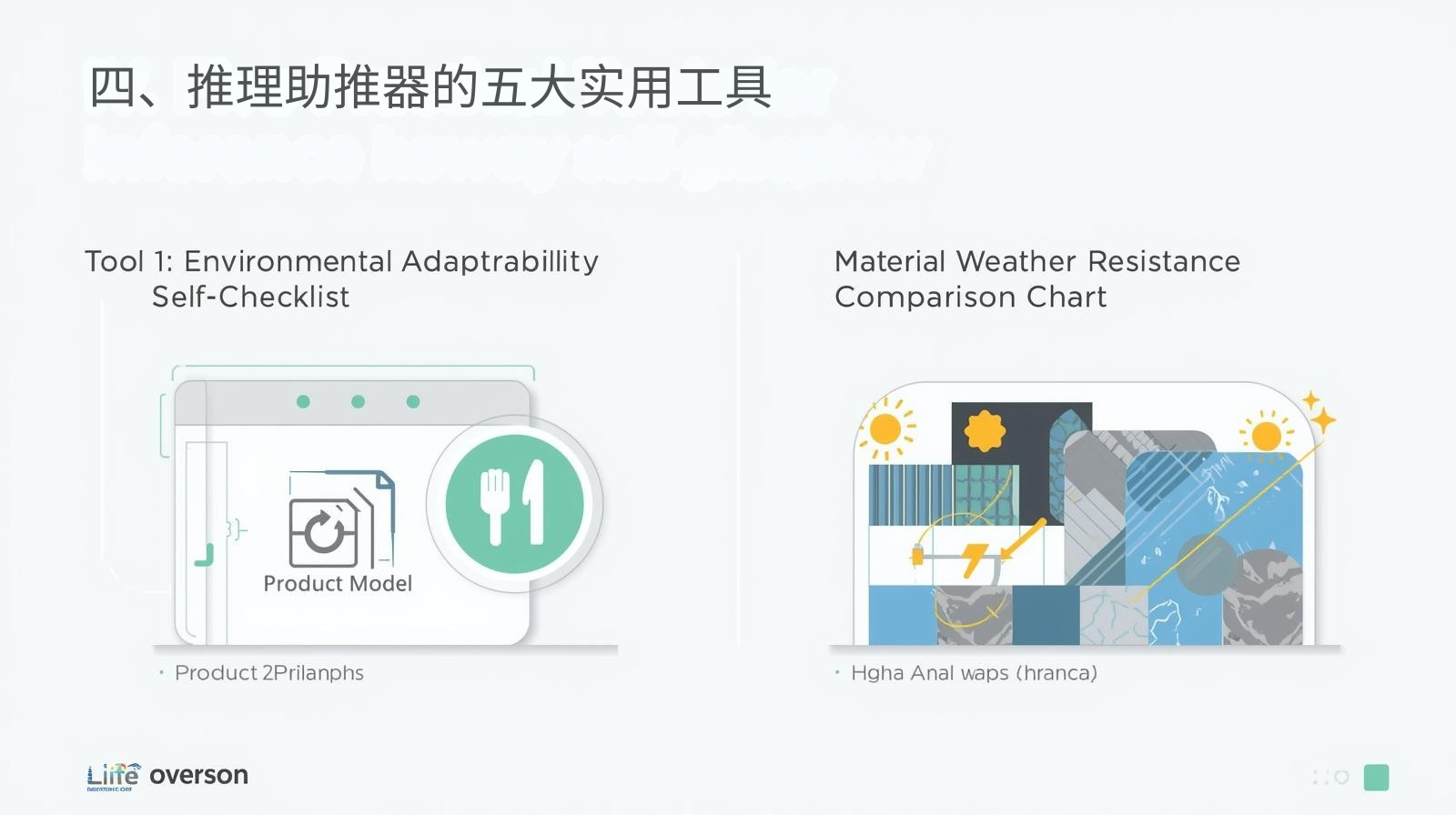
IV. Five Practical Tools of Reasoning Boosters
Tool 1: Environmental Adaptability Self-Assessment Checklist
This allows customers to quickly match the appropriate product model according to their own needs.
Tool 2: Material Weather Resistance Comparison Chart
It visually demonstrates the differences in performance of different materials under various harsh environments.
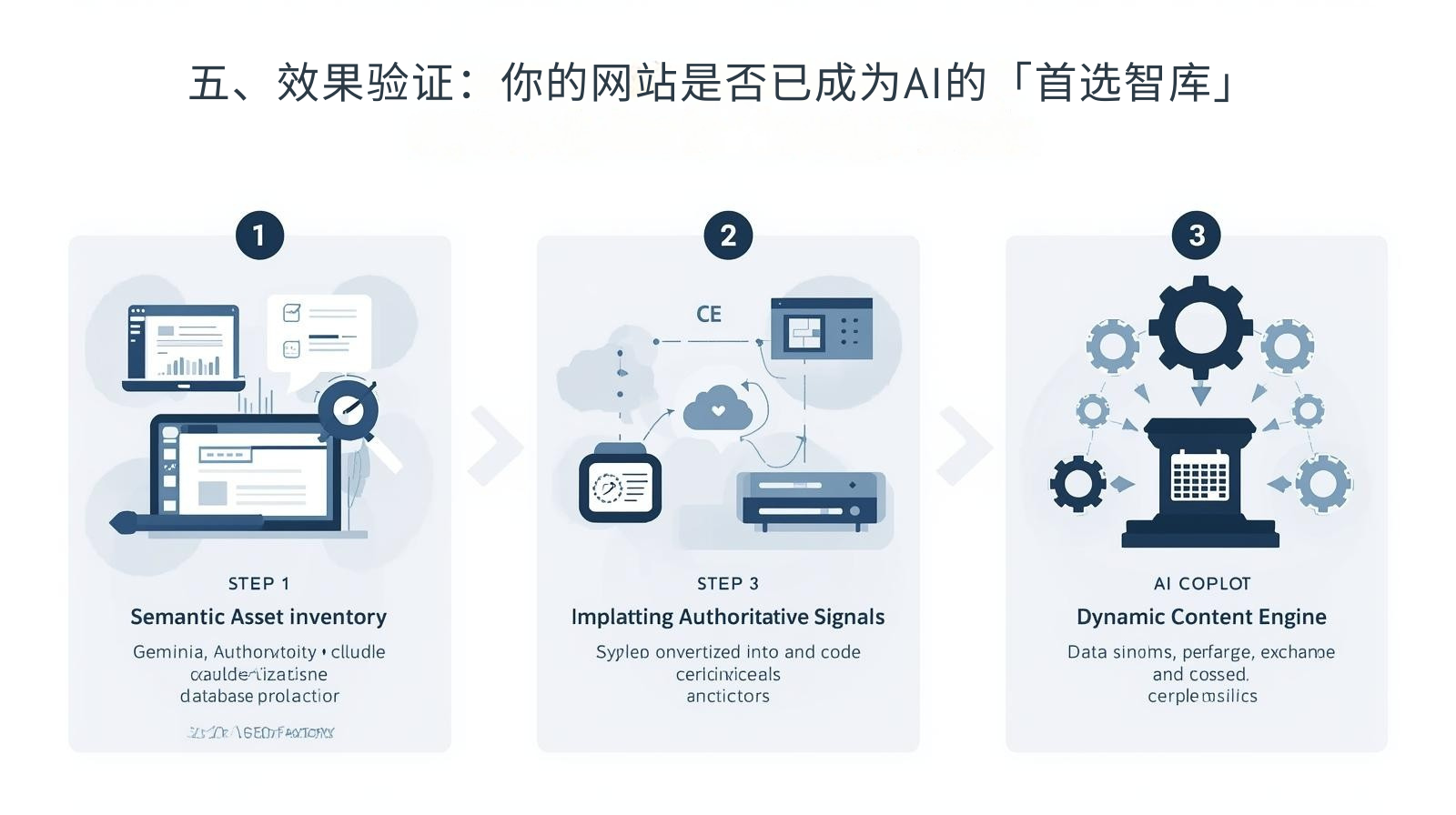
V. Results Verification: Has your website become the "preferred think tank" for AI?
Verification Method 1: Progressive Questioning Test
Try the following question sequence on different AI platforms:
What factors affect the lifespan of solar streetlights during the Nordic winter?
What product characteristics make it more suitable for use in this environment?
Through these progressively challenging questions, you can clearly observe whether AI will prioritize your website as an information source when performing complex reasoning.
Recommended article: Pintui Technology's Viewpoint: The Best Independent E-commerce Website of the Future Will Be the One That Is "Most Instructive"
VI. A Long-Term Mechanism for Continuous Optimization
Establish an effective monitoring and improvement system:
Monthly Checklist
- Have new environmental test data been added?
- Are there any new application cases?
- Have the technical parameters been updated and improved?