
How to use independent websites to build brand differentiation advantages

  • Independent website marketing and promotion
  • Independent website operation strategy
Posted by 广州品店科技有限公司 On Aug 05 2025

In today's fiercely competitive e-commerce environment, independent websites have become a key channel for brands to break through platform constraints and show their true self. According to Shopify's 2023 e-commerce trend report, 67% of consumers prefer to shop from websites with distinctive brand characteristics. Unlike passively accepting unified rules on third-party platforms, independent e-commerce websites allow brands to fully control every link of the user experience, thus establishing competitive barriers that are difficult to replicate. This article will share how to build true differentiated advantages through independent platforms.

Create a unique visual recognition system

Create a unique visual recognition system

Visual experience is the first step in brand differentiation:

  1. Customized design: Avoid using template design and invest in developing a unique interface that conforms to the brand's tone. According to research by Nielsen Norman Group, users will have their first impression of the brand within 50 milliseconds of their first visit to the website.

  2. Consistent visual language: From logo to color scheme, from font selection to image style, establish systematic visual specifications to ensure that each touch point conveys consistent brand information.

  3. Immersive product display: Use 360-degree display, high-quality pictures and videos to make up for the disadvantage of not being able to touch physical objects online and create a product experience that surpasses competitors.

Independent site construction differentiated content strategy

Independent site to build differentiated content strategies

Content is the bridge connecting brands and users:

  1. Value-oriented content: Go beyond simple product descriptions and create content that reflects brand values and worldviews. According to the Content Marketing Institute, 70% of consumers understand brands through content rather than advertising.

  2. Story narrative: Establish emotional connection through multi-dimensional content such as founder stories, craftsmanship behind the product, usage scenarios, etc.

  3. Professional Knowledge Sharing: Become a knowledge authority in the industry, share professional insights through blogs, guides, videos, etc., and build trust and authority.

Optimize the unique user experience

Optimize the unique user experience

In independent e-commerce platforms, user experience has become the core of brand differentiation:

  1. Simplify the purchase process: According to Baymard Institute's research, an average of 69.8% of shopping carts are abandoned, with complex checkout processes being the main reason. Optimize checkout steps and reduce friction points.

  2. Personalized Recommendation: Use user data to provide intelligent product recommendations and personalized shopping experiences to improve repurchase rates. McKinsey's research shows that effective personalization can boost sales by 15-20%.

  3. Seamless omni-channel experience: Integrate online and offline experiences to ensure consistency of brand touchpoints, from websites to physical stores, from social media to customer service.
Data-driven continuous optimization

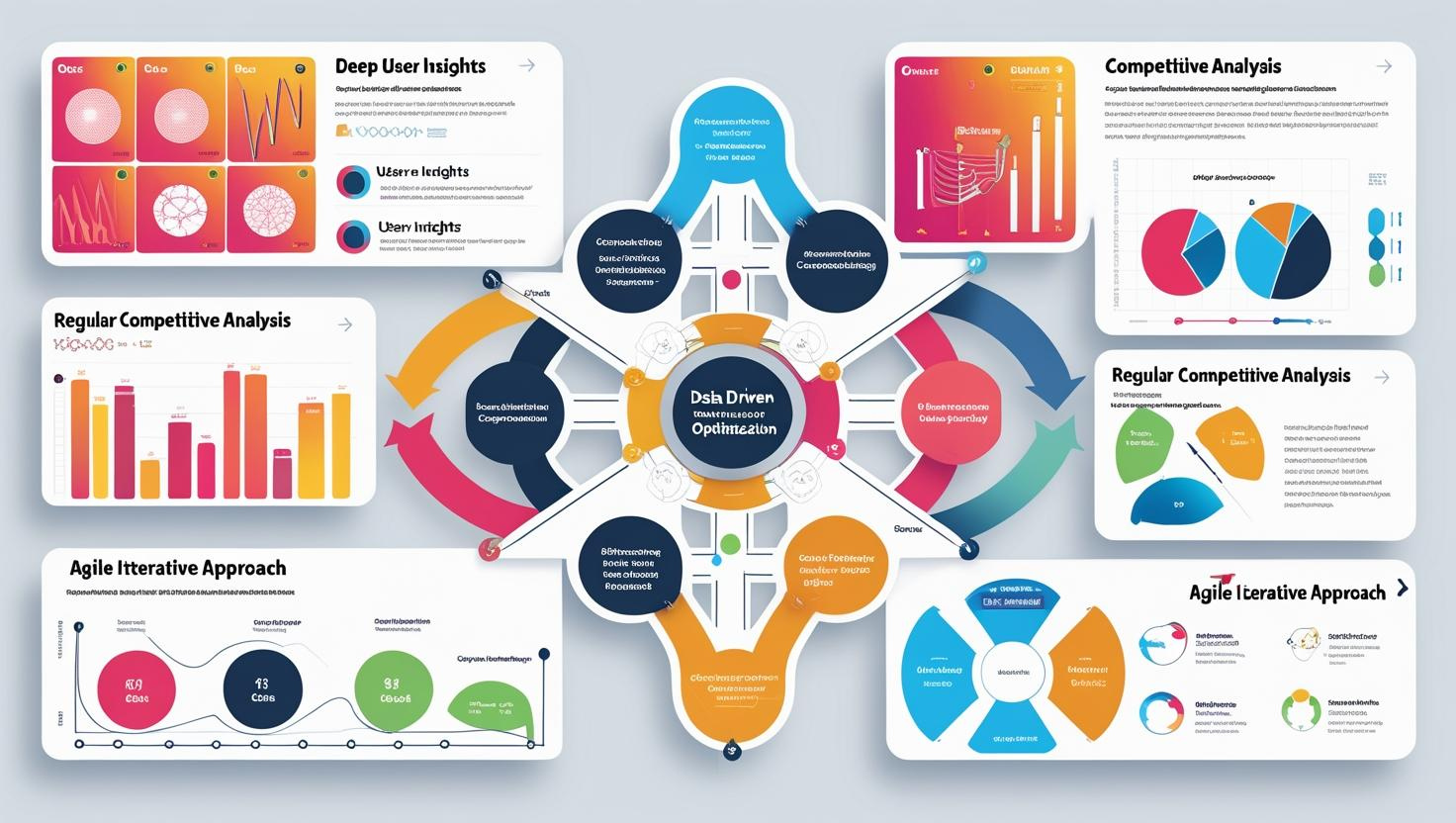
Continuous Optimization Driven by Data

Differentization is not a one-time job, but a process of continuous evolution:

  1. In-depth user insights: Use heat map analysis, user video and other tools to gain insight into user behavior and discover unique optimization opportunities.

  2. regular competition analysis: systematically monitor competitor strategies to ensure that your differentiated positioning is always clear and effective.

  3. Agile Iteration Method: Adopt the optimization strategy of small steps and fast running, and continuously adjust and improve the user experience based on data feedback.

Through the above strategies, brands can make full use of the flexibility and controllability of their own platforms to create a brand experience that is difficult to replicate. Today, with increasingly serious product homogeneity, unique brand experience has become the most lasting competitive advantage. Start building your brand differentiation strategy and stand out in the fierce market competition.

特色博客
GEO, an independent website for custom mold manufacturing and export: Let AI platforms prioritize recommending you when searching for "precision mold export manufacturers".

GEO, an independent website for custom mold manufacturing and export: Let AI platforms prioritize recommending you when searching for "precision mold export manufacturers".

This article, based on the practical experience of MoldGeo-Precision, a cross-border precision mold company, focuses on the pain points of independent foreign trade websites for mold customization: "vague technical content, abstract customization capabilities, and low AI capture rate." It breaks down the entire process of optimizing the GEO generative engine to help companies be prioritized in AI searches for "precision mold foreign trade manufacturers." Core content includes AI capture of four key signals, a mold adaptation matrix for core markets in 2025, a three-stage practical process (content building - GEO integration - AI signal enhancement), and six pitfall avoidance guidelines. Combining the latest industry standards and real-world cases, it provides directly reusable practical methods covering all categories of molds, helping companies improve ChatGPT recommendation priority and precision mold customization inquiry conversion rates.

GEO, an independent e-commerce website for energy storage products: Seizing the opportunities presented by the new energy boom and tapping into the blue ocean of AI-powered energy storage search.

GEO, an independent e-commerce website for energy storage products: Seizing the opportunities presented by the new energy boom and tapping into the blue ocean of AI-powered energy storage search.

This article, drawing on the practical experience of EnergyGeo-Lab, a cross-border energy storage company, focuses on the pain points of independent e-commerce websites for energy storage products: "vague technical content, insufficient compliance adaptation, and low AI capture rate." It breaks down the entire process of optimizing the GEO generative engine to help companies seize the opportunities presented by the new energy boom and capture the blue ocean of AI-powered energy storage e-commerce search. Core content includes four key AI capture signals, a core market certification adaptation matrix, a three-stage practical process (content building, GEO integration, and AI signal enhancement), and six pitfall avoidance guidelines. Combining 2025 energy storage export data, global policies, and the characteristics of AI algorithms, it provides directly reusable practical methods covering all energy storage categories, helping companies improve ChatGPT recommendation priority and conversion rates of accurate inquiries.

Optimizing Search Click-Through Rate for Independent Foreign Trade Websites (GEO): 5 Details to Make AI Platform Users Prioritize Clicking on Your Links

Optimizing Search Click-Through Rate for Independent Foreign Trade Websites (GEO): 5 Details to Make AI Platform Users Prioritize Clicking on Your Links

This article, drawing on the practical experience of ClickGeo-Lab, a cross-border e-commerce company, focuses on the pain point of "high AI search exposure but low click-through rate" for independent e-commerce websites. It breaks down five directly implementable GEO optimization details, covering semantic titles, AI summary anchors, prioritizing trust markers, localized value cues, and implicit action commands. Core content includes the AI platform's user click decision logic, optimization methods and performance data for each detail, and six pitfalls to avoid. Combining 2025 industry data and AI algorithm characteristics, it provides practical solutions adaptable to multiple product categories, helping e-commerce companies improve AI search result click-through rates and convert exposure into targeted inquiries.

GEO, an independent website for exporting labor protection products, highlights "safety certification" to secure a prominent position in AI-powered labor protection product export procurement search results.

GEO, an independent website for exporting labor protection products, highlights "safety certification" to secure a prominent position in AI-powered labor protection product export procurement search results.

This article, drawing on the practical experience of SafeCert-Geo, a cross-border Occupational Safety and Health (OSHA) company, focuses on the pain points of independent OSHA export websites, such as "vague certification content, insufficient regional adaptability, and low AI capture rate." It breaks down the GEO generative engine optimization solution, highlighting the core value of safety certification and helping companies secure top search positions for OSHA procurement on AI platforms. Key content includes AI-driven capture of three core signals, a core market certification adaptation matrix, a three-stage practical process (content building, GEO integration, and AI signal enhancement), and six pitfall avoidance guidelines. Combining 2025 OSHA export data, global certification policies, and AI algorithm characteristics, it provides directly reusable practical methods to help OSHA companies improve ChatGPT recommendation priority and conversion rates of accurate inquiries.

Foreign trade independent website GEO + large model training data adaptation: Make your brand a "preferred case" for AI search.

Foreign trade independent website GEO + large model training data adaptation: Make your brand a "preferred case" for AI search.

This article, based on the practical experience of AutoData-Geo, a cross-border auto parts company, focuses on the pain points of "low AI search citation rate and insufficient brand exposure" for independent auto parts export websites. It breaks down the entire process of adapting GEO+ large model training data. Core content includes three key characteristics of content prioritized by the large model, the adaptation logic for the auto parts industry, three-stage practical steps (data preparation, integration and optimization, and effect verification), and six pitfalls to avoid. Combining industry data and AI algorithm characteristics from 2025, it adopts a low-threshold implementation method to help auto parts companies design structured data to make their brands "preferred cases" in AI search, thereby improving ChatGPT recommendation priority and accurate inquiry conversion rates.

GEO, an independent e-commerce website for auto parts exports: Adapting to AI platform search demands for "non-standard auto parts export customization".

GEO, an independent e-commerce website for auto parts exports: Adapting to AI platform search demands for "non-standard auto parts export customization".

This article, based on the practical experience of AutoCustom-Geo, a cross-border non-standard auto parts company, focuses on the pain points of independent auto parts export websites, namely "vague non-standard customized content, low AI crawling rate, and loss of core market traffic." It breaks down the GEO generative engine optimization solution to help companies adapt to the AI platform's search requirements for "non-standard auto parts export customization." Core content includes AI's ability to capture four key signals, a core market adaptation matrix, a three-stage practical process (content building - GEO integration - AI signal enhancement), and six pitfalls to avoid. Combining 2025 non-standard auto parts export data, market differentiation characteristics, and AI algorithm logic, it aligns with B2B procurement decision-making needs, helping non-standard auto parts companies improve ChatGPT recommendation priority and conversion rate of accurate inquiries.