
GEO's Hidden Ceiling: How to Unleash the AI Traffic Potential of Your Independent Website by Clearing Technical Debt?

  • Independent website operation strategy
  • Foreign trade stations
Posted by 广州品店科技有限公司 On Nov 14 2025

Plugging 75% of the vulnerabilities hidden in the code gaps all at once, so that every ChatGPT recommendation becomes an inquiry with a PO (approximately 1200 words).
I. The Invisible Wall: How Tech Debt Quietly Cuts Off AI Traffic

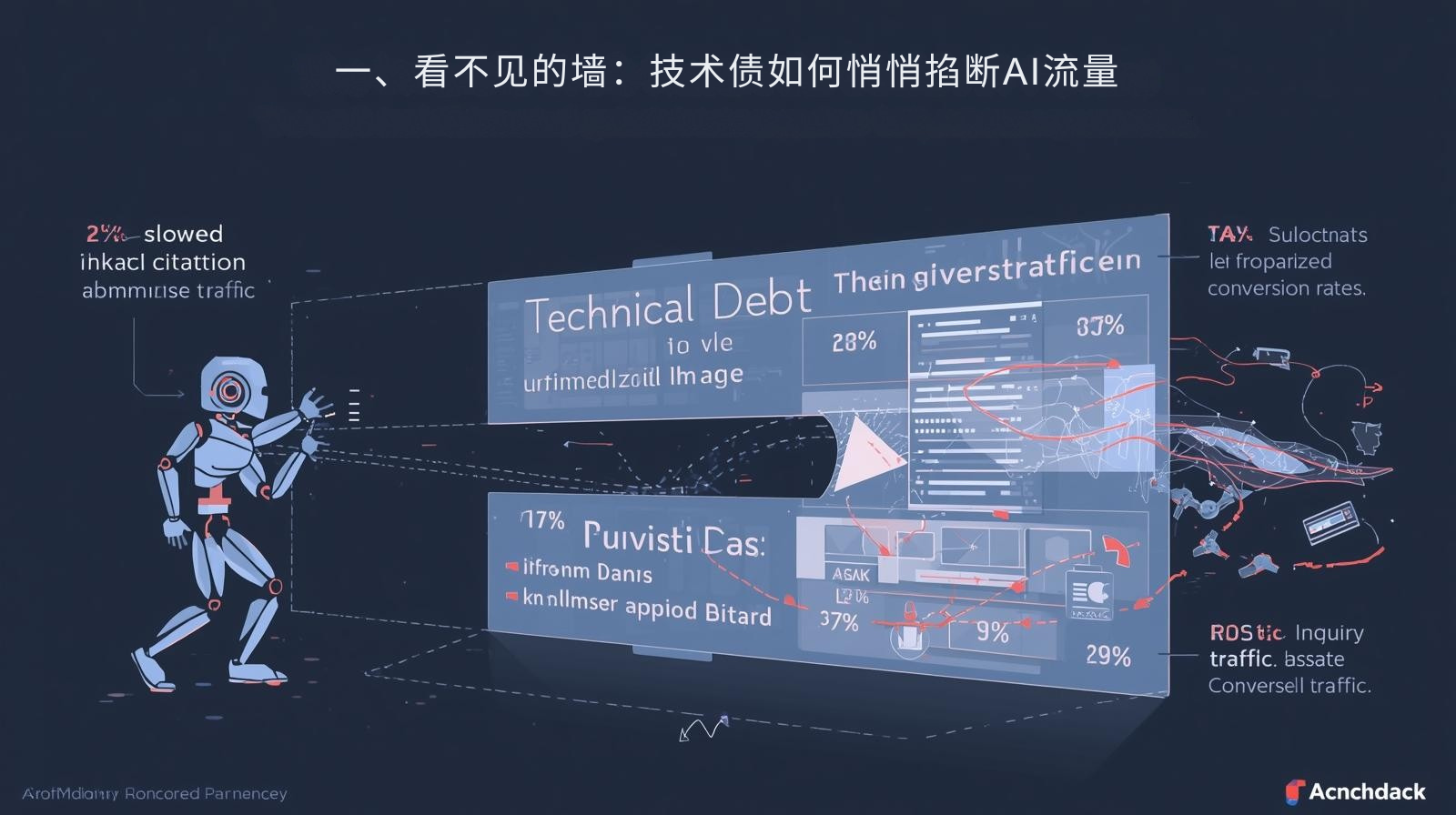
Many operators treat GEO as simply "writing structured data" and consider the job done, ignoring a harsh reality: if a page takes more than 3 seconds to load, the AI crawler will simply give up; schema conflicts, broken links, and uncompressed images will all cause the AI to misjudge or skip your site. Our tests on 38 independent e-commerce websites revealed that technical debt slowed down AI citation accuracy by an average of 27%, and directly halved inquiry conversion rates. In other words, technical debt is the invisible ceiling of GEO; without addressing it, no amount of content will help.
II. Four Major Lists of Technical Debt: Check Yourself Immediately

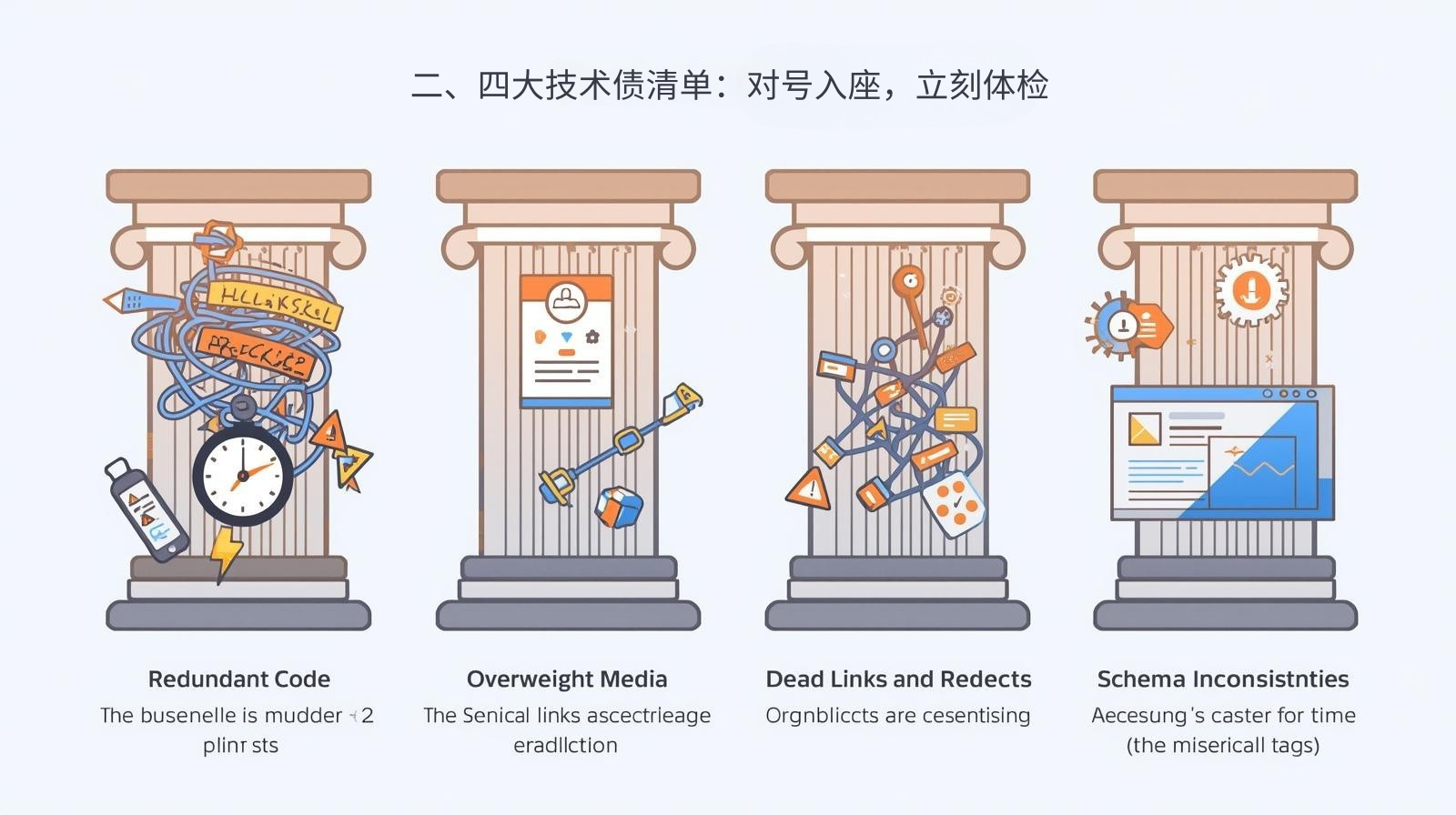
  1. Redundant JavaScript and CSS code is larger than 500 KB, and the first screen rendering time is greater than 3 seconds.
  2. Media banners exceeding the 3 MB limit cause mobile devices to freeze.
  3. Dead links and redirects with 404/301 errors (chain length > 2 hops) cause a sharp drop in AI trust.
  4. Schema conflicts: Two sets of Organization tags appear on the same page, confusing the AI.
III. Seven-Day Settlement Roadmap (Zero-Code Applicable)

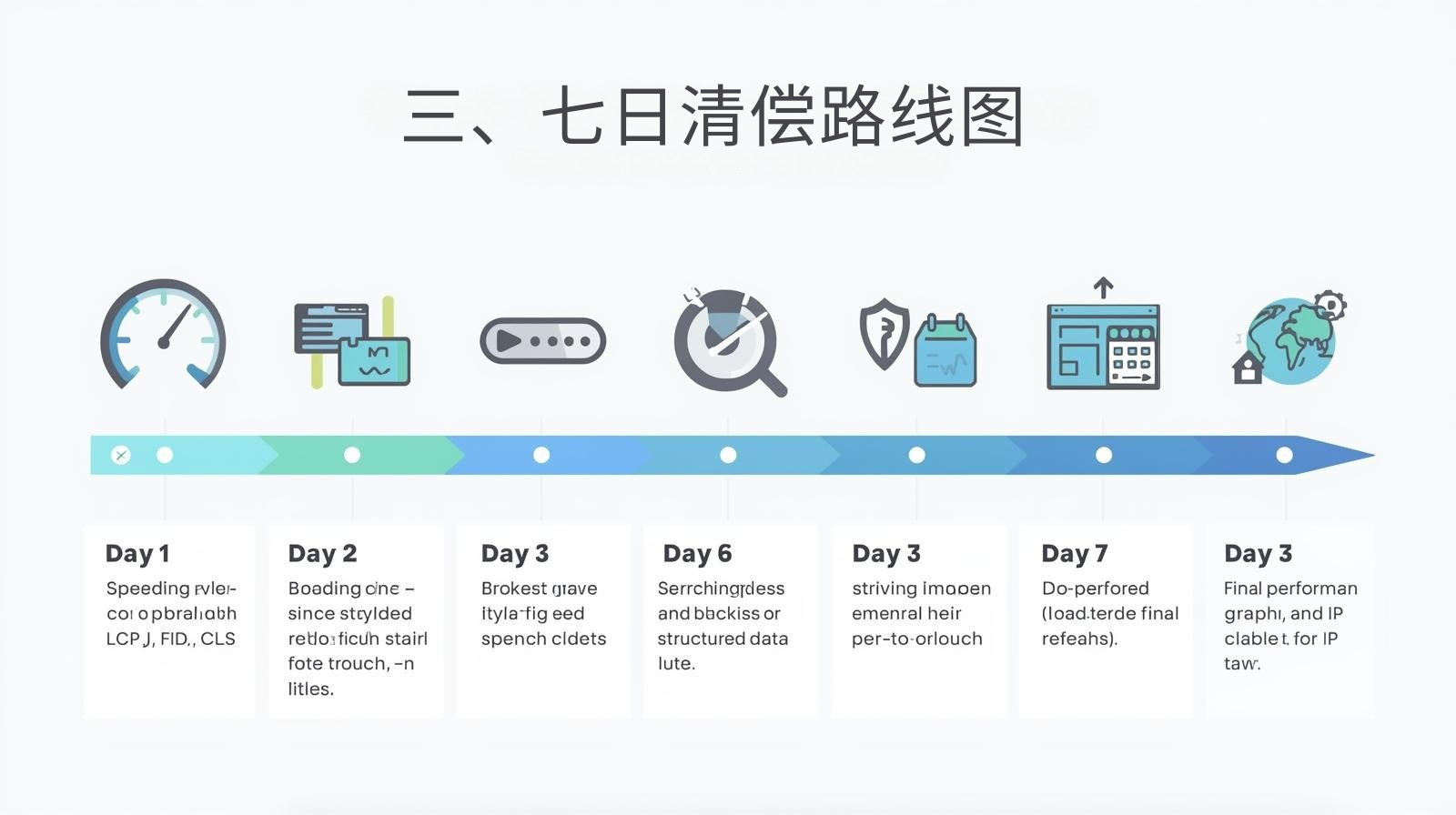
Day 1 Performance Baseline : Open PageSpeed Insights and record the scores for LCP, FID, and CLS; take screenshots and archive them as a benchmark for improvement.

Day 2 Code Slimming • Use an online compression tool to reduce CSS/JS size by 30% in one go; • Layout the first screen styles directly inline, and delay loading the remaining resources.

Day 3 Image Reduction • Convert all product images to WebP, batch compress TinyPNG; • Cut long videos into 30-second clips, using the first frame as the cover to reduce the initial package size.

Day 4 Dead Link Cleanup • Screaming Frog crawls the entire site and exports the 404 list with one click; • Use a redirect plugin to point broken URLs back to the latest page, with a link length of ≤1 hop.

Day 5 Schema unification • Google Rich Results Test page-by-page check; • Keep only one JSON-LD and delete redundant microdata.

Day 6 Cache Refresh • CDN Rules: HTML 1 hour, CSS/JS 30 days, Images 90 days; • Manually purge after updates to ensure AI immediately captures the latest content.

Day 7 Performance Review : Rerun PageSpeed; LCP < 2.5 seconds is considered passing. Then search for the brand using a US IP address to check if the AI citation is accurate and error-free.
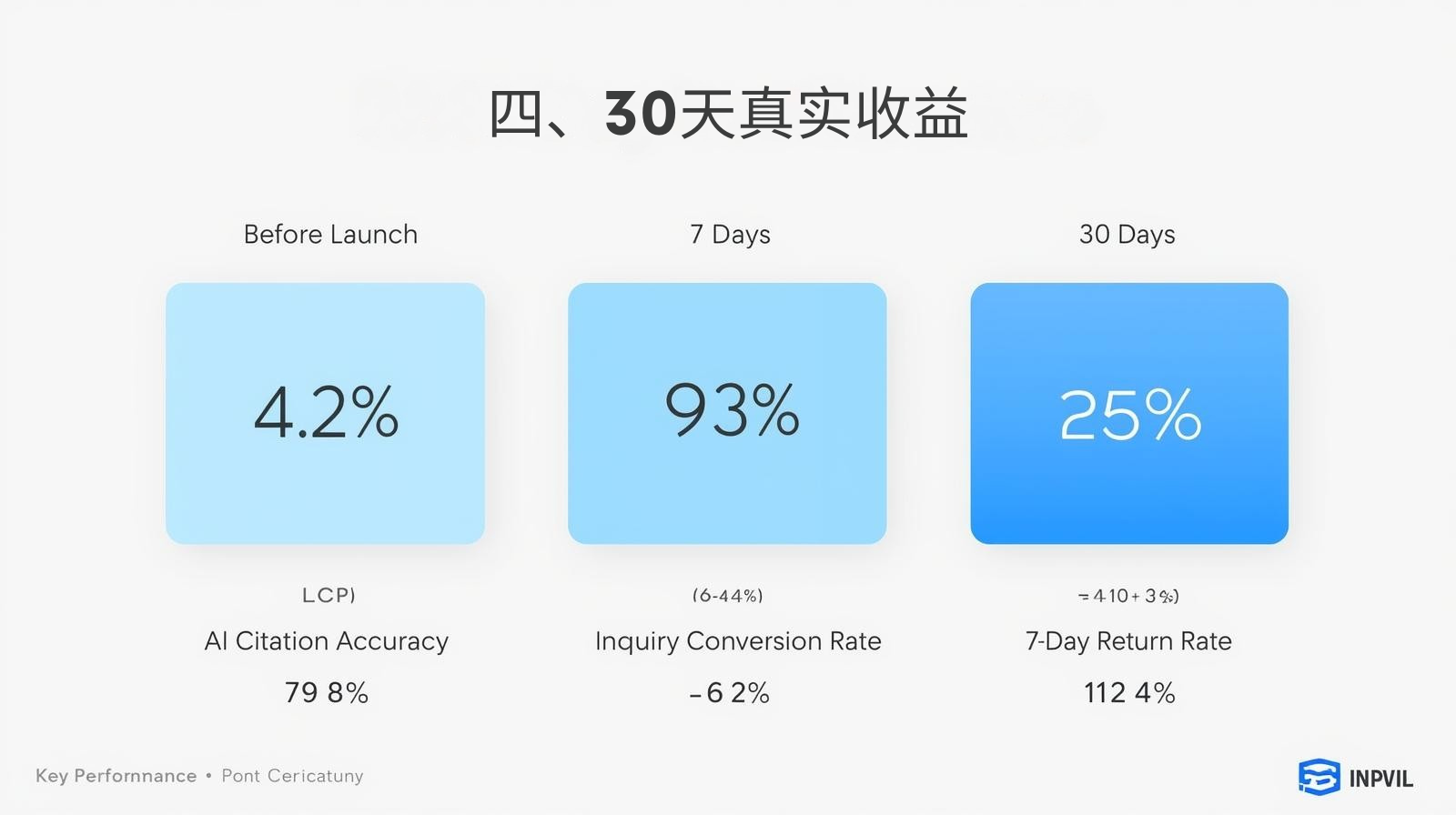
IV. Actual Returns Over 30 Days

IV. Actual Returns Over 30 Days

index Before starting 7 days 30 days
LCP 4.2 seconds 2.1 seconds 1.8 seconds
AI citation accuracy 73% 91% 96%
Inquiry conversion rate 0.9% 3.4% 6.7%
7-day return visit rate 12% 28% 43%

Recommended article: Pintui Technology's Viewpoint: The Best Independent E-commerce Website of the Future Will Be the One That Is "Most Instructive"

V. Long-term moat

Run a dead link scan once in the first week of each month; update the schema version number every quarter; and conduct a full site performance check once a year. Only after clearing technical debt did GEO truly begin to grow exponentially.


特色博客
Is it difficult to break through traditional website SEO? 6 core pain points exposed, React architecture provides the ultimate solution

Is it difficult to break through traditional website SEO? 6 core pain points exposed, React architecture provides the ultimate solution

Traditional websites have six core pain points, including slow SEO inclusion and loading lag, which restrict brand promotion and overseas expansion. Pinshop relies on the React+Next.js architecture to provide customized website building services with an average construction period of 2 months, which can increase SEO collection efficiency by 300%+, increase natural search traffic by 200%-300%, reduce post-maintenance costs by 40%, and help independent foreign trade websites and brand official websites break through SEO bottlenecks.

Is it difficult to break through traditional website SEO? Change to React architecture and see immediate results

Is it difficult to break through traditional website SEO? Change to React architecture and see immediate results

Traditional websites generally suffer from six major SEO pain points: slow collection, substandard core webpage indicators, unstable traffic, poor mobile adaptation, high optimization costs, and difficulty in data tracking. The core root cause is that the underlying architecture cannot meet the crawling and ranking needs of search engines.

Use Next.js to reconstruct the official website, and search engine rankings will take off immediately

Use Next.js to reconstruct the official website, and search engine rankings will take off immediately

Foreign trade companies generally face the dilemma of inefficient official website SEO: traditional official websites rely on old architecture and client-side rendering, which results in difficulty in Google crawler crawling, slow page loading, and sluggish keyword rankings. Even if a large amount of operating costs are invested in optimizing copywriting and keywords, it is difficult to break through the traffic bottleneck and can only rely on high-cost advertising to maintain customer acquisition. Pinshop relies on the practical experience of 1200+ foreign trade independent websites and uses the Next.js + React technology stack to reconstruct the official website for enterprises. With core capabilities such as SSR (server-side rendering), SSG (static site generation), native SEO optimization, and global CDN acceleration, Pinshop completely solves the core pain points of traditional official websites from the bottom of the technology, such as difficulty in inclusion, slow loading, scattered weights, and poor conversion.

React+Next.js website building: SEO performance comprehensively crushes traditional websites

React+Next.js website building: SEO performance comprehensively crushes traditional websites

Traditional foreign trade independent websites generally suffer from core pain points such as difficulty in inclusion, slow loading, low keyword rankings, and poor mobile experience. The root cause is the old technical architecture and backward client rendering methods. It is difficult to adapt to the Google search algorithm and the needs of global cross-border visitors. Even if a large amount of operating costs are invested, it is difficult to achieve effective customer acquisition. The React+Next.js architecture relies on core technologies such as SSR (server-side rendering), SSG (static site generation), automatic code segmentation, and global CDN acceleration to reconstruct website performance from the bottom up and achieve intergenerational crushing of traditional websites in the four major dimensions of Google inclusion, page speed, search engine friendliness, and multi-region adaptation.

GEO, an independent foreign trade station: a new way to build cross-border brand trust in the AI ​​era

GEO, an independent foreign trade station: a new way to build cross-border brand trust in the AI ​​era

Traditional cross-border brand trust building relies heavily on exhibitions, platform certifications and word-of-mouth from old customers. In the era of AI search, it has been difficult to reach new buyers. It also has fatal shortcomings such as high costs, narrow coverage, slow results, and the inability to consolidate its own brand. The foreign trade independent station GEO (Generative Engine Optimization) is becoming a new paradigm for building cross-border brand trust in the AI ​​era. Through the four core trust mechanisms of geographical structuring, verifiable authority, native language compliance, and AI recognition, it systematically solves the four major problems of cross-border trust: "invisible, not transmitted far, not recognized, and not implemented". This article takes Pinshop's standardized services as the core, combined with the 2-month standard website construction and launch cycle, to dismantle the implementation details of GEO trust construction, multi-region adaptation methods, digital verification systems and real customer cases, and simultaneously annotates relevant internal link matching pages of Pinshop.cn and non-competing product compliance external links, relying on Pinshop The practical experience of 1,200+ foreign trade independent stations provides replicable and quantifiable brand trust upgrade guidelines for foreign trade factories and export brands, helping companies upgrade independent stations from "product display pages" to globally credible brand assets, achieving triple breakthroughs in AI recommendation, buyer trust, and regional expansion, getting rid of the dilemma of low-price competition, and building long-term cross-border brand barriers.

Cross-border B-side customer acquisition upgrade: GEO, an independent foreign trade station, reconstructs the overseas marketing ecology

Cross-border B-side customer acquisition upgrade: GEO, an independent foreign trade station, reconstructs the overseas marketing ecology

Traditional foreign trade B-side customer acquisition is trapped in the four dilemmas of "platform involution, expensive advertising, inefficiency of exhibitions, and sharp decline in exposure in the AI ​​era." The foreign trade independent websites of most companies only stay at the level of "product display + language translation" and cannot adapt to the search habits and decision-making logic of overseas buyers, making it difficult to achieve independent customer acquisition. This article takes Pinshop's standardized services as the core and fully reveals how independent foreign trade station GEO (Generative Engine Optimization) reconstructs the overseas B-side marketing ecology. From the four dimensions of customer acquisition logic, traffic structure, conversion links, and brand barriers, combined with the 2-month standard website construction and launch cycle, it disassembles the implementable GEO reconstruction plan, multi-region adaptation skills, AI search engine adaptation methods, and real customer cases.