
Misconceptions about independent sites: Five common mistakes made by foreign trade people

  • Independent website operation strategy
  • Foreign trade stations
  • Foreign trade website
Posted by 广州品店科技有限公司 On Aug 19 2025

1. Misconception 1: Only focus on appearance design and ignore SEO basics

1. Misconception 1: Only focus on appearance design and ignore SEO basics

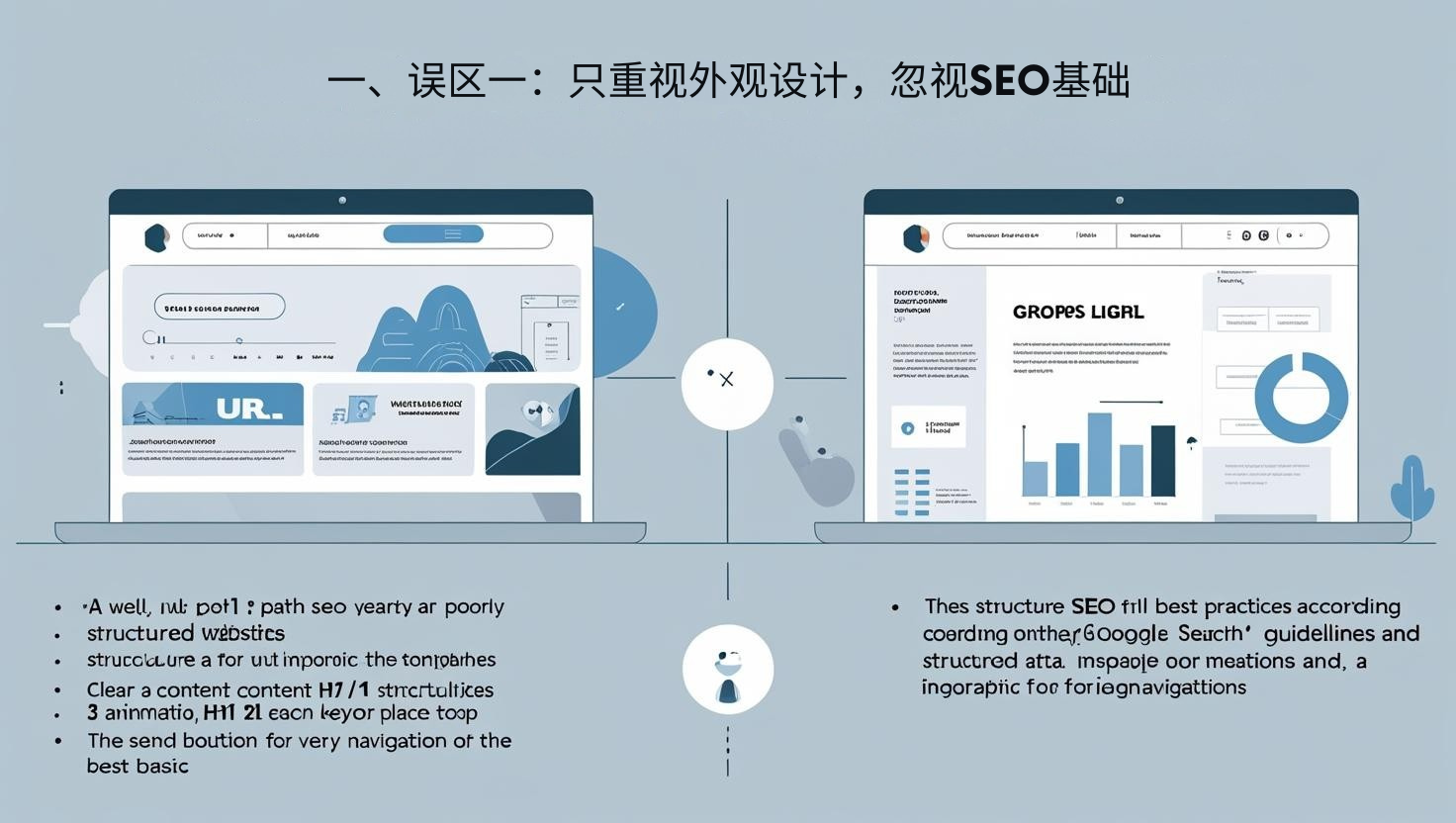
When building their websites, many foreign trade companies invest too much of their budget in "high-end" visual effects and ignore the most basic SEO structure.

  • If a website lacks clear URL logic, H1/H2 hierarchy and keyword layout, it will be difficult to get a good ranking in search engines.

  • According to Google Search Central , search engines place more emphasis on structured data and content relevance rather than fancy animations.

The right approach : Embed SEO thinking at the beginning of the design to ensure that the foreign trade website is both beautiful and optimized.
2. Misconception 2: Over-reliance on paid advertising and ignoring organic traffic

2. Misconception 2: Over-reliance on paid advertising and ignoring organic traffic

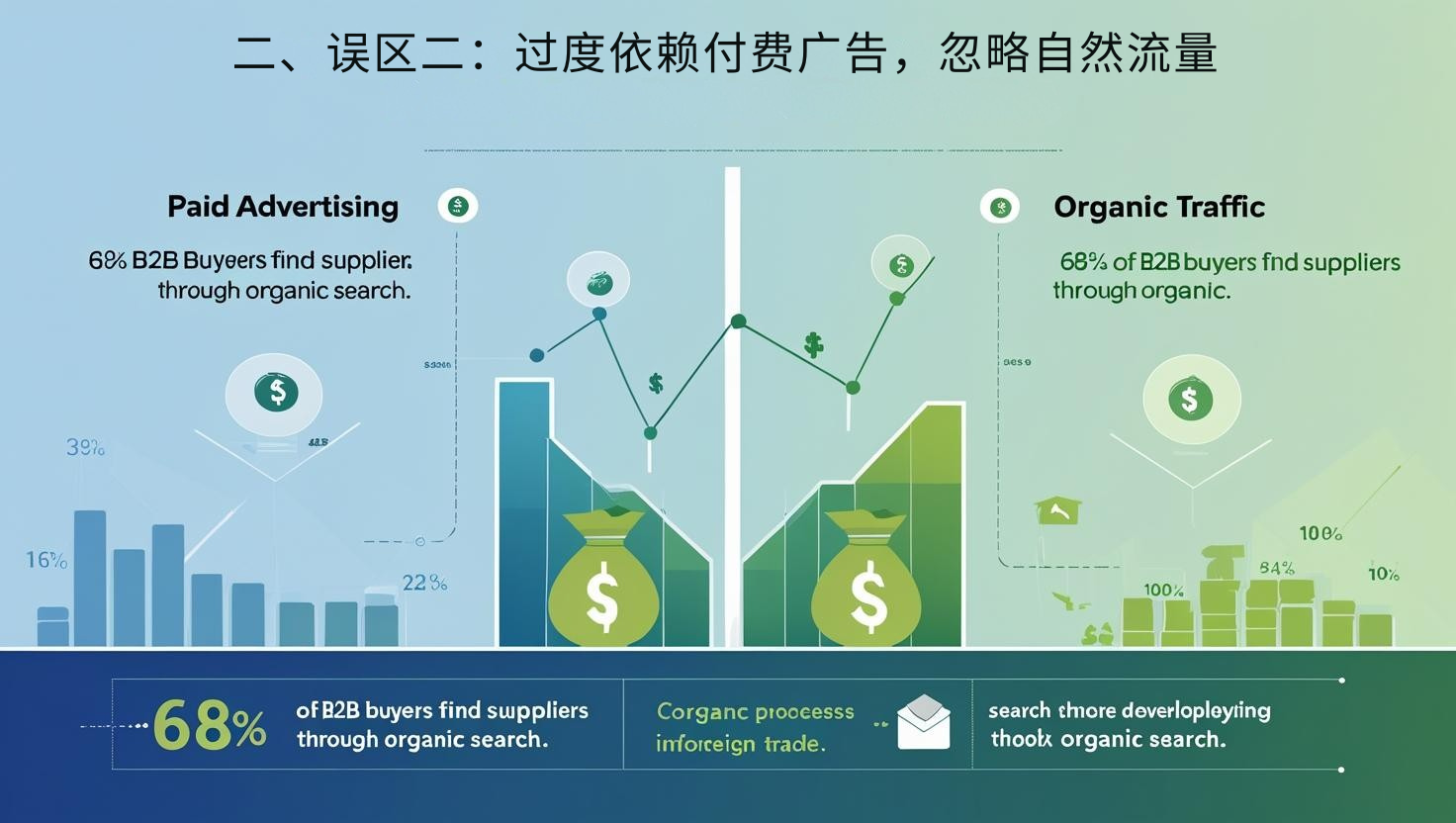
Many foreign trade bosses are accustomed to relying on Google Ads or social media advertising, which has obvious short-term effects, but the traffic will immediately return to zero after stopping the delivery.

  • Statista ’s research shows that 68% of B2B buyers find suppliers through organic search, which means that organic traffic is the core of long-term customer acquisition.

The correct approach : By continuously updating content and optimizing keywords, foreign trade websites can accumulate long-term natural traffic and reduce dependence on advertising.
3. Misunderstanding 3: Ignoring Multilingualism and Localization Adaptation

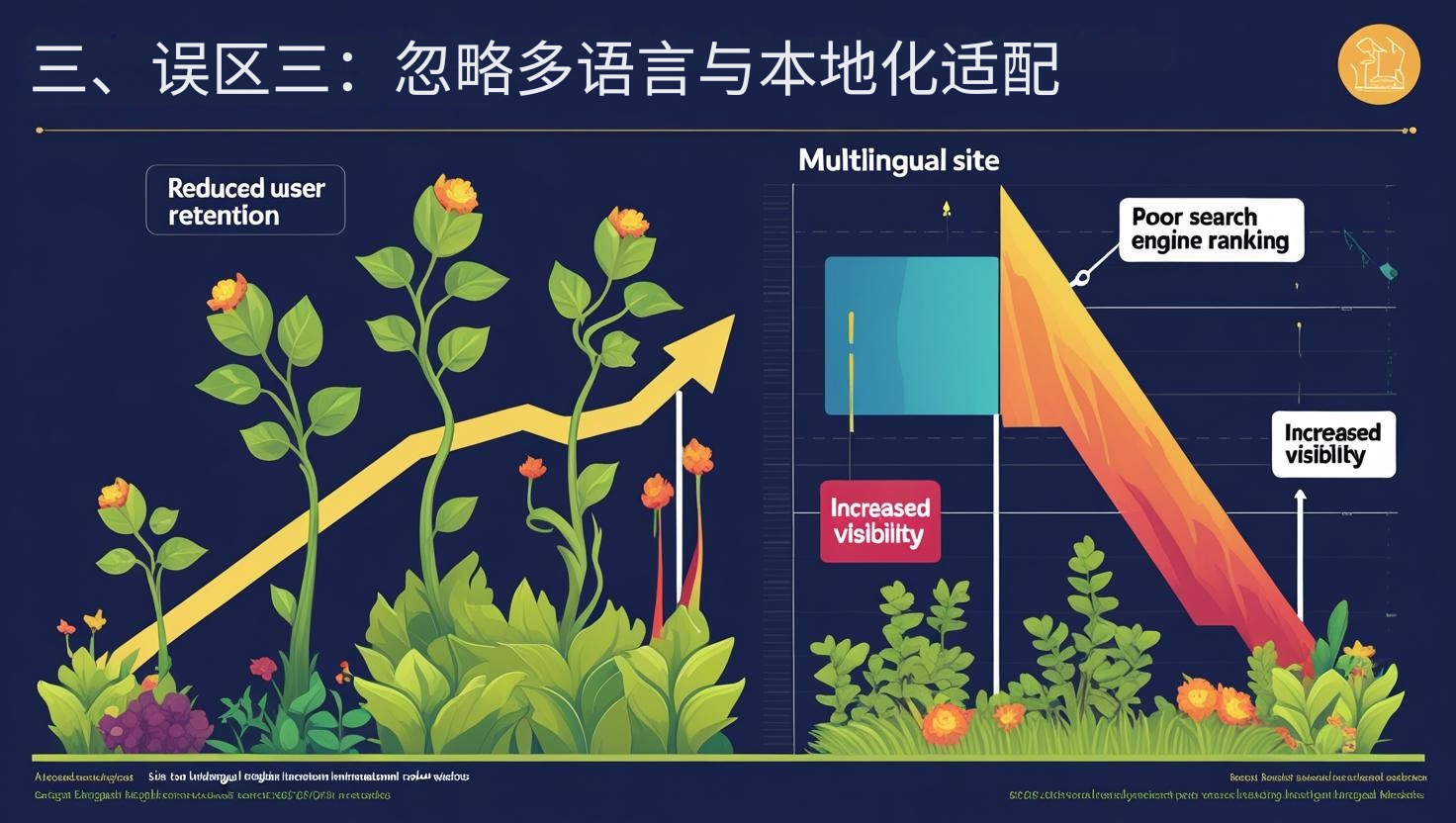
3. Misunderstanding 3: Ignoring Multilingualism and Localization Adaptation

Many foreign trade websites only provide English pages, resulting in a poor experience for customers in other markets.

  • A report from the World Trade Organization (WTO) emphasizes that localized language and content are key aspects of global marketing.

  • A website that is not localized not only reduces user stay time, but also directly affects search engine rankings in the target country.

The right approach : Create a multilingual foreign trade website, integrate it with the target market culture, and increase exposure on local search engines.
4. Misunderstanding 4: Ignoring the continuous updating of content

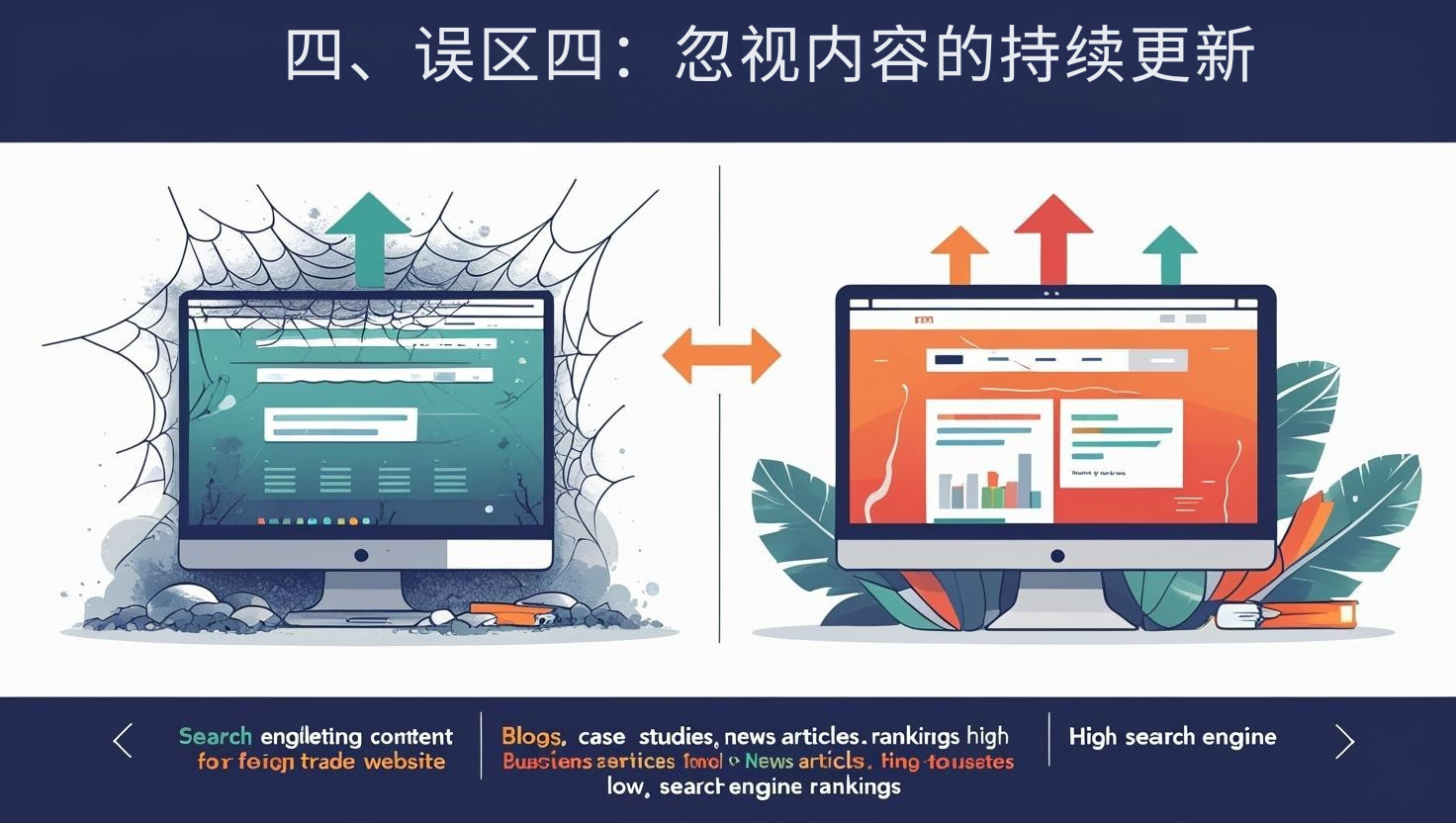
4. Misunderstanding 4: Ignoring the continuous updating of content

Foreign trade companies generally have the problem of "don't care after going online". The website has not been updated for many years and eventually becomes a "digital business card".

  • Research by the China Academy of Information and Communications Technology (CAICT) shows that a website's activity is directly linked to search engine crawling frequency. Search engines will lower the weight of websites that stop updating.

The right approach : Constantly update the content of your foreign trade website through blogs, case studies, and industry information to allow search engines to continue crawling.
5. Myth 5: Lack of data-driven optimization

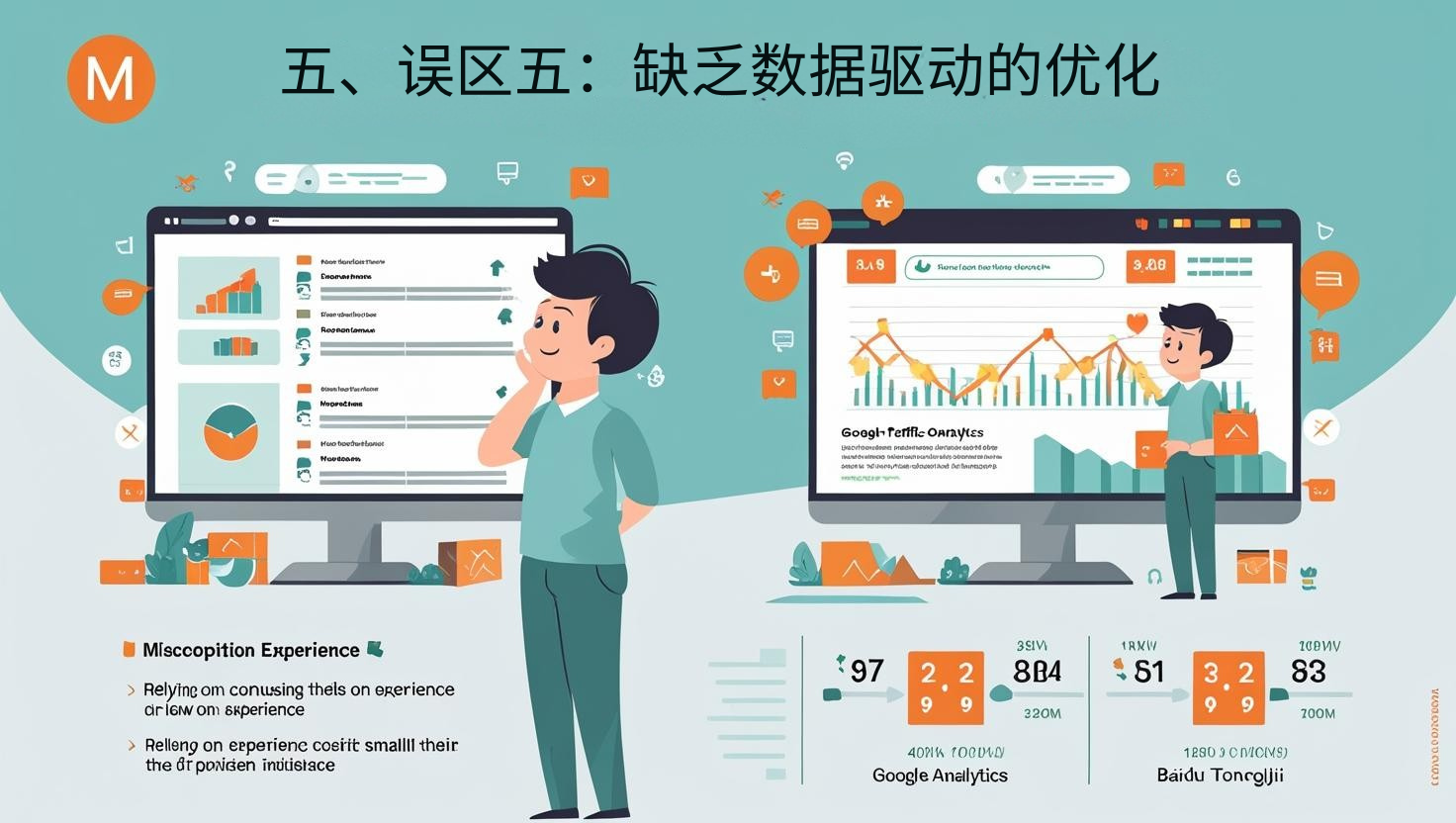
5. Myth 5: Lack of data-driven optimization

Many foreign trade people judge the quality of a website based on experience rather than data analysis.

  • Without analyzing page traffic sources, conversion rates, and customer behavior, you won’t be able to find the real problem.

Correct approach : Use tools such as Google Analytics and Baidu Statistics to continuously monitor data and adjust optimization strategies based on keyword rankings.
How to avoid these misunderstandings and increase the natural traffic of foreign trade websites?

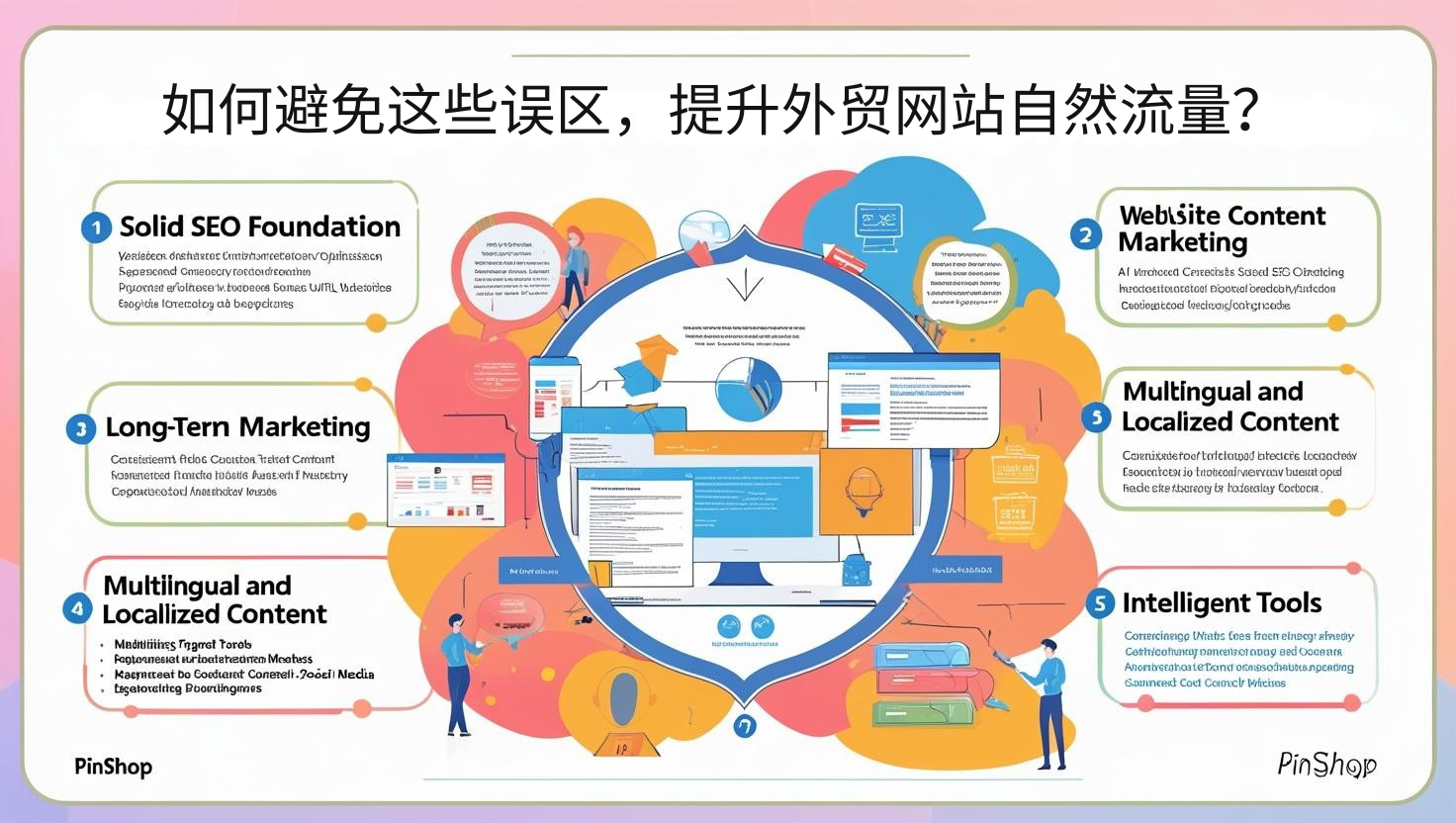
How to avoid these misunderstandings and increase the natural traffic of foreign trade websites?

  1. Lay a solid foundation for SEO : structure optimization, keyword layout, and URL simplification.

  2. Focus on long-term content marketing : continuously output articles and industry information.

  3. Multilingualism and localization : covering the real needs of the target market.

  4. With the help of intelligent tools : improve efficiency and reduce manual input.

👉 In this regard, the Pinshop website building platform provides an all-in-one solution:

For independent websites to truly be effective, they must avoid these five common misconceptions and comprehensively improve from the perspectives of SEO, content, multilingualism, and data-driven development. Only in this way can a foreign trade website become a core customer acquisition engine for a company, rather than a mere "showpiece." With Pinshop , foreign trade companies can quickly build a professional, intelligent, and sustainable independent website, making organic traffic a true long-term asset.


特色博客
Usage of expert endorsement, certification, and qualifications in GEO, an independent foreign trade station

Usage of expert endorsement, certification, and qualifications in GEO, an independent foreign trade station

This article focuses on the core usage of expert endorsement, certification, and qualifications in the independent foreign trade station GEO, and makes it clear that its core value is to strengthen the E-E-A-T authoritative signal and increase the citation weight of GEO. Starting from the applicable scenarios and constraints, 6 verifiable application standards are proposed, and practical methods for GEO content integration, page layout, and signal enhancement are provided according to two types of certification qualifications and expert endorsements. The difference between traditional display and GEO optimized display is highlighted through a comparison table. Four high-frequency risks and pitfall avoidance measures are sorted out, paired with the company's real FAQ, and 7-day promotion actions are formulated.

Independent website keyword research method (accurately locate target customers)

Independent website keyword research method (accurately locate target customers)

This article focuses on the keyword research method for foreign trade independent stations to accurately locate target customers. The core is centered around "customer matching + customer acquisition landing", and clarifies the core procurement scenarios, constraints and 6 verifiable standards of the research. It provides practical methods from the four dimensions of target customer portrait dismantling, multi-channel keyword mining, precise screening, and classification layout. Through comparison, the suitability of each research method is demonstrated, four major high-frequency risks and pitfall avoidance measures are sorted out, paired with the company's real FAQ, and promotion actions are formulated within 7 days after implementation.

How to improve GEO ranking using a question-and-answer structure

How to improve GEO ranking using a question-and-answer structure

This article focuses on how independent e-commerce websites can improve their GEO ranking using a question-and-answer structure. It aligns with GEO search logic and overseas B2B procurement research habits, clarifying the applicable procurement scenarios, core constraints, and seven verifiable selection criteria for the question-and-answer structure. Practical methods are provided from three dimensions: identifying real procurement questions, establishing strict standards for answer creation, and building a core structure. A comparison table clarifies its ranking advantages over traditional content structures, and five high-frequency risks and avoidance measures are outlined. Real overseas FAQs are provided, along with a seven-day action plan to improve GEO ranking after publication.

How to improve GEO ranking using a question-and-answer structure

How to improve GEO ranking using a question-and-answer structure

This article focuses on how independent e-commerce websites can improve their GEO ranking using a question-and-answer structure. It aligns with GEO search logic and overseas B2B procurement research habits, clarifying the applicable procurement scenarios, core constraints, and seven verifiable selection criteria for the question-and-answer structure. Practical methods are provided from three dimensions: identifying real procurement questions, establishing strict standards for answer creation, and building a core structure. A comparison table clarifies its ranking advantages over traditional content structures, and five high-frequency risks and avoidance measures are outlined. Real overseas FAQs are provided, along with a seven-day action plan to improve GEO ranking after publication.

Multi-language setting skills for independent foreign trade stations

Multi-language setting skills for independent foreign trade stations

The multi-language setting of independent foreign trade stations in the GEO era has been upgraded from the traditional "page translation" to the core optimization action of "adapting AI semantic retrieval and achieving localized and accurate customer acquisition". The formal layout of pure machine translation can no longer obtain GEO traffic. Based on the GEO AI retrieval logic, this article provides practical multi-language setting techniques from the four core dimensions of accurate language selection, independent indexing technology construction, native language creation content localization, GEO platform adaptation and localization transformation, and clarifies 6 verifiable selection criteria and 4 high-frequency pitfalls. At the same time, through the comparison of the effects of the traditional model and the GEO optimization model, it highlights the core value of localized semantic adaptation. Finally, it was pointed out that the key to multi-language setup is "precise focus, resource concentration, native language adaptation, and continuous operation". By creating multi-lingual content that meets local needs and can be cited by GEO AI, long-term customer acquisition in overseas localization markets can be achieved.

Long content vs. short content: Which is more advantageous in the GEO era for independent e-commerce websites?

Long content vs. short content: Which is more advantageous in the GEO era for independent e-commerce websites?

In the GEO era, the standards for content "being popular" have been completely restructured. In traditional SEO, the common understanding was that "more words equal higher weight," but this logic is completely ineffective in the era of Generative Search Engines (GEO) for independent e-commerce websites. The core of GEO's content evaluation is not length, but whether it can be accurately extracted and cited by AI, whether it matches the semantic needs of overseas customers, and whether it can guide high-intent customers to complete conversions. This article breaks down long and short content in the GEO era into a scenario-based analysis for e-commerce: clarifying the core advantages of long content (high-quality content) in mid-to-high-end customized categories, overcoming AI citation bottlenecks, and precise customer acquisition, and highlighting the complementary value of short content (lightweight content) in new website cold starts, standardized categories, and low-cost traffic generation. Ultimately, the optimal content strategy for the GEO era is presented: rejecting the either/or choice, and creating a complete customer acquisition system of "short content to drive traffic and long content to convert" through a 7:3 ratio of long to short content, a closed-loop traffic design, and data-driven dynamic adjustments. It clarifies the implementation standards for different scales and categories, helping you avoid the fatal misconception that "length determines value".