
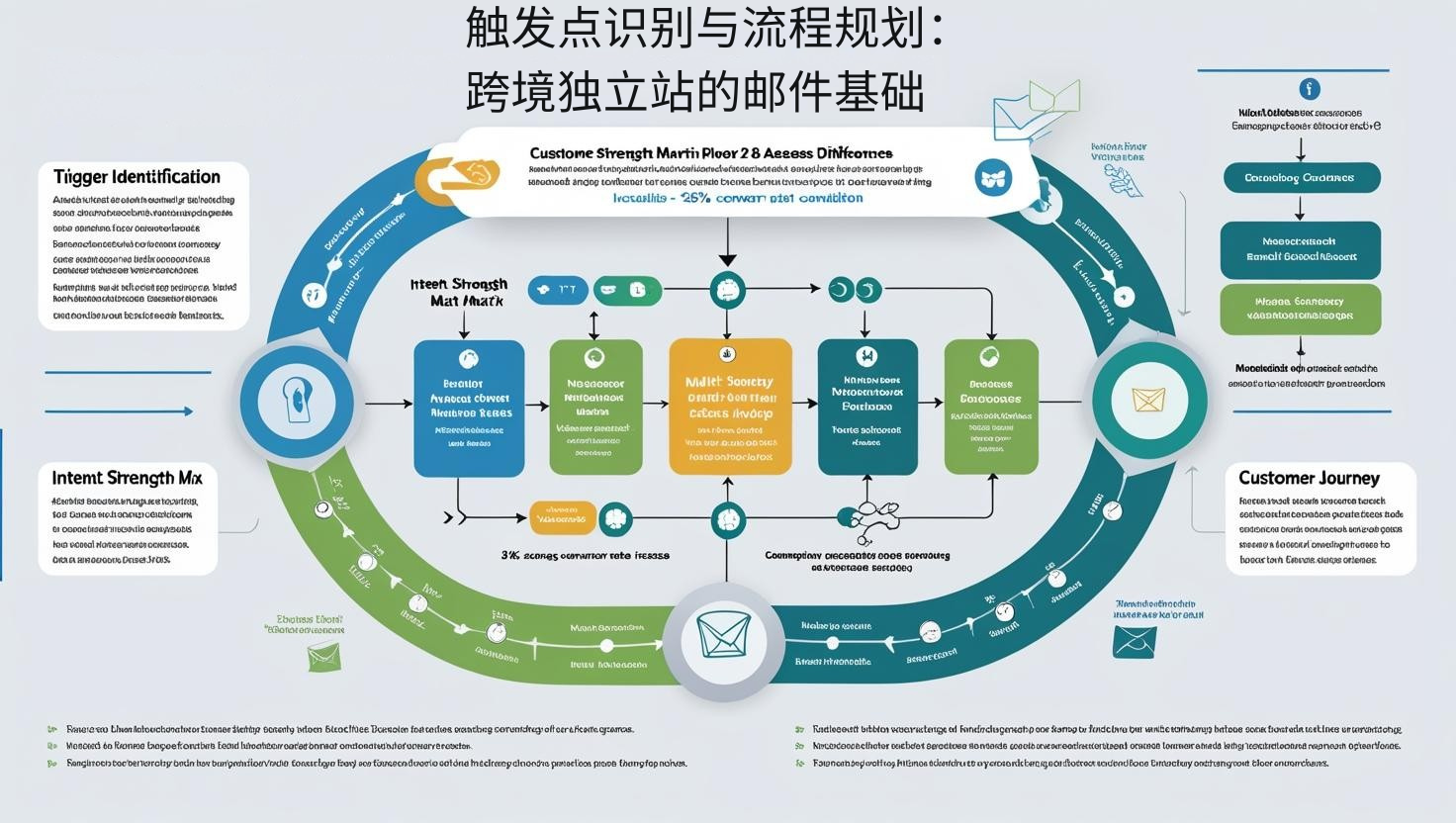
 Trigger Point Identification and Process Planning: The Fundamentals of Email for Cross-Border Independent Websites
Trigger point design determines email relevance. According to Epsilon research, behavior-triggered emails achieve an average click-through rate of 119% higher than regular bulk emails, making them the primary factor in boosting effectiveness.
Design a core triggered email flow
-
Identify key customer behavior triggers: Analyze website visit behavior and key points in the shopping journey; identify high-intent signals and purchase readiness indicators; examine differences in customer behavior patterns across markets; assess the length of decision cycles for different product categories; develop triggers for first-time visits, category browsing, and product review; design granular triggers for shopping cart behavior and the checkout process; and pay special attention to trigger identification for cross-session behavior and multi-device users. An advanced strategy is the "Intent Strength Matrix," which assesses purchase intent based on a combination of behaviors. Research shows that this approach increases conversion rates by an average of approximately 36% compared to single-behavior triggers.
-
Customer Journey Email Flowchart: Design a complete email journey map from awareness to post-purchase; create multi-path email flows with different entry points; consider specific email paths for different segments; evaluate the optimal balance between email frequency and interval; design branching conditions and dynamic path transitions; develop a coordinated system of primary and secondary triggers; and pay special attention to email cadence preferences across different markets and cultural contexts. A key approach is "journey prioritization," which identifies the most impactful key email flows. Data shows that focusing on optimizing 3-5 core email flows improves implementation efficiency by approximately 68% and overall effectiveness by approximately 41% compared to attempting to cover all possible scenarios.
-
Segmentation and Personalization Strategy: Develop a segmentation system based on behavioral data and purchase history; create differentiated email flows for new, active, and dormant customers; consider segmentation tags based on price sensitivity and brand loyalty; evaluate segmentation applications based on product category preferences; design intelligent adjustments for geography and time zone; develop dynamic segmentation for holidays and seasonal events; and pay special attention to cultural preferences and shopping habits across different markets. Research shows that triggered emails with three or more segments increase click-through rates by an average of approximately 58% and conversion rates by approximately 62% compared to unsegmented emails, demonstrating the critical value of granular segmentation.
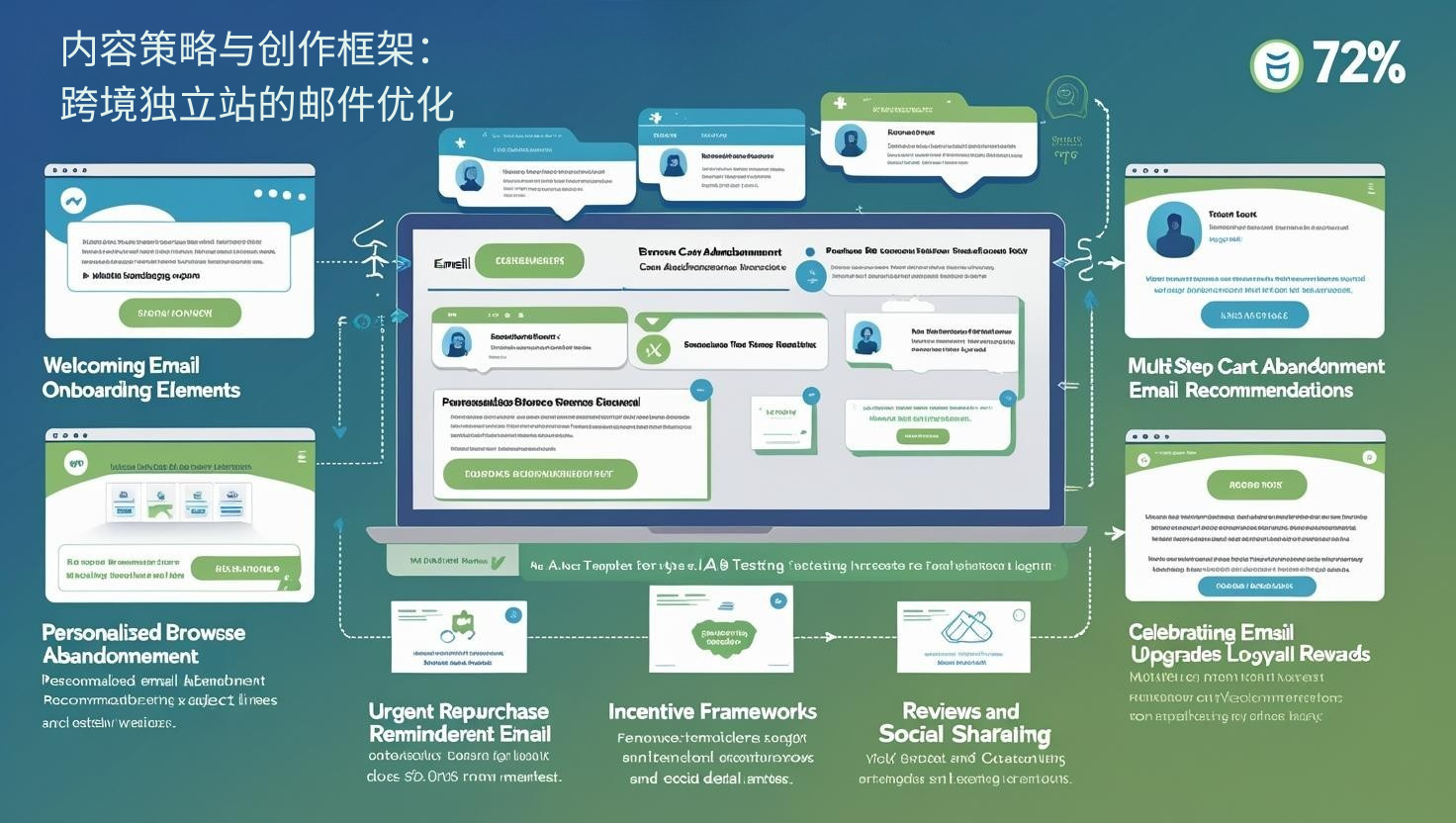 Content Strategy and Creative Framework: Email Optimization for Cross-Border Independent Websites
Content strategy determines email effectiveness. According to Mailchimp analysis, a well-designed email content strategy can increase click-through rates by an average of 101%, making it a key driver of conversions.
Create a high-converting email content system
-
Content templates for core email types: Design progressive brand onboarding for welcome emails; create a multi-step recovery strategy for cart abandonment emails; develop a personalized recommendation structure for browse abandonment emails; consider creating a sense of urgency for repurchase reminders and back-in-stock notifications; evaluate incentive frameworks for review requests and social sharing; design celebratory emails for membership tier changes and loyalty rewards; and pay special attention to differences in email length and detail preferences across different markets. A highly effective structure is a "modular content system," which creates a library of reconfigurable content modules. Research shows that this approach can increase email creation efficiency by approximately 72% while maintaining brand consistency and optimizing quality.
-
Subject Line and Preview Text Strategy: Develop subject line formulas that evoke curiosity and value propositions; create a framework for conveying urgency and scarcity; consider strategically inserting personalized elements and variations; evaluate a testing framework for varying lengths and delivery styles; design preview text coordination strategies that enhance open rates; develop a systematic approach to A/B testing for subject lines; and pay special attention to differences in subject line effectiveness across languages and cultures. Research shows that an optimized subject line and preview text combination can increase open rates by approximately 22%, making it the first key to successful email marketing.
-
Email Content Creation and Design Principles: Design a mobile-first, responsive email template system; establish a clear visual hierarchy and action-oriented structure; consider personalized content blocks and dynamic recommendation areas; evaluate the optimal balance of text and image ratios; design a framework for multilingual content and cultural adaptation; develop a balance between brand consistency and email uniqueness; and pay special attention to differences in image style and color preferences across countries. One conversion strategy is the "single call to action" principle, focusing each email on a clear goal. Data shows that this focus increases click-through rates by an average of 34% compared to multi-targeted emails, simplifying the user decision-making process.
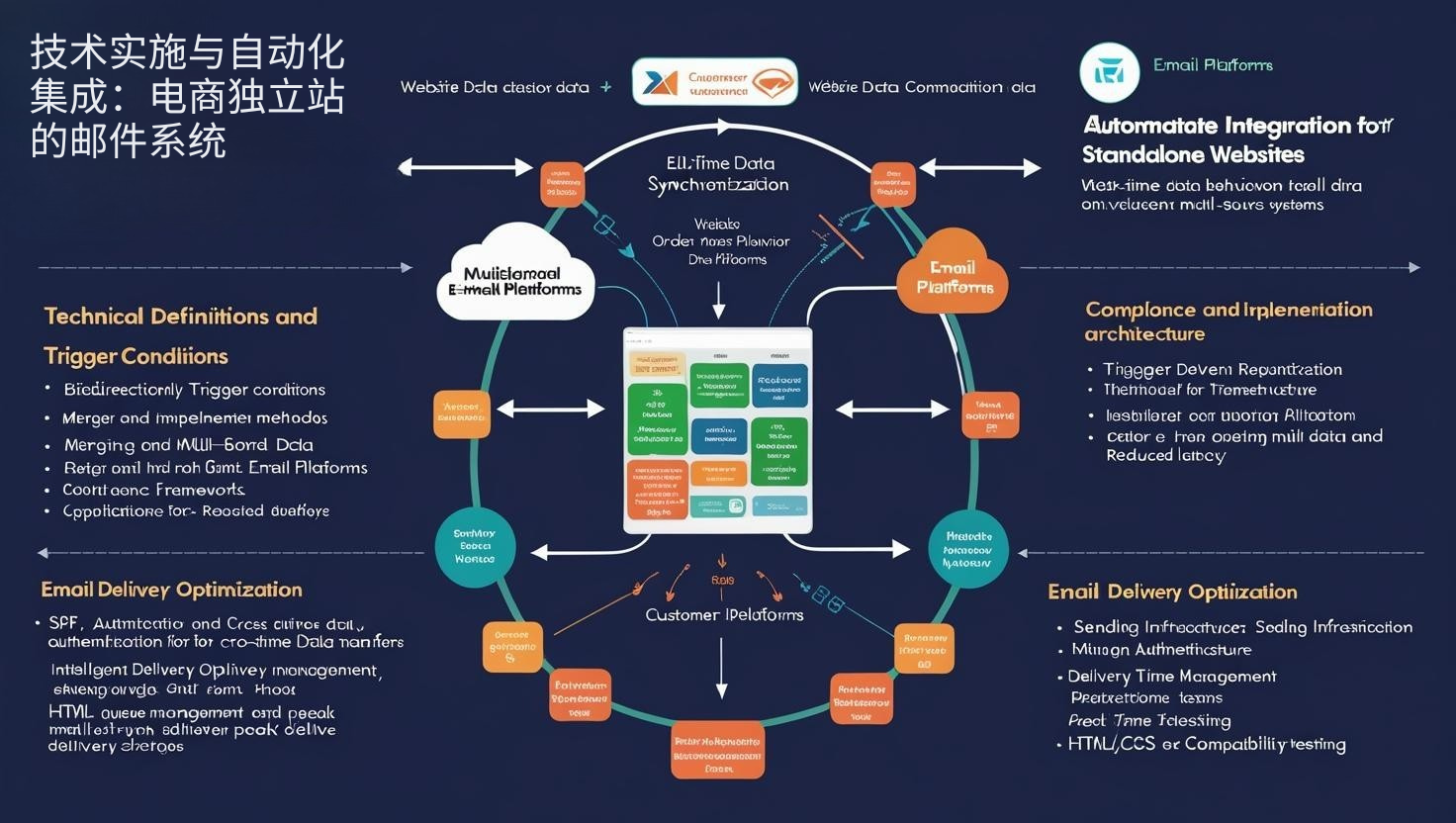 Technical Implementation and Automation Integration: Email Systems for E-commerce Standalone Websites
Technical integration determines automation efficiency. According to Litmus research, good technical integration can reduce email marketing operations time by up to 43%, while also improving data accuracy and response speed.
Build a Robust Email Technology Foundation
-
Data Integration and Trigger Setup: Build real-time synchronization between website behavior data and email platforms; develop bidirectional integration between customer data platforms and email systems; consider data flows across CRM, order management, and email platforms; evaluate multi-source data consolidation and cleansing processes; design technical definitions and implementation methods for trigger conditions; create a compliance framework for data security and privacy protection; and pay special attention to compliance requirements and technical solutions for cross-border data transfers. An effective solution is an event-driven architecture, which triggers relevant processes in real time based on user behavior. Research shows that this architecture reduces trigger latency by an average of 87% compared to batch processing, significantly improving email relevance and timeliness.
-
Email Delivery Optimization and Technical Setup: Optimize technical factors for email deliverability and inbox placement; set up SPF, DKIM, and DMARC records to ensure authentication; consider sending infrastructure and IP reputation management; evaluate delivery time optimization and intelligent time zone adjustments; design email queue management and peak delivery strategies; develop a compatibility testing system for email HTML and CSS; and pay special attention to display consistency across different email clients and devices. Research shows that comprehensive technical optimization can increase email deliverability by approximately 11-15%, which directly translates into more business opportunities and conversions.
-
Automated Workflows and Integration Scenarios: Create end-to-end automation scenarios for multi-system collaboration; develop API-based order follow-up processes and service emails; consider automated triggering flows for inventory changes and price adjustments; evaluate integration between customer service systems and email platforms; design cross-data utilization for social media and advertising platforms; create intelligent triggering for external events (such as weather and holidays); and pay special attention to the automation challenges of multi-time zones and multiple languages for global operations. A high-level integration is "omnichannel collaborative automation," which ensures that email messages are coordinated with messages from other channels. Data shows that this collaboration can increase overall conversion rates by approximately 27%, creating a seamless customer experience.
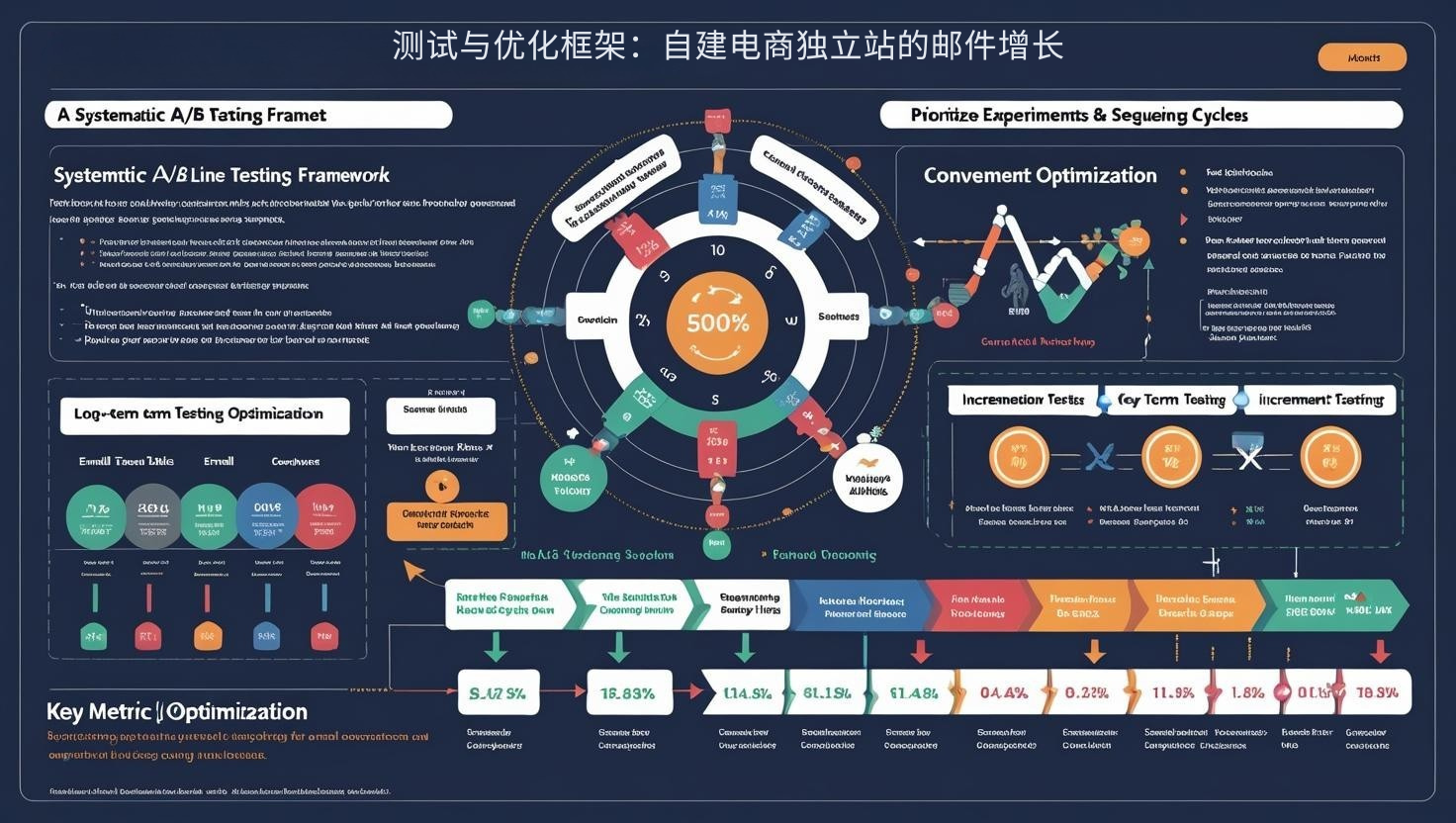 Testing and Optimization Framework: Email Growth for Self-Built E-Commerce Websites
Testing and optimization determine long-term results. According to research by Email on Acid, systematic email testing and optimization can improve overall performance by an average of 31%, making it the key to sustained growth.
Build a data-driven continuous optimization system
-
Systematic A/B testing framework: Design a structured testing plan for subject lines, content, and design elements; create experiments to optimize send timing, frequency, and sequencing; consider the effectiveness of personalization and segmentation; evaluate the conversion rates of different promotional strategies and value propositions; design a long-term testing roadmap and prioritize; develop testing cycles for rapid learning and immediate application; and pay special attention to differentiated testing across different markets and customer segments. A highly effective approach is "incremental optimization," where each test focuses on a key variable. Research shows that this systematic approach achieves an average cumulative improvement of approximately 68% compared to random testing, making it a scientific approach to email optimization.
-
Key Metrics Analysis and Decision-Making Framework: Establish a comprehensive metric system from open rate to final conversion; create specific performance benchmarks for different email types; consider a comprehensive assessment of direct and attribution conversions; evaluate the correlation between email engagement and customer lifetime value; design comparative analysis and improvement opportunities for segmented groups; develop predictive models and analytical tools for trend identification; and pay special attention to performance differences and unique patterns in different international markets. Research shows that companies that use multi-level metric analysis identify an average of approximately 43% more optimization opportunities than those focusing solely on basic metrics, achieving a more sustainable growth curve.
-
Email Marketing ROI and Resource Optimization: Analyze the return on investment and resource allocation of different email streams; create an assessment to balance the degree of automation with marketing effectiveness; consider the optimal combination of internal capabilities and external tools; establish a decision-making framework to assess technology investment and expected returns; design a strategic choice between incremental improvements and major redesigns; develop a resource balance between content creation and technology optimization; and pay special attention to the cost-effectiveness and priority markets of global expansion. One strategic framework is a "return on investment matrix," which assesses the revenue contribution and resource requirements of different email streams. Data shows that this approach can improve marketing investment efficiency by approximately 35%, achieving optimal resource allocation.
Amidst increasingly fierce global e-commerce competition, triggered email marketing automation has become a key driver for boosting conversion rates and customer value for self-built websites. Through systematic trigger point identification, refined segmentation strategies, a professional content creation framework, and data-driven testing and optimization, companies can build a truly intelligent email marketing system, delivering the right message to the right person at the right time, achieving significant improvements in marketing effectiveness. The key lies in transforming email from a simple marketing channel into a strategic customer journey management tool, using automation to create personalized experiences and build lasting customer relationships and brand loyalty.
Related article recommendations: https://pinshop.cn/zh-Hans/blog/what-is-independent-site-for-business