
Independent Station Internationalization Strategy: Entering Multiple Overseas Markets

  • Independent website marketing and promotion
  • Independent website industry application
  • Independent website operation strategy
Posted by 广州品店科技有限公司 On Aug 08 2025
With the rapid globalization of digital commerce, expanding into international markets through independent websites has gone from being an option to a necessity for growth. According to eMarketer, global cross-border e-commerce transactions are projected to reach $2.1 trillion by 2027, with a compound annual growth rate exceeding 27%. International expansion not only offers significant revenue growth potential but also diversifies regional risks and extends product lifecycles. However, a successful internationalization strategy goes far beyond simple website translation; it requires comprehensive market adaptation and operational adjustments. This article will share how to systematically plan and execute a multi-market expansion strategy, avoid common pitfalls, and accelerate global business growth.

International Market Selection and Prioritization

International Market Selection and Prioritization

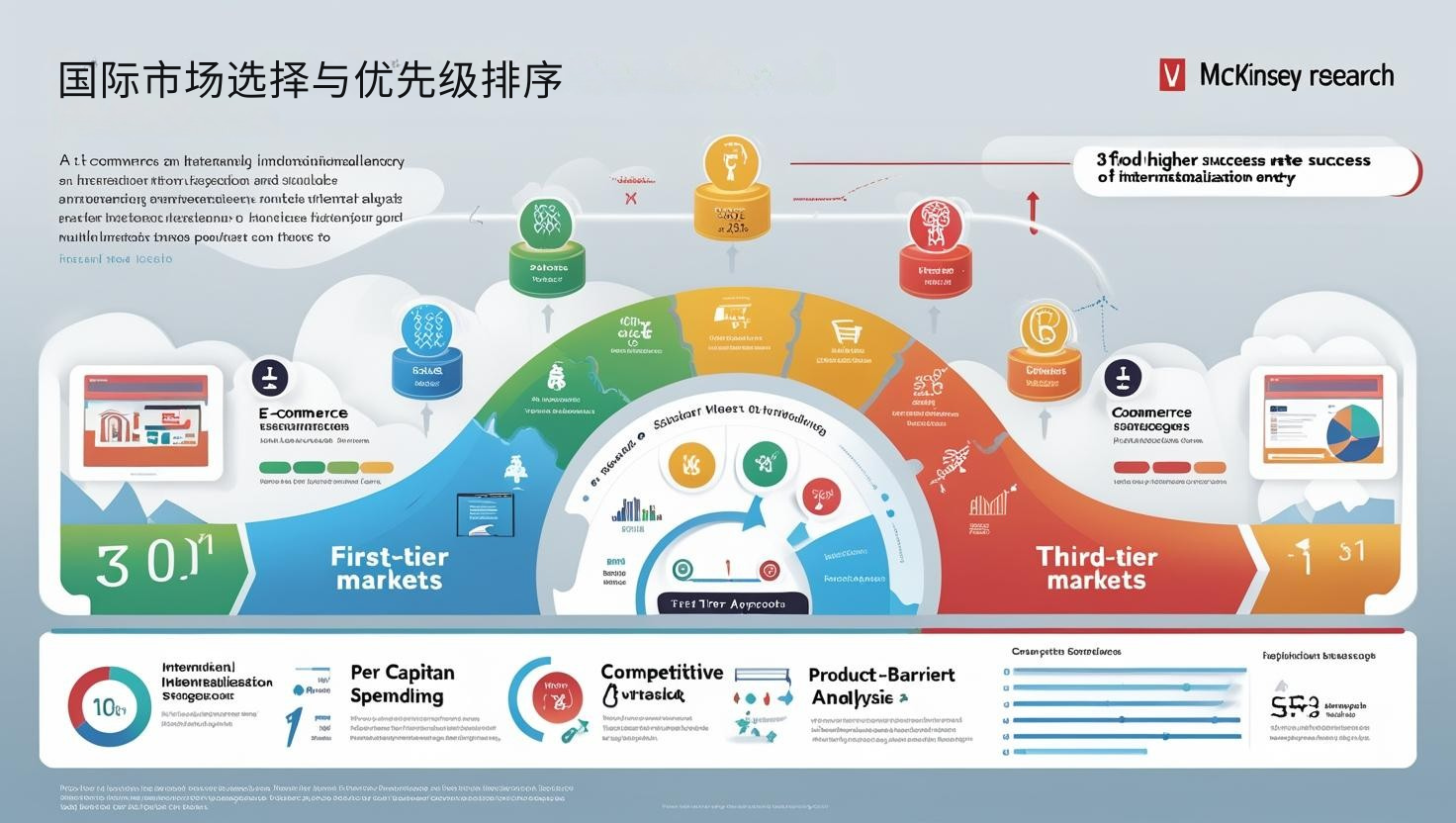
Successful internationalization begins with accurate market selection:

  1. Market Opportunity Assessment Framework:

    • Market Size and Growth Analysis: Use metrics such as e-commerce penetration and per capita online shopping expenditure
    • Competitive Landscape Assessment: Analyze the number of local competitors, market share, and differentiation opportunities
    • Product-Market Fit: Assess how well product features match the needs of target market consumers
    • Entry Barrier Analysis: Examine factors such as tariffs, regulatory requirements, and logistics challenges
  2. Market Segmentation Strategy:

    • First Tier Market: Culturally similar, Markets with developed e-commerce and mature logistics (such as expansion between English-speaking countries)
    • Second-tier markets: Moderately difficult to enter, requiring partial localization (such as continental Europe)
    • Third-tier markets: High-potential but challenging markets requiring deep localization (such as Asia or Latin America)
  3. Gradual Expansion Plan:

    • First establish a successful model in one or two first-tier markets
    • Improve replicable expansion processes and lessons learned
    • Gradually expand to more challenging markets, leveraging accumulated experience to mitigate risk

According to McKinsey research, e-commerce companies that adopt a phased internationalization strategy have a three times higher success rate than those that enter multiple markets all at once, and their return on investment is shortened by an average of 40%. Scientific market selection is the first step to successful internationalization.
Global Website Architecture and Localization Strategy

Global Website Architecture and Localization Strategy

Technical foundation determines international scalability:

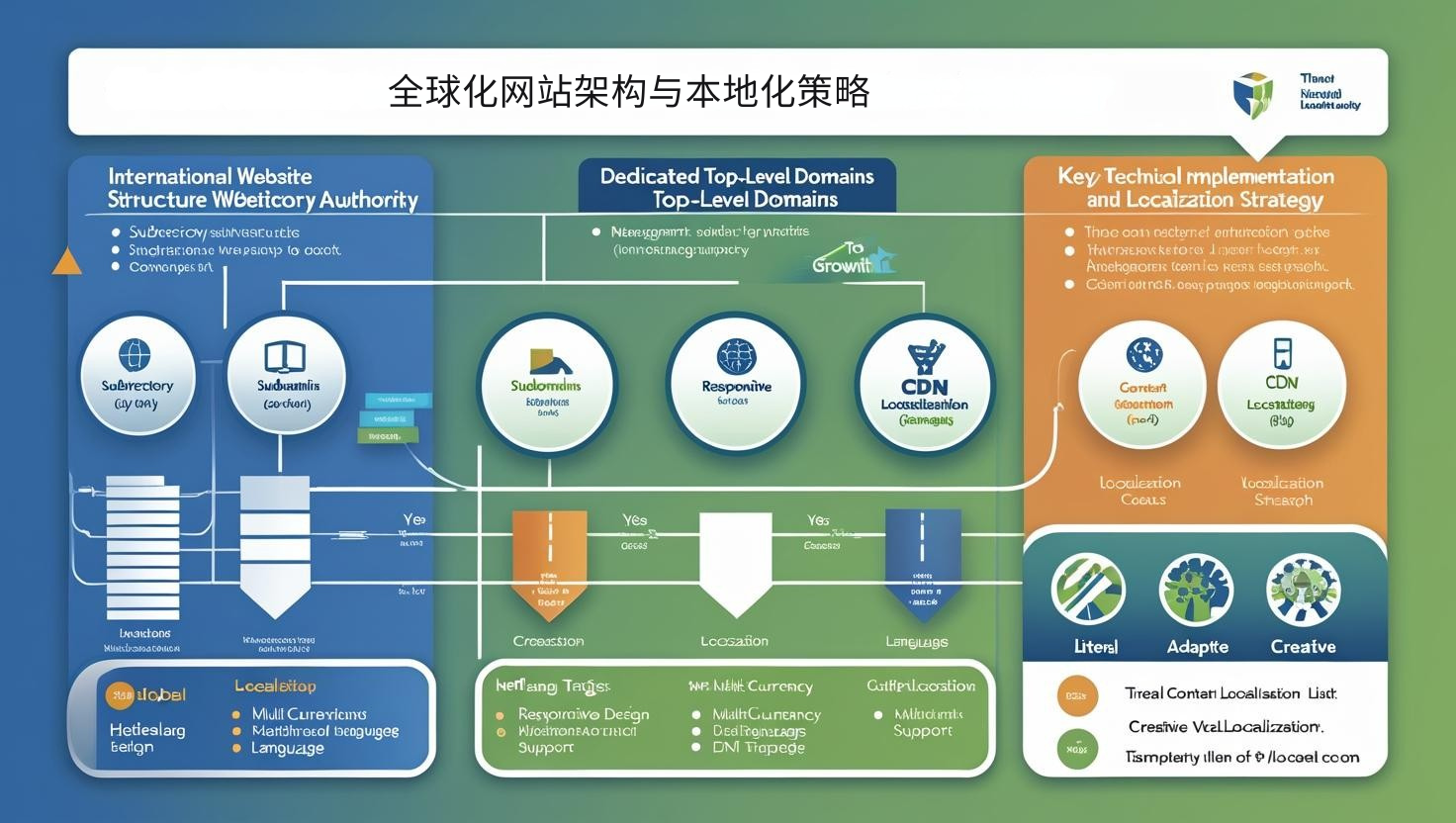
  1. International Website Architecture Selection:

    • Subdirectory structure (example.com/uk/): Shared SEO authority, simple management, suitable for initial expansion
    • Subdomain method (uk.example.com): Moderate differentiation, easy regional management
    • Independent top-level domain (example.co.uk): Highest local relevance, but with high costs and management complexity. ... Asking about speed
  2. In-depth Decision Making for Content Localization:

    • Literal Localization: Translate only the text, maintaining the overall structure (low cost, low impact)
    • Adaptive Localization: Adjust content structure, images, and case studies (medium cost, good impact)
    • Creative Localization: Recreate content based on local culture (high cost, best impact)
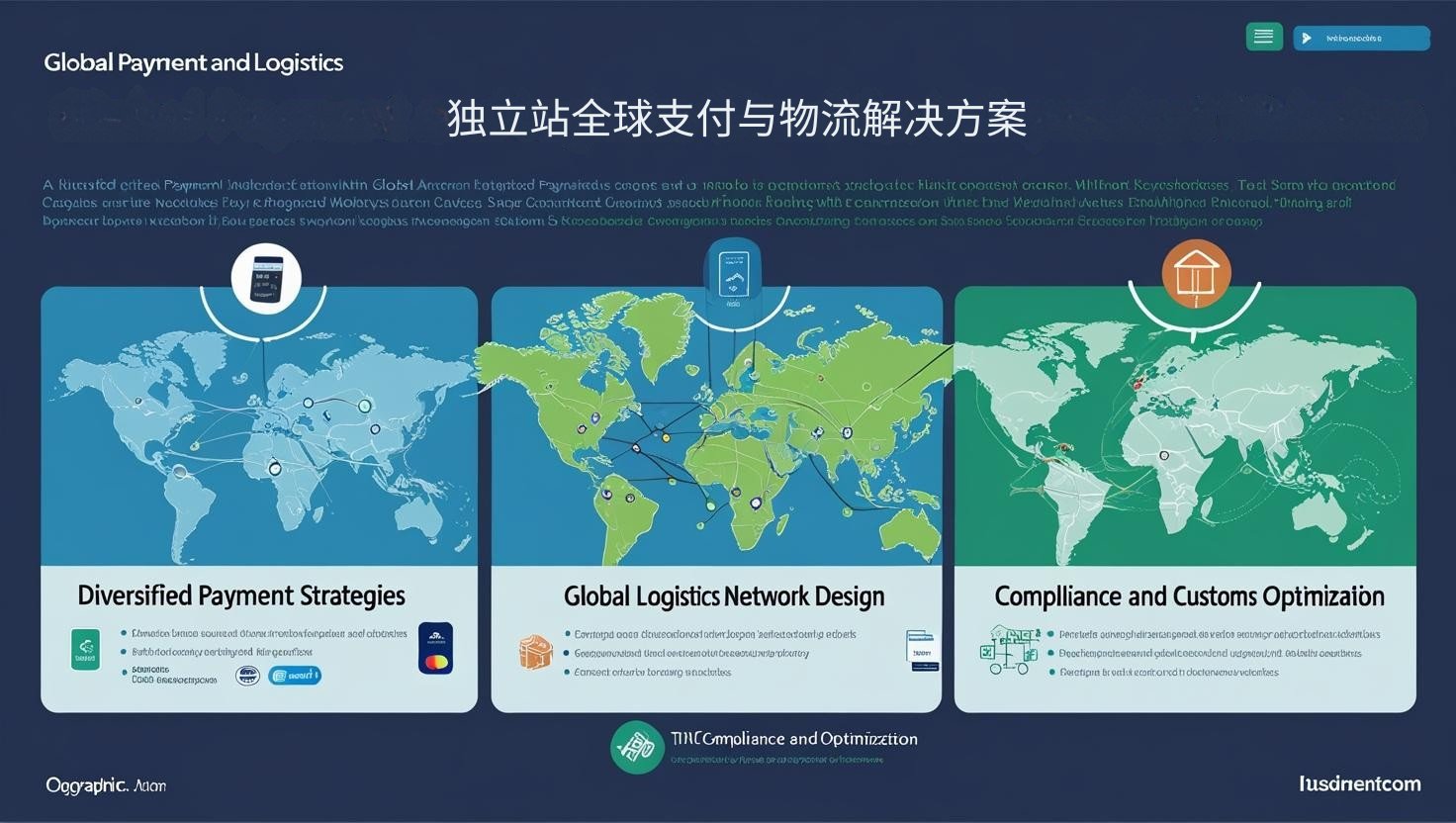
Global Payment and Logistics Solutions for Independent Websites

Global Payment and Logistics Solutions for Independent Websites

The core operational challenge of cross-border e-commerce lies in the payment and delivery experience:

  1. Diversified Payment Strategies:

    • Integrating mainstream regional payment methods: Europe (SEPA, Sofort), Asia (Alipay, LINE) Pay)
    • Implement intelligent payment routing to display relevant options based on user location
    • Consider exchange rate fluctuation strategies, such as dynamic pricing or fixed exchange rate periods
    • Ensure fraud protection systems adapt to international transaction patterns
  2. Global Logistics Network Design:

    • Build a multi-tiered distribution strategy: local warehousing in core markets, cross-border direct mail in secondary markets
    • Select specialized regional logistics partners to avoid single-source logistics Global logistics providers
    • Implement intelligent freight rate calculation and transparent tariff display
    • Design international return solutions that balance customer experience and costs
  3. Compliance and customs optimization:

    • Establish a product compliance database to record market-specific requirements
    • Optimize product descriptions and standardize HS codes to reduce customs clearance delays
    • Consider simplified customs procedures such as IOSS (EU) or Section 321 (US)
    • Implement an automated document generation system to ensure document accuracy

According to DHL's cross-border e-commerce research, 70% of shopping cart abandonment is related to delivery (high shipping costs, long delivery times, hidden fees), while merchants who adopt a localized delivery strategy have an average conversion rate that is 35% higher.
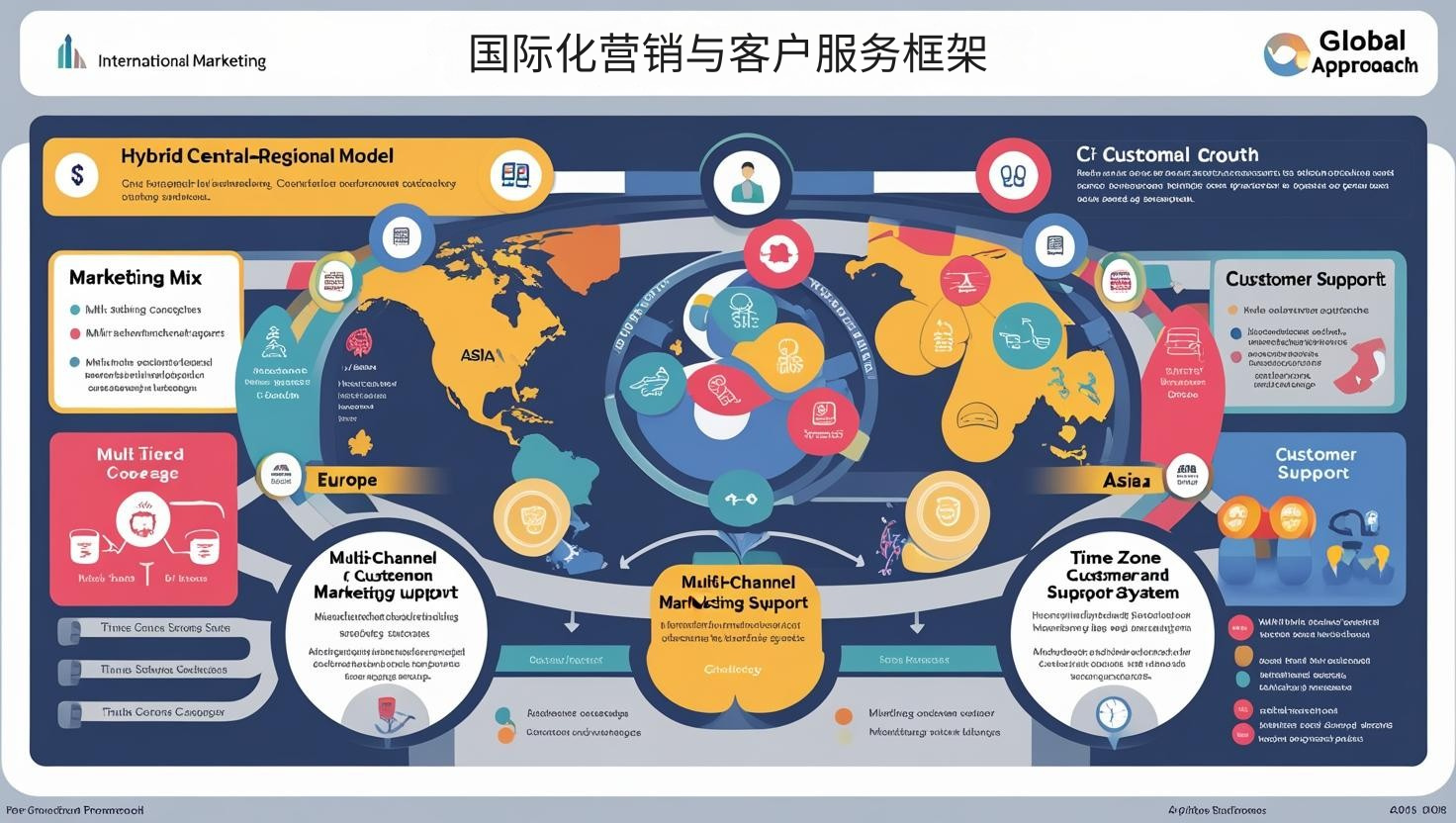
International Marketing and Customer Service Framework

International Marketing and Customer Service Framework

Effective international marketing requires balancing global consistency with local needs:

  1. Cross-marketing organizational structure:

    • Central-regional hybrid model: Centrally formulate core strategies, localize regional execution
    • Establish global brand guidelines and a list of adaptable elements
    • Establish a mechanism for cross-regional knowledge sharing and best practice transfer
    • Set independent KPIs for each market, taking into account differences in market maturity
  2. Multi-channel marketing mix:

    • Adjust channel investment based on regional differences: Europe and the United States (Google, Facebook), Asia (Brazil) (local search engines, social platforms)
    • Explore region-specific channels: price comparison sites, local content platforms, regional e-commerce festivals
    • Adjust marketing calendars to accommodate local shopping seasons and holidays
    • Establish a cross-market remarketing strategy to track global customers
  3. International Customer Service Model:

    • Build multi-tiered support: self-service FAQs, chatbots, and live customer service
    • Consider time zone coverage strategies: Follow the sun or strengthen during peak hours
    • Implement translation technology and multilingual knowledge bases
    • Establish local customer service standards to accommodate different cultural expectations

Through a systematic internationalization strategy, e-commerce brands can effectively mitigate expansion risks and accelerate global business growth. Remember, successful internationalization is a process of continuous learning and adaptation, not a one-time project. Start with small tests, continuously refine your operating model, and ultimately build a truly global business.

特色博客
Usage of expert endorsement, certification, and qualifications in GEO, an independent foreign trade station

Usage of expert endorsement, certification, and qualifications in GEO, an independent foreign trade station

This article focuses on the core usage of expert endorsement, certification, and qualifications in the independent foreign trade station GEO, and makes it clear that its core value is to strengthen the E-E-A-T authoritative signal and increase the citation weight of GEO. Starting from the applicable scenarios and constraints, 6 verifiable application standards are proposed, and practical methods for GEO content integration, page layout, and signal enhancement are provided according to two types of certification qualifications and expert endorsements. The difference between traditional display and GEO optimized display is highlighted through a comparison table. Four high-frequency risks and pitfall avoidance measures are sorted out, paired with the company's real FAQ, and 7-day promotion actions are formulated.

Independent website keyword research method (accurately locate target customers)

Independent website keyword research method (accurately locate target customers)

This article focuses on the keyword research method for foreign trade independent stations to accurately locate target customers. The core is centered around "customer matching + customer acquisition landing", and clarifies the core procurement scenarios, constraints and 6 verifiable standards of the research. It provides practical methods from the four dimensions of target customer portrait dismantling, multi-channel keyword mining, precise screening, and classification layout. Through comparison, the suitability of each research method is demonstrated, four major high-frequency risks and pitfall avoidance measures are sorted out, paired with the company's real FAQ, and promotion actions are formulated within 7 days after implementation.

How to improve GEO ranking using a question-and-answer structure

How to improve GEO ranking using a question-and-answer structure

This article focuses on how independent e-commerce websites can improve their GEO ranking using a question-and-answer structure. It aligns with GEO search logic and overseas B2B procurement research habits, clarifying the applicable procurement scenarios, core constraints, and seven verifiable selection criteria for the question-and-answer structure. Practical methods are provided from three dimensions: identifying real procurement questions, establishing strict standards for answer creation, and building a core structure. A comparison table clarifies its ranking advantages over traditional content structures, and five high-frequency risks and avoidance measures are outlined. Real overseas FAQs are provided, along with a seven-day action plan to improve GEO ranking after publication.

How to improve GEO ranking using a question-and-answer structure

How to improve GEO ranking using a question-and-answer structure

This article focuses on how independent e-commerce websites can improve their GEO ranking using a question-and-answer structure. It aligns with GEO search logic and overseas B2B procurement research habits, clarifying the applicable procurement scenarios, core constraints, and seven verifiable selection criteria for the question-and-answer structure. Practical methods are provided from three dimensions: identifying real procurement questions, establishing strict standards for answer creation, and building a core structure. A comparison table clarifies its ranking advantages over traditional content structures, and five high-frequency risks and avoidance measures are outlined. Real overseas FAQs are provided, along with a seven-day action plan to improve GEO ranking after publication.

Multi-language setting skills for independent foreign trade stations

Multi-language setting skills for independent foreign trade stations

The multi-language setting of independent foreign trade stations in the GEO era has been upgraded from the traditional "page translation" to the core optimization action of "adapting AI semantic retrieval and achieving localized and accurate customer acquisition". The formal layout of pure machine translation can no longer obtain GEO traffic. Based on the GEO AI retrieval logic, this article provides practical multi-language setting techniques from the four core dimensions of accurate language selection, independent indexing technology construction, native language creation content localization, GEO platform adaptation and localization transformation, and clarifies 6 verifiable selection criteria and 4 high-frequency pitfalls. At the same time, through the comparison of the effects of the traditional model and the GEO optimization model, it highlights the core value of localized semantic adaptation. Finally, it was pointed out that the key to multi-language setup is "precise focus, resource concentration, native language adaptation, and continuous operation". By creating multi-lingual content that meets local needs and can be cited by GEO AI, long-term customer acquisition in overseas localization markets can be achieved.

Long content vs. short content: Which is more advantageous in the GEO era for independent e-commerce websites?

Long content vs. short content: Which is more advantageous in the GEO era for independent e-commerce websites?

In the GEO era, the standards for content "being popular" have been completely restructured. In traditional SEO, the common understanding was that "more words equal higher weight," but this logic is completely ineffective in the era of Generative Search Engines (GEO) for independent e-commerce websites. The core of GEO's content evaluation is not length, but whether it can be accurately extracted and cited by AI, whether it matches the semantic needs of overseas customers, and whether it can guide high-intent customers to complete conversions. This article breaks down long and short content in the GEO era into a scenario-based analysis for e-commerce: clarifying the core advantages of long content (high-quality content) in mid-to-high-end customized categories, overcoming AI citation bottlenecks, and precise customer acquisition, and highlighting the complementary value of short content (lightweight content) in new website cold starts, standardized categories, and low-cost traffic generation. Ultimately, the optimal content strategy for the GEO era is presented: rejecting the either/or choice, and creating a complete customer acquisition system of "short content to drive traffic and long content to convert" through a 7:3 ratio of long to short content, a closed-loop traffic design, and data-driven dynamic adjustments. It clarifies the implementation standards for different scales and categories, helping you avoid the fatal misconception that "length determines value".