In March 2026, AI sourcing and AI search became the mainstream methods for overseas buyers to obtain information. Accurate identification, stable indexing, and frequent recommendations of independent websites by ChatGPT are crucial for foreign trade enterprises to acquire incremental inquiries. The core goal of GEO (Generative Engine Optimization) is to enable AI crawlers to smoothly crawl and correctly understand website information and include brands in a trusted recommendation library. A suitable GEO tool can improve optimization efficiency several times over, avoiding blind operations. This article recommends suitable GEO tools for foreign trade independent websites according to the practical link of "monitoring—optimization—structuring—technical support." Each tool is labeled with its purpose, usage, and authoritative basis to help you quickly improve AI indexing and exposure efficiency.

I. Official and authoritative tools: Ensure AI can properly crawl and index content (essential basic tools)
These tools are provided by AI platforms and search engines, with the most accurate data and the most authoritative rules. They are the underlying guarantee for GEO optimization and are mainly used to detect whether GPTBot and Google AI crawlers can access the site normally and whether there are any crawling obstacles.
1. OpenAI GPTBot Official Detection and Configuration Tool
As the official crawler for ChatGPT, GPTBot's ability to successfully access the site directly determines whether AI will include your independent website. OpenAI provides complete GPTBot instructions and a detection entry point, which can be used to verify whether the site allows crawling, whether it is blocked, and whether the pages can be read by AI. You can check the User-Agent, configure rules, and view the crawling status through the official documentation to ensure that core pages are not mistakenly blocked, which is the first prerequisite for GEO optimization. Reference: https://openai.com/gptbot
2. Google Search Console (GSC) AI Search Data Panel
In 2026, Google fully opened up its AI Overview and AI Search data. GSC can directly view a site's display, clicks, and crawl anomalies in Google AI, helping you identify which pages are prioritized by AI and which pages cannot be recognized due to structural issues. For independent e-commerce websites, GSC also supports multi-regional and multi-language AI traffic splitting, accurately judging the AI exposure effect in different markets. Reference: https://search.google.com/search-console
3. Dark Visitors AI Crawler Monitoring Tool
It can identify and count AI crawlers (including GPTBot, ClaudeBot, GoogleBot AI, etc.) visiting a site in real time, displaying crawling frequency, access path, and abnormal interception records. It is suitable for investigating the real reasons why "AI does not collect" such as frequent 403 errors, loading timeouts, and permission blocking. The data is intuitive and requires no complicated configuration. Reference: https://darkvisitors.com
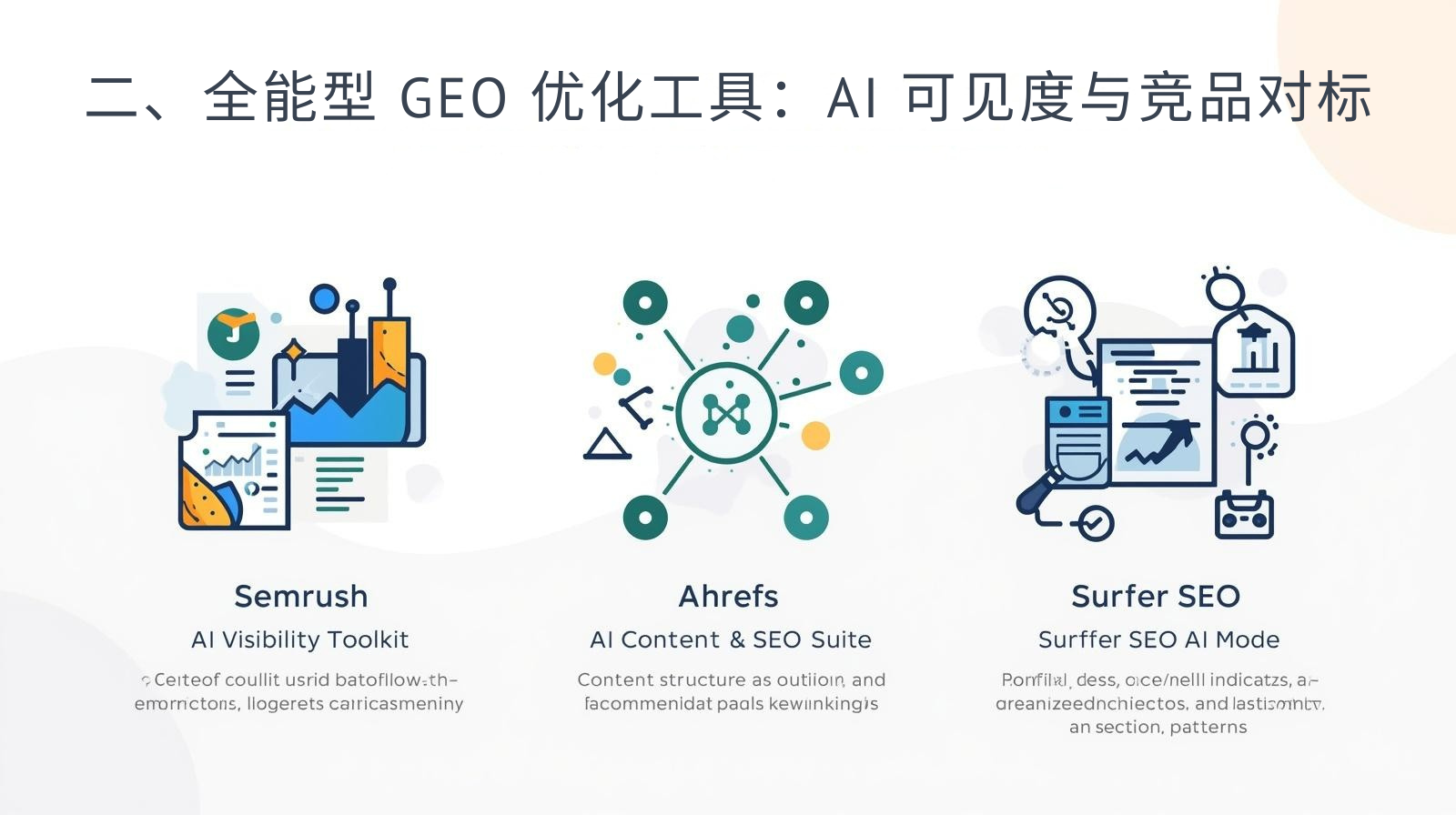
II. Comprehensive GEO Optimization Tool: AI Visibility and Competitor Benchmarking (Main Recommendation)
These tools cover the entire process of AI inclusion monitoring, keyword intent, semantic optimization, and competitor comparison. They are the main tools for independent foreign trade websites to achieve GEO (Growth Objective) and are suitable for daily optimization and performance tracking.
1. Semrush AI Visibility Toolkit
In 2026, Semrush underwent a comprehensive upgrade to its AI optimization module, supporting the monitoring of brand visibility scores on mainstream AI platforms such as ChatGPT, Google AI, and Perplexity. It can track the exposure frequency, citation rate, and ranking position of core keywords in AI answers, while providing semantic optimization suggestions and competitor AI strategy analysis. It is the most widely used GEO all-in-one tool in overseas markets. Reference: https://zh.semrush.com/kb/1493-ai-visibility-toolkit
2. Ahrefs AI Content & SEO Suite
It excels in analyzing the authority of external links and content structure, and can detect whether site content matches AI's understanding preferences. It can identify problems such as missing page structure, unclear intent, and insufficient trust signals, and provides multilingual content optimization directions. It is suitable for B2B foreign trade independent websites to enhance their professionalism and credibility and increase the probability of AI recommendation. Reference: https://ahrefs.com
3. Surfer SEO AI Mode
Focusing on the alignment between content and AI, it can generate suggestions for page structure, title hierarchy, and paragraph semantic density based on AI recommendation logic, and automatically align with common questions from overseas buyers, making product pages and blog pages more likely to be extracted as authoritative answers by ChatGPT. It is simple to operate and quick to show results. Reference: https://surferseo.com
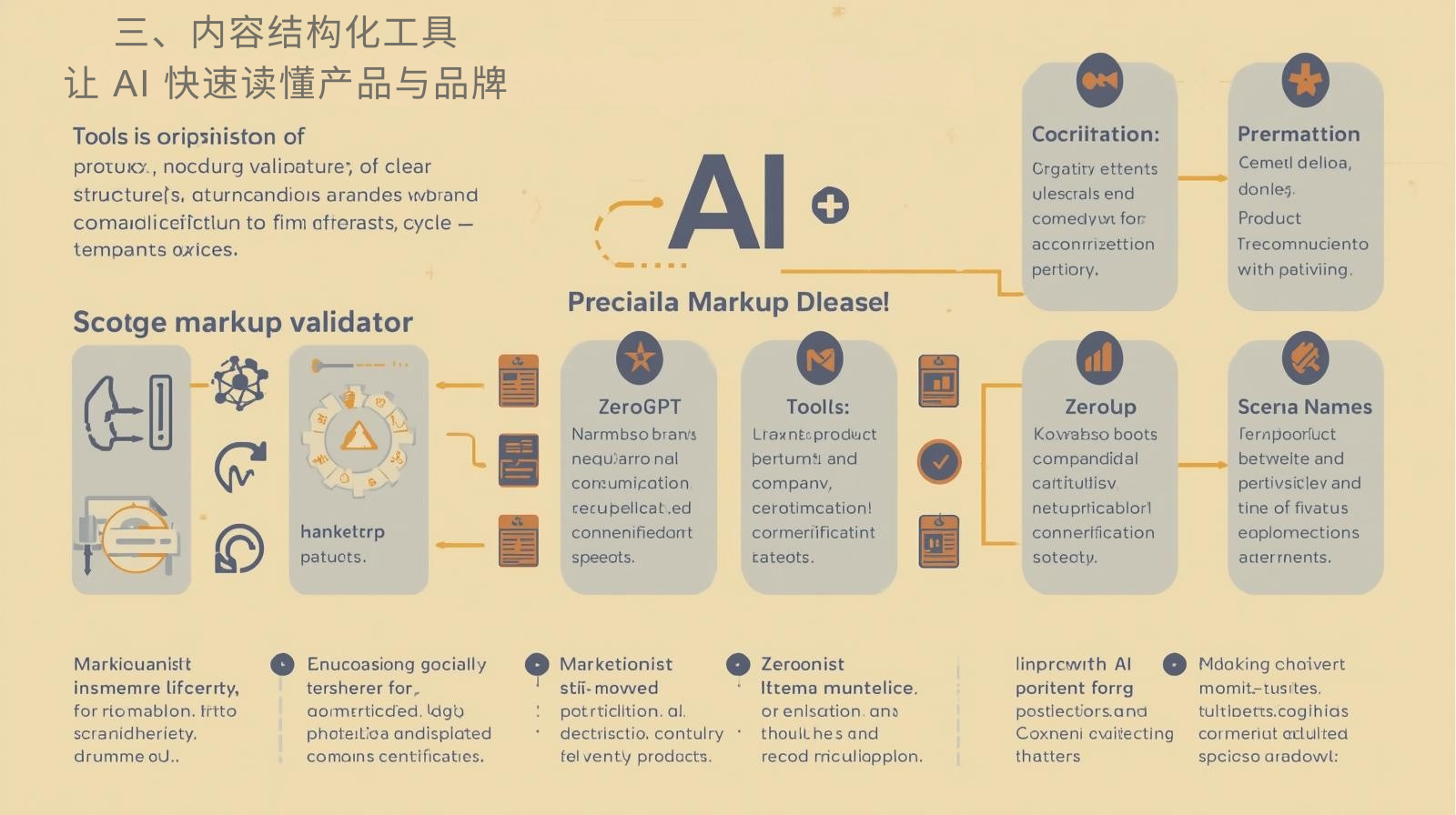
III. Content Structuring Tools: Enabling AI to Quickly Understand Products and Brands (Precision and Efficiency Improvement)
AI prioritizes content with clear structure, standardized information, and verifiability. Structured tools can organize product parameters, company information, and certification qualifications into a format that is easy for AI to read, significantly improving the speed of inclusion and the accuracy of recommendations.
1. Schema Markup Validator (Google's official structured data testing tool)
This tool is used to check whether structured data such as products, organizations, FAQs, and certifications are correctly added to a page, ensuring that AI can accurately extract key information such as brand name, product model, material, certification, price, and delivery cycle. It is an essential verification tool to improve the efficiency of AI recognition. Reference: https://validator.schema.org
2. Marketoonist AI Semantic Structure Generation Tool
Generate product descriptions, company introductions, and FAQs that conform to AI reading habits based on foreign trade industry templates. Automatically align with frequently asked questions from overseas buyers, avoid colloquial and fragmented expressions, and make the page information easier for ChatGPT to organize into recommended answers.
3. ZeroGPT Content Credibility Detection
This tool is used to check whether content is excessively AI-generated, logically loose, or factually ambiguous, helping you adjust your content to more credible and AI-adoptable professional language, thereby improving your site's trust score in the AI model. Reference: https://www.zerogpt.com
IV. Site Technical Optimization Tools: Ensuring AI Crawling Speed and Stability (Underlying Support)
AI crawlers have higher requirements for site loading speed, access stability, and mobile adaptation. Technical tools are used to remove crawling obstacles, allowing AI crawlers such as GPTBot to smoothly crawl the entire site content.
1. Google PageSpeed Insights
The official page speed testing tool provides direct suggestions on AI crawler friendliness, including optimization points such as loading time, resource compression, and rendering congestion. Meeting the page speed standard can significantly improve the AI's indexing priority, making it especially suitable for overseas markets such as Europe and the United States. Reference: https://pagespeed.web.dev
2. Cloudflare Crawler Management and Acceleration
It supports setting exclusive access rules for GPTBot and GoogleBot AI to avoid accidental blocking, while providing global CDN acceleration to reduce the latency of overseas AI crawlers and improve the overall crawling coverage and speed. Reference: https://www.cloudflare.com
3. Hotjar Page Behavior Analysis
It is used to view user dwell time, clicks, and scrolling data, and to optimize the page structure in reverse, making core information more prominent. This not only improves conversion rates but also makes it easier for AI to locate key content, indirectly enhancing the AI's willingness to make recommendations. Reference: https://www.hotjar.com
Recommended Article: Your Competitors Haven't Reacted Yet: Building an Independent E-commerce Website with GEO is the Biggest Blue Ocean Strategy Right Now
V. Tools + High-Quality Websites for More Stable GEO Results
GEO tools can significantly improve optimization efficiency, but the final effect still depends on the underlying architecture of the independent website: loading speed, structural specifications, multi-language adaptation, and global access stability, which directly determine whether the AI crawler is willing to include the site in its index for a long time and recommend it frequently.
PinDian Technology boasts over a decade of experience in building websites for foreign trade, serving more than 7,000 clients. Utilizing React technology to construct independent websites, it offers smoother page rendering and a more seamless browsing experience. Supporting server-side rendering (SSR) and global CDN acceleration, it natively adapts to AI crawler rules such as GPTBot, and features built-in structured data templates and AI traffic statistics capabilities. This ensures your independent website is fundamentally more aligned with GEO optimization requirements. Combined with the tools mentioned above, it can accelerate AI indexing and increase exposure.
In 2026, competition for AI-driven customer acquisition will intensify. Utilizing GEO tools effectively and choosing the right website building platform are crucial to ensuring your brand consistently appears in AI search results such as ChatGPT, thereby continuously acquiring accurate overseas inquiries.