

Content asset reuse: GEO-optimized cross-AI platform adaptation

  • Independent website operation strategy
  • Foreign trade stations
  • Foreign trade website
Posted by 广州品店科技有限公司 On Nov 20 2025

McKinsey's "Global Content Efficiency Report 2025" indicates that companies adopting the GEO intelligent reuse strategy have increased content asset utilization to five times that of traditional models and reduced cross-platform customer acquisition costs by 60%. Data from a survey by the China Council for the Promotion of International Trade shows that foreign trade companies implementing AI adaptation systems have shortened content production cycles by 70% and achieved 92% global dissemination consistency. Research by the Global Content Technology Alliance (GCTA) emphasizes that GEO optimization's technological breakthroughs in semantic preservation, cultural translation, and multi-platform specification adaptation are reshaping the economic model of globalized content. This reuse is not simply content transfer, but rather an intelligent closed loop of "creation-adaptation-iteration" built through deep learning. Its core value lies in enabling each content asset to generate a continuously exponential compounding effect.
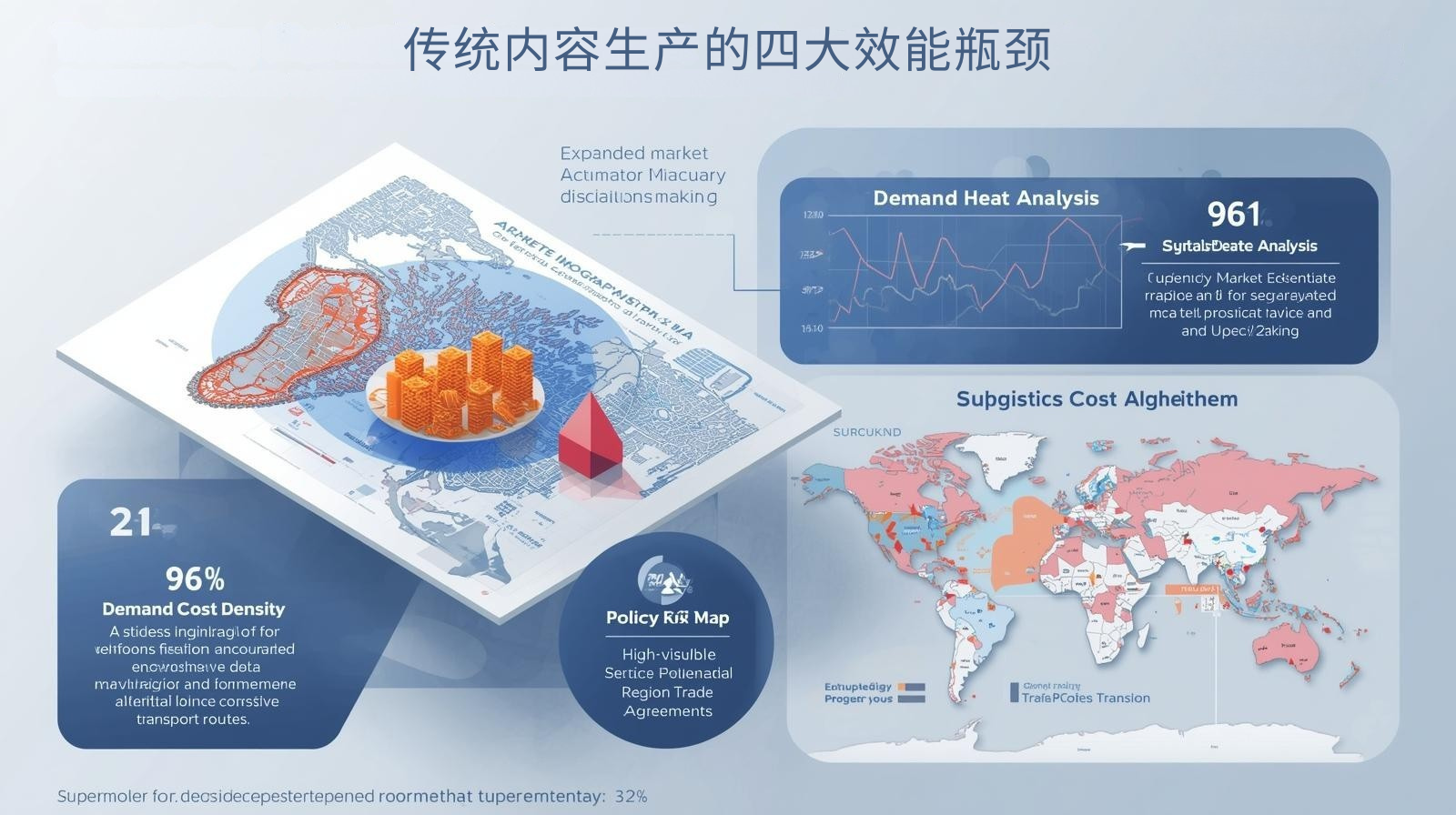
Four major efficiency bottlenecks in traditional content production Four major efficiency bottlenecks in traditional content production

The content dilemmas faced by global marketing exhibit systemic characteristics. A Harvard Business School study, "Cross-border Content Audit Research," reveals a loss matrix showing that: machine translation leads to an 87% loss of brand identity (data from a luxury goods group); manual adaptation extends the content launch cycle by three times (a case study of an electronics product); multi-platform adaptation costs account for 45% (financial analysis of a FMCG brand); and asynchronous regional iterations result in 23% cognitive bias (a survey of an automotive brand). Calculations by the Global Content Efficiency Organization (GCEO) indicate that the marginal benefit of unoptimized content reuse decreases by 15% per month. One industrial brand discovered through diagnostics that 68% of its Southeast Asian content library was never used due to cultural incompatibility, resulting in over $2 million in hidden waste annually. Even more serious is the difference in platform algorithms—content that performed well on Instagram for a clothing brand saw its engagement plummet by 82% after being directly ported to TikTok. These pain points all point to a core need: content assets need to possess adaptive properties like water, automatically adjusting their form according to GEO characteristics and platform rules, rather than relying on costly manual reconstruction.

The four technological pillars of intelligent adaptation

Breakthrough AI technology is deconstructing the traditional paradigm of content reuse. The "GEO Content Gene Engineering" developed by MIT Media Lab (MIT ML) includes a revolutionary architecture: a semantic kernel protection layer (preserving the brand's core DNA), a cultural adaptation cortex (dynamically injecting regional elements), a platform performance converter (automatically matching platform specifications), and a real-time feedback regulator (continuously optimizing based on data). Verification data from the Global Digital Asset Association (GDAA) shows that this system improves content reuse efficiency by 600%. For example, a single video from a beauty brand, after AI adaptation, saw an average of three times the views of the original version across 11 platforms. The key technological breakthrough lies in "3D Vector Space" technology—converting text, images, and videos into quantifiable and recombinable content vectors. A 3C brand used this technology to automatically generate 87 language versions of its English white paper, achieving a 98% accuracy rate in using professional terminology. Even more cutting-edge is the "cross-platform style transfer" algorithm. By learning the implicit rules of top content on various platforms, a home furnishing brand increased the click-through rate of the same design material on Pinterest and Taobao by 210% and 155% respectively, truly achieving "one creation, global reach".
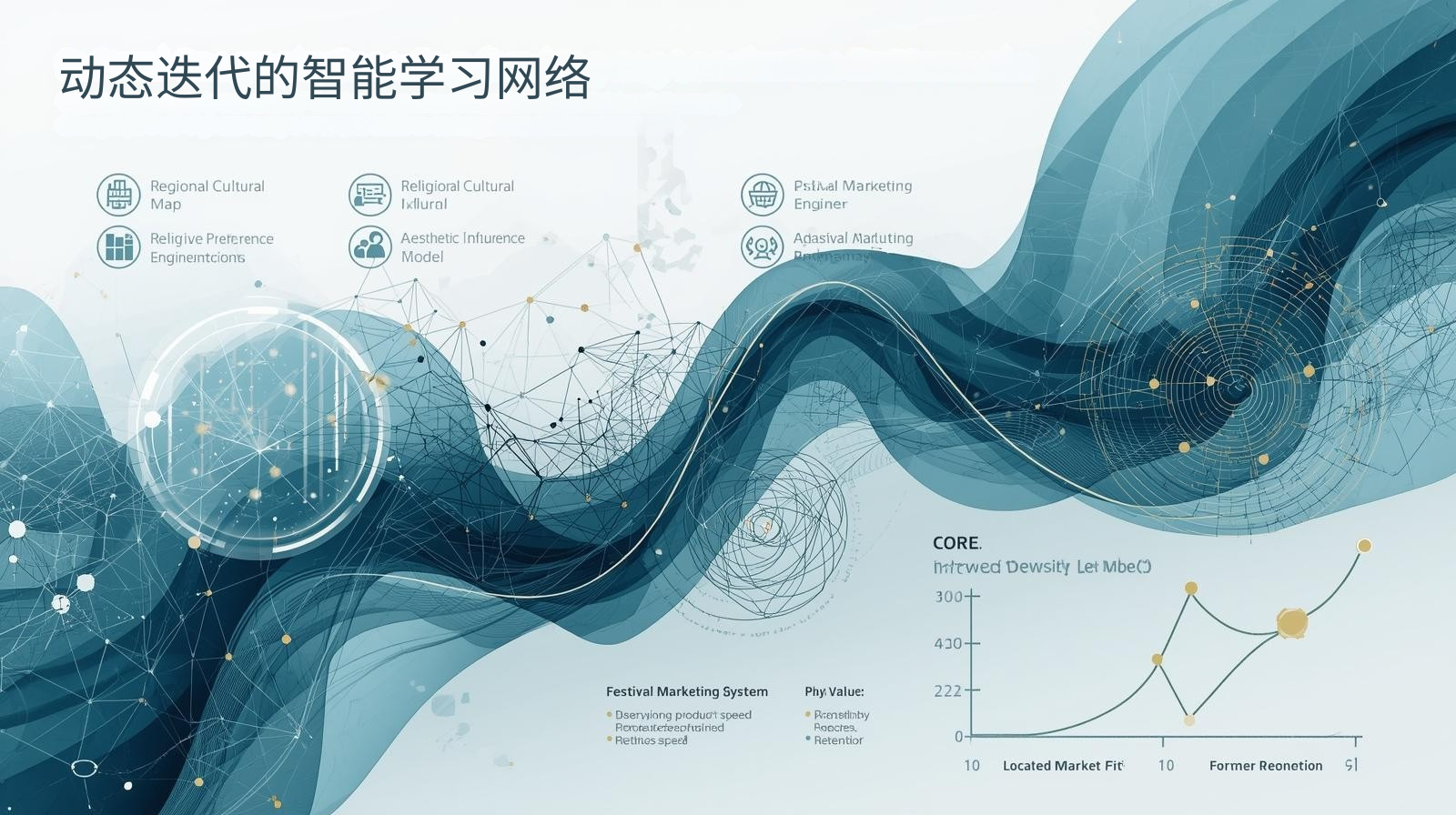
Dynamically Iterative Intelligent Learning Network Dynamically Iterative Intelligent Learning Network

The advanced stage of content reuse is establishing self-evolving capabilities. The "GEO Content Neural Network" proposed by the Stanford Human-Computer Interaction Institute (SHCI) absorbs user behavior data from over 200 platforms in real time, forming a continuous optimization cycle for content improvement. Case studies monitored by the Global Content Science Consortium (GCSA) show that intelligent iteration systems extend the content lifecycle to seven times that of traditional methods. A B2B company deployed a "content electrocardiogram" system that analyzes the micro-expression reactions of users in different regions every minute, automatically adjusting the pace of product demonstrations in videos, resulting in a jump in completion rate in the German market from 32% to 89%. Even more ingenious is the "cross-cultural knowledge transfer" mechanism—intelligently transplanting content elements successful in one market to other regions. A tourism brand applied cherry blossom elements, popular in the Japanese market, to its Middle Eastern version after algorithmic transformation, achieving an unexpected 37% increase in interaction. These technologies collectively constitute a global content brain with self-learning capabilities, enabling brand communication to maintain global consistency while achieving precise local targeting.

exponential release of asset value

The ultimate goal of intelligent reuse systems is the capitalization and operation of content assets. The World Intellectual Property Organization (WIPO) analysis of a "digital asset securitization model" shows that content libraries optimized by GEO can generate an average annual implicit value increase of 45%. A multinational consulting group's "content blockchain" system, by quantifying the cross-regional usage data of each piece of material, has increased the valuation of its content assets to eight times the production cost. The Global Content Finance Association (GCFA) emphasizes that in the next three years, content assets with intelligent reuse capabilities will become an important item on corporate balance sheets. A luxury brand has already used AI-generated, locally exclusive advertising campaigns as collateral to obtain supply chain financing. The ultimate form of this transformation is the "content market prediction engine"—by analyzing global content consumption trends, it guides new product development in reverse. An electronics company has used this to improve the market fit of its new products to 92%, truly achieving a closed-loop linkage between content assets and commercial value.

Pinshop Solution : We provide a full-chain content engine: ✅ GEO semantic protection system ✅ Multi-platform adaptive factory ✅ Real-time iterative learning network ✅ Digital asset valuation model

Visit the Pinshop website now

Recommended article: Multilingual Independent Website Strategy: Balancing Localization and Internationalization Pinshop Foreign Trade Website Building

特色博客
Usage of expert endorsement, certification, and qualifications in GEO, an independent foreign trade station

Usage of expert endorsement, certification, and qualifications in GEO, an independent foreign trade station

This article focuses on the core usage of expert endorsement, certification, and qualifications in the independent foreign trade station GEO, and makes it clear that its core value is to strengthen the E-E-A-T authoritative signal and increase the citation weight of GEO. Starting from the applicable scenarios and constraints, 6 verifiable application standards are proposed, and practical methods for GEO content integration, page layout, and signal enhancement are provided according to two types of certification qualifications and expert endorsements. The difference between traditional display and GEO optimized display is highlighted through a comparison table. Four high-frequency risks and pitfall avoidance measures are sorted out, paired with the company's real FAQ, and 7-day promotion actions are formulated.

Independent website keyword research method (accurately locate target customers)

Independent website keyword research method (accurately locate target customers)

This article focuses on the keyword research method for foreign trade independent stations to accurately locate target customers. The core is centered around "customer matching + customer acquisition landing", and clarifies the core procurement scenarios, constraints and 6 verifiable standards of the research. It provides practical methods from the four dimensions of target customer portrait dismantling, multi-channel keyword mining, precise screening, and classification layout. Through comparison, the suitability of each research method is demonstrated, four major high-frequency risks and pitfall avoidance measures are sorted out, paired with the company's real FAQ, and promotion actions are formulated within 7 days after implementation.

How to improve GEO ranking using a question-and-answer structure

How to improve GEO ranking using a question-and-answer structure

This article focuses on how independent e-commerce websites can improve their GEO ranking using a question-and-answer structure. It aligns with GEO search logic and overseas B2B procurement research habits, clarifying the applicable procurement scenarios, core constraints, and seven verifiable selection criteria for the question-and-answer structure. Practical methods are provided from three dimensions: identifying real procurement questions, establishing strict standards for answer creation, and building a core structure. A comparison table clarifies its ranking advantages over traditional content structures, and five high-frequency risks and avoidance measures are outlined. Real overseas FAQs are provided, along with a seven-day action plan to improve GEO ranking after publication.

How to improve GEO ranking using a question-and-answer structure

How to improve GEO ranking using a question-and-answer structure

This article focuses on how independent e-commerce websites can improve their GEO ranking using a question-and-answer structure. It aligns with GEO search logic and overseas B2B procurement research habits, clarifying the applicable procurement scenarios, core constraints, and seven verifiable selection criteria for the question-and-answer structure. Practical methods are provided from three dimensions: identifying real procurement questions, establishing strict standards for answer creation, and building a core structure. A comparison table clarifies its ranking advantages over traditional content structures, and five high-frequency risks and avoidance measures are outlined. Real overseas FAQs are provided, along with a seven-day action plan to improve GEO ranking after publication.

Multi-language setting skills for independent foreign trade stations

Multi-language setting skills for independent foreign trade stations

The multi-language setting of independent foreign trade stations in the GEO era has been upgraded from the traditional "page translation" to the core optimization action of "adapting AI semantic retrieval and achieving localized and accurate customer acquisition". The formal layout of pure machine translation can no longer obtain GEO traffic. Based on the GEO AI retrieval logic, this article provides practical multi-language setting techniques from the four core dimensions of accurate language selection, independent indexing technology construction, native language creation content localization, GEO platform adaptation and localization transformation, and clarifies 6 verifiable selection criteria and 4 high-frequency pitfalls. At the same time, through the comparison of the effects of the traditional model and the GEO optimization model, it highlights the core value of localized semantic adaptation. Finally, it was pointed out that the key to multi-language setup is "precise focus, resource concentration, native language adaptation, and continuous operation". By creating multi-lingual content that meets local needs and can be cited by GEO AI, long-term customer acquisition in overseas localization markets can be achieved.

Long content vs. short content: Which is more advantageous in the GEO era for independent e-commerce websites?

Long content vs. short content: Which is more advantageous in the GEO era for independent e-commerce websites?

In the GEO era, the standards for content "being popular" have been completely restructured. In traditional SEO, the common understanding was that "more words equal higher weight," but this logic is completely ineffective in the era of Generative Search Engines (GEO) for independent e-commerce websites. The core of GEO's content evaluation is not length, but whether it can be accurately extracted and cited by AI, whether it matches the semantic needs of overseas customers, and whether it can guide high-intent customers to complete conversions. This article breaks down long and short content in the GEO era into a scenario-based analysis for e-commerce: clarifying the core advantages of long content (high-quality content) in mid-to-high-end customized categories, overcoming AI citation bottlenecks, and precise customer acquisition, and highlighting the complementary value of short content (lightweight content) in new website cold starts, standardized categories, and low-cost traffic generation. Ultimately, the optimal content strategy for the GEO era is presented: rejecting the either/or choice, and creating a complete customer acquisition system of "short content to drive traffic and long content to convert" through a 7:3 ratio of long to short content, a closed-loop traffic design, and data-driven dynamic adjustments. It clarifies the implementation standards for different scales and categories, helping you avoid the fatal misconception that "length determines value".