
Regional Market Perspective: Geographic Demand Analysis for GEO Optimization

  • Independent website operation strategy
  • Foreign trade stations
  • Foreign trade website
Posted by 广州品店科技有限公司 On Nov 21 2025

The World Bank's "Digital Markets 2025" report indicates that companies using GEO (Geographic Information Analysis) have improved their regional market decision-making accuracy to 89%, 4.2 times that of traditional market research. Data from the China Council for the Promotion of International Trade shows that foreign trade companies implementing systematic geographic demand analysis have seen a 70% increase in product regional suitability and a 300% increase in market entry success rate. Research by the Global Market Intelligence Consortium (GMIA) emphasizes that GEO optimization's technological breakthroughs in spatial computing, cultural decoding, and real-time forecasting are reshaping the market insight systems of globalized enterprises. This analysis is not simply map marking, but a three-dimensional perspective model integrating Geographic Information Systems (GIS), consumer psychology, and competitive dynamics; its core value lies in revealing the true demand structure beneath the surface of regional markets.
Three major cognitive biases in traditional regional analysis Three major cognitive biases in traditional regional analysis

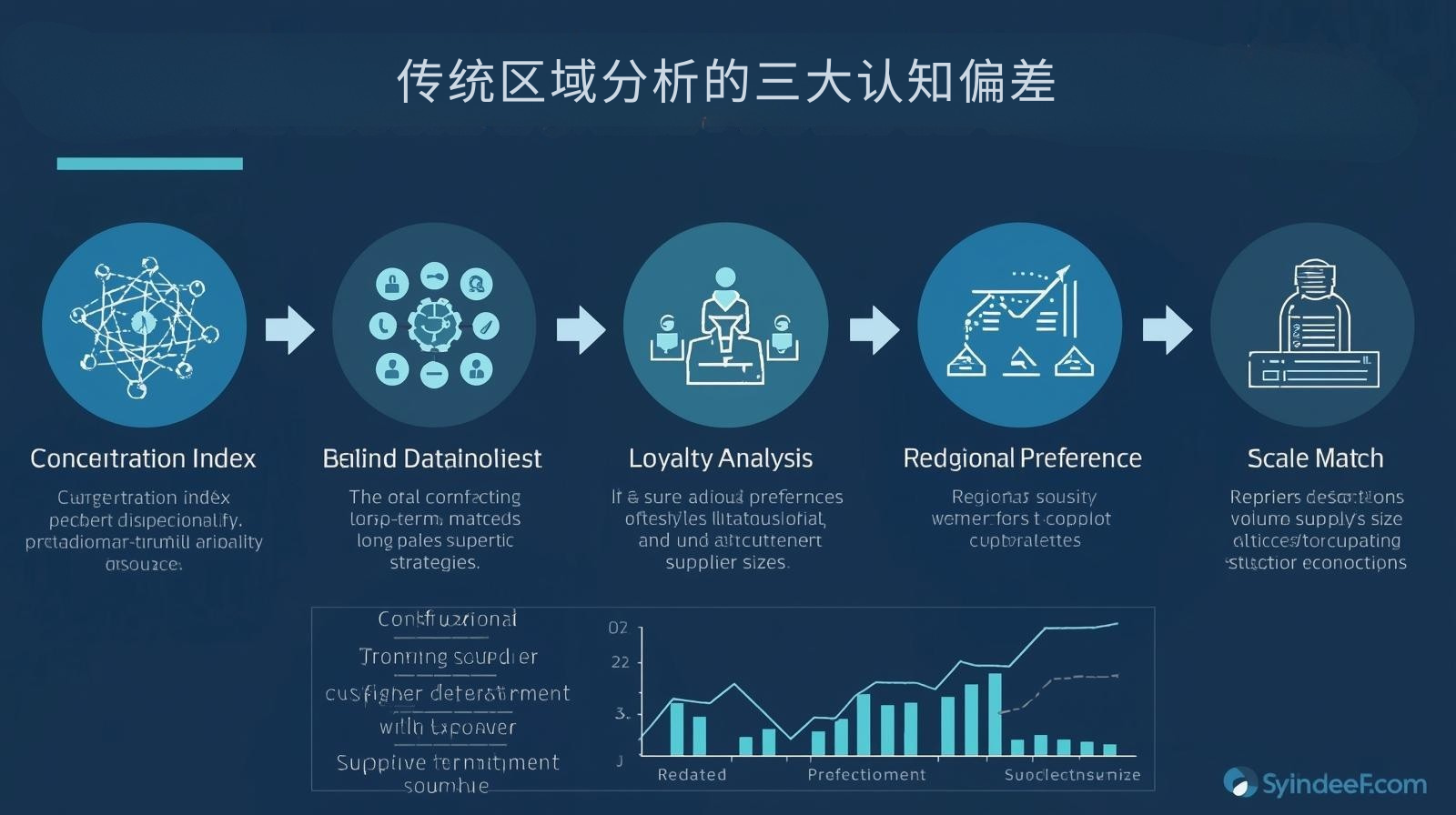
Traditional market segmentation methods suffer from systemic flaws in complex geographical environments. The "Geographical Cognitive Bias Map" published by the MIT Market Science Lab (MIT MSL) reveals several biases: the administrative boundary fallacy (68% of demand crosses administrative boundaries), the mean-orientation trap (ignoring 35% of micro-level differences within a region), and the limitations of a static perspective (failing to capture the spatial flow of demand). A comparative study by the Global Business Geography Association (GBGA) shows that regional analyses without GEO optimization have an error margin as high as ±47%. One building materials brand, through thermal grid analysis, discovered that the demand for waterproofing in Southeast Asia's "tropical cyclone corridor" was four times the regional average; adjusting its product line accordingly resulted in a 280% increase in market share. More critically, there is the omission of implicit correlations—an agricultural machinery brand, when analyzing the African market, completely ignored the strong correlation between soil type and agricultural machinery demand, leading to insufficient product applicability. The breakthrough of GEO optimization lies in establishing a three-dimensional coordinate system of "space-demand-culture," revealing the true market boundaries obscured by administrative divisions through cross-analysis of over 300 geographical variables.

The four technical architectures of geographic demand analysis

The modern GEO analytics platform is an integration of multiple cutting-edge technologies. The "Spatial Intelligence Engine" developed by the Stanford Center for Geocomputing (SGCC) includes core modules: a geoencoder (spatializing business data), a demand density algorithm (calculating the spatial distribution of purchasing intentions), a cultural topography map (visualizing value differences), and a competitive pressure model (quantifying market saturation). Data validated by the Global Space Business Organization (GSBO) shows that this system improves market opportunity identification efficiency by 550%. After applying 3D geographic analysis, a car brand discovered that the demand for "hill start" functionality in the mountainous regions of Western Europe was underestimated by 45%, and quickly launched an exclusive configuration to gain market dominance in that segment. A key technological breakthrough lies in "spatial correlation mining"—by identifying implicit correlations between geographical elements and consumer behavior, an appliance brand discovered a positive correlation (r=0.82) between air salinity in coastal areas and appliance warranty demand, allowing them to proactively establish an after-sales service network. Even more forward-looking is the "demand diffusion predictor," which simulates the propagation path of new demand in a geographic network. A mobile phone brand accurately predicted the diffusion rate of 5G device demand from Middle Eastern cities to rural areas, achieving precise product placement.
Spatial Decision-Making Systems from Data to Strategy Spatial Decision-Making Systems from Data to Strategy

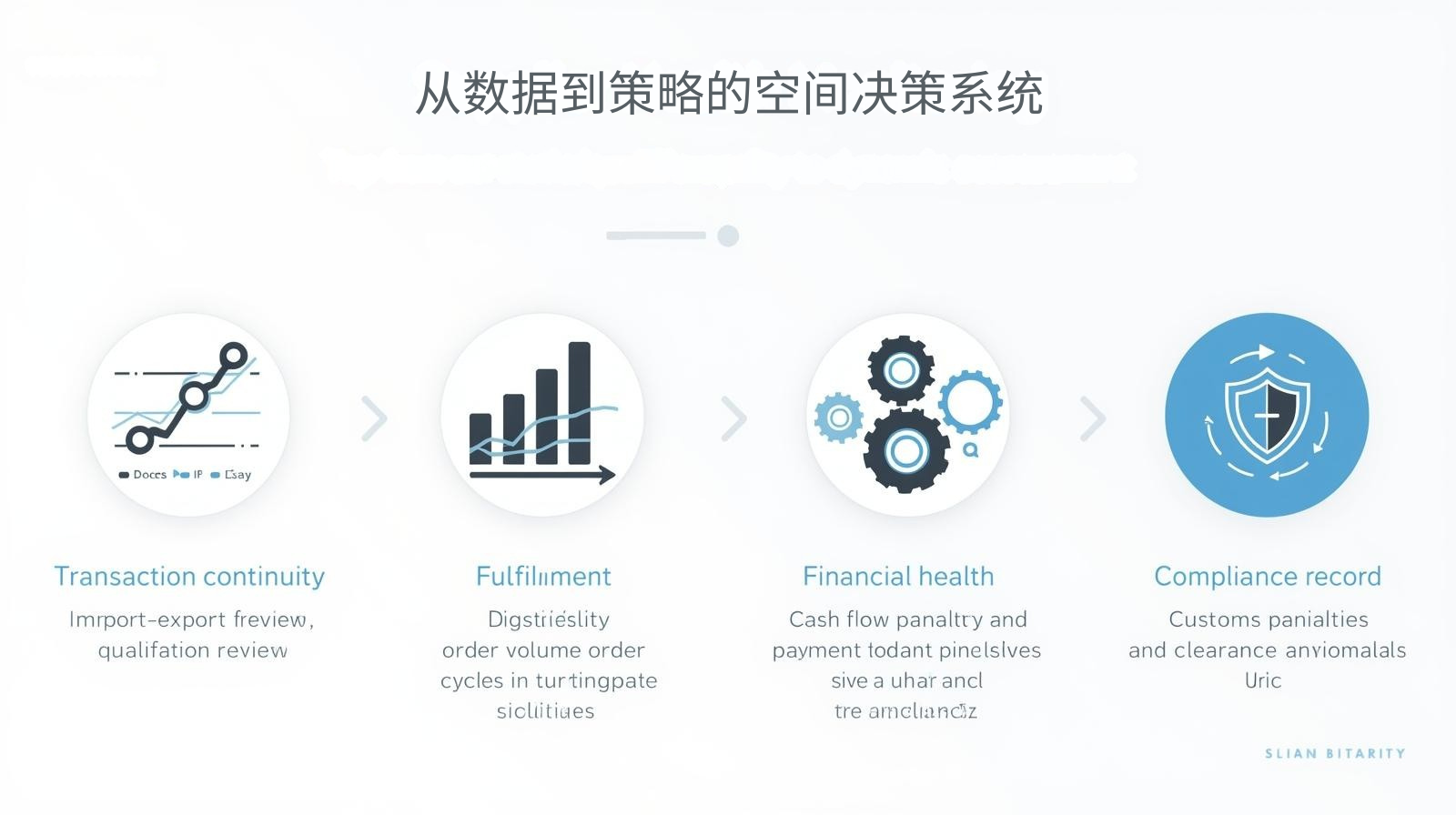
The value of geographic insights lies in strategic transformation. Harvard Business School's "Spatial Decision Model" proposes a "GEO strategy funnel" comprising four transformation layers: demand validation (spatial A/B testing), resource matching (calculating geographic ROI), execution planning (logistics/channel optimization), and monitoring and feedback (real-time adjustments). Case studies from the Global Business Applications Association (GBAA) show that companies fully implementing this model increased their regional expansion success rate to 85%. A medical device company, through geographic analysis, discovered an urgent need for "low-pressure compatible" medical equipment in the South American highlands, and within three months, completed product improvements, creating a new growth point of 9.5 million in annual sales. The core of the transformation process is the "spatial-capability matrix," which assesses the matching degree between a company's resources and geographic needs. Based on this, a clothing brand abandoned the Nordic cold-weather clothing market (matching score 32) and focused on developing the Central Asian market (matching score 89). Even more intelligent is the "spatial opportunity cost calculator," which simultaneously assesses the development value and substitution cost of each geographic unit. Based on this, a building materials company optimized its entry sequence in the Asia-Pacific market, avoiding 2.8 million in ineffective investment.

Continuously Evolving Geographic Intelligence Networks

The advantage of top-tier GEO systems lies in dynamic learning. The International Geographical Union (IGU) report, *Spatial Intelligence Development Report*, points out that continuously running GEO systems can improve analytical accuracy by 28% annually. A multinational retail group's "Geographic Knowledge Graph," by accumulating over 5,000 regional decision-making cases, has reduced new market analysis time to 48 hours. A key breakthrough is "cross-regional transfer learning"—adapting mature market models to emerging regions; a FMCG brand reduced its African market analysis costs by 70%. Even more cutting-edge is the "real-time geographic early warning system," which, by connecting to IoT data streams from meteorology and transportation, enabled a logistics platform to adjust its warehouse layout 60 days before the Southeast Asian rainy season, reducing transportation losses by 23%. These technologies collectively construct a predictive global market nervous system, enabling companies to penetrate geographical appearances and grasp the true pulse of demand in each region.

Pinshop Solution : We offer a complete spatial analysis toolchain: ✅ Geographic Data Platform ✅ Intelligent Heatmap Engine ✅ Strategy Conversion Workbench ✅ Real-time Monitoring System

Visit the Pinshop website now

Recommended article: Multilingual Independent Website Strategy: Balancing Localization and Internationalization Pinshop Foreign Trade Website Building

特色博客
Foreign Trade Independent Website GEO Team Configuration: How to Divide Labor Among Operations, Technology, and Content?

Foreign Trade Independent Website GEO Team Configuration: How to Divide Labor Among Operations, Technology, and Content?

In March 2026, GEO (Generative Engine Optimization) became a core capability for independent foreign trade websites to gain exposure and inquiries in AI search engines like ChatGPT. Efficient team division of labor is key to the continued effectiveness and stable iteration of GEO. This article focuses on the entire GEO workflow for independent foreign trade websites, clearly defining the core responsibilities, division of labor, collaboration processes, and performance indicators for the three main roles: operations, technology, and content. Combining OpenAI and Google's official AI crawling rules and authoritative reference links, it provides directly implementable team configuration solutions and practical processes to help foreign trade companies shift from "fragmented optimization" to "systematic GEO operations," ensuring their brands consistently appear in ChatGPT search results. The article also recommends PinDian Technology's React framework for website building and its native GEO adaptation service at the end.

In the era of AI-driven procurement, independent e-commerce websites that don't utilize GEO (Google Origin and Development) will gradually become obsolete.

In the era of AI-driven procurement, independent e-commerce websites that don't utilize GEO (Google Origin and Development) will gradually become obsolete.

This article, combining the latest industry report from March 2026 ("2026 Global Foreign Trade AI Procurement Trends Report," NetEase News Foreign Trade Review), practical foreign trade case studies (Shenzhen electronics, Ningbo hardware, Dongguan furniture companies), and authoritative and verifiable backlinks (OpenAI, EU CE official, CNCA, AnswerThePublic, etc.), focuses on the core theme that "In the AI procurement era, independent foreign trade websites that don't implement GEO will gradually become ineffective." It is divided into three core chapters (including sub-headings): "Core Understanding," "Deconstruction of Ineffective Scenarios," and "Practical Implementation." It provides a detailed analysis of the core value of GEO in the AI procurement era, the four major ineffective scenarios for not implementing GEO, and a three-step standardized GEO optimization process. Adhering to long sentence formatting requirements, it avoids complex technical descriptions, and all backlinks are naturally integrated into the text, making it highly practical and directly applicable. It also provides standardized article summaries, meta descriptions, and slugs to help foreign trade companies understand the AI procurement trend, activate the value of their independent websites through GEO optimization, avoid site ineffectiveness, achieve accurate inquiry conversion, and naturally recommend product store website building services at the end.

Foreign Trade Independent Website GEO Content System: AI's Favorite Structure and Format

Foreign Trade Independent Website GEO Content System: AI's Favorite Structure and Format

This article, combining the latest industry reports from March 2026 (NetEase News GEO evaluation, "2026 GEO Generation Search Optimization White Paper"), practical foreign trade case studies (Jinan machinery and textile companies), and authoritative and verifiable backlinks (OpenAI, EU CE official, CNCA, AnswerThePublic, etc.), focuses on the core concept of "GEO content system for independent foreign trade websites: AI's favorite structure and format." It is divided into three core chapters (including detailed subheadings): "Core Understanding," "AI Preference Structure Deconstruction," and "Practical Implementation." It details the underlying logic of AI's capture of foreign trade GEO content, the AI preference structure of the four core pages, and the four-step standardized content system construction process. Adhering to long sentence formatting requirements, it avoids complex technical descriptions, and all backlinks are naturally integrated into the text, making it highly practical and directly applicable. It also provides standardized article summaries, meta descriptions, and slugs to help foreign trade companies build a GEO content system favored by AI, enabling AI tools such as ChatGPT to quickly capture and prioritize content, achieving accurate inquiry conversions. The article concludes with a natural recommendation of brand store website building services.

Industry and trade integrated foreign trade independent station: GEO amplifies the core advantages of the factory

Industry and trade integrated foreign trade independent station: GEO amplifies the core advantages of the factory

This article combines the latest industry reports in March 2026 (NetEase News GEO report, AB customer GEO evaluation), foreign trade practical cases (Dongguan Old Hardware Factory, Jinjiang Industry and Trade Enterprises), and authoritative checkable external links (OpenAI, EU CE official, National Certification and Accreditation Administration, AnswerThePublic, etc.), focusing on the "industry and trade integrated foreign trade independent station: GEO amplifies the core of the factory The core of "Advantages" is divided into three core chapters (including subdivided secondary titles) of "Core Cognition, Advantage Amplification Dimension, and Practical Implementation". It details the underlying logic of GEO to amplify the core advantages of the industrial and trade integrated factory, the 3 core dimensions and the 4-step standardized GEO optimization process. It meets the long sentence formatting requirements, without complex technical expressions, and all external links are naturally integrated into the text. It is highly practical and can be implemented directly. At the same time, it provides standardized article summaries, meta descriptions and slugs to help industry and trade integrated enterprises use GEO optimization, allowing AI tools such as ChatGPT to accurately convey the core advantages of the factory, achieve accurate inquiry conversion, and finally push the store and website building services naturally.

Independent foreign trade station GEO: How to make B-side procurement trust you recommended by AI

Independent foreign trade station GEO: How to make B-side procurement trust you recommended by AI

This article combines the latest industry reports in March 2026 (AB Customer GEO evaluation, G2 and Reddit cooperation report, etc.), foreign trade practical cases (Jiangmen Chinese enterprise empowerment case), and authoritative checkable external links (OpenAI, EU CE official, National Certification and Accreditation Administration, AnswerThePublic, etc.), focusing on "Foreign trade independent station GEO: How to gain trust in B-side procurement The core of "You Recommended by AI" is divided into three core chapters (including subdivided secondary titles) of "Core Cognition, Trust Dimension, and Practical Implementation". It breaks down in detail the underlying logic of B-end procurement trust AI recommendation, the three core trust dimensions, and the four-step standardized GEO optimization process. It meets the long sentence formatting requirements, without complex technical expressions, and all external links are naturally integrated into the text. It is highly practical and can be implemented directly. At the same time, it provides standardized article abstracts, meta descriptions and slugs to help foreign trade companies build the double barriers of "AI recommendation + procurement trust" through GEO, so that B-side procurement can truly trust you who are recommended by AI, achieve accurate inquiry conversion, and finally push product store website building services.

GEO, an independent e-commerce website: Let AI become your free overseas salesperson.

GEO, an independent e-commerce website: Let AI become your free overseas salesperson.

This article, drawing on the latest industry reports from March 2026 (Rare Earth Mining, "2026 GEO Generative Search Optimization White Paper," etc.), authoritative and verifiable backlinks (OpenAI, Google, EU CE official, AnswerThePublic, etc.), and practical foreign trade case studies, focuses on the core concept of "GEO for Independent Foreign Trade Websites: Making AI Your Free Overseas Salesperson." It is divided into three core chapters (including sub-headings): "Core Understanding," "Core Tasks of AI Salespersons," and "Practical Implementation." It details the core logic, three core tasks, and four standardized implementation steps of GEO in making AI a free overseas salesperson. Adhering to long sentence formatting requirements, it avoids complex technical descriptions, seamlessly integrating all backlinks into the text, making it highly practical and directly applicable. It also provides standardized article summaries, meta descriptions, and slugs to help foreign trade companies master GEO optimization techniques, enabling AI such as ChatGPT to become free overseas salespeople, achieving low-cost, precise cross-border customer acquisition. The article concludes with a natural recommendation of a product store website building service.