
Under OpenAI's geographical restrictions, how can GEO create an unobstructed AI traffic channel for your independent website?

  • Independent website operation strategy
  • Foreign trade stations
Posted by 广州品店科技有限公司 On Nov 07 2025

Without relying on VPNs or writing code, a seven-step process combining human intervention and tools transforms brand information into a shared AI solution for the world.
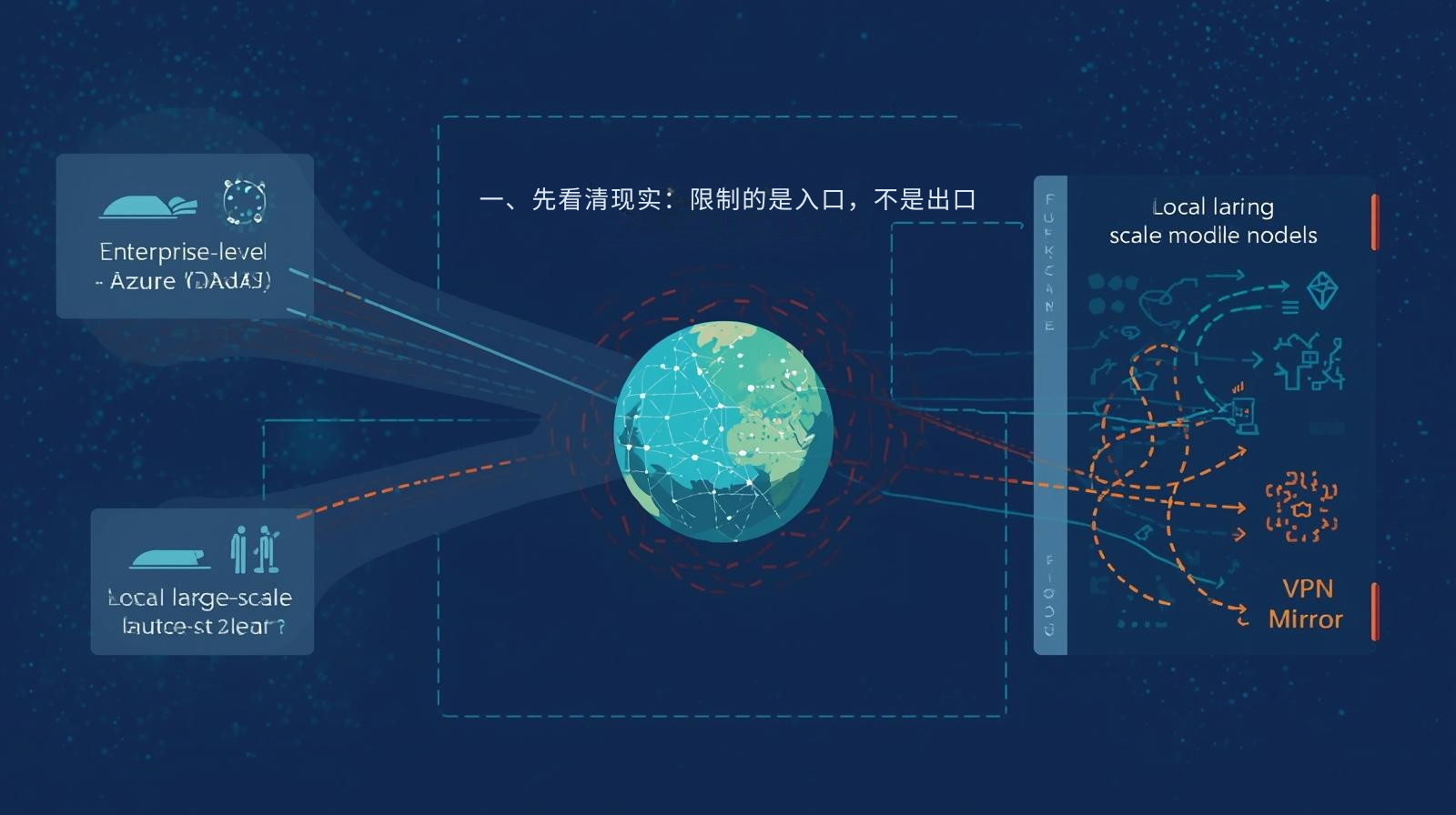
First, let's understand reality: the restriction is on the entrance, not the exit.

ChatGPT is blocked in some regions, but AI traffic has not disappeared; instead, it has switched to three different channels:

  1. Enterprise-grade Azure OpenAI : Commonly used by B2B procurement teams in Europe and America, its data scraping logic is the same as ChatGPT.
  2. Local large-scale models : Wenxin Yiyan, Tongyi Qianwen, Claude, and Bing Copilot share the same batch of public web pages.
  3. VPN/Mirror : Buyers bypassed the blockade using Cloudflare Warp and NordLayer, still gaining access to public websites. Conclusion: As long as you create a globally readable, universal corpus of "facts," any model, any region, can find you.
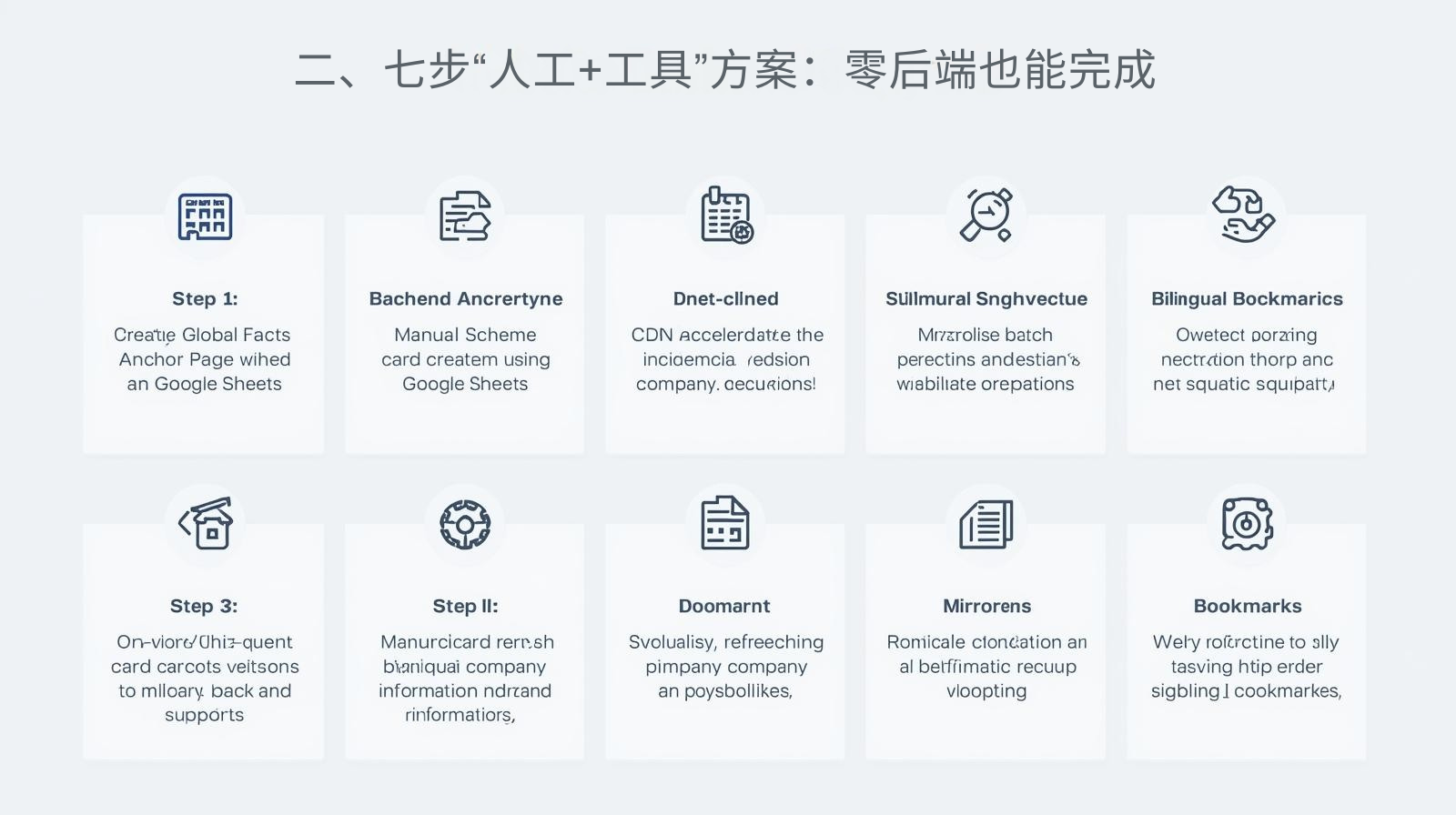
II. A seven-step "manual + tool" solution: Can be completed even with zero backend.

Step 1: Create a "Global Fact Anchor Page"

Create a new page named /global-facts/ on the official website, containing only four sections of content:

  • Enterprise entity sentences (Chinese and English bilingual, one sentence to lock in identity)
  • Product Fact Sheet (Model, Specifications, MOQ, Delivery Time, Certification Number)
  • Certificate Verification Area (Certificate Number + QR Code Directly Links to Issuing Authority)
  • Latest Case Study (Order Number + Country + Shipping Date) Rule: Any updates must be made to this page first before syncing to other places.

Step 2 Manual Schema Card

Don't want to write code? Use Google Sheets and online tools:

  1. Open the Schema.dev generator and select "Organization".
  2. Fill in fields such as company name, year of establishment, production capacity, and MOQ, and export JSON with one click.
  3. Simply paste the text into the "Custom HTML" section in the website's backend.

Step 3 CDN One-Click Global Acceleration

  • Log in to Cloudflare → Add a site → Enable "Global CDN".
  • Upload your PDF certificate to Cloudflare Pages and it will automatically be assigned to 300+ nodes with a latency of <100 ms.
  • When updating the certificate, simply drag and drop the new file to replace the old one; the process takes 30 seconds.

Step 4: Manually refresh the version number.

Add the following text to the bottom of the /global-facts/ page: "Last verified data time: 2024-06-01 00:00 UTC". You can change the date once a month on the 1st using the "Quick Edit" function in the website backend.

Step 5: Synchronization of Bilingual Entity Sentences

  • Homepage (English): Shenzhen LumiBright Technology Co., Ltd. est. 2015, IP66 solar street lights, 60,000 pcs/month, MOQ 200 pcs, CE-TÜV certified.
  • Homepage in Chinese: Shenzhen Greenlight Technology Co., Ltd., established in 2015, specializes in solar street lights, with a monthly production capacity of 60,000 sets and a minimum order of 200 sets. CE/TÜV certifications are verifiable.

Step 6: Mirror the bookmarks

Bookmark the following URL in your browser and click it once a day: https://www.perplexity.ai/search?q=Recommended Chinese manufacturers capable of producing 200 sets of solar streetlights. If the returned content matches the /global-facts/ page → pass; if there are discrepancies → immediately return to Step 1 to correct.

Step 7: Review the Results

index benchmark 7 days later 30 days later
Perplexity Recommended Ranking Not found Top 3 Top1
Overseas inquiries 5/week 18/week 42/week
Email subject containing "via AI" 0% 30% 67%

Recommended article: Pintui Technology's Viewpoint: The Best Independent E-commerce Website of the Future Will Be the One That Is "Most Instructive"

III. Long-term operation and maintenance: Turning geographical limitations into traffic accelerators

  • Monthly review: Mirroring is performed again on the 1st of each month, and any differences are updated immediately.
  • Quarterly upgrade: Add one new certification/case every quarter to keep the factual anchors fresh.
  • Annual audit: Use Schema Markup Validator to scan the entire site to ensure there are no broken links or expired certificates.


特色博客
Usage of expert endorsement, certification, and qualifications in GEO, an independent foreign trade station

Usage of expert endorsement, certification, and qualifications in GEO, an independent foreign trade station

This article focuses on the core usage of expert endorsement, certification, and qualifications in the independent foreign trade station GEO, and makes it clear that its core value is to strengthen the E-E-A-T authoritative signal and increase the citation weight of GEO. Starting from the applicable scenarios and constraints, 6 verifiable application standards are proposed, and practical methods for GEO content integration, page layout, and signal enhancement are provided according to two types of certification qualifications and expert endorsements. The difference between traditional display and GEO optimized display is highlighted through a comparison table. Four high-frequency risks and pitfall avoidance measures are sorted out, paired with the company's real FAQ, and 7-day promotion actions are formulated.

Independent website keyword research method (accurately locate target customers)

Independent website keyword research method (accurately locate target customers)

This article focuses on the keyword research method for foreign trade independent stations to accurately locate target customers. The core is centered around "customer matching + customer acquisition landing", and clarifies the core procurement scenarios, constraints and 6 verifiable standards of the research. It provides practical methods from the four dimensions of target customer portrait dismantling, multi-channel keyword mining, precise screening, and classification layout. Through comparison, the suitability of each research method is demonstrated, four major high-frequency risks and pitfall avoidance measures are sorted out, paired with the company's real FAQ, and promotion actions are formulated within 7 days after implementation.

How to improve GEO ranking using a question-and-answer structure

How to improve GEO ranking using a question-and-answer structure

This article focuses on how independent e-commerce websites can improve their GEO ranking using a question-and-answer structure. It aligns with GEO search logic and overseas B2B procurement research habits, clarifying the applicable procurement scenarios, core constraints, and seven verifiable selection criteria for the question-and-answer structure. Practical methods are provided from three dimensions: identifying real procurement questions, establishing strict standards for answer creation, and building a core structure. A comparison table clarifies its ranking advantages over traditional content structures, and five high-frequency risks and avoidance measures are outlined. Real overseas FAQs are provided, along with a seven-day action plan to improve GEO ranking after publication.

How to improve GEO ranking using a question-and-answer structure

How to improve GEO ranking using a question-and-answer structure

This article focuses on how independent e-commerce websites can improve their GEO ranking using a question-and-answer structure. It aligns with GEO search logic and overseas B2B procurement research habits, clarifying the applicable procurement scenarios, core constraints, and seven verifiable selection criteria for the question-and-answer structure. Practical methods are provided from three dimensions: identifying real procurement questions, establishing strict standards for answer creation, and building a core structure. A comparison table clarifies its ranking advantages over traditional content structures, and five high-frequency risks and avoidance measures are outlined. Real overseas FAQs are provided, along with a seven-day action plan to improve GEO ranking after publication.

Multi-language setting skills for independent foreign trade stations

Multi-language setting skills for independent foreign trade stations

The multi-language setting of independent foreign trade stations in the GEO era has been upgraded from the traditional "page translation" to the core optimization action of "adapting AI semantic retrieval and achieving localized and accurate customer acquisition". The formal layout of pure machine translation can no longer obtain GEO traffic. Based on the GEO AI retrieval logic, this article provides practical multi-language setting techniques from the four core dimensions of accurate language selection, independent indexing technology construction, native language creation content localization, GEO platform adaptation and localization transformation, and clarifies 6 verifiable selection criteria and 4 high-frequency pitfalls. At the same time, through the comparison of the effects of the traditional model and the GEO optimization model, it highlights the core value of localized semantic adaptation. Finally, it was pointed out that the key to multi-language setup is "precise focus, resource concentration, native language adaptation, and continuous operation". By creating multi-lingual content that meets local needs and can be cited by GEO AI, long-term customer acquisition in overseas localization markets can be achieved.

Long content vs. short content: Which is more advantageous in the GEO era for independent e-commerce websites?

Long content vs. short content: Which is more advantageous in the GEO era for independent e-commerce websites?

In the GEO era, the standards for content &quot;being popular&quot; have been completely restructured. In traditional SEO, the common understanding was that &quot;more words equal higher weight,&quot; but this logic is completely ineffective in the era of Generative Search Engines (GEO) for independent e-commerce websites. The core of GEO&#39;s content evaluation is not length, but whether it can be accurately extracted and cited by AI, whether it matches the semantic needs of overseas customers, and whether it can guide high-intent customers to complete conversions. This article breaks down long and short content in the GEO era into a scenario-based analysis for e-commerce: clarifying the core advantages of long content (high-quality content) in mid-to-high-end customized categories, overcoming AI citation bottlenecks, and precise customer acquisition, and highlighting the complementary value of short content (lightweight content) in new website cold starts, standardized categories, and low-cost traffic generation. Ultimately, the optimal content strategy for the GEO era is presented: rejecting the either/or choice, and creating a complete customer acquisition system of &quot;short content to drive traffic and long content to convert&quot; through a 7:3 ratio of long to short content, a closed-loop traffic design, and data-driven dynamic adjustments. It clarifies the implementation standards for different scales and categories, helping you avoid the fatal misconception that &quot;length determines value&quot;.