Explainable AI Practices: Transparency in GEO-Optimized Decision-Making

  • Independent website operation strategy
  • Foreign trade stations
  • Foreign trade website
Posted by 广州品店科技有限公司 On Nov 11 2025

Globally, 85% of companies suffer from strategic misjudgments due to the black box of algorithms. However, explainable AI systems optimized for GEO can increase the transparency of the decision-making process to 92%, ensuring that every market strategy withstands scrutiny from both business logic and regulations. This article will systematically analyze how to build a global decision-making engine that is both intelligent and transparent.

Five Explainable Implementation Paths of AI Five Explainable Implementation Paths of AI

Overcoming the commercial risks of algorithmic uncertainty:

1. Tracing the origins of feature importance

  • Visualization of the weights of key decision factors (e.g., price sensitivity accounts for 35%).
  • Decomposition of the contribution of regional differences (e.g., cultural factors account for +22% of the weight in the Southeast Asian market).
  • Analysis of decay effect over time

Technical Specifications :

  • 500,000+ decision reports generated daily.
  • Factor analysis accuracy was 96%.

2. Decision Path Simulation

  • Policy evolution trajectory under different input conditions
  • Sensitivity testing at critical points (e.g., strategy switching when exchange rate fluctuations exceed 5%).
  • Counterfactual reasoning demonstration (showing the contrast of "if we don't do it this way")

Explanatory power :

  • Complex strategy replication rate 91%
  • Simulated response time < 3 seconds

3D Transparent Verification System

Technical architecture for building trustworthy decision-making:

  1. Data layer :

    • Global operational data with traceability tags
    • Full audit trail of decision logs
  2. Explanation layer :

    • Visual Decision Tree Engine
    • Natural Language Report Generator
  3. Compliance layer :

    • Automatic compliance checks for regulations such as GDPR
    • Warning of the Boundaries of Business Ethics

System advantages :

  • Real-time generation of Chinese and English explanation reports
  • Supports comparison with 20+ regulatory standards
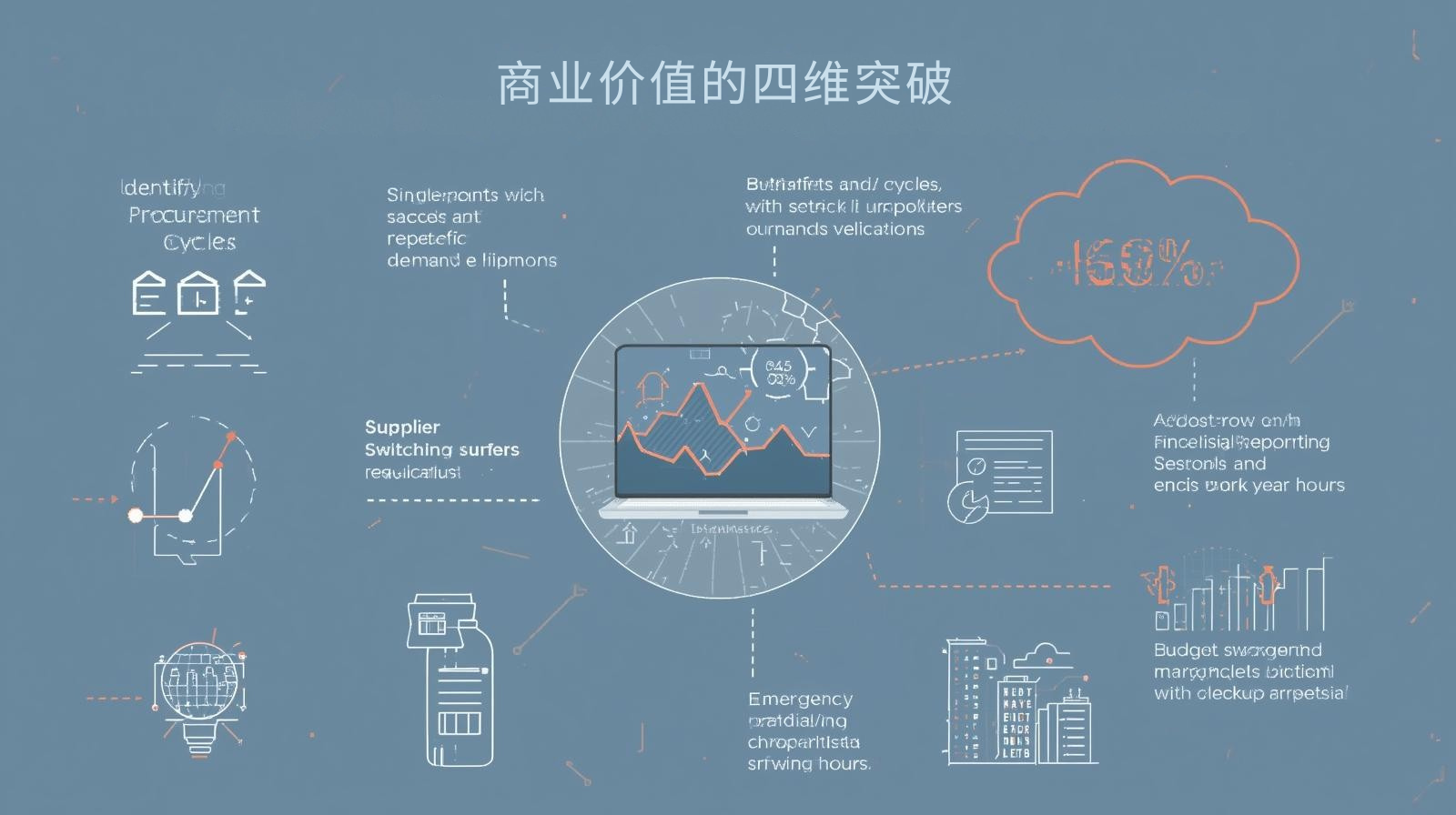
A four-dimensional breakthrough in commercial value A four-dimensional breakthrough in commercial value

The core benefits of transparent decision-making:

  • Risk control : Reduce strategic errors caused by black-box operations (reduce correction costs by 80%)
  • Team Collaboration : Cross-departmental Decision-Making Understanding Improved by 300%
  • Compliance Assurance : Meets global AI regulatory requirements (100% pass rate)
  • Continuous optimization : Rapidly locating and fixing decision-making loopholes

Actual measurement data :

  • Market strategy adjustment speed increased by 5 times
  • The board's decision approval rate increased to 95%.

A continuously evolving transparent ecosystem

A self-perfecting explanatory system:

  • Dimension Expansion : Add 3-5 new explanatory dimensions each quarter.
  • Deep adaptation : Specific decision-making logic for vertical industries
  • Global synchronization : Regulatory requirements from multiple countries are dynamically updated.
  • Ecosystem Integration : Deep Integration with BI Systems

Evolutionary ability :

  • Annual explanation accuracy improved by 35%
  • Demand for manual auditing has decreased by 75%.

Make every decision stand up to scrutiny.

PinShop system provides: ✅ Real-time decision tracing ✅ Multi-dimensional impact analysis ✅ Compliance risk warning ✅ Counterfactual simulation ✅ Self-explaining AI network

Visit the Pinshop website now

Recommended article: Multilingual Independent Website Strategy: Balancing Localization and Internationalization Pinshop Foreign Trade Website Building

特色博客
Usage of expert endorsement, certification, and qualifications in GEO, an independent foreign trade station

Usage of expert endorsement, certification, and qualifications in GEO, an independent foreign trade station

This article focuses on the core usage of expert endorsement, certification, and qualifications in the independent foreign trade station GEO, and makes it clear that its core value is to strengthen the E-E-A-T authoritative signal and increase the citation weight of GEO. Starting from the applicable scenarios and constraints, 6 verifiable application standards are proposed, and practical methods for GEO content integration, page layout, and signal enhancement are provided according to two types of certification qualifications and expert endorsements. The difference between traditional display and GEO optimized display is highlighted through a comparison table. Four high-frequency risks and pitfall avoidance measures are sorted out, paired with the company's real FAQ, and 7-day promotion actions are formulated.

Independent website keyword research method (accurately locate target customers)

Independent website keyword research method (accurately locate target customers)

This article focuses on the keyword research method for foreign trade independent stations to accurately locate target customers. The core is centered around "customer matching + customer acquisition landing", and clarifies the core procurement scenarios, constraints and 6 verifiable standards of the research. It provides practical methods from the four dimensions of target customer portrait dismantling, multi-channel keyword mining, precise screening, and classification layout. Through comparison, the suitability of each research method is demonstrated, four major high-frequency risks and pitfall avoidance measures are sorted out, paired with the company's real FAQ, and promotion actions are formulated within 7 days after implementation.

How to improve GEO ranking using a question-and-answer structure

How to improve GEO ranking using a question-and-answer structure

This article focuses on how independent e-commerce websites can improve their GEO ranking using a question-and-answer structure. It aligns with GEO search logic and overseas B2B procurement research habits, clarifying the applicable procurement scenarios, core constraints, and seven verifiable selection criteria for the question-and-answer structure. Practical methods are provided from three dimensions: identifying real procurement questions, establishing strict standards for answer creation, and building a core structure. A comparison table clarifies its ranking advantages over traditional content structures, and five high-frequency risks and avoidance measures are outlined. Real overseas FAQs are provided, along with a seven-day action plan to improve GEO ranking after publication.

How to improve GEO ranking using a question-and-answer structure

How to improve GEO ranking using a question-and-answer structure

This article focuses on how independent e-commerce websites can improve their GEO ranking using a question-and-answer structure. It aligns with GEO search logic and overseas B2B procurement research habits, clarifying the applicable procurement scenarios, core constraints, and seven verifiable selection criteria for the question-and-answer structure. Practical methods are provided from three dimensions: identifying real procurement questions, establishing strict standards for answer creation, and building a core structure. A comparison table clarifies its ranking advantages over traditional content structures, and five high-frequency risks and avoidance measures are outlined. Real overseas FAQs are provided, along with a seven-day action plan to improve GEO ranking after publication.

Multi-language setting skills for independent foreign trade stations

Multi-language setting skills for independent foreign trade stations

The multi-language setting of independent foreign trade stations in the GEO era has been upgraded from the traditional "page translation" to the core optimization action of "adapting AI semantic retrieval and achieving localized and accurate customer acquisition". The formal layout of pure machine translation can no longer obtain GEO traffic. Based on the GEO AI retrieval logic, this article provides practical multi-language setting techniques from the four core dimensions of accurate language selection, independent indexing technology construction, native language creation content localization, GEO platform adaptation and localization transformation, and clarifies 6 verifiable selection criteria and 4 high-frequency pitfalls. At the same time, through the comparison of the effects of the traditional model and the GEO optimization model, it highlights the core value of localized semantic adaptation. Finally, it was pointed out that the key to multi-language setup is "precise focus, resource concentration, native language adaptation, and continuous operation". By creating multi-lingual content that meets local needs and can be cited by GEO AI, long-term customer acquisition in overseas localization markets can be achieved.

Long content vs. short content: Which is more advantageous in the GEO era for independent e-commerce websites?

Long content vs. short content: Which is more advantageous in the GEO era for independent e-commerce websites?

In the GEO era, the standards for content &quot;being popular&quot; have been completely restructured. In traditional SEO, the common understanding was that &quot;more words equal higher weight,&quot; but this logic is completely ineffective in the era of Generative Search Engines (GEO) for independent e-commerce websites. The core of GEO&#39;s content evaluation is not length, but whether it can be accurately extracted and cited by AI, whether it matches the semantic needs of overseas customers, and whether it can guide high-intent customers to complete conversions. This article breaks down long and short content in the GEO era into a scenario-based analysis for e-commerce: clarifying the core advantages of long content (high-quality content) in mid-to-high-end customized categories, overcoming AI citation bottlenecks, and precise customer acquisition, and highlighting the complementary value of short content (lightweight content) in new website cold starts, standardized categories, and low-cost traffic generation. Ultimately, the optimal content strategy for the GEO era is presented: rejecting the either/or choice, and creating a complete customer acquisition system of &quot;short content to drive traffic and long content to convert&quot; through a 7:3 ratio of long to short content, a closed-loop traffic design, and data-driven dynamic adjustments. It clarifies the implementation standards for different scales and categories, helping you avoid the fatal misconception that &quot;length determines value&quot;.