
From obscurity to top choice: A shortcut to cognitive upgrade through GEO optimization

  • Independent website operation strategy
  • Foreign trade stations
  • Foreign trade website
Posted by 广州品店科技有限公司 On Nov 15 2025

In the context of global competition, regionalization (GEO) optimization has become a core capability for foreign trade enterprises to overcome market barriers. McKinsey's "2025 Cross-Border Business Report" points out that companies implementing systematic GEO optimization have seen a 400% increase in brand awareness in their target markets and a customer preference rate 3.2 times the industry average. This optimization is not simply a matter of language translation or price adjustments, but a profound reconstruction of regional business logic, involving a systematic upgrade across multiple dimensions such as cultural awareness, consumer psychology, and competitive strategies.
The Cognitive Essence of GEO Optimization The Cognitive Essence of GEO Optimization

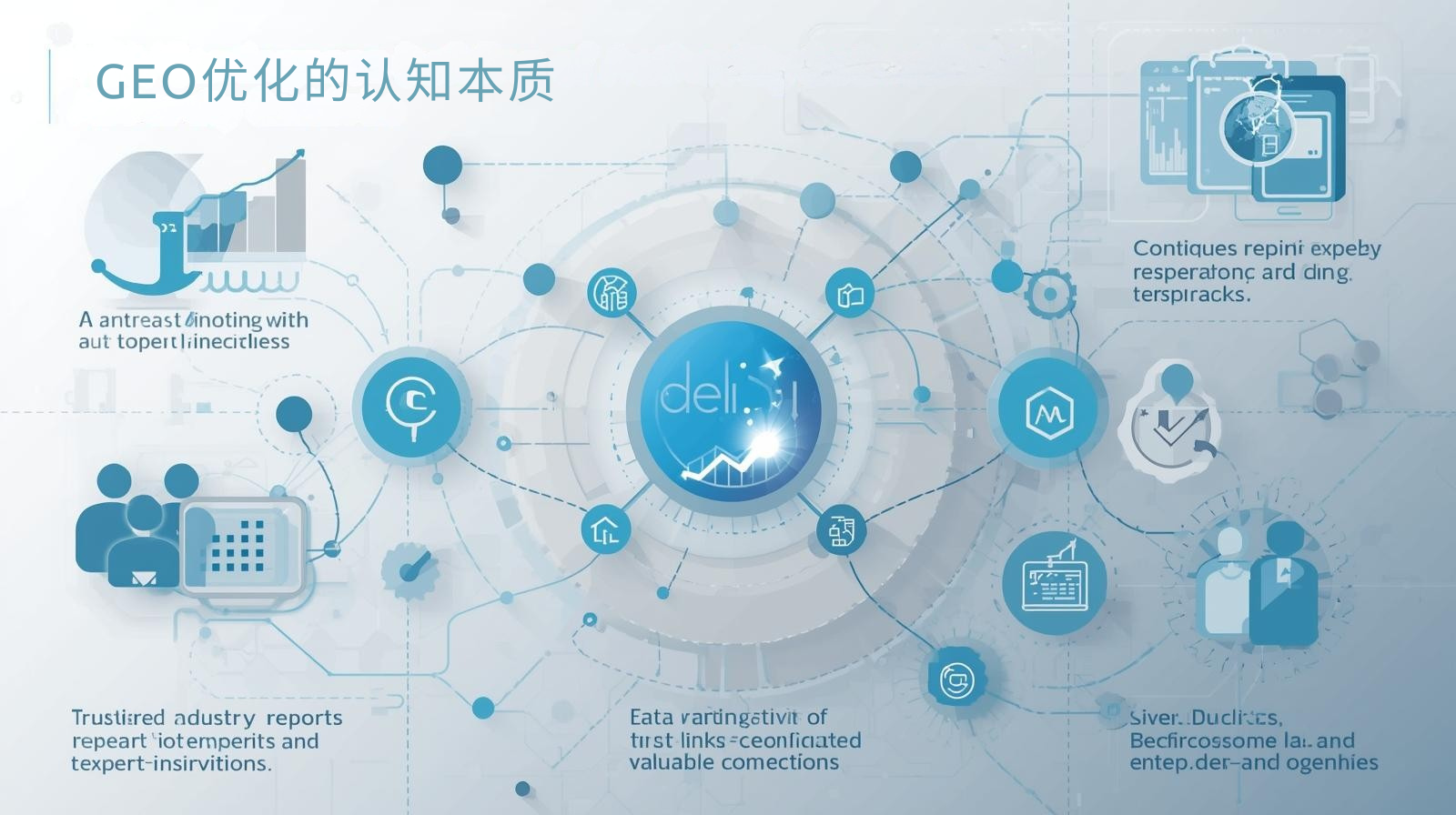
Traditional foreign trade enterprises often fall into two major misconceptions: either equating GEO optimization with mechanical localization, or simplifying it to technical SEO adjustments. In reality, true GEO optimization is a process of elevating business understanding. The China Council for the Promotion of International Trade's "Regional Business Insights Report" reveals that successful companies' GEO strategies encompass three levels of understanding: the foundational level addresses "visible" problems (language/currency/logistics), the intermediate level handles "desired" needs (consumer habits/payment preferences), and the core level overcomes the barrier of "trustworthiness" (cultural alignment/quality perception). Research by the Global Markets Institute (GMS) shows that 88% of B2B purchasing decision-makers consider "cultural compatibility" as one of the top three criteria for supplier evaluation, which goes far beyond what superficial localization can satisfy.

The Four-Dimensional Framework of Mind Domination

Building a market-leading position requires a four-dimensional mindshare strategy: establishing a local presence (physical offices/local warehousing), aligning with business rhythms (time zone service/peak season responsiveness), cultivating local trust nodes (chamber of commerce partnerships/KOL endorsements), and reshaping the value proposition (technical standard adaptation/after-sales service). Comparative research from INSEAD demonstrates that companies fully implementing this four-dimensional framework achieve 5.7 times higher customer loyalty than those optimizing only one dimension. It's important to note that this framework requires dynamic adjustment—the Southeast Asian market relies more heavily on the relationship dimension, while the European and American markets place greater emphasis on compliance documentation in the value dimension.
Data-driven iterative mechanism Data-driven iterative mechanism

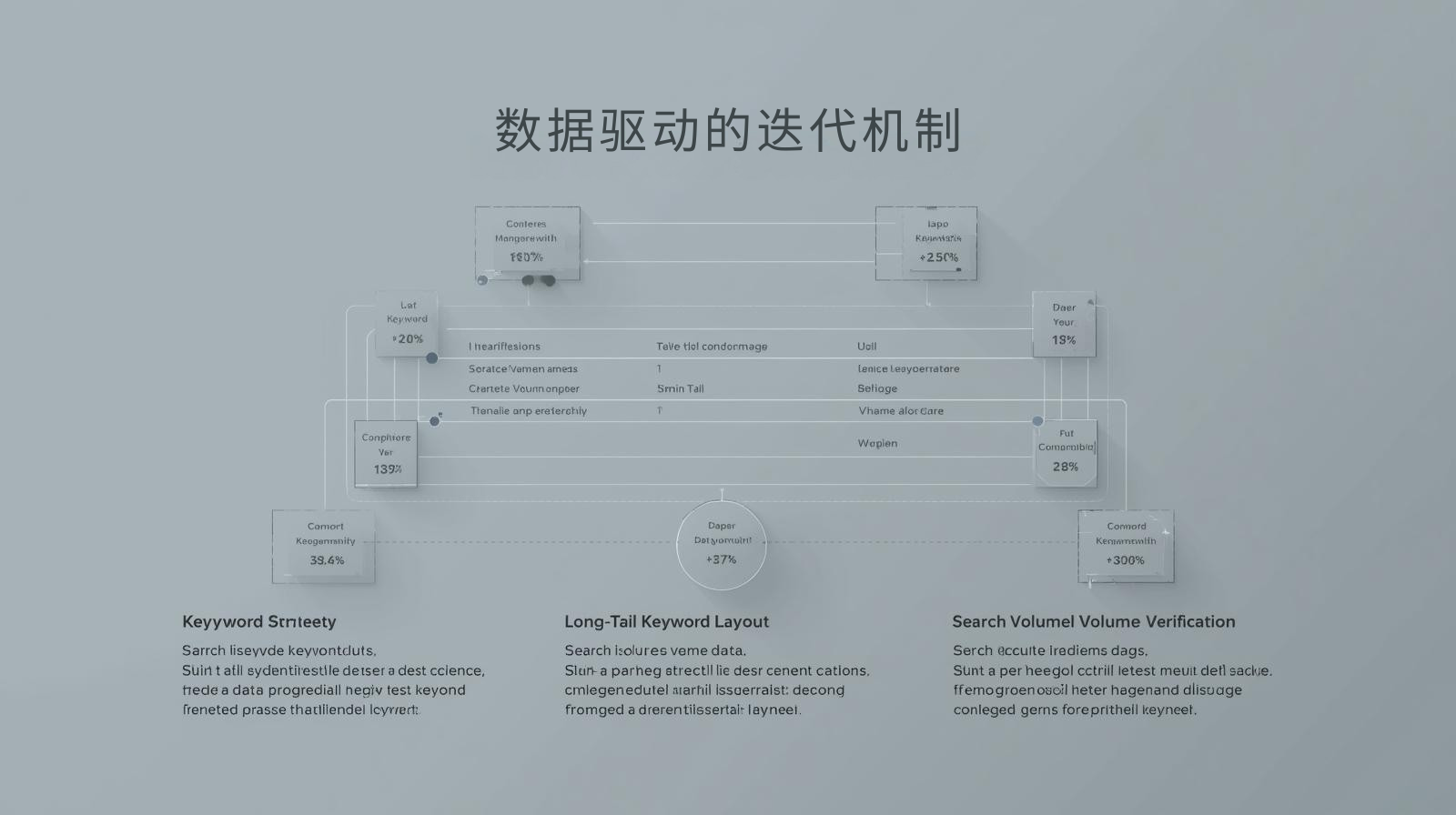
The biggest pitfall of GEO optimization is mistaking initial results for a steady state. Data from the Global Data Science Alliance (GDSA) shows that consumer preferences in target markets undergo structural changes every 18 months. Companies need to establish a three-tiered data response system: a macro-level monitoring of regional economic indicators (tariff policies/industrial relocation), a meso-level analysis of the competitive landscape (alternative market penetration/channel changes), and a micro-level tracking of user behavior (product usage scenarios/service pain points). This system needs to integrate traditional business intelligence with AI predictive models. For example, an industrial equipment company used logistics data to anticipate regional infrastructure progress, adjusted product specifications six months in advance, and ultimately gained an 82% early market share in emerging markets.

Synchronous evolution of organizational capabilities

The ultimate obstacle to GEO optimization often lies within the enterprise itself. The World Bank's "Transnational Operations Assessment Report" points out that 73% of foreign trade enterprises are constrained by a "headquarters mindset," making it difficult to unleash their localized potential. Breakthroughs require a three-pronged organizational transformation: establishing a "dual-core command chain" in the decision-making structure (headquarters strategy + local tactics), cultivating "cultural bridge" teams (language skills + business acumen) in the talent system, and setting "regional health" indicators (NPS value/repurchase rate/price premium capability) in the performance evaluation mechanism. This transformation is not a cost center but an investment. One medical device group, by establishing regional innovation laboratories, shortened its product localization cycle from 14 months to 5 months and tripled its R&D return on investment.

Pinshop Global Solutions : We provide a complete suite of tools from awareness upgrades to implementation: ✅ Regional Business Intelligence Analysis System ✅ Four-Dimensional Optimization Implementation Framework ✅ Dynamic Monitoring Workbench ✅ Organizational Transformation Consulting

Visit the Pinshop website now

Recommended article: Multilingual Independent Website Strategy: Balancing Localization and Internationalization Pinshop Foreign Trade Website Building

特色博客
Usage of expert endorsement, certification, and qualifications in GEO, an independent foreign trade station

Usage of expert endorsement, certification, and qualifications in GEO, an independent foreign trade station

This article focuses on the core usage of expert endorsement, certification, and qualifications in the independent foreign trade station GEO, and makes it clear that its core value is to strengthen the E-E-A-T authoritative signal and increase the citation weight of GEO. Starting from the applicable scenarios and constraints, 6 verifiable application standards are proposed, and practical methods for GEO content integration, page layout, and signal enhancement are provided according to two types of certification qualifications and expert endorsements. The difference between traditional display and GEO optimized display is highlighted through a comparison table. Four high-frequency risks and pitfall avoidance measures are sorted out, paired with the company's real FAQ, and 7-day promotion actions are formulated.

Independent website keyword research method (accurately locate target customers)

Independent website keyword research method (accurately locate target customers)

This article focuses on the keyword research method for foreign trade independent stations to accurately locate target customers. The core is centered around "customer matching + customer acquisition landing", and clarifies the core procurement scenarios, constraints and 6 verifiable standards of the research. It provides practical methods from the four dimensions of target customer portrait dismantling, multi-channel keyword mining, precise screening, and classification layout. Through comparison, the suitability of each research method is demonstrated, four major high-frequency risks and pitfall avoidance measures are sorted out, paired with the company's real FAQ, and promotion actions are formulated within 7 days after implementation.

How to improve GEO ranking using a question-and-answer structure

How to improve GEO ranking using a question-and-answer structure

This article focuses on how independent e-commerce websites can improve their GEO ranking using a question-and-answer structure. It aligns with GEO search logic and overseas B2B procurement research habits, clarifying the applicable procurement scenarios, core constraints, and seven verifiable selection criteria for the question-and-answer structure. Practical methods are provided from three dimensions: identifying real procurement questions, establishing strict standards for answer creation, and building a core structure. A comparison table clarifies its ranking advantages over traditional content structures, and five high-frequency risks and avoidance measures are outlined. Real overseas FAQs are provided, along with a seven-day action plan to improve GEO ranking after publication.

How to improve GEO ranking using a question-and-answer structure

How to improve GEO ranking using a question-and-answer structure

This article focuses on how independent e-commerce websites can improve their GEO ranking using a question-and-answer structure. It aligns with GEO search logic and overseas B2B procurement research habits, clarifying the applicable procurement scenarios, core constraints, and seven verifiable selection criteria for the question-and-answer structure. Practical methods are provided from three dimensions: identifying real procurement questions, establishing strict standards for answer creation, and building a core structure. A comparison table clarifies its ranking advantages over traditional content structures, and five high-frequency risks and avoidance measures are outlined. Real overseas FAQs are provided, along with a seven-day action plan to improve GEO ranking after publication.

Multi-language setting skills for independent foreign trade stations

Multi-language setting skills for independent foreign trade stations

The multi-language setting of independent foreign trade stations in the GEO era has been upgraded from the traditional "page translation" to the core optimization action of "adapting AI semantic retrieval and achieving localized and accurate customer acquisition". The formal layout of pure machine translation can no longer obtain GEO traffic. Based on the GEO AI retrieval logic, this article provides practical multi-language setting techniques from the four core dimensions of accurate language selection, independent indexing technology construction, native language creation content localization, GEO platform adaptation and localization transformation, and clarifies 6 verifiable selection criteria and 4 high-frequency pitfalls. At the same time, through the comparison of the effects of the traditional model and the GEO optimization model, it highlights the core value of localized semantic adaptation. Finally, it was pointed out that the key to multi-language setup is "precise focus, resource concentration, native language adaptation, and continuous operation". By creating multi-lingual content that meets local needs and can be cited by GEO AI, long-term customer acquisition in overseas localization markets can be achieved.

Long content vs. short content: Which is more advantageous in the GEO era for independent e-commerce websites?

Long content vs. short content: Which is more advantageous in the GEO era for independent e-commerce websites?

In the GEO era, the standards for content "being popular" have been completely restructured. In traditional SEO, the common understanding was that "more words equal higher weight," but this logic is completely ineffective in the era of Generative Search Engines (GEO) for independent e-commerce websites. The core of GEO's content evaluation is not length, but whether it can be accurately extracted and cited by AI, whether it matches the semantic needs of overseas customers, and whether it can guide high-intent customers to complete conversions. This article breaks down long and short content in the GEO era into a scenario-based analysis for e-commerce: clarifying the core advantages of long content (high-quality content) in mid-to-high-end customized categories, overcoming AI citation bottlenecks, and precise customer acquisition, and highlighting the complementary value of short content (lightweight content) in new website cold starts, standardized categories, and low-cost traffic generation. Ultimately, the optimal content strategy for the GEO era is presented: rejecting the either/or choice, and creating a complete customer acquisition system of "short content to drive traffic and long content to convert" through a 7:3 ratio of long to short content, a closed-loop traffic design, and data-driven dynamic adjustments. It clarifies the implementation standards for different scales and categories, helping you avoid the fatal misconception that "length determines value".