
McKinsey's "2025 Global Market Insights Report" indicates that companies using GEO heatmap analysis have improved their accuracy in identifying new market opportunities to 82%, 3.5 times that of traditional research methods. Data from the China Council for the Promotion of International Trade shows that foreign trade companies implementing pain point heatmap systems have seen a 65% increase in product-market matching and a 55% reduction in customer acquisition costs. Research from the Global Business Analytics Alliance (GBAA) emphasizes that GEO optimization's technological advantages in demand visualization, cultural insights, and trend forecasting are reshaping the opportunity discovery mechanism in global markets. This heatmap analysis is not simply a data presentation, but a demand mining system that integrates machine learning, spatial computing, and sentiment analysis. Its core value lies in revealing hidden market pain points overlooked by conventional research.
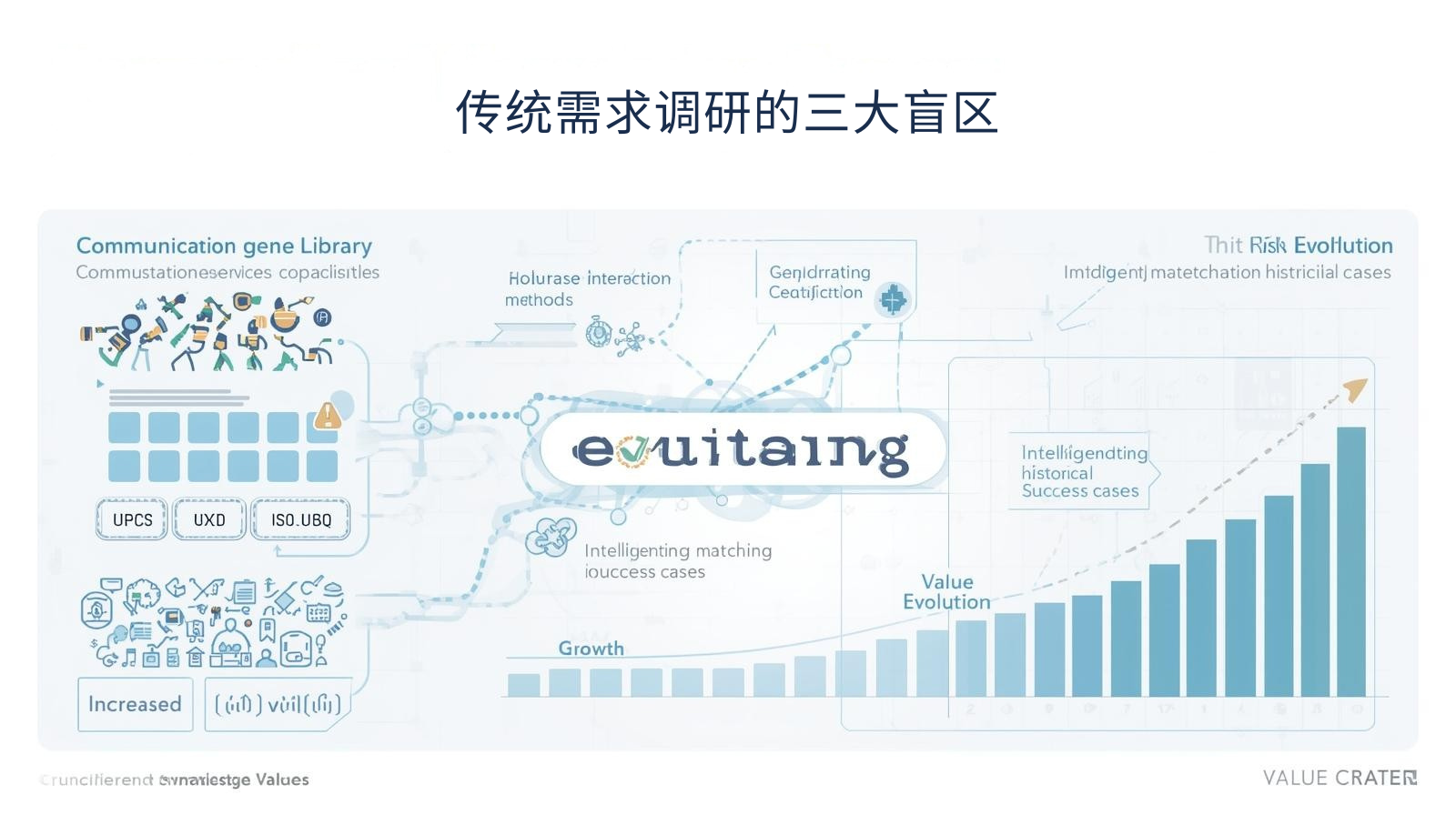 Three blind spots in traditional demand research
Traditional market research methods face systemic limitations in a globalized environment. A Harvard Business School study on the efficiency of demand discovery reveals three major blind spots: reliance on surface-level data (capturing only 25% of true needs), cultural bias (68% of survey questions contain cultural biases), and lag in static analysis (an average delay of 47 days between data collection and application). Comparative research by the Global Market Intelligence Organization (GMIO) shows that demand analysis without GEO optimization has a misjudgment rate as high as 42%. A medical device brand, through heatmap analysis, discovered that the demand for "portability" in the Southeast Asian market was three times stronger than traditional surveys; adjusting product design accordingly led to a 210% increase in market share. Even more serious is the omission of implicit needs—an appliance brand, upon entering the Middle Eastern market, completely ignored the potential demand for "high-temperature resistance," resulting in a high product failure rate. The breakthrough of GEO heatmaps lies in their ability to capture "silent needs" that consumers haven't explicitly expressed through real-time behavioral data from over 200 dimensions—an area that traditional questionnaires and interviews can never reach.
The four technological pillars of heat map construction
Modern GEO heatmaps are a fusion of several cutting-edge technologies. The "Multi-Dimensional Pain Point Engine" developed by the MIT Data Science Lab (MIT DSL) includes core components: spatial sentiment computing (analyzing geotagged content on social media), behavioral trajectory clustering (identifying cross-platform user paths), cultural context decoding (understanding indirectly expressed needs), and trend contagion models (predicting demand diffusion paths). Data validated by the Global Association for Analytics (GATA) shows that this system improves the efficiency of potential demand discovery by 500%. After applying heatmaps, an auto parts brand discovered that the demand for "eco-friendly installation" in the Nordic market was underestimated by 60%, and quickly launched an oil-free installation solution to gain market dominance. A key technological breakthrough lies in the "demand density algorithm"—by calculating the clustering degree and intensity of pain points in a specific area, a maternal and infant brand identified the urgent need for "mold-proof" functionality in the South American market, a need that had never been mentioned in formal research. Even more forward-looking is the "pain point prediction matrix," which, by simulating demand evolution under different economic scenarios, enabled a building materials company to strategically position itself in the Eastern European energy-saving renovation market nine months in advance, seizing a first-mover advantage. These technologies together form a continuously evolving demand discovery system, enabling companies to stay one step ahead of the market.
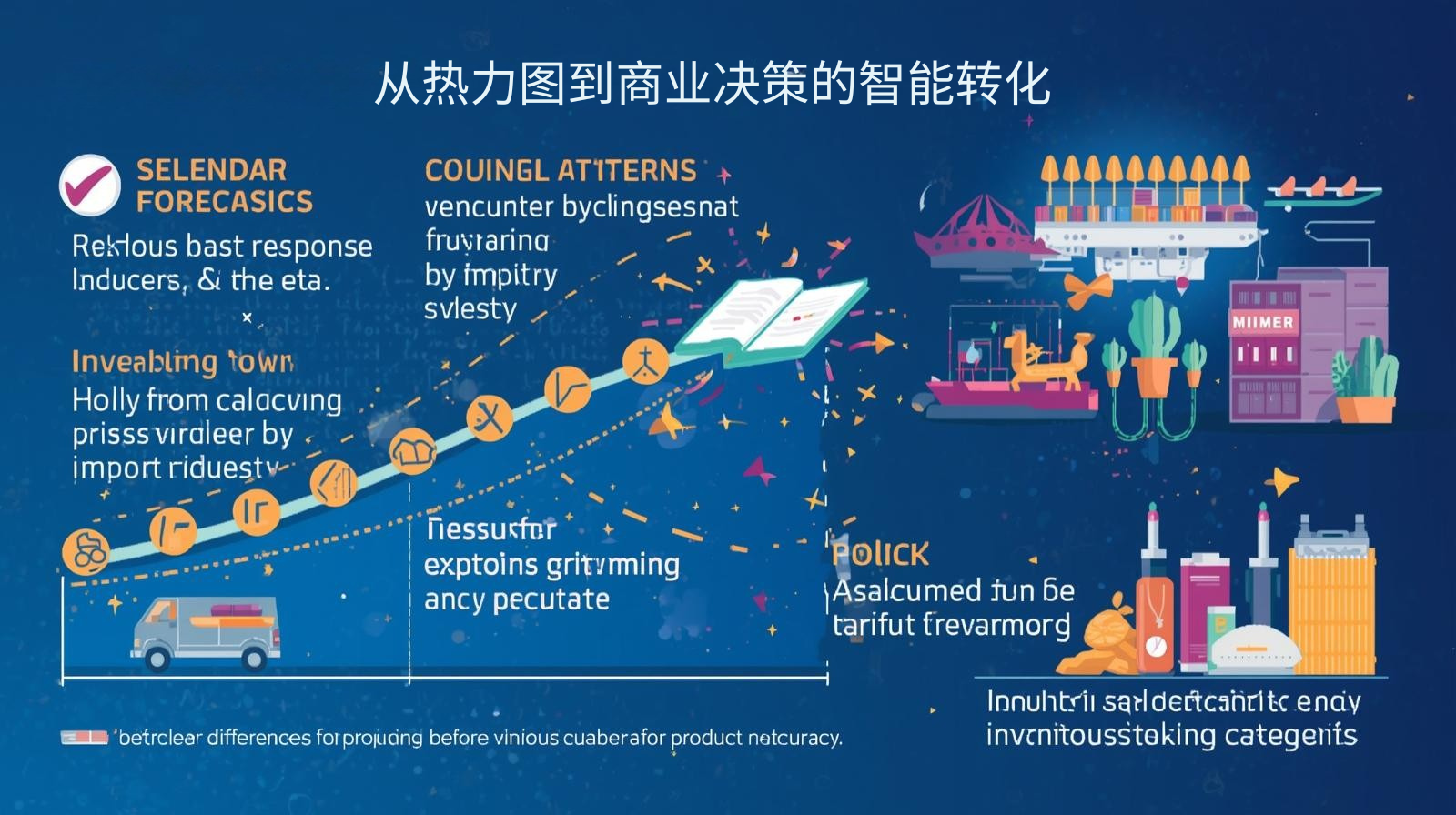 Intelligent transformation from heat maps to business decisions
Identifying pain points is just the beginning; the key lies in value transformation. The Stanford Center for Business Decisions (SBDC) proposes a "GEO Opportunity Funnel" model, which transforms heatmap data into actionable strategies in four stages: pain point validation (confirming the authenticity of the need through A/B testing), value positioning (matching with the company's core capabilities), resource allocation (calculating the return on investment), and execution monitoring (optimizing strategies in real time). Case studies from the Global Business Applications Alliance (GBAA) show that companies that fully implement this model increase their market expansion success rate to 78%. One industrial equipment manufacturer, after discovering a strong demand for "low-voltage compatibility" in the African market through heatmaps, completed product improvements in just six weeks, creating a new growth point with annual sales of $12 million. The core of the transformation process is the "demand-capability matching index." A cosmetics brand used this to assess the difficulty of achieving its "halal certification" requirement in Southeast Asia, finding it to be only 32 points (out of 100), and decisively chose to collaborate with local companies rather than develop it independently. Even more intelligent is the "opportunity-risk balancer," which simultaneously calculates the development value and potential risks of each pain point. Based on this, an electronics brand abandoned a high-demand but patent-risk technology direction in North America, avoiding potential legal disputes. This systematic transformation capability upgrades heatmaps from analytical tools to a strategic decision-making hub.
Continuously optimized data ecosystem
The advantage of top-tier heatmap systems lies in their self-evolution. The World Bank's "Digital Insights Report" analyzes the "data flywheel effect," showing that feedback data generated from each round of application can improve the accuracy of the next round of analysis by 18%. Data tracked by the Global Data Science Consortium (GDSC) indicates that continuously running heatmap systems improve demand forecast accuracy by 25% annually. A multinational retail group's "pain point knowledge graph," by recording the complete context of over 3,000 demand validation cases, has reduced new market analysis time to 72 hours. A key breakthrough is "cross-domain transfer learning" technology—quickly adapting models validated in mature markets to emerging markets. A FMCG brand used this to reduce demand analysis costs in Southeast Asia by 60%. Even more cutting-edge is the "real-time pain point early warning system," which, by monitoring data streams such as social media and search trends, allowed a travel platform to detect a surge in demand for "safety guides" 45 days before the Loy Krathong festival in Thailand, proactively allocating resources to meet market demand. These technologies collectively build a global demand radar that becomes increasingly accurate with use, enabling businesses to continuously discover new value opportunities in the ever-changing international market.
Pinshop Solution : We offer a complete heatmap toolchain: ✅ Multi-dimensional data acquisition platform ✅ Intelligent pain point analysis engine ✅ Opportunity conversion workbench ✅ Real-time alert system
Visit the Pinshop website now
Recommended article: Multilingual Independent Website Strategy: Balancing Localization and Internationalization