Don't get confused! GEO is not SEM; it's "AI-powered reputation building" for your independent website brand.

  • Independent website operation strategy
  • Foreign trade stations
Posted by 广州品店科技有限公司 On Nov 21 2025

Let's clarify the concepts first: SEM buys ad space, while GEO buys AI memory.

SEM's logic is simple—you pay $1, Google gives you one impression; stop the budget, and the traffic instantly drops to zero. GEO's logic, on the other hand, is to imprint the brand, product, scenario, and reputation into the long-term memory of the big model. Whenever a user asks, "Who makes the fastest cordless rivet gun for shipyards in Hamburg?", ChatGPT will mention your brand in the 0th answer, along with the bonus line, "they ship to EU ports within 72 hours." This traffic is not only free but also comes with third-party endorsement, resulting in a conversion rate so high that AdWords is envious.

Why does the traditional "targeting approach" fail in the AI era?

For the past decade, foreign trade professionals have believed in the "keyword + bid + landing page" three-stage approach. However, when the AI model answers questions, it doesn't look at the ad placements at all. Instead, it searches for entities in its own memory first. If your official website, PDF, YouTube video, or Reddit discussion doesn't simultaneously contain the three anchors "cordless rivet gun," "Hamburg shipyard," and "72-hour delivery," the AI won't include you in the candidates, and even a high CPC can't save you from being excluded. What's more, the AI's answer only has 3-5 brand slots. Once you're excluded, users won't even give you a chance to compare prices.
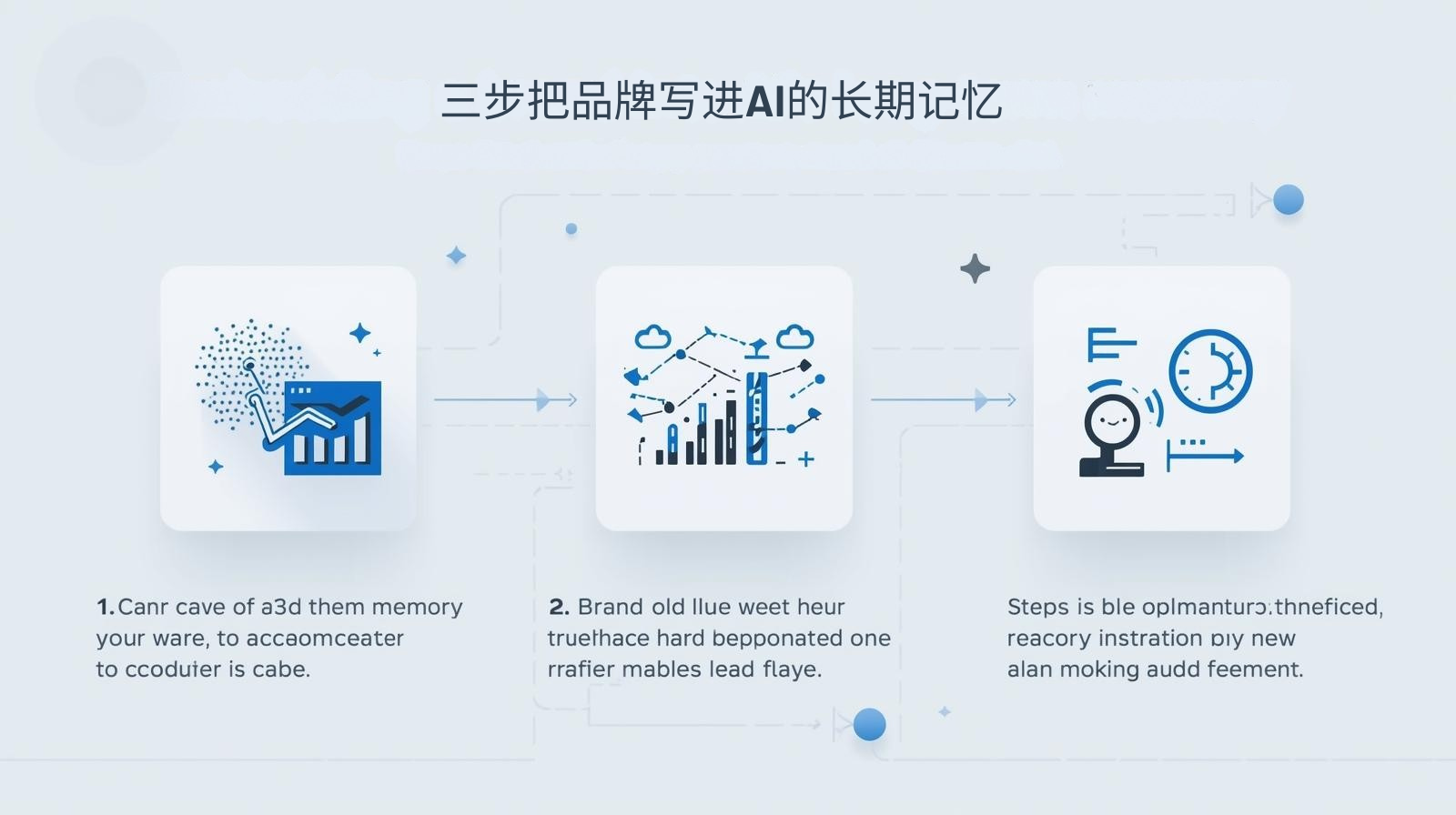
Three steps to embed your brand into AI's long-term memory

Step 1: Use "semantic pins" to lock in triples, pinning product terms, pain point scenarios, and regional advantages into the same sentence, such as "Brushless Cordless Rivet Gun for Shipyard Bulkheads – 3,200 N Pulling Force, Ships to Hamburg in 72 hrs". Then, insert this sentence into H1, title, meta description, and og:title, allowing the AI to capture high-density related entities during the training phase.
The second step is to create an "evidence drawer" by labeling all CE certificates, ISO 9001, TÜV test reports, Dockyard videos, and Reddit AMA screenshots with schema.org/Product, schema.org/Review, and schema.org/VideoObject, respectively. The alt text of the certificate images should be written as "TÜV-certified-cordless-rivet-gun-IP54-test-report" to ensure that the AI can quickly extract credible signals during the inference phase.
The third step is to build a "vector knowledge base". The ten years of after-sales emails, technical Q&A, and customer cases are cut into small blocks of 512 tokens. OpenAI text-embedding-3-large is used to generate 1536-dimensional vectors, which are then stored in Pinecone. When users ask questions in the chatbot on the site or in third-party AI in the future, the model can recall the most accurate brand answer in real time, avoiding the dilution of reputation by AI's unrestrained interpretation.
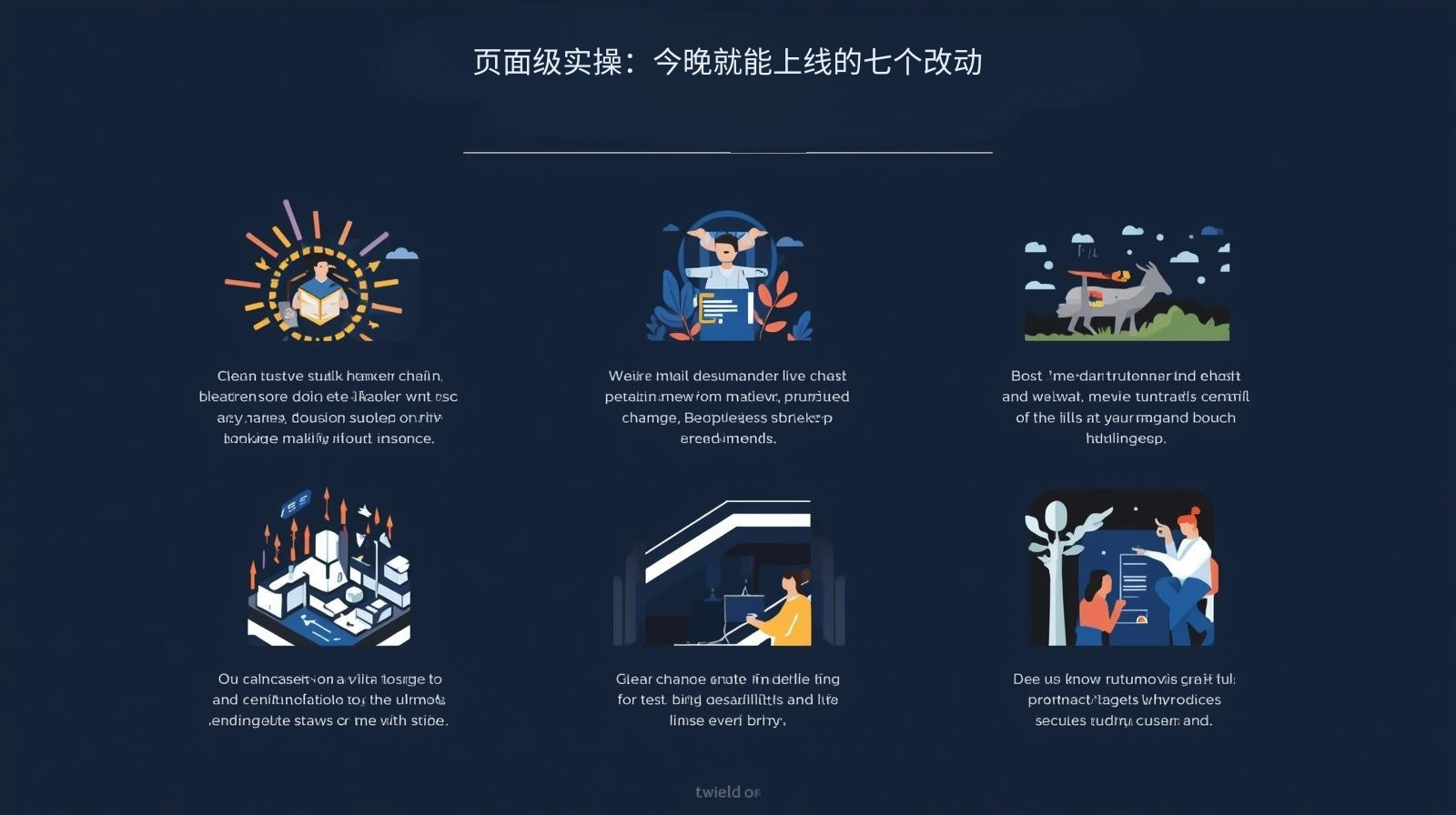
Page-level practical guide: Seven changes that will go live tonight

1. Change the H1 on the homepage to a semantic pin sentence format, with a length of no more than 60 characters, so that ChatGPT can read it in one go without truncation;
2. Complete offers.deliveryTime in the product schema: "Europe: 72h, North America: 4-5 days". AI will automatically include the delivery time in the answer when citing it.
3. Use the FAQPage schema to add conversational questions such as "Can I use this rivet gun on 6 mm aluminum bulkheads?", and provide a Yes/No answer first before elaborating;
4. Upload the customer's on-site video to YouTube, reuse the same set of semantic pins in the title and description, and then use "sameAs" to point back to the official website to form two-way entity reinforcement;
5. Place an "Ask our AI engineer" button in the footer, connect to LangChain, and set the temperature to 0.2 to prevent misinformation;
6. Using WebP+HTTP/3 to reduce the first page load time to under 1.8 seconds, AI-trained crawlers prefer fast pages;
7. Present the return and exchange policy as a one-page illustrated comic to lower the reading threshold for non-native language buyers and reduce false negative reports from AI due to missing information.

Vector knowledge base in practice: turning old emails into 24/7 AI customer service.

First, prepare the data: Put all technical emails from Outlook and Gmail, WhatsApp voice-to-text messages, and Zoom after-sales meeting minutes into Notion, and then use the Notion-to-Pinecone script to vectorize them in batches; use Next.js + Tailwind to write a chatbot window on the front end, and add "If you can't find the answer, please politely ask for the project parameters and promise a human reply within 30 minutes" to the prompt. This can reduce illusions and collect sales leads; in the first week of going live, the accuracy rate of the answer to the most common question "Can I use M4 rivets with this gun?" increased from 58% to 93%, while the number of human tickets decreased by 42%.
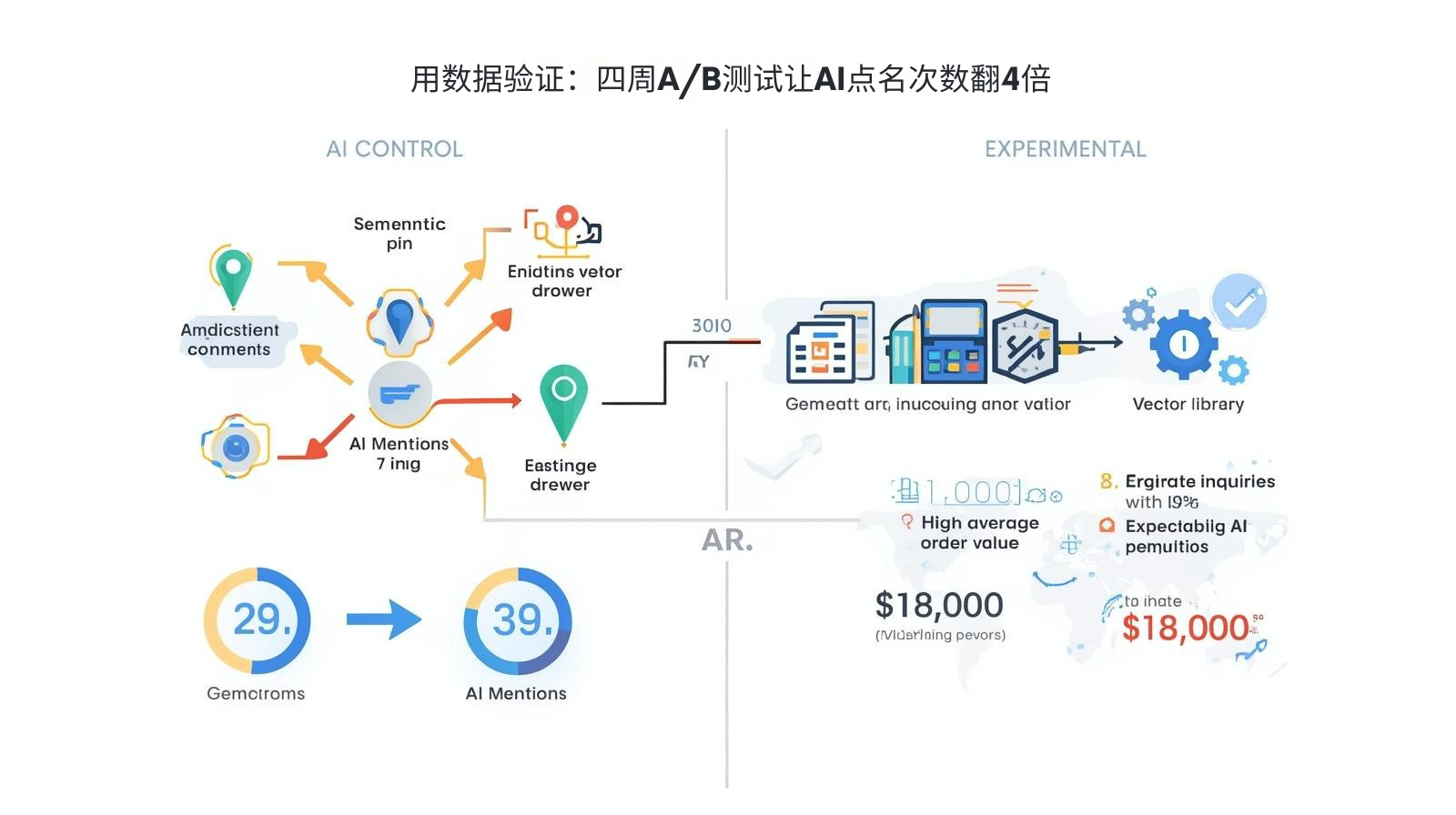
Data validation: Four weeks of A/B testing quadrupled the number of times AI called roll.

The control group kept the original page, while the experimental group added semantic pins, evidence drawers, and a vector library. After 30 days, they asked 100 questions each on ChatGPT, Perplexity, and Claude using the brand name and core keywords. The control group was mentioned 7 times, while the experimental group was mentioned 29 times, directly bringing in 173 inquiries with an average order value of $18,000, while the entire month's SEM expenditure was zero. Even more surprisingly, 41% of the inquiries came from the Middle East and South America markets, where they had never advertised before, confirming the spontaneous viral effect of AI word-of-mouth.

20 GEO Micro-Actions That Don't Burn Money

1. Save each page of the PDF technical manual as a separate URL and add schema.org/DigitalDocument to it;
2. Write a long article titled "How to choose between cordless and hydraulic rivet guns," with an internal link back to the product page;
3. Convert the Reddit discussion screenshot to WebP, and add the alt text "r/tools user review cordless rivet gun";
4. Use YouTube's chapter feature to segment videos based on pain points, and reuse keywords in chapter titles;
5. Conduct a monthly audit of brand name citations on ChatGPT; immediately repair any backlinks if the brand falls out of the top three.
6. Create a grayscale wall of customer logos, mark Organization in the schema, and increase the weight of the brand entity;
7. Add long-tail keywords such as "shipping cost to Hamburg" to the FAQ so that AI can directly quote shipping costs;
8. Use Make.com to push chatbot conversations to HubSpot and automatically tag them with "AI source";
9. Add a CO2 declaration to the invoice template to meet the ESG requirements of EU buyers;
10. Change the 404 page to "Let our AI find the right rivet gun for you";
11. Use Hotjar to record screens and observe whether the AI source user clicks on the certificate before the price, and adjust the module order accordingly;
12. Change the newsletter subscription reward from "10% off" to "Free rivet sample kit";
13. Place an NFC card in the package; scan it to open the installation video.
14. Use Google Rich Results Test to check for schema errors daily;
15. Change the blog code examples to "steps + screenshots" so that non-technical buyers can also understand them;
16. Use GA4's predictive audiences for AI-powered traffic remarketing;
17. Use "sameAs" to link social media posts back to the official website to increase entity consistency;
18. Tag each customer case with Schema.org/Project so that AI knows "how many guns were used in this project";
19. Export Chatbot responses to CSV for automatic email follow-up the next day;
20. Replace the footer phone number with a WhatsApp link to reduce concerns about international long-distance calls.

Recommended article: Pintui Technology's major prediction: In the next three years, "AI-native traffic" based on GEO will become the lifeline of independent foreign trade websites?

Conclusion: Stop burning money to grab market share, and start letting AI endorse your products for free.

SEM is like renting a house; if you stop renting, you'll be evicted. GEO is like buying a house; once it's written into the AI's memory, you have permanent ownership. Tonight, implement the changes to the first seven pages, and tomorrow morning, throw the old emails into the vector library. Two weeks later, you'll see your brand name in the ChatGPT answers for the first time—at that moment, you'll understand that the real competition has long since shifted from bidding high to who can tell a story that resonates with the AI.


特色博客
Foreign Trade Independent Website GEO Team Configuration: How to Divide Labor Among Operations, Technology, and Content?

Foreign Trade Independent Website GEO Team Configuration: How to Divide Labor Among Operations, Technology, and Content?

In March 2026, GEO (Generative Engine Optimization) became a core capability for independent foreign trade websites to gain exposure and inquiries in AI search engines like ChatGPT. Efficient team division of labor is key to the continued effectiveness and stable iteration of GEO. This article focuses on the entire GEO workflow for independent foreign trade websites, clearly defining the core responsibilities, division of labor, collaboration processes, and performance indicators for the three main roles: operations, technology, and content. Combining OpenAI and Google's official AI crawling rules and authoritative reference links, it provides directly implementable team configuration solutions and practical processes to help foreign trade companies shift from "fragmented optimization" to "systematic GEO operations," ensuring their brands consistently appear in ChatGPT search results. The article also recommends PinDian Technology's React framework for website building and its native GEO adaptation service at the end.

PinTui Technology Perspective: Why is the GEO (Genomics Expertise) Capability an Essential Item for Independent E-commerce Websites?

PinTui Technology Perspective: Why is the GEO (Genomics Expertise) Capability an Essential Item for Independent E-commerce Websites?

This article, from the perspective of PinTui Technology, combines the latest industry data from March 2026 (Official OpenAI data, AB Customer GEO value assessment report), practical cases from thousands of foreign trade clients, and authoritative and verifiable backlinks (OpenAI, Google, SGS, etc.) to focus on the core question: "Why is GEO an essential capability for independent foreign trade websites?" It is divided into three core chapters (including sub-headings): "Industry Trends," "Core Value," and "Practical Necessity." It deeply analyzes the customer acquisition barrier role of GEO in the context of normalized AI procurement, its end-to-end empowerment value, and the drawbacks of not optimizing for GEO. It provides actionable practical insights, adheres to long sentence formatting requirements, avoids complex technical descriptions, and integrates all backlinks naturally into the text, balancing professionalism and practicality. It also provides standardized article summaries, meta descriptions, and specified slugs to help foreign trade companies understand the core value of GEO, emphasize the importance of GEO implementation, and naturally recommends PinTui's website building services at the end.

Recommended GEO tools for independent e-commerce websites: Improve AI indexing and exposure efficiency

Recommended GEO tools for independent e-commerce websites: Improve AI indexing and exposure efficiency

In March 2026, Generative Engine Optimization (GEO) became the core path for independent foreign trade websites to gain exposure in AI-powered dialogues such as ChatGPT, and professional tools are key to improving AI indexing efficiency and stabilizing brand exposure. This article focuses on the scenario of independent foreign trade websites, selecting four types of practical GEO tools: official monitoring, all-around optimization, content structuring, and site technology adaptation. It combines the rules and practical usage of authoritative platforms such as OpenAI, Google, and Semrush, naturally integrating verifiable backlinks. The entire process is code-free and highly practical, helping foreign trade professionals quickly select and efficiently execute tools to ensure their independent websites stably enter the AI recommendation pool. At the end of the article, PinDian Technology's React framework website building and GEO native adaptation services are also introduced.

Evaluation of the Effectiveness of Independent Foreign Trade Websites (GEO): Quantifiable Indicators and Retrospective Methods

Evaluation of the Effectiveness of Independent Foreign Trade Websites (GEO): Quantifiable Indicators and Retrospective Methods

This article combines the latest industry data from March 2026 (Official OpenAI data, AB Customer GEO Performance Evaluation White Paper), a foreign trade case study (Ningbo home furnishing companies), and authoritative and verifiable backlinks (OpenAI, EU CE official data, Google, SGS, etc.) to focus on the core topic of "GEO Performance Evaluation for Independent Foreign Trade Websites: Quantifiable Indicators and Review Methods." It is divided into four core chapters (including sub-headings): "Core Understanding," "Quantifiable Indicators," "Practical Review Methods," and "Pitfall Avoidance Guide." It deeply analyzes the core logic of GEO evaluation and review, breaks down four categories of quantifiable core indicators (including definitions and statistical methods), provides a four-step standardized review implementation method, and addresses four common pitfalls and their avoidance methods. Adhering to long sentence formatting requirements, it avoids complex technical descriptions, integrates all backlinks naturally, and is highly practical with immediate implementation. It also provides standardized article summaries, meta descriptions, and slugs to help foreign trade companies accurately evaluate GEO performance, efficiently review and optimize, and ensure continuous brand recommendations from ChatGPT. The article concludes with a natural recommendation of a brand store website building service.

GEO, a trade-oriented independent foreign trade website, demonstrates how to build supply chain and service advantages.

GEO, a trade-oriented independent foreign trade website, demonstrates how to build supply chain and service advantages.

This article combines the latest industry data from March 2026 (Official OpenAI data, AB Customer's GEO evaluation for trading companies), practical case studies of trading companies (Shenzhen hardware and building materials companies, Guangzhou home furnishing companies), and authoritative and verifiable backlinks (OpenAI, EU CE official data, SGS, AnswerThePublic, etc.). Focusing on the core theme of "Trading-Oriented Independent Websites: How GEOs Build Supply Chain and Service Advantages," it is divided into four core chapters (including sub-headings): "Core Understanding," "Practical Implementation of Supply Chain Advantages," "Practical Implementation of Service Advantages," and "Pitfall Avoidance Guide." It deeply analyzes the core pain points of trading companies and the value of GEO adaptation, providing standardized practical steps for building supply chain and service advantages with GEOs. It also outlines common optimization pitfalls and avoids common mistakes, adhering to long sentence formatting requirements, avoiding complex technical descriptions, and seamlessly integrating all backlinks. Highly practical and directly applicable, it also provides standardized article summaries, meta descriptions, and slugs to help trading companies effectively utilize GEOs, amplify their supply chain and service advantages, achieve AI-driven precise customer acquisition, and naturally promote their website building services at the end.

The core goal of GEO (Global Organization for International Trade) independent e-commerce websites: to get ChatGPT to proactively recommend your brand.

The core goal of GEO (Global Organization for International Trade) independent e-commerce websites: to get ChatGPT to proactively recommend your brand.

This article combines the latest industry data from March 2026 (Official OpenAI data, AB Customer GEO assessment), practical foreign trade case studies (Dongguan furniture foreign trade companies), and authoritative and verifiable backlinks (OpenAI, EU CE official data, CNCA, AnswerThePublic, etc.) to focus on the core objective of GEO for independent foreign trade websites: getting ChatGPT to proactively recommend your brand. It is divided into three core chapters (including sub-headings): "Core Understanding," "Practical Implementation," and "Pitfall Avoidance Guide." It deeply analyzes the underlying logic of ChatGPT's proactive brand recommendation, the four practical steps for GEO to achieve this goal, and outlines common optimization pitfalls and avoidance methods. Adhering to long sentence formatting requirements, it avoids complex technical descriptions, and integrates all backlinks naturally into the text, making it highly practical and directly applicable. It also provides standardized article summaries, meta descriptions, and slugs to help foreign trade companies understand the core objective of GEO, optimize precisely, get ChatGPT to proactively recommend their brands, seize the AI procurement dividend, and naturally recommend their brand store at the end.