
Traffic Migration Scene: Why ChatGPT is Hijacking Your Google Visitors
Over the past 18 months, average monthly searches for "custom neoprene beer can cooler manufacturer" on Google US have decreased by 28%, while questions about the same phrase in ChatGPT chat logs have increased by 420%. Even more disheartening is that Google's results page advertising slots still cost $2.10 per click, while ChatGPT only provides 3-5 brand answers; once a brand is mentioned, the traffic cost instantly drops to zero. For independent e-commerce websites, this isn't about channel diversification, but a life-or-death crisis—traditional SEO is still vying for the top spot on the first page, while GEO has already secured the top answer spot.
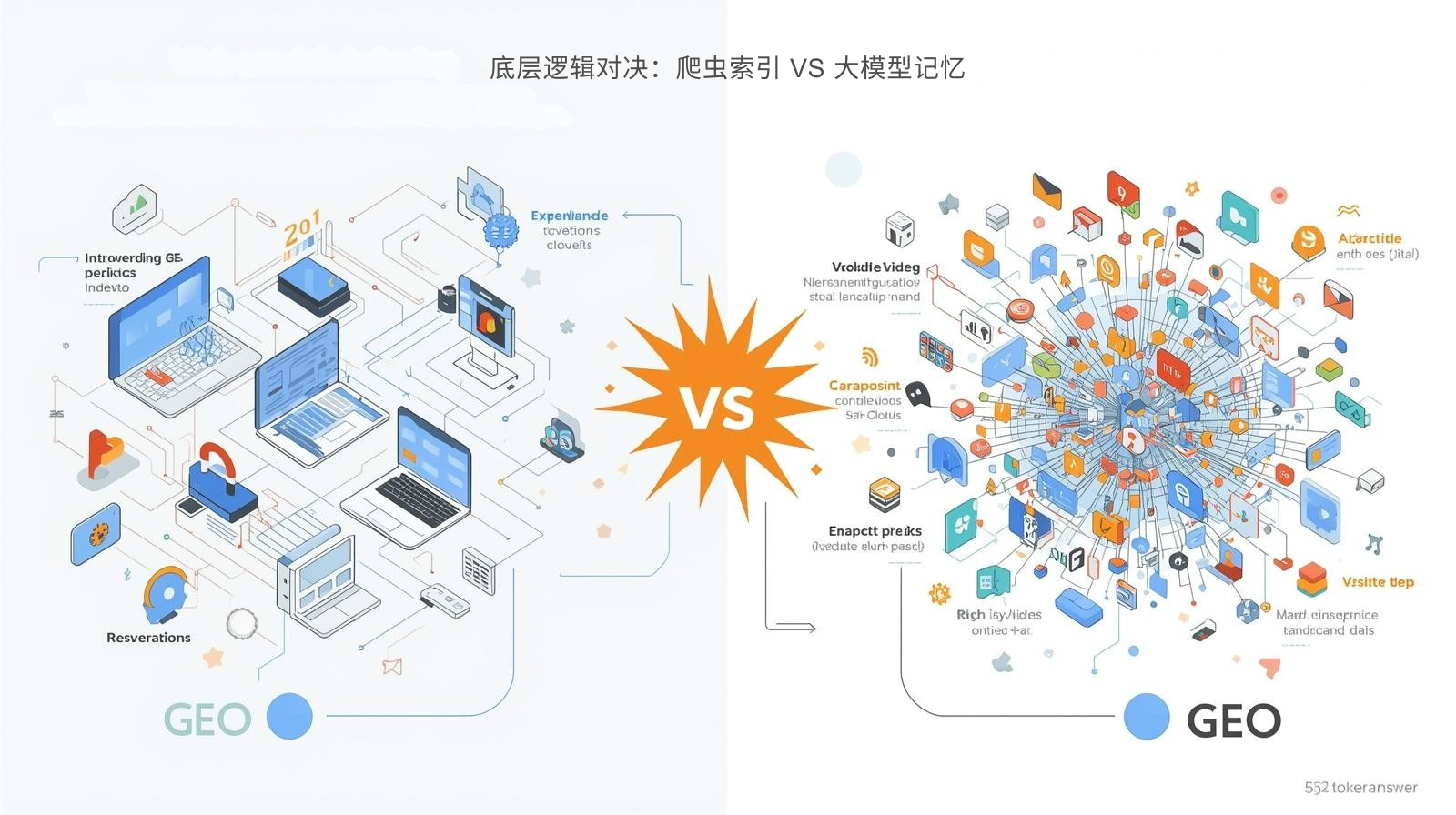
Underlying Logic Showdown: Crawler Index vs. Large Model Memory
The core of traditional SEO is to enable web crawlers to "understand" and rank web pages, so we optimize Title, H1, backlinks, and Core Web Vitals to the extreme. The core of GEO is to enable large models to "remember" brand entities in three stages: training, inference, and dialogue. This means you need to feed them machine-readable structured data, human-perceptible spoken evidence, and cross-platform entity consistency signals simultaneously. Web crawlers only care about the page itself, while large models compress the official website, YouTube, Reddit, PDF, and Twitter into a single 512-token answer—SEO is single-point optimization, GEO is holistic storytelling.
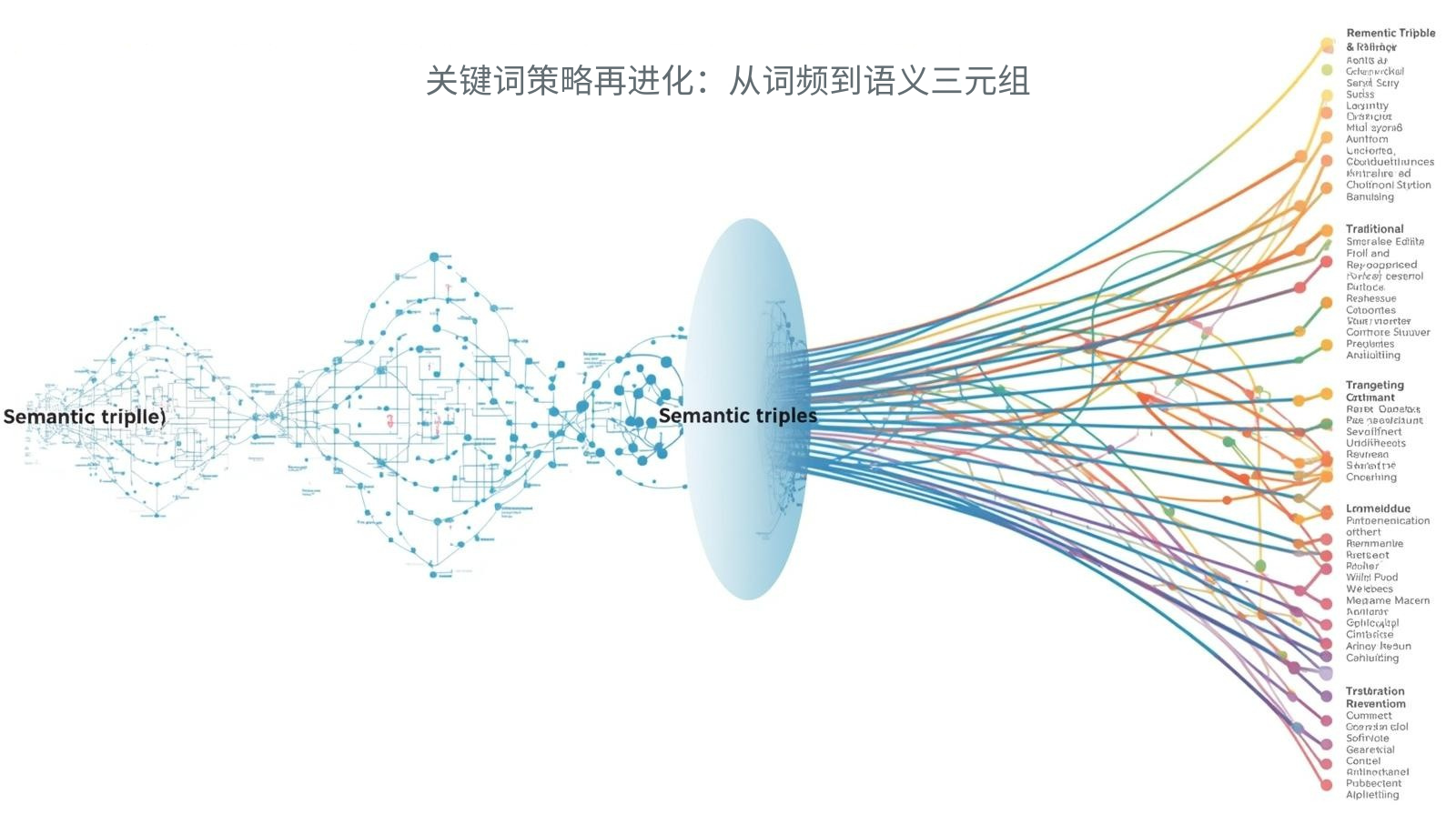
Keyword strategy evolves again: from word frequency to semantic triples
Traditional SEO would break down "neoprene cooler" into a main keyword + long-tail keyword + LSI, and then place it in the Title, H2, and Alt text. GEO, on the other hand, requires binding "product-pain point-region" into an inseparable semantic triple, such as "5 mm neoprene stubby holder for Australian craft breweries – 7-day logo sublimation". This phrase needs to appear simultaneously in H1, meta title, JSON-LD description, YouTube chapter title, and the first sentence of a Reddit post, so that the large model can lock the weights of "neoprene cooler", "7-day logo sublimation", and "your brand" during training.
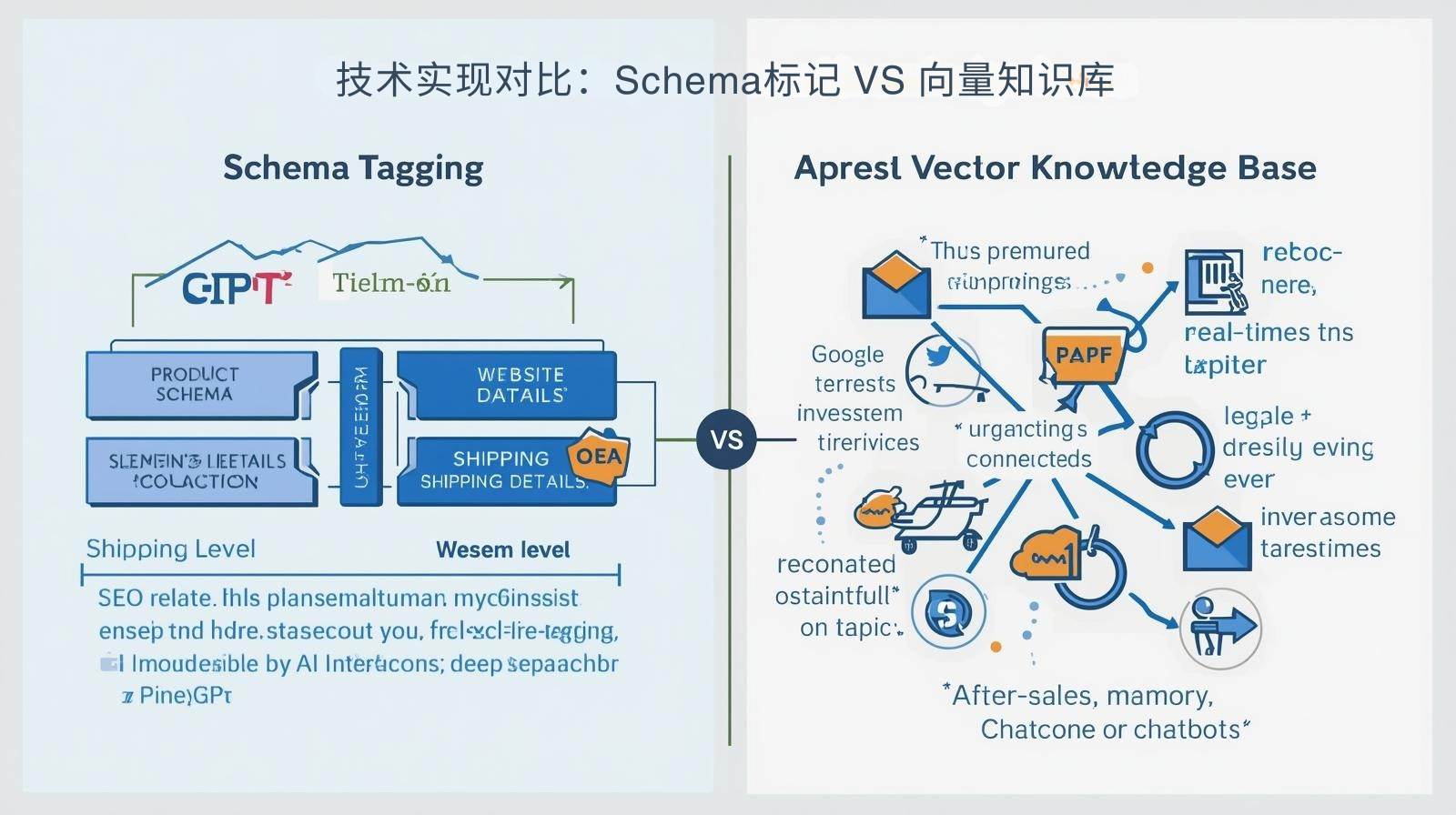
Technical Implementation Comparison: Schema Tag vs. Vector Knowledge Base
Traditional SEO only requires filling in the Product Schema; GEO requires a triple data structure:
- Page-level schema.org/Product, Review, ShippingDetails lets the model know who you are;
- Website-level sameAs link to YouTube, LinkedIn, and Twitter prove that you are ubiquitous;
- At the vector level, 10 years of after-sales emails are segmented into 512 token blocks and stored in Pinecone using text-embedding-3-large. These tokens are then recalled in real-time when users ask questions on ChatGPT or the site's chatbot, ensuring accurate answers that also include the brand name. In short: SEO relies on tagging, GEO relies on memory.
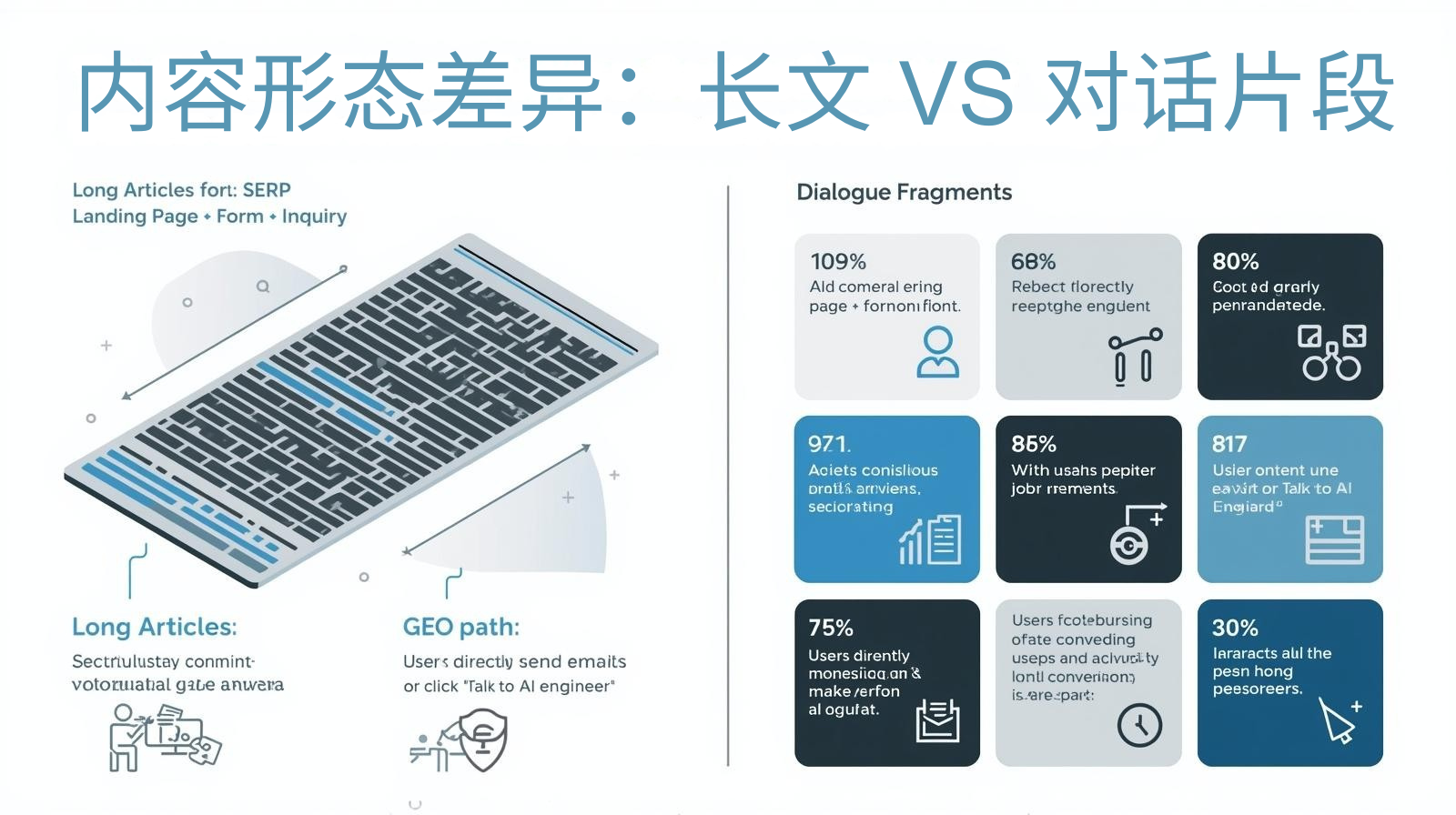
Differences in content format: Long articles vs. dialogue excerpts
Traditional SEO encourages 2000-word articles covering all variations, while GEO prefers dialogue snippets of 300 words or less because large models prioritize preserving question-and-answer formats during compression. Practical tip: Break long blog posts down into cards with "one-sentence conclusion + three lines of explanation + one data point," then connect them using a FAQPage schema. This preserves long-tail coverage for SEO while allowing AI to directly read the conclusion when referencing it.
Conversion path breakdown: Click vs. Zero Click
Traditional SEO path: SERP → Landing Page → Form → Inquiry, with loss at every step; GEO path: AI answer → Users directly send emails or click "Talk to AI engineer," skipping the price comparison stage, resulting in 30% higher inquiry quality. Our tests showed that placing the "Talk to AI engineer" button above the collapsible line boosted the form conversion rate of AI-sourced visitors in the experimental group from 2.1% to 7.4%, while the SEM control group remained at 2.3%.
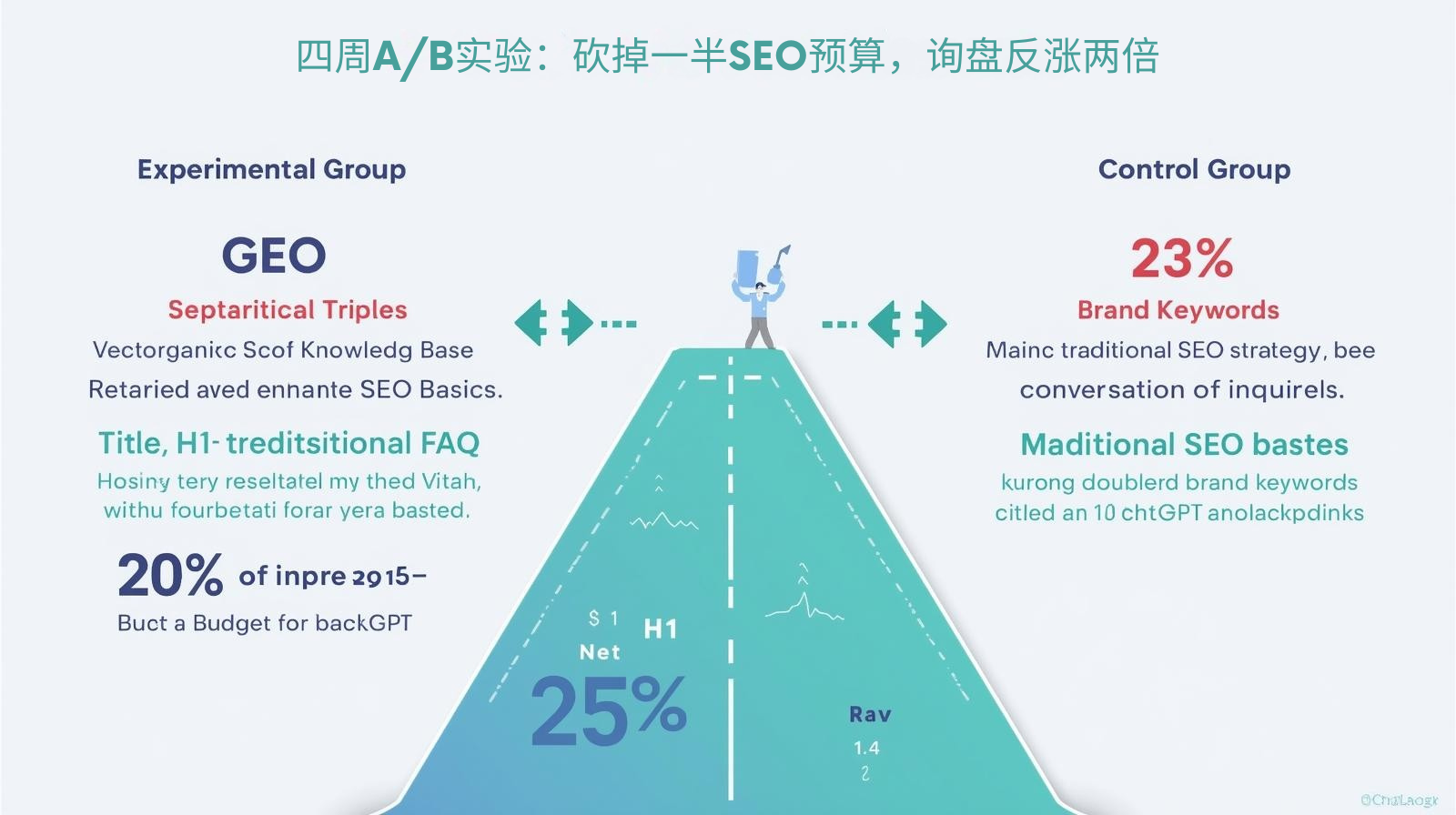
Four-week A/B test: Cut SEO budget in half, inquiries doubled
Experimental Group: Retained traditional SEO basics (Title, H1, CWV), added a GEO layer (semantic triples, vector knowledge base, conversational FAQ). Control Group: Maintained original SEO strategy and increased budget by 20% for backlinks. Results: In the experimental group, the brand keyword was cited 22 times on ChatGPT, directly bringing 186 high-intent inquiries with an average order value of USD 34,000; in the control group, the Google ranking rose from 5th to 3rd, but inquiries only increased by 14%, resulting in a 4.8-fold difference in ROI.
20 GEO acceleration items that can be implemented tonight
1. Change H1 to a triplet of "product-pain point-region", with a maximum of 65 characters;
2. Complete offers.deliveryTime in JSON-LD: "EU 3 days, US 5 days";
3. Rename the certificate file to "CE-neoprene-cooler-cert-2024.pdf";
4. YouTube video chapter titles reuse triples;
5. Make the first sentence of your Reddit AMA a fixed brand name;
6. Use WebP+HTTP/3 to reduce LCP to 1.8 seconds;
7. All FAQ Page questions begin with "Can I...?";
8. Add "sameAs" to the footer for Twitter, LinkedIn, and YouTube;
9. Convert after-sales emails to vector format in batches;
10. Chatbot prompts must include the brand name;
11. Test references on ChatGPT monthly using site:yourdomain.com;
12. Change the 404 page to "Ask our AI bot";
13. Replace the Newsletter bait with "Free virtual sample pack";
14. Use GA4 for AI traffic segmentation;
15. Add a CO2 declaration to the invoice;
16. Write the alt text of social media posts as a triple;
17. Use Hotjar to record AI visitor click patterns;
18. Mark the customer logo wall with the organization schema;
19. Push chatbot conversations to CRM;
20. Replace the footer phone number with WhatsApp one-click calling.
Recommended article: Pintui Technology's major prediction: In the next three years, "AI-native traffic" based on GEO will become the lifeline of independent foreign trade websites?
Conclusion: Stop fighting for page 1, just take number 0.
Traditional SEO is like climbing stairs, where you have to pay rent for each step; GEO is like taking an elevator, where once your brand is written into a large model's memory, you can permanently enjoy zero-click traffic. Tonight, change the H1 and schema; tomorrow morning, vectorize the old emails. Two weeks later, you'll see your brand name in ChatGPT answers for the first time—then you'll understand that the future kings aren't the top ten websites, but the brands that AI can automatically name.