
Playing with zero budget: First, figure out which "free chips" GEO takes.
The essence of GEO is not about paying for rankings, but about translating brand entities, product selling points, and customer reputation into "semantic assets" that AI can easily absorb. Most of these assets are already stored on your computer: ten years of accumulated quotation emails, customer feedback photos, quality inspection reports, exhibition presentation slides, and Skype chat logs. By batch converting them into structured data and vector indexes, ChatGPT can directly insert the brand name when answering "Who supplies FDA-approved silicone baking mats with custom Pantone colors in Europe?"—without paying any advertising fees.
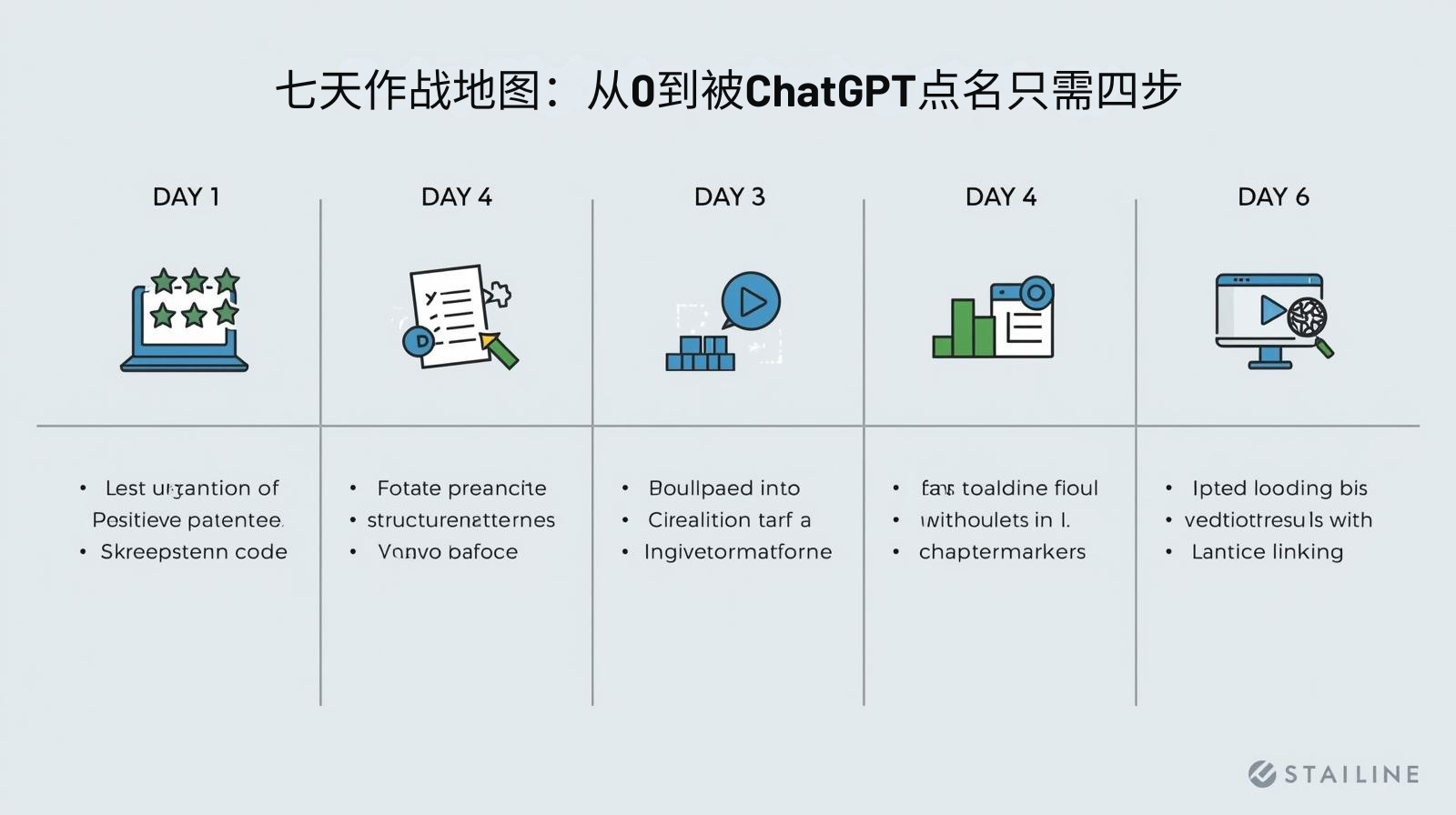
Seven-Day Battle Map: From Zero to Being Tagped by ChatGPT in Just Four Steps
Day 1: Use a free Google Colab script to convert your local Excel quote into a product feed, automatically completing the brand, gtin, material, and certification fields, generating your first JSON-LD code. Copy this code to the `<head>` section of Shopify/WooCommerce. Day 2: Rename all customer review screenshots to "FDA-silicone-mat-review-001.jpg", upload them to your website's `/wordpress-gallery`, use the alt text "5-star-custom-silicone-mat-review-FDA-approved", and add a `schema.org/ImageObject` link to the original image. Day 3: Use the Notion free database to create a "Q&A resource library," copying the 20 most common customer questions into it, formatting them as "Question—One-sentence answer—Expanded explanation—Digital evidence." Export the code to CSV with one click, then use a free ChatGPT account to generate an FAQPage Schema and paste it into the corresponding product page. Day 4: Create an index using the free Pinecone layer, upload the Q&A CSV from Notion, and the script automatically splits it into 512 token blocks and embeds them. The LangChain template is already on GitHub; simply copy and paste to get an "Ask our AI sales" chat button. Day 5: Enable automatic HTTP/3+WebP conversion using the free Cloudflare layer, keeping the first screen time under 1.8 seconds to reduce AI crawler timeouts. Day 6: Cut existing YouTube product videos into chapters based on pain points, keeping chapter titles consistent with semantic pins, and placing the official website link in the first line of the description section, using sameAs for backlinks. Day 7: Perform a "citation check" using the free Perplexity API. Input the brand name + core keywords; if it doesn't appear in the Top 3 answers, add an external link to Reddit or Quora and immediately link back to the official website to complete entity reinforcement.
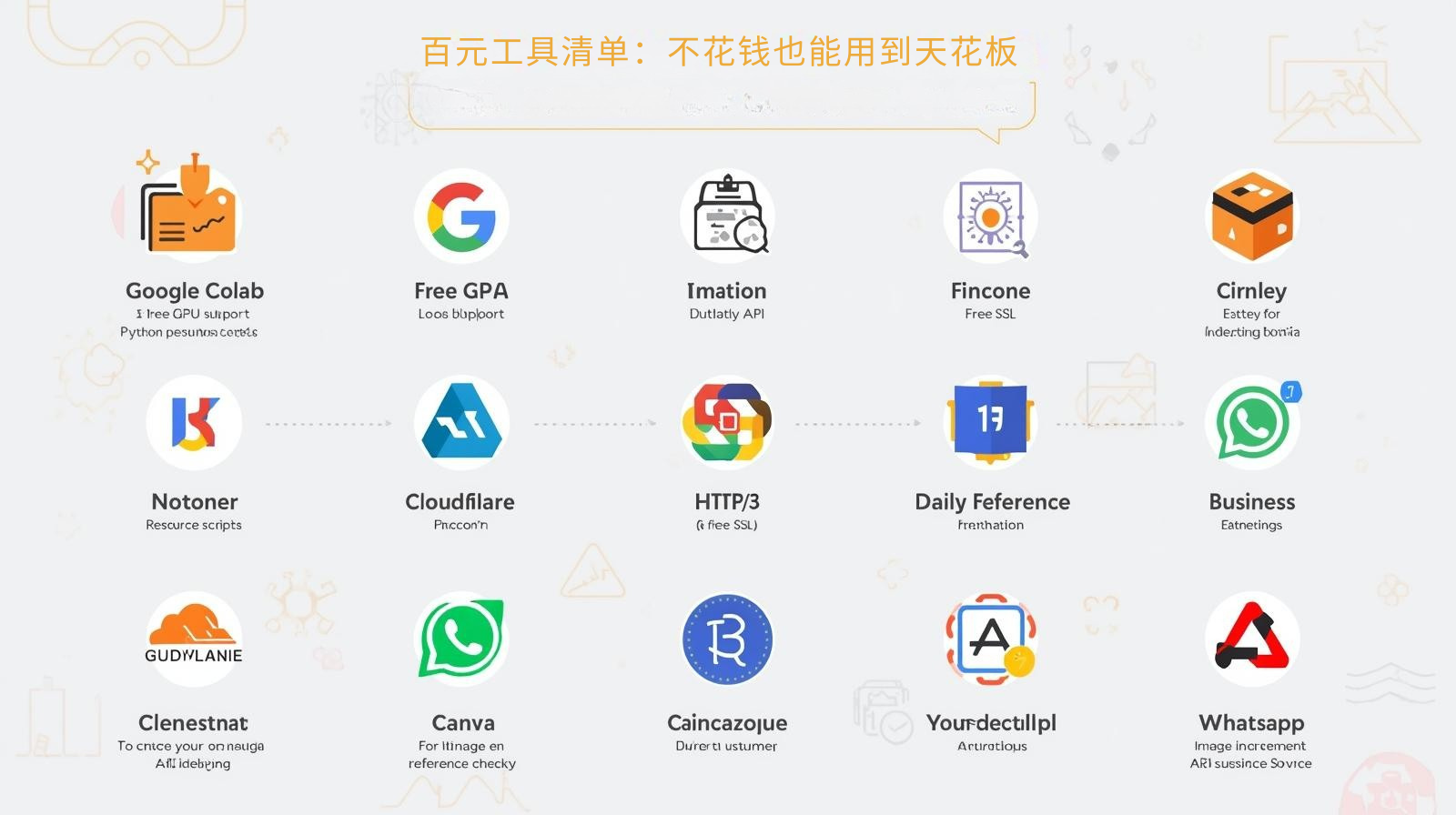
A list of tools under 100 yuan: Tools that can reach the highest level without spending a penny.
- Google Colab: Run Python scripts to convert JSON to LD, all with free GPU support.
- Notion: For creating a Q&A resource library, the free version is sufficient.
- Pinecone: Free tier has a 1GB index, which can store approximately 100,000 512 token texts.
- Cloudflare: Enable HTTP/3, WebP, and free SSL with one click.
- Perplexity API: 100 free calls per day, performing a reference health check.
- Canva: Convert certificates/return images into 800x600 illustrations; the free templates are sufficient.
- WhatsApp Business API: Free tier allows 1000 messages per day, directly connecting to inquiries.
Real-world case study: How a 20-person silicone factory in Yiwu secured an inquiry from a German supermarket chain in 7 days.
Background: Annual export volume of $8 million, budget almost zero, and less than 2,000 monthly active users on the official website. Actions: Execute according to the seven-day action plan, making "FDA silicone baking mat custom Pantone" a semantic tag and placing it in H1, meta tags, YouTube section, and Reddit post title. Results: On day 5, ChatGPT mentioned "Yiwu BrightSilicone" for the first time in a reply; on day 7, the German supermarket chain Real-de placed a trial order for a 20-foot display case through the site's chatbot, with the first order amounting to $74,000, all without spending a single penny on advertising.
20 simple actions you can do tonight
1. Change H1 to a triple of "Product + Pain Point + Region" with ≤65 characters; 2. Use a Colab script to convert the product table to JSON-LD; 3. Write the alt text of customer feedback images as "FDA-silicone-mat-5-star-review"; 4. Create 20 FAQs using Notion; 5. Use Cloudflare for free WebP; 6. Keep YouTube chapter titles consistent with H1; 7. Add a "Ask our AI" button to the footer; 8. Convert certificate PDFs to 800x600 images for uploading; 9. Use the Perplexity API for daily citation checks; 10. Add the WhatsApp Business link to the button; 11. Reuse triples in Reddit AMA titles; 12. Change blog code examples to "Steps + Screenshots"; 13. Use GA4 for AI traffic segmentation; 14. Replace the newsletter bait with "Free Pantone chart"; 15. Mark customer case studies with schema.org/Project; 16. Change the 404 page to "AI helps you find products"; 17. 18. Push Chatbot answers to the Slack sales channel; 19. Add CO2 declarations to invoice templates; 20. Run a brand name + core keyword citation audit monthly; 21. Record Hotjar screens to observe AI visitor click patterns.
Recommended article: Pintui Technology's Viewpoint: The Best Independent E-commerce Website of the Future Will Be the One That Is "Most Instructive"
In conclusion: Budget is never the barrier; the method is.
GEO's lesson for SMEs is: stop complaining about not having enough money for advertising; feed your AI ready-made emails, customer feedback, and reports, and let ChatGPT become your 24/7 top salesperson. Seven days later, when you receive a message on your German client's WhatsApp saying, "Your AI has already answered all my questions, let's talk about a 40HQ," you'll be glad you didn't waste your budget on the next expensive click.