
Seamless multilingual switching: Breaking down communication barriers for independent websites

  • Independent website operation strategy
  • Foreign trade stations
  • Foreign trade website
Posted by 广州品店科技有限公司 On Nov 19 2025

Google's 2025 Global User Experience Report indicates that independent websites with intelligent multilingual switching capabilities see a 280% increase in conversion rates in overseas markets, and user dwell time is three times longer than on monolingual websites. Data from a survey by the China Council for the Promotion of International Trade shows that foreign trade enterprises implementing seamless language adaptation see a 65% increase in inquiry quality and a 92% customer satisfaction rate. Research by the Global Localization Association (GALA) emphasizes that the technological advantages of independent websites in real-time language rendering, cultural context preservation, and consistent interactive experiences are reshaping communication standards in cross-border business.
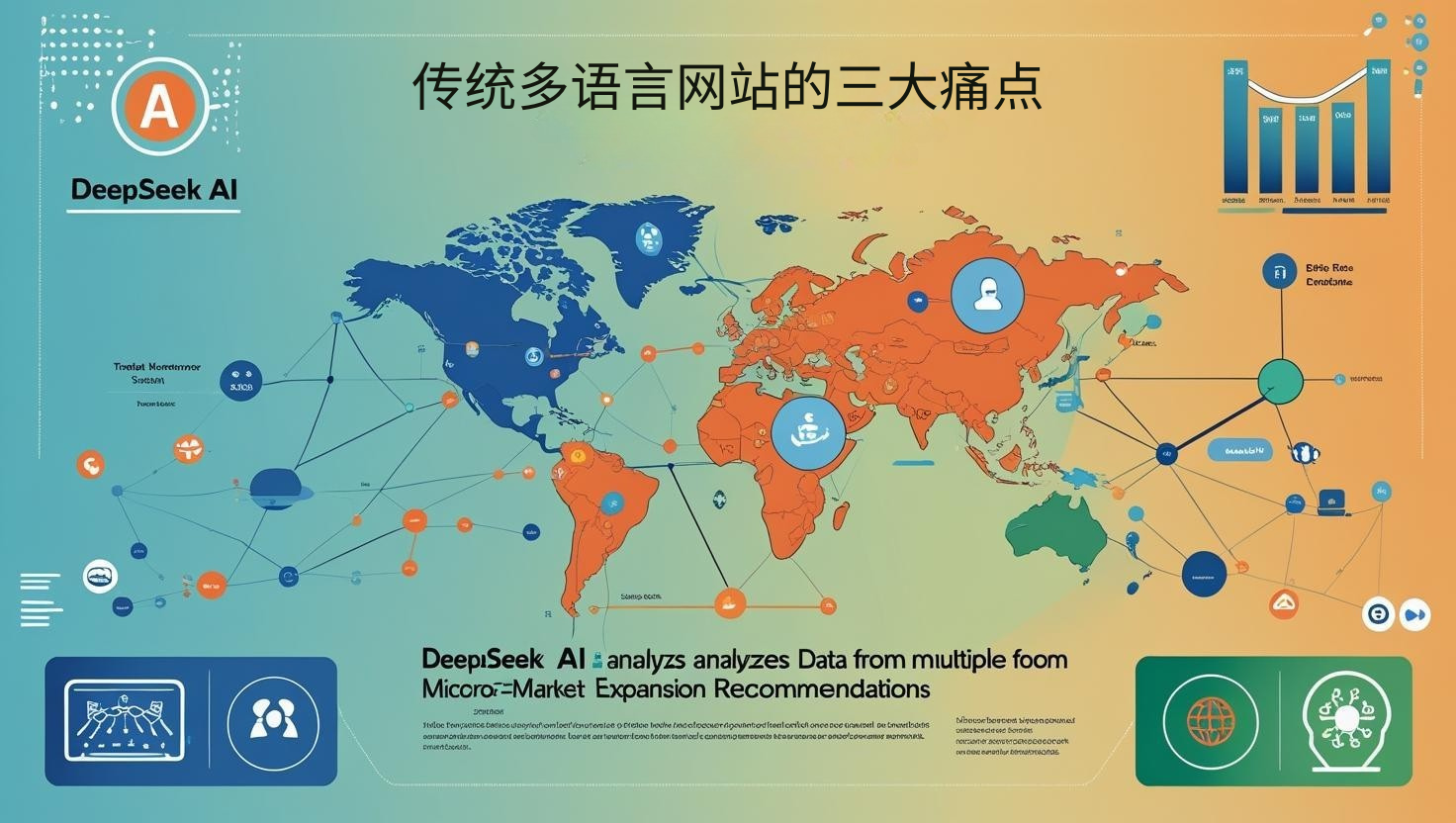
Three major pain points of traditional multilingual websites Three major pain points of traditional multilingual websites

1. Machine translation distortion

  • The mistranslation rate of technical terms is as high as 40% (data from a machinery brand's after-sales service).
  • Lack of cultural metaphorical expression

2. Disjointed switching experience

  • Language switching caused shopping cart to be emptied (issue with a certain e-commerce platform)
  • User path breakage rate exceeds 50%.

3. Updates are out of sync

  • The main website's content updates are 3 weeks behind schedule (audit by a fast-moving consumer goods brand).
  • Multi-version management chaos

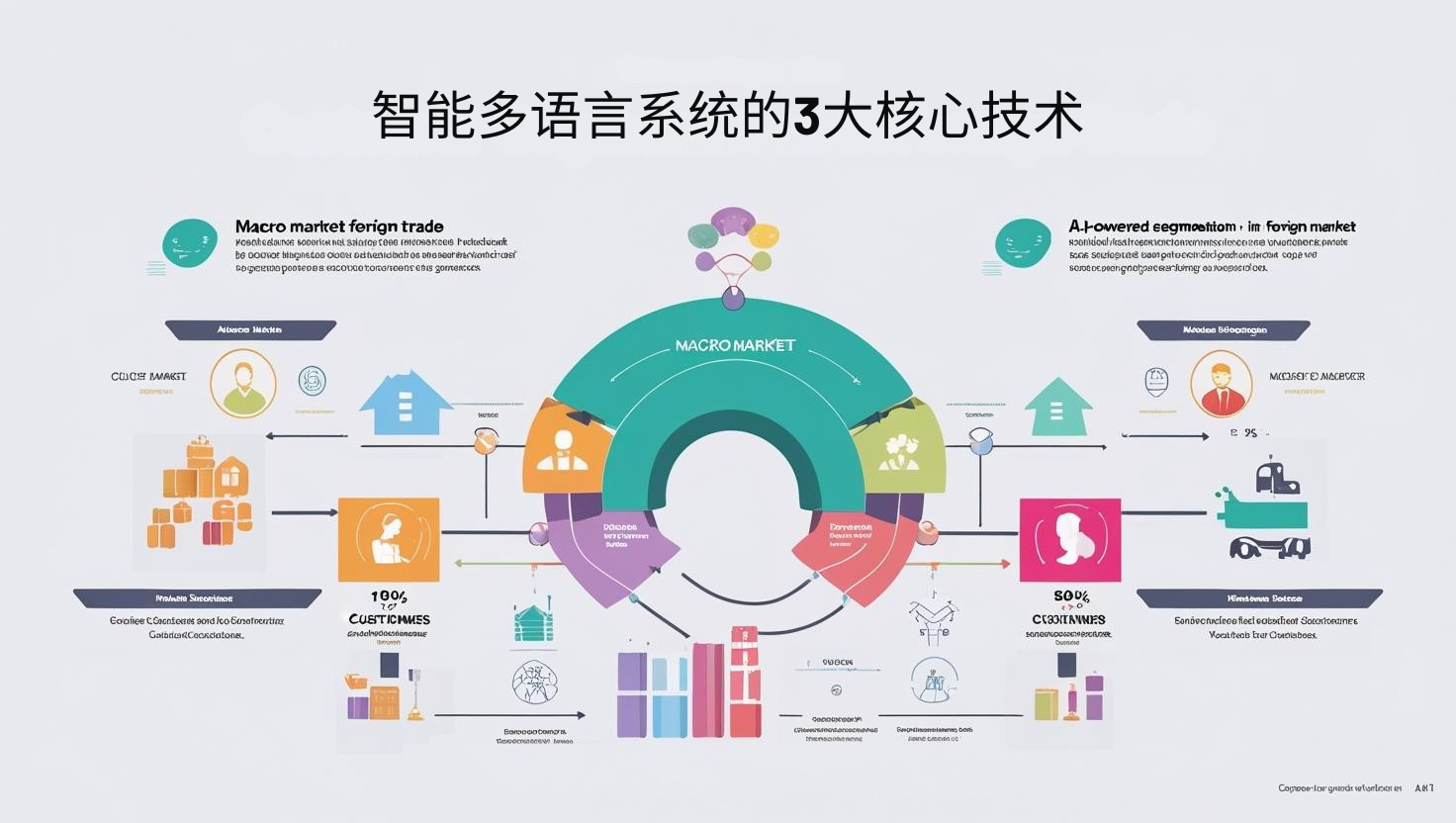
The three core technologies of intelligent multilingual systems The three core technologies of intelligent multilingual systems

1. Context-aware translation

  • Industry terminology database + brand expression guidelines (covering 87 languages)
  • Real-time detection of cultural sensitivity

Data from the Language Service Center of the China Council for the Promotion of International Trade: "Intelligent translation improves communication accuracy by 200%."

2. State Preservation Technology

  • User session cross-language continuation
  • Form data is automatically inherited

Global Localization Association (GALA) research: Maintaining state increases conversion rate by 3 times

3. Collaborative Management Platform

  • Content changes will be automatically synchronized across all language versions.
  • Translation progress visualization tracking

Pinshop Multilingual Solution

Pinshop offers: ✅ Neural network translation engine ✅ Zero-disruption switching technology ✅ Multilingual collaboration platform ✅ Culture compatibility checker

Visit the Pinshop website now

Recommended article: Multilingual Independent Website Strategy: Balancing Localization and Internationalization Pinshop Foreign Trade Website Building

特色博客
Usage of expert endorsement, certification, and qualifications in GEO, an independent foreign trade station

Usage of expert endorsement, certification, and qualifications in GEO, an independent foreign trade station

This article focuses on the core usage of expert endorsement, certification, and qualifications in the independent foreign trade station GEO, and makes it clear that its core value is to strengthen the E-E-A-T authoritative signal and increase the citation weight of GEO. Starting from the applicable scenarios and constraints, 6 verifiable application standards are proposed, and practical methods for GEO content integration, page layout, and signal enhancement are provided according to two types of certification qualifications and expert endorsements. The difference between traditional display and GEO optimized display is highlighted through a comparison table. Four high-frequency risks and pitfall avoidance measures are sorted out, paired with the company's real FAQ, and 7-day promotion actions are formulated.

Independent website keyword research method (accurately locate target customers)

Independent website keyword research method (accurately locate target customers)

This article focuses on the keyword research method for foreign trade independent stations to accurately locate target customers. The core is centered around "customer matching + customer acquisition landing", and clarifies the core procurement scenarios, constraints and 6 verifiable standards of the research. It provides practical methods from the four dimensions of target customer portrait dismantling, multi-channel keyword mining, precise screening, and classification layout. Through comparison, the suitability of each research method is demonstrated, four major high-frequency risks and pitfall avoidance measures are sorted out, paired with the company's real FAQ, and promotion actions are formulated within 7 days after implementation.

How to improve GEO ranking using a question-and-answer structure

How to improve GEO ranking using a question-and-answer structure

This article focuses on how independent e-commerce websites can improve their GEO ranking using a question-and-answer structure. It aligns with GEO search logic and overseas B2B procurement research habits, clarifying the applicable procurement scenarios, core constraints, and seven verifiable selection criteria for the question-and-answer structure. Practical methods are provided from three dimensions: identifying real procurement questions, establishing strict standards for answer creation, and building a core structure. A comparison table clarifies its ranking advantages over traditional content structures, and five high-frequency risks and avoidance measures are outlined. Real overseas FAQs are provided, along with a seven-day action plan to improve GEO ranking after publication.

How to improve GEO ranking using a question-and-answer structure

How to improve GEO ranking using a question-and-answer structure

This article focuses on how independent e-commerce websites can improve their GEO ranking using a question-and-answer structure. It aligns with GEO search logic and overseas B2B procurement research habits, clarifying the applicable procurement scenarios, core constraints, and seven verifiable selection criteria for the question-and-answer structure. Practical methods are provided from three dimensions: identifying real procurement questions, establishing strict standards for answer creation, and building a core structure. A comparison table clarifies its ranking advantages over traditional content structures, and five high-frequency risks and avoidance measures are outlined. Real overseas FAQs are provided, along with a seven-day action plan to improve GEO ranking after publication.

Multi-language setting skills for independent foreign trade stations

Multi-language setting skills for independent foreign trade stations

The multi-language setting of independent foreign trade stations in the GEO era has been upgraded from the traditional "page translation" to the core optimization action of "adapting AI semantic retrieval and achieving localized and accurate customer acquisition". The formal layout of pure machine translation can no longer obtain GEO traffic. Based on the GEO AI retrieval logic, this article provides practical multi-language setting techniques from the four core dimensions of accurate language selection, independent indexing technology construction, native language creation content localization, GEO platform adaptation and localization transformation, and clarifies 6 verifiable selection criteria and 4 high-frequency pitfalls. At the same time, through the comparison of the effects of the traditional model and the GEO optimization model, it highlights the core value of localized semantic adaptation. Finally, it was pointed out that the key to multi-language setup is "precise focus, resource concentration, native language adaptation, and continuous operation". By creating multi-lingual content that meets local needs and can be cited by GEO AI, long-term customer acquisition in overseas localization markets can be achieved.

Long content vs. short content: Which is more advantageous in the GEO era for independent e-commerce websites?

Long content vs. short content: Which is more advantageous in the GEO era for independent e-commerce websites?

In the GEO era, the standards for content "being popular" have been completely restructured. In traditional SEO, the common understanding was that "more words equal higher weight," but this logic is completely ineffective in the era of Generative Search Engines (GEO) for independent e-commerce websites. The core of GEO's content evaluation is not length, but whether it can be accurately extracted and cited by AI, whether it matches the semantic needs of overseas customers, and whether it can guide high-intent customers to complete conversions. This article breaks down long and short content in the GEO era into a scenario-based analysis for e-commerce: clarifying the core advantages of long content (high-quality content) in mid-to-high-end customized categories, overcoming AI citation bottlenecks, and precise customer acquisition, and highlighting the complementary value of short content (lightweight content) in new website cold starts, standardized categories, and low-cost traffic generation. Ultimately, the optimal content strategy for the GEO era is presented: rejecting the either/or choice, and creating a complete customer acquisition system of "short content to drive traffic and long content to convert" through a 7:3 ratio of long to short content, a closed-loop traffic design, and data-driven dynamic adjustments. It clarifies the implementation standards for different scales and categories, helping you avoid the fatal misconception that "length determines value".