
In independent website operations, pop-ups are a tool for directly reaching users, often used to collect email addresses, promote discounts, and issue important notifications. However, improper use of pop-ups can easily lead to user annoyance and negatively impact the overall user experience. Improving conversion rates through design and triggering strategies is a question every independent website operator needs to consider in depth.
 Pop-up design: concise content and clear visual guidance
Design is the first step in your pop-up strategy. Your website's pop-up should quickly convey its core message and guide users to action. The content should highlight value, such as discounts, limited-time events, or exclusive content. Visually, it should align with the overall style of the website, using a clear call-to-action button and eye-catching color scheme, while avoiding overly obtrusive content. According to research by the American Marketing Association (AMA ) and Nielsen Norman Group , simple pop-ups with clear messaging can increase click-through rates and conversion rates.
Pop-up timing: precise triggering to avoid interruptions
In addition to design, the timing of pop-up notifications is equally crucial. Displaying them too early or too frequently can impact the user experience, while displaying them too late can lead to missed conversion opportunities. Independent websites can set trigger conditions based on user behavior, such as page dwell time, scroll depth, and specific actions (adding to cart, browsing multiple pages of products). Authoritative data shows that personalized pop-ups triggered by user behavior have an average conversion rate that is over 30% higher than fixed-time pop-ups. By combining cross-border e-commerce data provided by the International E-Commerce Association (IEIA) , companies can optimize triggering rules and achieve targeted marketing.
 User experience: Pop-up strategy matches user psychology
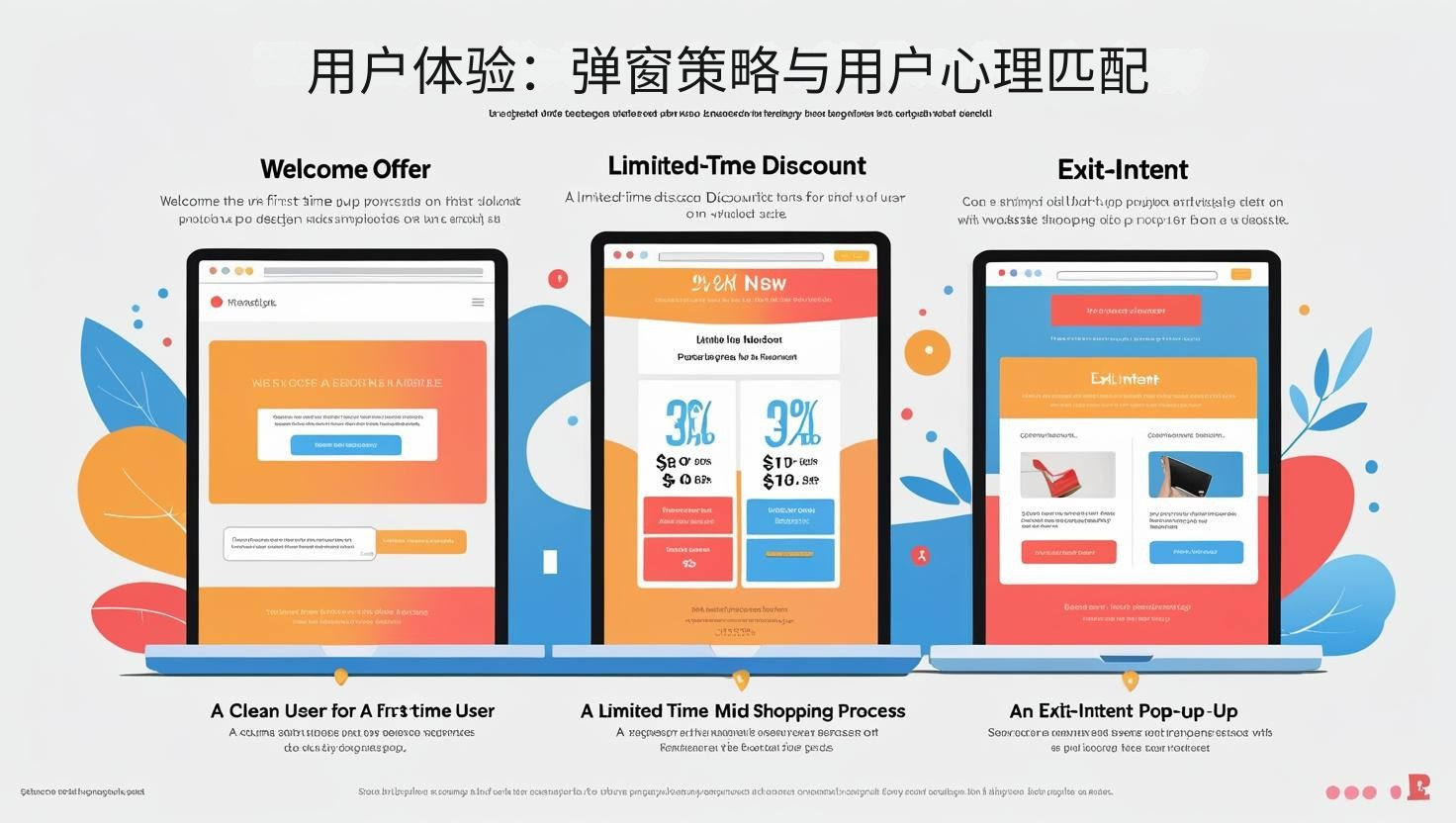
Pop-up strategies aren't just about technical maneuvers; they also involve user psychology. Users value benefits and convenience, so pop-ups need to provide value without disrupting the browsing experience. For example, a welcome offer could appear for first-time users, a limited-time discount could be displayed mid-shopping, and an exit pop-up could trigger for users with a clear intention to leave. By combining user behavior data with psychological research, companies can achieve precise pop-up placement on their independent websites, increasing conversion rates while reducing annoyance.
Data-driven optimization: continuous testing and iteration
An effective pop-up strategy requires data support. Independent website operators should regularly analyze the display rate, click-through rate, conversion rate, and user feedback of pop-ups, and conduct A/B testing to optimize content, design, and trigger conditions. Through data platforms such as Google Analytics and heat map tools (such as Hotjar), companies can understand the interaction effect between users and pop-ups, continuously adjust strategies, and maximize the effect. Data from the International E-Commerce Association (IEIA) and the Association for Marketing Research (AMA) show that data-driven optimization of independent website marketing plans can increase the overall conversion rate by 20%-50%[1][3].
Combining pop-up strategies with closed-loop marketing
Pop-up ads on independent websites aren't just a single reach tool; they should be integrated into the overall marketing cycle. By collecting user email addresses or behavioral data, companies can conduct follow-up email marketing, social media remarketing, or targeted advertising, achieving a complete closed loop from reach, guidance, to conversion. For example, the multi-channel integration capabilities provided by the Pinshop website building platform can automatically synchronize customer information collected through pop-up ads with CRM systems or marketing automation tools, improving the efficiency of converting potential customers.
Recommended related articles: Multilingual Independent Station Strategy: Balancing Localization and Internationalization