
I. The Root of the Problem: Why do cold, hard specifications fail to resonate with people? When a German engineer asks ChatGPT late at night about “solar streetlights suitable for use in the Bavarian mountains,” if your website only provides product dimensions and wattage, the AI will have a hard time connecting your product with that fog-shrouded hillside.
In fact, the vast majority of independent e-commerce websites still use the display logic from twenty years ago—displaying products as a parts list. However, in the era of generative AI, what is truly scarce is not information, but a way of telling information with warmth and empathy.
Data shows that pages with only technical parameters have a conversion rate of about 0.9% after AI references, while pages incorporating real stories can achieve a conversion rate of 7.8%. This difference lies in the power of emotion.

II. Three Core Shifts in Narrative Thinking
The shift from "What is this?" to "What can this change?" is evident in traditional product pages that would state "200W power, IP68 protection rating." A narrative approach, however, would tell the story: "After Mr. Hans installed this streetlight on his farm in the Alps, he no longer had to risk his life to inspect wiring during blizzards."
Instead of claiming "we are the best" and "we know best," show a faded photo of a nameplate instead of boasting "industry-leading durability"—"This street lamp, number SL-018, has worked for 2,190 days and nights at the entrance of the ski resort in St. Moritz."
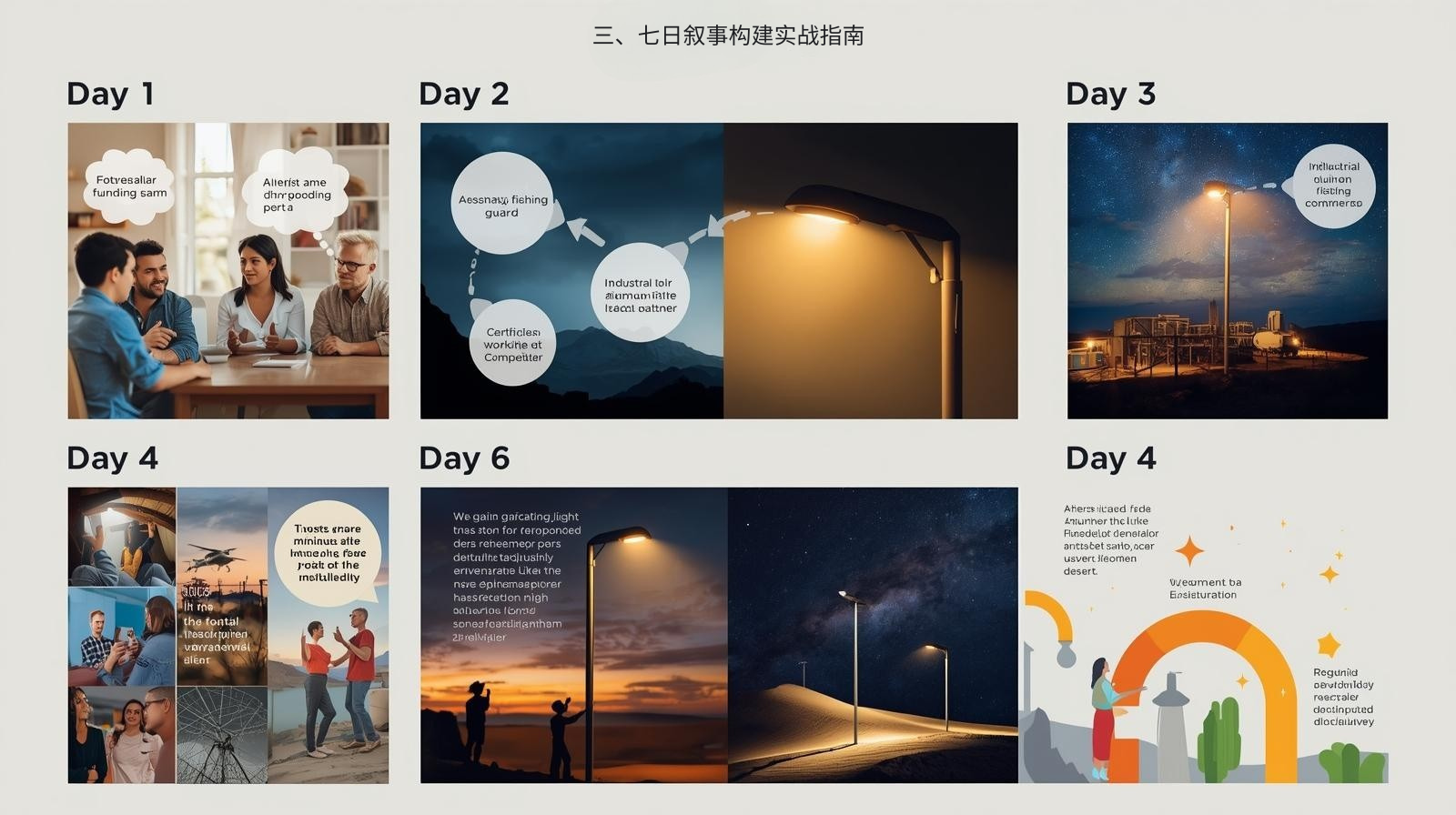
III. A Practical Guide to Constructing a Seven-Day Narrative
Day 1: Uncovering the Brand's Original Story. Sit down with the founding team and discuss these three questions: What initially prompted you to start this product? Which customer's feedback are you most proud of? What extreme environmental challenges has the product overcome?
Record these vivid moments; they will become the cornerstone of building emotional connections.
Day 2: Build Product Roles. Position your solar streetlights as "mountain guardians" or your industrial air compressors as "tireless workshop partners".
This is not fiction, but rather an attempt to give the product the character and charm it deserves.
Day 3: Create a visual narrative medium. Use your phone to film a real customer usage scenario—perhaps a beam of light still clear in the morning mist of a Norwegian fishing port, or the scene of a small town on the edge of the Sahara being lit up for the first time at night.
Day 4 The intersection of weaving technology and humanity. Instead of saying "using aerospace-grade aluminum alloy", we say "we chose the same material used to manufacture helicopter rotor blades because it must withstand the unpredictable temperature changes of the mountain climate".
Remember to capture those small moments: the installers breathing out warm air and giving a thumbs up, and the children playing around the newly installed streetlights.
Day 5: Imbuing Cultural Resonance Points . Researching the cultural symbols of the target market—when creating pages for German clients, meticulously noting every test standard and certification number; when designing content for Middle Eastern clients, highlighting the product's durability under high temperatures and dust storms.
Day 6: Lay out an immersive experience path. Design a browsing path that allows visitors to naturally immerse themselves in the experience: from the problem scenario they encounter, to the introduction of the product, and then to the new and changed landscape.
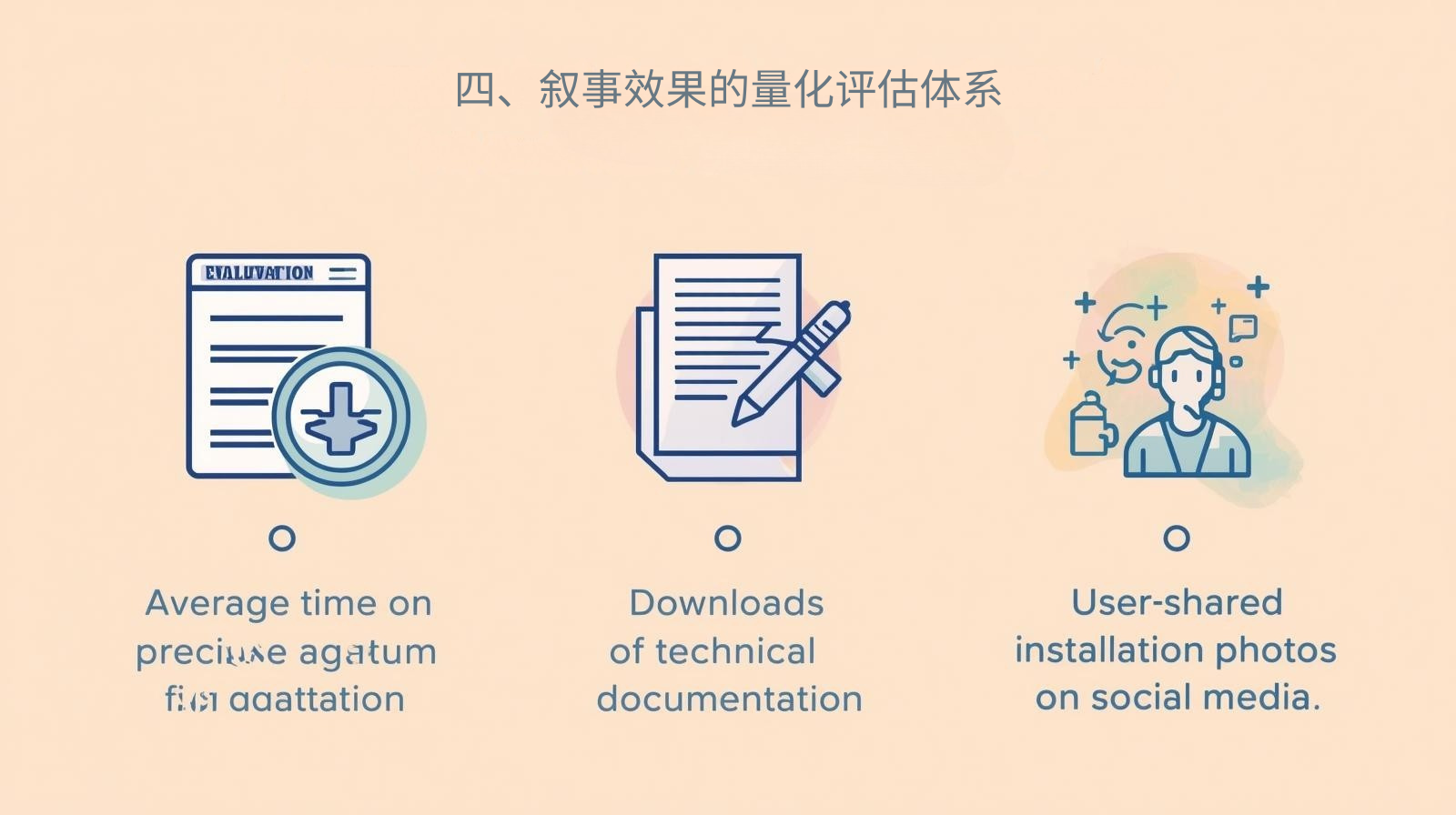
IV. Quantitative Evaluation System for Narrative Effect
In addition to traditional conversion rates and inquiry numbers, we should pay more attention to these new metrics: the average time users spend on the product detail page, the number of visitors who downloaded the technical documentation, and the number of installation photos spontaneously shared on social media—these are all more concrete manifestations of emotional connection and their specific numerical changes.
Recommended related article: PinTui Technology's Viewpoint: The best independent e-commerce website of the future will be the one that is "most instructive".
V. Sustainable Narrative Growth Framework: Establish a mechanism for regularly collecting and updating story materials, encourage customers to share their experiences, and integrate these authentic testimonials into every corner of the website.
Monthly Narrative Updates: Collect a new customer case study each month, even if it's just a simple user experience, as it can become important material for the next round of AI recommendations.