
In March 2026, more and more foreign trade companies realized that relying on individual, piecemeal optimization was no longer sufficient to ensure their independent websites were continuously recognized and recommended by ChatGPT. A dedicated GEO (Geographic Optimization) team, encompassing operations, technology, and content collaboration, was essential. The essence of GEO is enabling AI to smoothly crawl, correctly understand, trust, and recommend your site. It spans three major areas: strategy execution, site technology, and content structuring. Unclear roles and chaotic division of labor can directly lead to abnormal AI crawling, non-standardized content, and a lack of closed-loop optimization, ultimately significantly diminishing the effectiveness of GEO. This article, based on practical experience, fully explains how to configure a GEO team for an independent foreign trade website, how to divide the responsibilities of the three roles, and how to ensure efficient collaboration, ensuring that every task has a responsible person, a defined process, and verifiable results.
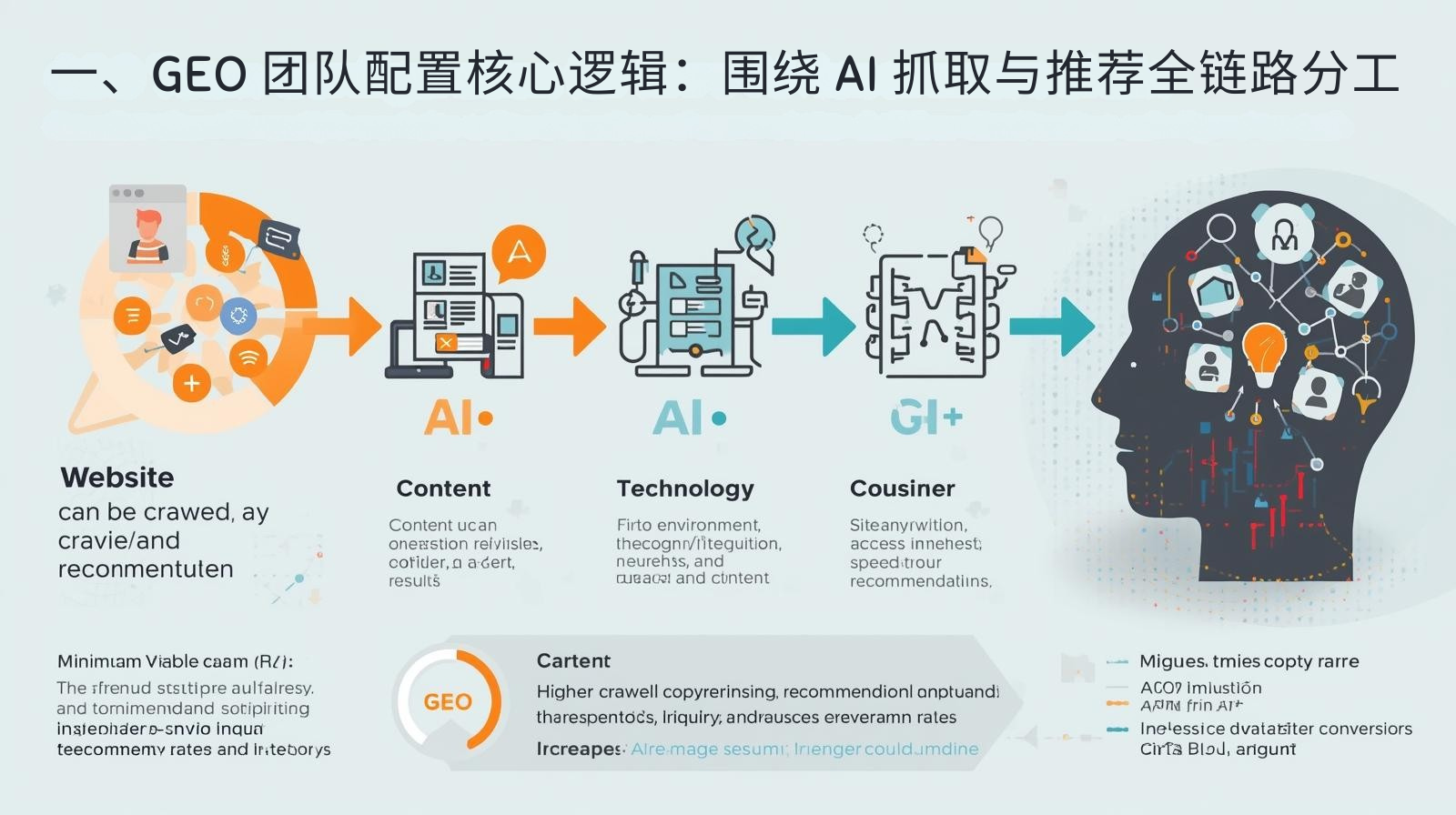
I. Core Logic of GEO Team Configuration: Division of Labor Around the Entire AI Crawling and Recommendation Chain
The complete GEO optimization chain is: the site can be crawled by AI → the content can be understood by AI → the information can be trusted by AI → it can be converted after recommendation → the data can be reviewed and iterated . All job settings are based on this chain. A 2026 survey on AI-driven customer acquisition in foreign trade showed that companies with a clear division of labor among their GEOs (Generative Engine Operators) achieved a 4.1 times higher success rate in AI recommendations compared to companies that relied on a single person for all tasks, resulting in a 47% reduction in inquiry costs. (https://www.cnabke.com/blogs/foreign-trade-geo-generative-engine-optimization.html ) For small and medium-sized foreign trade enterprises, it is not necessary to hire three people; one person can hold multiple positions, but the responsibilities must be clearly defined. For medium and large enterprises, it is recommended to establish a dedicated GEO team to ensure the stable implementation of strategies.
1.1 Minimum Viable GEO Team: 3 roles, 3 types of capabilities
- Operations role: responsible for strategy, execution, post-mortem analysis, and results.
- Technical role: Responsible for site environment, crawler access, speed, and structure.
- Content Credentials: Responsible for AI-friendly copywriting, structured information, and trust-based information.
The three entities do not operate independently, but rather form a closed-loop relationship involving operational leadership, technical support, and content supply .
1.2 GEO Team's Shared Goals
To enable independent websites to achieve higher crawling rates, recognition rates, recommendation frequency, and AI-sourced inquiry conversion rates in AI search engines such as ChatGPT, all division of labor and assessments revolve around this goal.
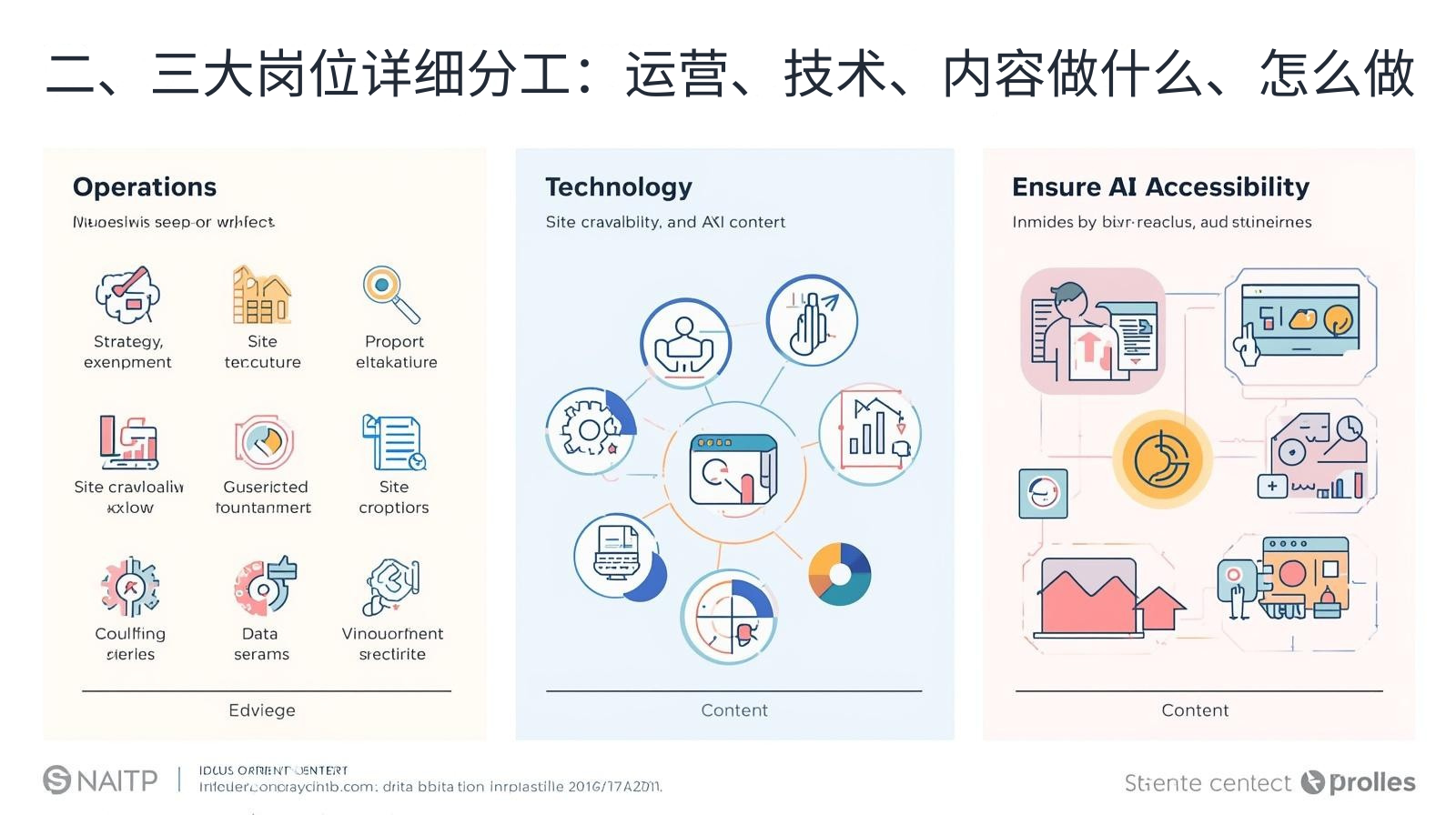
II. Detailed division of responsibilities for the three main roles: Operations, Technology, and Content – what to do and how to do it.
2.1 Operations Position: GEO (General Manager), responsible for overall coordination of strategy, execution, and post-mortem analysis.
The operations manager is the primary person responsible for the GEO project, overseeing the overall goals, pace, results, and post-project review.
Core job responsibilities:
- Develop an overall GEO strategy, including core keywords, target markets, prioritized pages for optimization, and phased goals.
- Break down the tasks and simultaneously assign them to technical and content creation staff, clearly defining delivery timelines and acceptance criteria.
- Monitor GPTBot crawling status, AI recommendation results, traffic and inquiry data: https://help.openai.com/en/articles/5097620-blocking-gptbot .
- Conduct weekly/monthly reviews of GEO performance to identify problems and adjust optimization strategies.
- We adapt to changes in external tools and platform rules, and promptly synchronize team adjustments to our strategies.
- Responsible for optimizing landing page experience, conversion guidance, and inquiry path.
Required output: GEO optimization plan, weekly/monthly review reports, keyword list, and AI recommendation monitoring records.
2.2 Technical Positions: Ensure the site is fully open, capable of capturing, readable, fast, and stable for AI.
Technical roles involve more than just writing code; they also require ensuring that AI crawlers like GPTBot can successfully access websites, read content, and avoid being blocked or experiencing lag.
Core job responsibilities:
- Ensure that the independent website allows GPTBot to crawl normally and is not mistakenly blocked by firewalls or security policies: https://openai.com/gptbot .
- Optimize site loading speed to ensure pages open within 2 seconds in major global markets: https://pagespeed.web.dev
- Enables the scraping of page text, avoiding the situation where core information is only contained in images or complex scripts and cannot be read.
- Establish a standardized page structure, using clear heading levels, lists, and tables to facilitate AI recognition.
- Configure a sitemap, ensure page links are standardized, and promptly remove broken links.
- In coordination with operations, we provide data tracking points to analyze traffic and behavior from AI sources.
Technical roles don't necessarily involve writing complex code ; they are more about ensuring a stable environment, optimizing the site's structure, configuring permissions, and improving speed, making the site inherently compatible with AI crawling rules.
2.3 Content Creator: Write content that AI can understand, buyers can trust, and that can be recommended.
Content is the core ingredient of GEO, and the essence of AI recommendation is to present high-quality, structured, and credible content to users.
Core job responsibilities:
- Write product descriptions, company introductions, service advantages, and FAQs according to AI's understanding habits.
- Complete the product structure information: parameters, specifications, certifications, uses, delivery time, and applicable scenarios. https://validator.schema.org
- Insert verifiable trust information, such as certifications, qualifications, partners, and service commitments.
- It aligns with the real questions asked by overseas buyers, making it easier for ChatGPT to adopt the content as an answer.
- Maintain the authenticity, professionalism, and consistency of content, and avoid excessive AI generation that could lead to a decrease in credibility. https://www.zerogpt.com
- We continuously iterate on content based on operational feedback, and strengthen the recommendation of frequently used keywords and scenarios.
The core of content creation roles is not writing skills, but rather standardized, structured content that can be extracted by AI and built on trust .
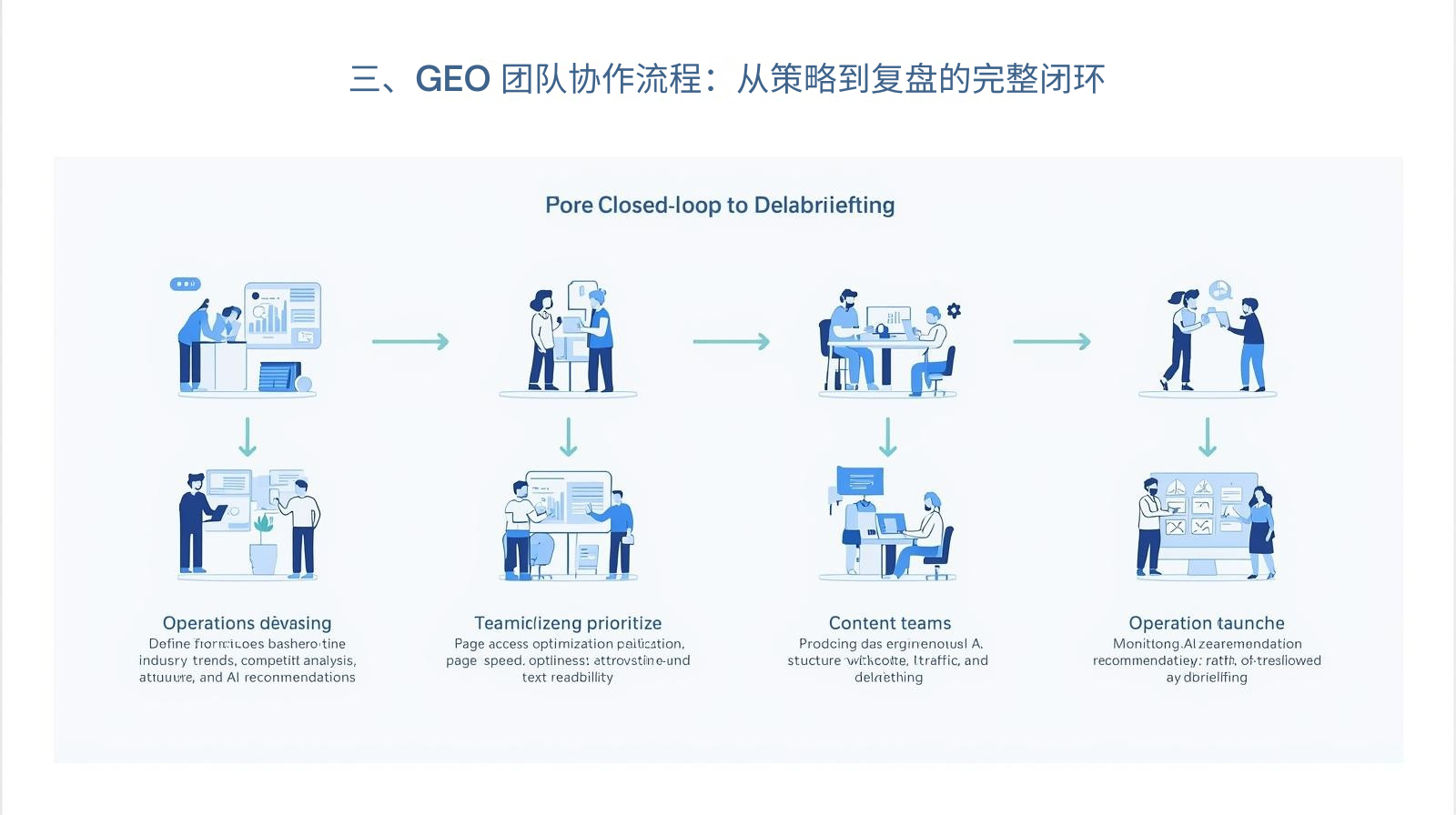
III. GEO Team Collaboration Process: A Complete Closed Loop from Strategy to Debriefing
3.1 Step 1: Determine Operational Strategy (Weekly/Monthly)
Based on industry trends, competitor analysis, and AI recommendation data, the operations team determines the GEO targets and page list for this period and distributes them to the technology and content teams.
3.2 Second step: Technology first ensures environmental protection
Prioritize technical improvements: enable GPTBot access, optimize page speed, optimize structure, and ensure text readability to lay a solid foundation for content delivery (https://developers.google.com/search/blog/2026/ai-driven-b2b-search ).
3.3 Third step: Produce content according to specifications
Content creators, based on the keywords and structural requirements provided by operations, output AI-friendly content to complete the product's structured information and trustworthy content.
3.4 Step Four: Operational Launch Monitoring and Review
After the content goes live, the operations team monitors whether the data collection was successful, whether AI recommended it, and whether traffic and inquiries increased. This process is used to draw conclusions before moving on to the next round of optimization.
The more stable this closed loop is, the more sustained the GEO effect will be.
IV. Simplified Performance Indicators for the GEO Team (Can be used directly)
- Operations role : GPTBot crawl rate, AI recommendation frequency, AI-generated traffic, inquiry conversion rate
- Technical roles : Page load speed, crawling error rate, site stability, structured page coverage.
- Content creation roles : Content qualification rate, AI recognition rate, completeness of trust information, and timeliness of page updates.
Clear metrics enable teams to move beyond "optimization by feel" and instead use data to drive GEO .
Recommended Article: Your Competitors Haven't Reacted Yet: Building an Independent E-commerce Website with GEO is the Biggest Blue Ocean Strategy Right Now
Conclusion: Team division of labor + high-quality underlying servers double GEO efficiency.
For GEO to achieve long-term results, execution accounts for 30% and the system 70%, and a reasonable division of labor within the team is the starting point of the system. Operations set the direction, technology provides support, and content supplies the resources; only through the synergy of these three can your independent website consistently appear in ChatGPT search results and continuously generate accurate overseas procurement inquiries.
To make the GEO team's work easier and more stable, an AI-friendly independent website underlying architecture is essential. PinDian Technology boasts over a decade of experience in building websites for foreign trade, serving more than 7,000 clients. Built with React technology, it offers a smoother browsing experience, faster response times, and supports server-side rendering. It is naturally compatible with GPTBot crawling rules, and features built-in structured data templates, AI traffic statistics, and a multi-language system, enabling operations, technology, and content teams to implement GEO optimization at a lower cost and higher efficiency.
In 2026, AI-driven foreign trade competition has entered a systematic era. By building a strong GEO team and choosing the right AI-friendly website building platform, your independent foreign trade website can maintain its leading position in AI recommendations and steadily acquire customers.