Why do 90% of foreign trade website building fail? A list of pitfalls to avoid

  • Independent website operation strategy
  • Foreign trade stations
Posted by 广州品店科技有限公司 On Aug 23 2025

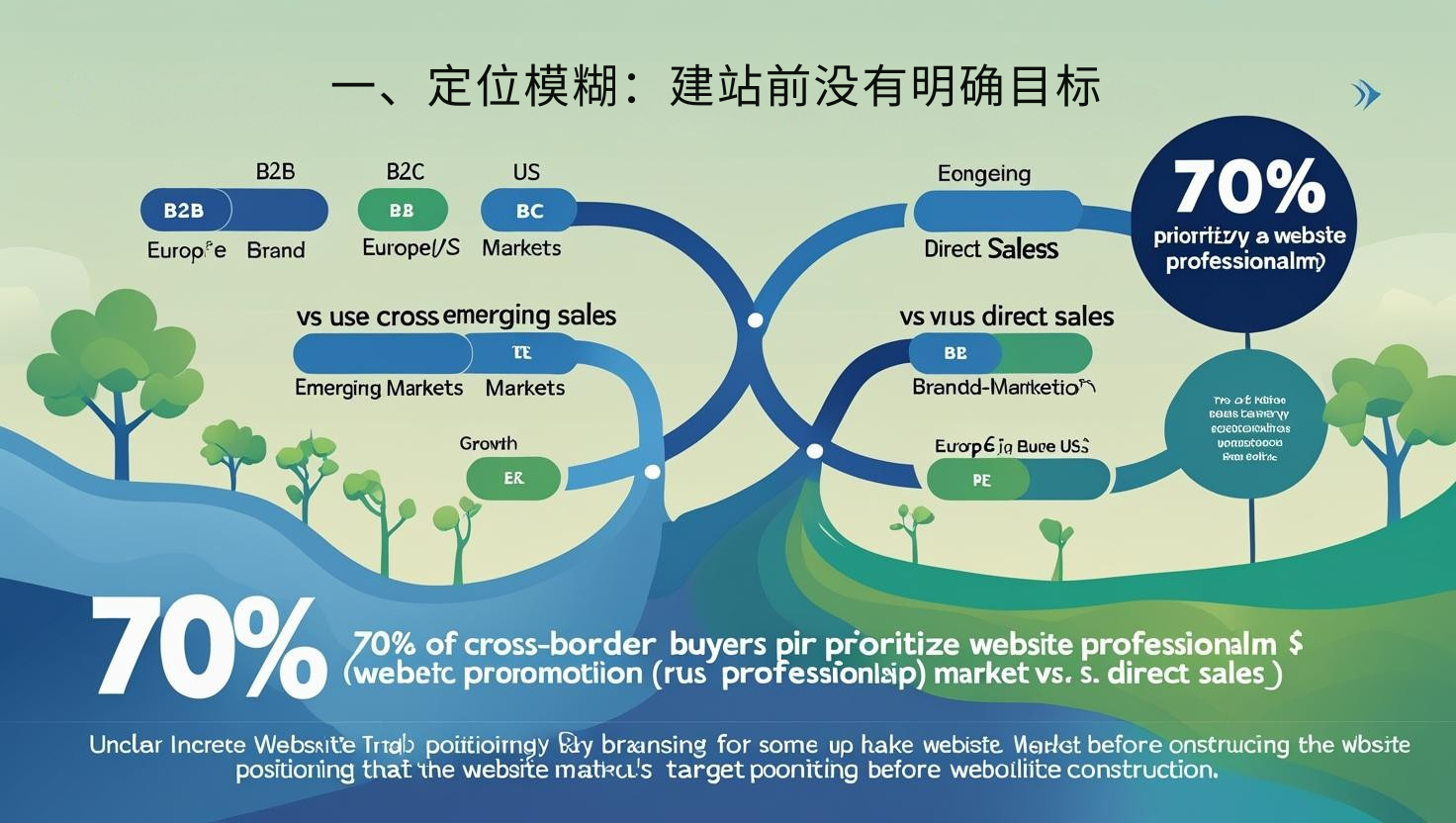
1. Ambiguous positioning: No clear goals before building the website

1. Ambiguous positioning: No clear goals before building the website

The root cause of many foreign trade website building failures is that the website positioning is not clearly defined at the beginning:

  • Is it for brand display or for direct customer acquisition?

  • Is it aimed at large B2B customers or the B2C retail market?

  • Is the target market concentrated in Europe and the United States, or emerging markets?

Research by Statista shows that over 70% of cross-border buyers prioritize a website's professionalism and relevance when selecting suppliers. If a website's positioning is unclear and its content doesn't align with user expectations, customers will naturally avoid leaving inquiries.

Tips for avoiding pitfalls : Before building a website, clarify your target market and customer groups, and use this as the starting point for content and structure design.
2. Lack of SEO: The website is just a “decoration”

2. Lack of SEO: The website is just a “decoration”

Many companies have spent hundreds of thousands of dollars on building websites for foreign trade, but have neglected SEO optimization. As a result, the website has been online for many years but still has no ranking or traffic.

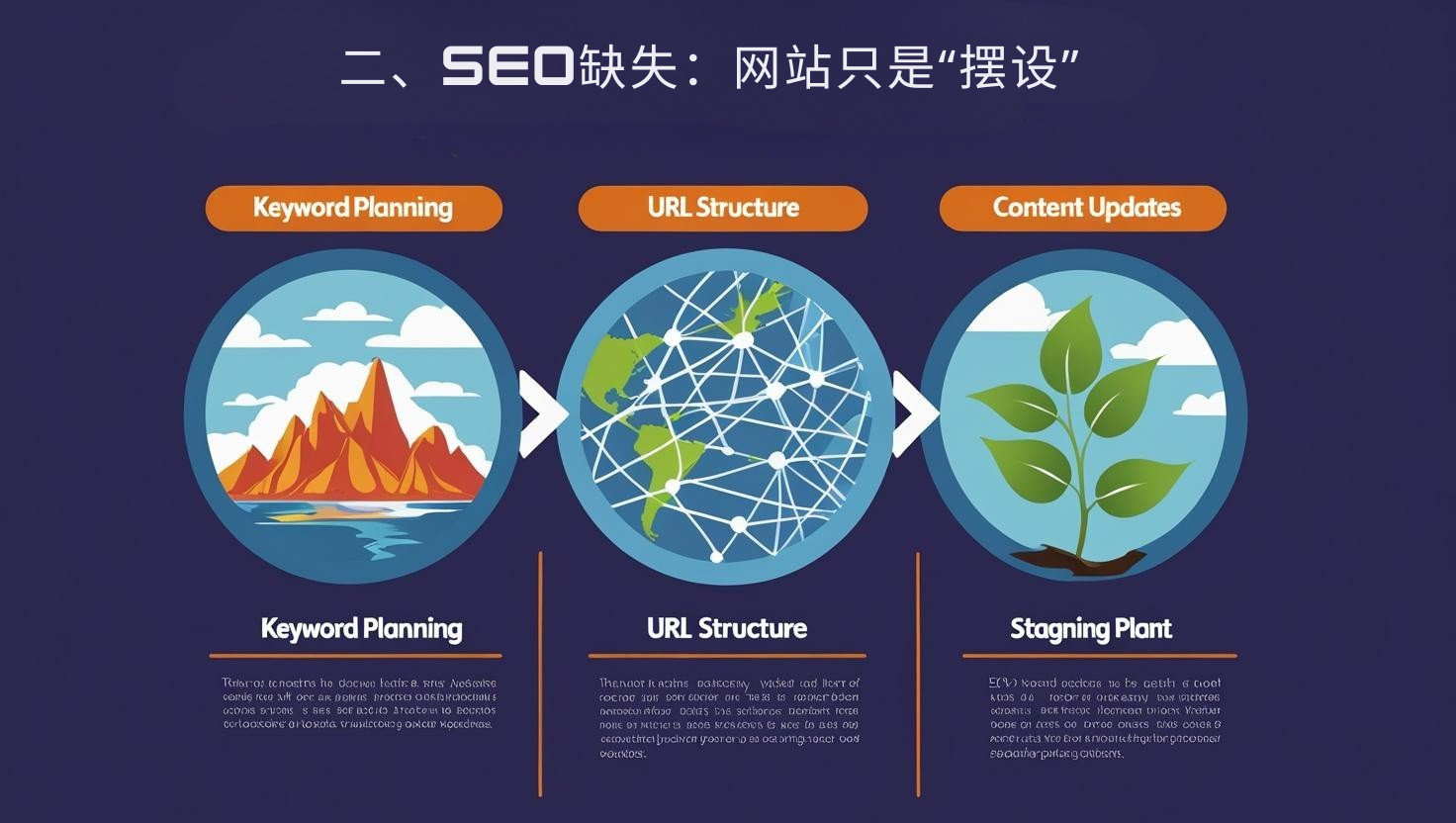
  • There is no keyword layout, which makes it impossible for target customers to search.

  • The URL structure is chaotic, which affects search engine crawling.

  • Content updates have stagnated and have not been included for a long time.

Google Search Central points out that keyword optimization, website structure, and continuous content updates are the three pillars of organic traffic growth. Ignoring SEO when building a foreign trade website is like opening a store on a deserted island.

Tips for avoiding pitfalls : Embed SEO thinking from the beginning of website construction, produce content regularly, and gradually improve natural rankings.
3. Poor user experience: traffic is there, but it can’t be retained

3. Poor user experience: traffic is there, but it can’t be retained

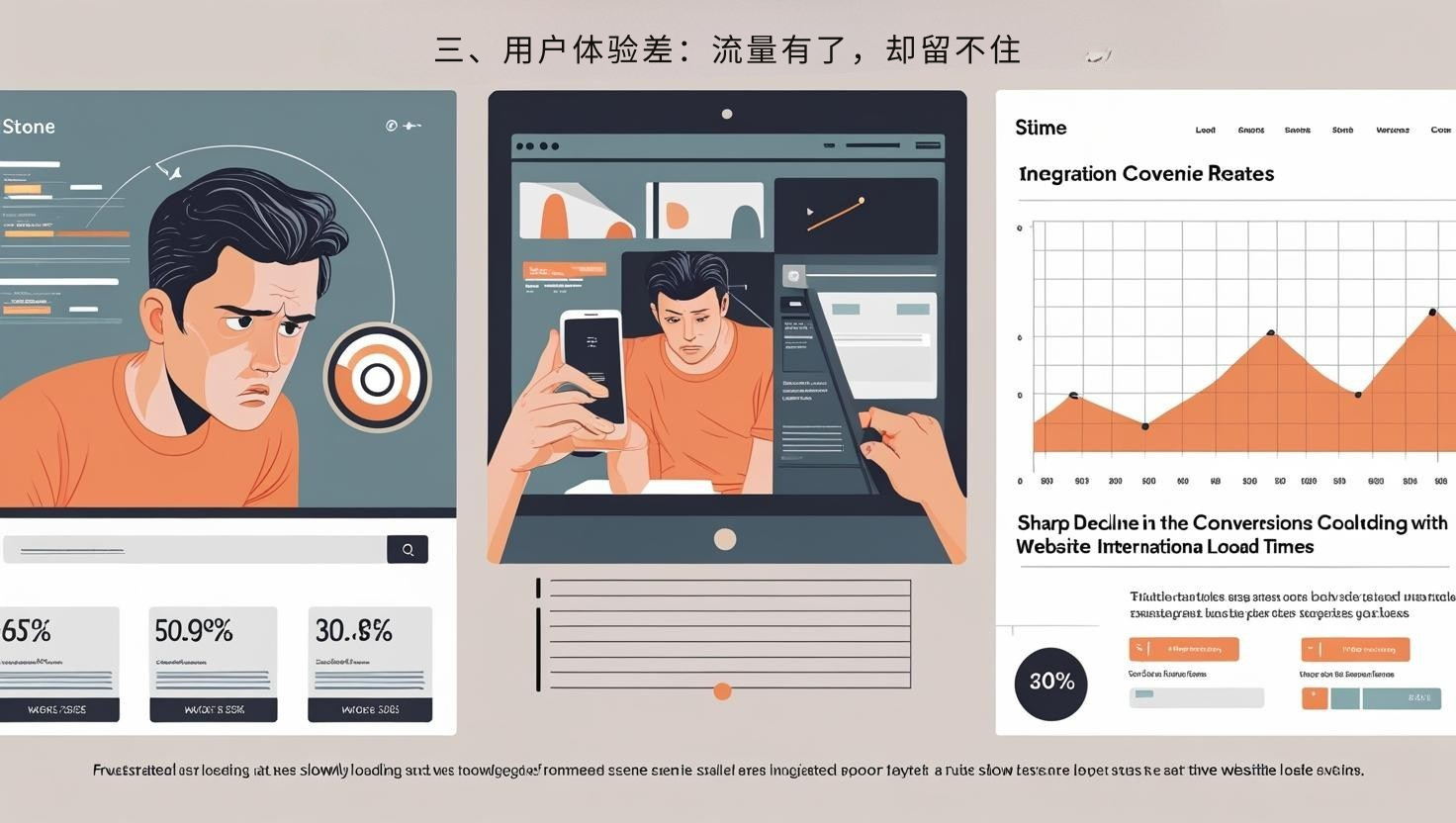
Some foreign trade websites can bring in traffic, but the bounce rate is high and the conversion rate is low. The main reasons include:

  • The loading speed is slow and visitors leave in seconds.

  • The mobile terminal is poorly adapted and a large number of overseas users cannot browse normally.

  • The page layout is confusing and the core products and contact information are difficult to find.

Research from the China Academy of Information and Communications Technology (CAICT) shows that for every one-second delay in website loading, conversion rates drop by an average of 7%. This shows that if you neglect user experience when building a website for foreign trade, even the most traffic will be fleeting.

Tips for avoiding pitfalls : Optimize loading speed, ensure mobile experience, and highlight key information entrances.
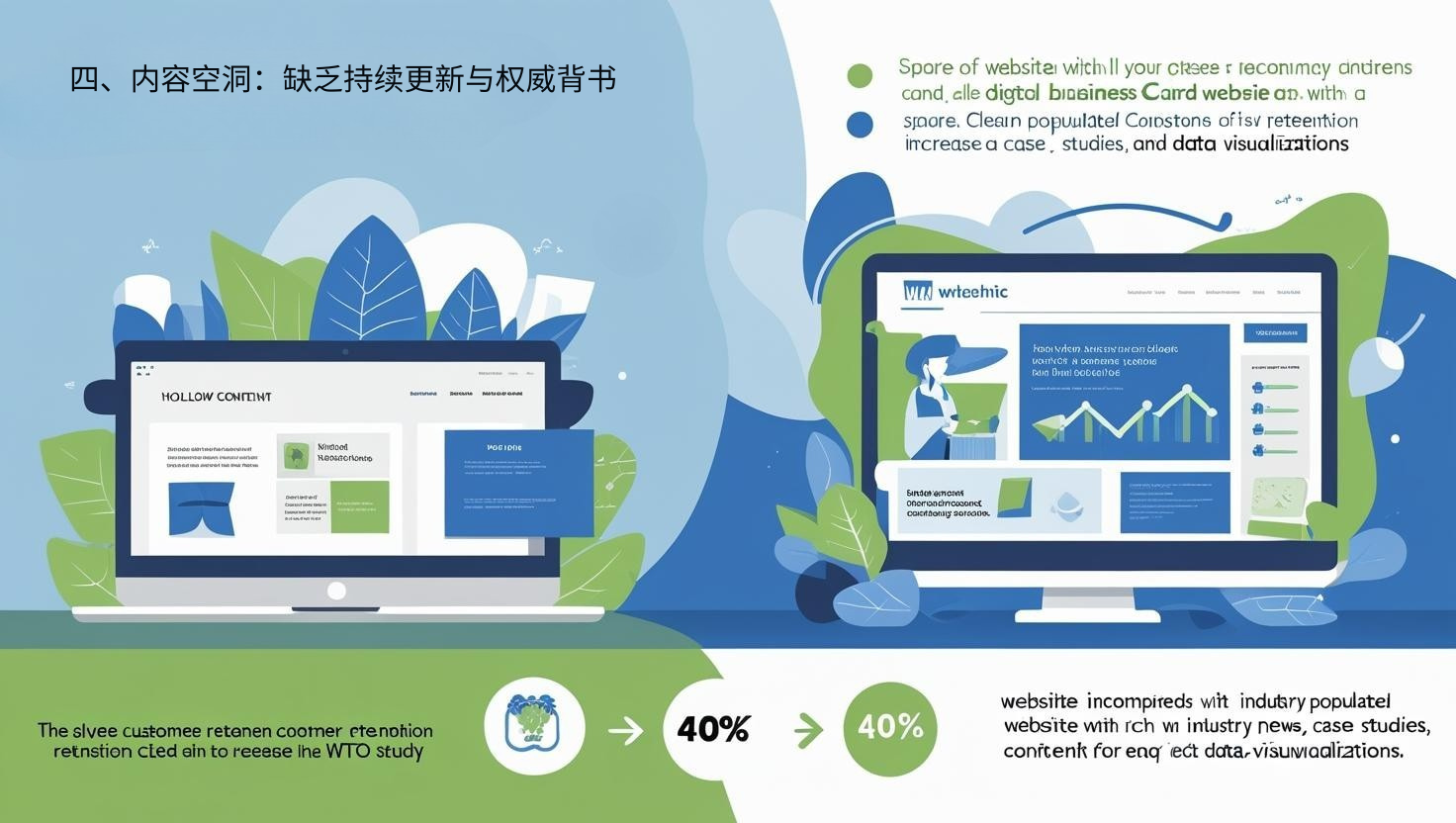
4. Hollow Content: Lack of Continuous Updates and Authoritative Endorsement

4. Hollow Content: Lack of Continuous Updates and Authoritative Endorsement

Many companies only upload their product catalogs after building their websites, and rarely update them afterwards, eventually turning them into "digital business cards."

  • Without industry information and cases, it is impossible to demonstrate professionalism.

  • Without authoritative data references, it is difficult to build customer trust.

A study by the World Trade Organization (WTO) indicates that cross-border e-commerce websites that incorporate authoritative data and case studies see an average 40% increase in customer retention time. This demonstrates the dual value of high-quality content for both SEO and customer trust.

Tips for avoiding pitfalls : Regularly update industry trends, application scenarios and customer cases to enhance the authority and attractiveness of the website.
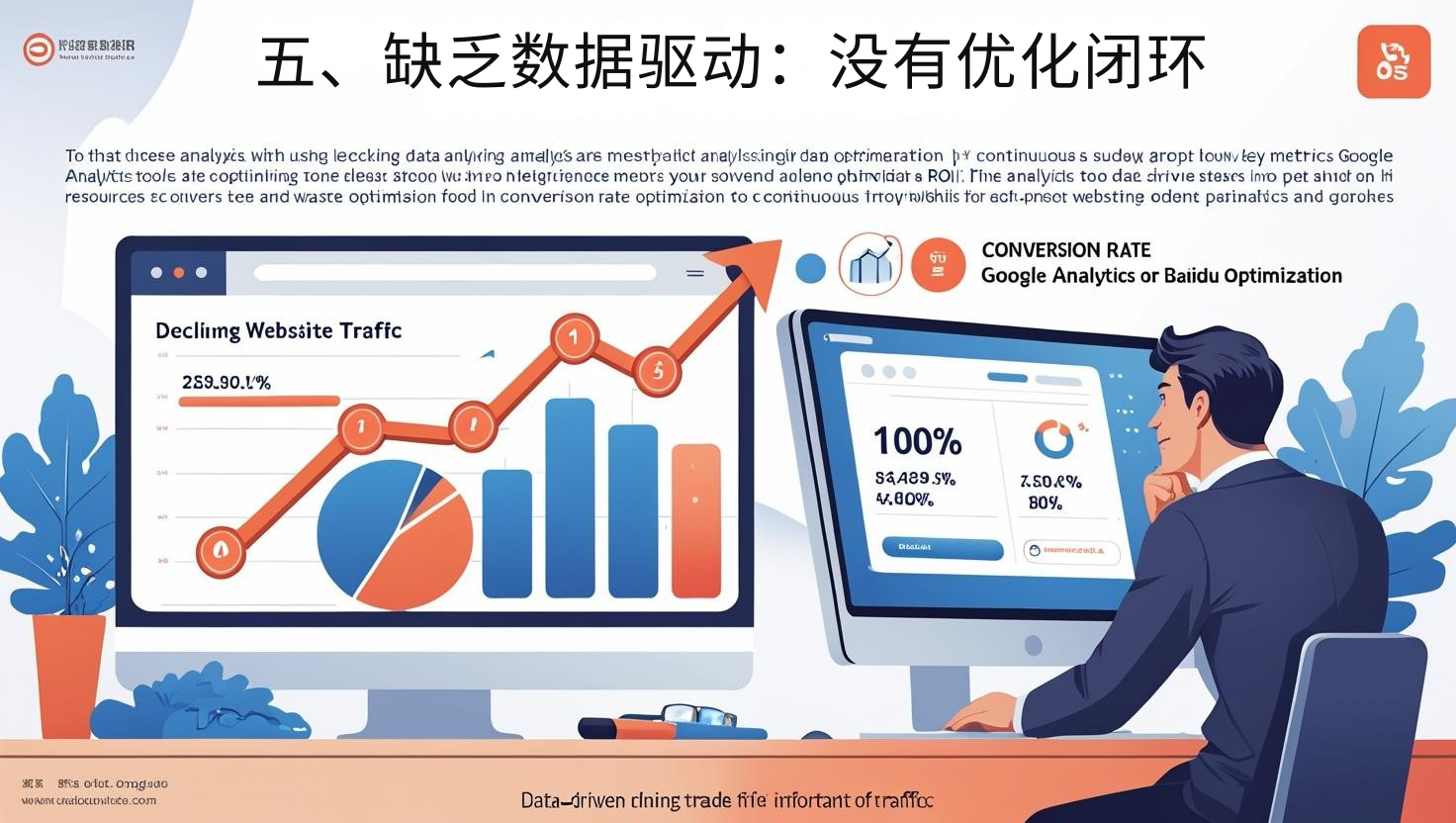
5. Lack of data-driven: No closed-loop optimization

Many foreign trade companies pay little attention to data after launching their independent websites.

  • Without tracking the source of traffic, it is unclear where the customers come from.

  • Without analyzing bounce rate and conversion rate, it is impossible to determine where the problem lies.

  • Failure to adjust optimization strategies based on data feedback.

The result is: after building the website, the company falls into the misunderstanding that "it is useless".

Tips for avoiding pitfalls : Use Google Analytics or Baidu Statistics to regularly analyze visitor behavior, and use the data to continuously optimize pages and content.

Recommended related articles: Foreign trade customer acquisition software + independent website: traffic conversion golden combination

Pitfalls to Avoid: Five Keys to Successful Website Development

  1. Clarify website positioning and target market.

  2. SEO optimization is embedded from the beginning of website construction.

  3. Optimize user experience, especially speed and mobile adaptation.

  4. Continuously produce high-quality content, combining authoritative data and cases.

  5. Establish a data-driven optimization closed loop.

Only by avoiding these five traps can foreign trade website building truly become a long-term traffic engine for the enterprise.

Building a website for international trade isn't a one-time project; it's a process of continuous optimization and operation. Why do 90% of international trade website builds fail? The root cause lies in neglecting positioning, SEO, user experience, content, and data. Companies that avoid these pitfalls will truly benefit from the low-cost, high-quality organic traffic and customer retention that independent websites bring.

👉 If you're looking to quickly build a website for international trade with SEO optimization, multilingual support, automated content updates, and intelligent customer service , we recommend trying Pinshop . It can help business owners and international trade decision-makers avoid failure traps and turn their websites into true engines for customer acquisition and growth.


特色博客
High-conversion independent website structure: Home / Product Page / About Us / Contact Us Practical Construction Guide

High-conversion independent website structure: Home / Product Page / About Us / Contact Us Practical Construction Guide

This article focuses on the high-conversion core of foreign trade independent websites, aiming at the industry pain points of cluttered homepage, valueless product pages, lack of trust in About Us, and long contact us. Based on thousands of actual cases, it dissects the high-conversion construction logic of the four core pages of homepage, product page, about us, and contact us. From page value positioning, content layout, design skills to closed-loop connection, a step-by-step practical plan that can be directly copied is provided. It also provides adaptation strategies for different categories (B2B/B2C), data-driven optimization methods and core design techniques. With practical cases of cross-border machinery brands, it verifies the value of the four major pages in building a closed loop from "information display" to "traffic-trust-conversion", helping foreign trade companies activate traffic value and achieve a significant increase in inquiry conversion rate.

Pintui Technology: Use GEO to make your foreign trade independent station stand on the AI trend

Pintui Technology: Use GEO to make your foreign trade independent station stand on the AI trend

This article focuses on the core of "Pintui Technology: Use GEO to make your foreign trade independent station stand on the AI trend", from the practical perspective of Pintui Technology, combined with the latest industry data in March 2026 ("2026 GEO Generate Search Optimization White Paper", Pintui practical data), foreign trade practical cases and 4 new authoritative checkable external links (OpenAI official, EU CE certification official, NetEase News, Rare Earth Nuggets), divided into "window awareness, Pintui GEO full process practical operation, GEO optimization pitfall avoidance guide, core summary" The four core chapters (including subdivided secondary titles) deeply dissect the core logic of GEO to help independent websites seize the AI spotlight, and provide full-process practical methods for AI capture adaptation, semantic structured modeling, trust evidence chain construction, and demand scenario alignment, accurately avoiding six high-frequency misunderstandings and meeting long sentence formatting requirements.

GEO, an independent foreign trade station: the key upgrade from “human search” to “AI answer”

GEO, an independent foreign trade station: the key upgrade from “human search” to “AI answer”

This article focuses on “Foreign Trade Independent Station GEO: From ‘People Search’ to ‘AI Answer’s key upgrade” core, combined with the latest industry data in March 2026 (AB customers, industry practical measurement data), foreign trade practical cases and 4 authoritative checkable external links (EU official, NetEase News, Rare Earth Nuggets, Tencent News), is divided into four core chapters (including cognitive upgrade, GEO full process practical operation, GEO optimization pitfall avoidance guide, core summary) (including subdivided secondary titles), in-depth dismantling of the core differences between “human search” and “AI answer” Differently, it reveals the essence of GEO as "AI source modeling" and provides a full-process practical method of AI capture adaptation, semantic structuring, trust evidence chain construction, and demand scenario alignment. It accurately avoids six high-frequency misunderstandings and meets the long sentence formatting requirements. There are no complex technical statements. External links are naturally integrated into the text, taking into account both professionalism and practicality. It helps foreign trade companies adapt to customer acquisition rules in the AI era and achieve the key upgrade from "passively searched" to "actively recommended"

GEO, an independent e-commerce platform for foreign trade, solves not just the problem of exposure, but rather the problem of precise trust.

GEO, an independent e-commerce platform for foreign trade, solves not just the problem of exposure, but rather the problem of precise trust.

This article revolves around the core concept of "GEO for Independent Foreign Trade Websites: Solving the Problem of Precise Trust, Not Exposure," combining the latest industry data from March 2026 (iResearch Consulting, Gartner report), practical foreign trade case studies, and three authoritative sources (EU official, NetEase News, Phoenix News). It is divided into four core chapters (including sub-headings): "Cognitive Reconstruction," "Practical Application of GEO Trust Building," "Trust Optimization and Pitfall Avoidance Guide," and "Core Summary." It deeply analyzes the core value of GEO—building precise trust rather than simply providing exposure—and offers a complete practical method for improving trust signals, precise semantic matching, value content output, and trust verification optimization. It precisely avoids six common pitfalls, adheres to long sentence formatting requirements, avoids complex technical descriptions, and integrates backlinks naturally into the text, balancing professionalism and practicality. This helps foreign trade companies avoid exposure pitfalls, build a precise trust barrier with GEO, and achieve efficient conversion from "exposure → trust → inquiry."

Traditional promotion is becoming more and more expensive, and independent foreign trade station GEO has become the best alternative

Traditional promotion is becoming more and more expensive, and independent foreign trade station GEO has become the best alternative

This article focuses on "Traditional promotion is becoming more and more expensive, foreign trade independent station GEO The core of "Becoming the Best Alternative", combined with the latest industry data in March 2026 (measured data of China Academy of Information and Communications Technology, Semrush), foreign trade practical cases and three authoritative checkable external links (OpenAI, China Academy of Information and Communications Technology, Semrush), is divided into four core chapters (including subdivided secondary titles) of "traditional promotion difficulties, GEO core advantages, GEO full-process practical operation, and GEO optimization pitfall avoidance guide" to deeply dismantle the foreign trade tradition in 2026 The high-cost trap of promotion, analyzes the three core advantages of GEO optimization to replace traditional promotion, and provides a full-process practical method of AI capture adaptation, precise semantic embedding, trust endorsement upgrade, and inquiry guidance optimization, accurately avoiding the five major high-frequency misunderstandings, meeting the requirements of long sentence formatting, without complex technical expressions, external links naturally integrated into the text, taking into account professionalism and practicality, helping foreign trade companies get rid of traditional promotion dependence, and use GEO optimization to achieve low-cost, long-term, and accurate customer acquisition.

The optimization strategies for GEO are completely different for new and old independent foreign trade websites.

The optimization strategies for GEO are completely different for new and old independent foreign trade websites.

This article revolves around the core concept that "the GEO optimization approaches for new and established independent foreign trade websites are completely different." Combining the latest industry data from March 2026, OpenAI's official crawler rules, practical foreign trade case studies, and 2-3 authoritative and verifiable backlinks, it is divided into four core chapters (including sub-headings): "Core Understanding," "Practical Applications for New Websites," "Practical Applications for Established Websites," and "Pitfall Avoidance Guide for New and Established Websites." It delves into the underlying differences in GEO optimization for new and established independent foreign trade websites, providing detailed practical methods for new websites to quickly break through and established websites to overcome bottlenecks. It precisely avoids common pitfalls, adheres to long sentence formatting requirements, avoids complex technical descriptions, and integrates backlinks naturally into the text, balancing professionalism and practicality. It helps new websites complete AI understanding registration and gain initial exposure, and helps established websites improve their AI crawling ranking and overcome inquiry conversion bottlenecks.