
A Must-Read for Independent Sites: Mishandling Old Product Pages = SEO Suicide? 4 Steps to Rescue Rankings and Traffic | Professional Guide

  • Foreign trade stations
  • Foreign trade website
Posted by 广州品店科技有限公司 On Aug 21 2025

In the fierce competition among independent websites, product updates and iterations are the norm. However, if those once-glorious, now-deprecated or outdated product pages are abandoned carelessly, it is like burying "SEO mines" in your digital assets. They not only waste crawler resources, but also dilute the website's authority, reduce user experience, drag down overall rankings , and ultimately lead to the continuous loss of valuable organic search traffic. For business owners and foreign trade decision-makers who have invested heavily in building independent websites, this is undoubtedly a huge hidden loss.
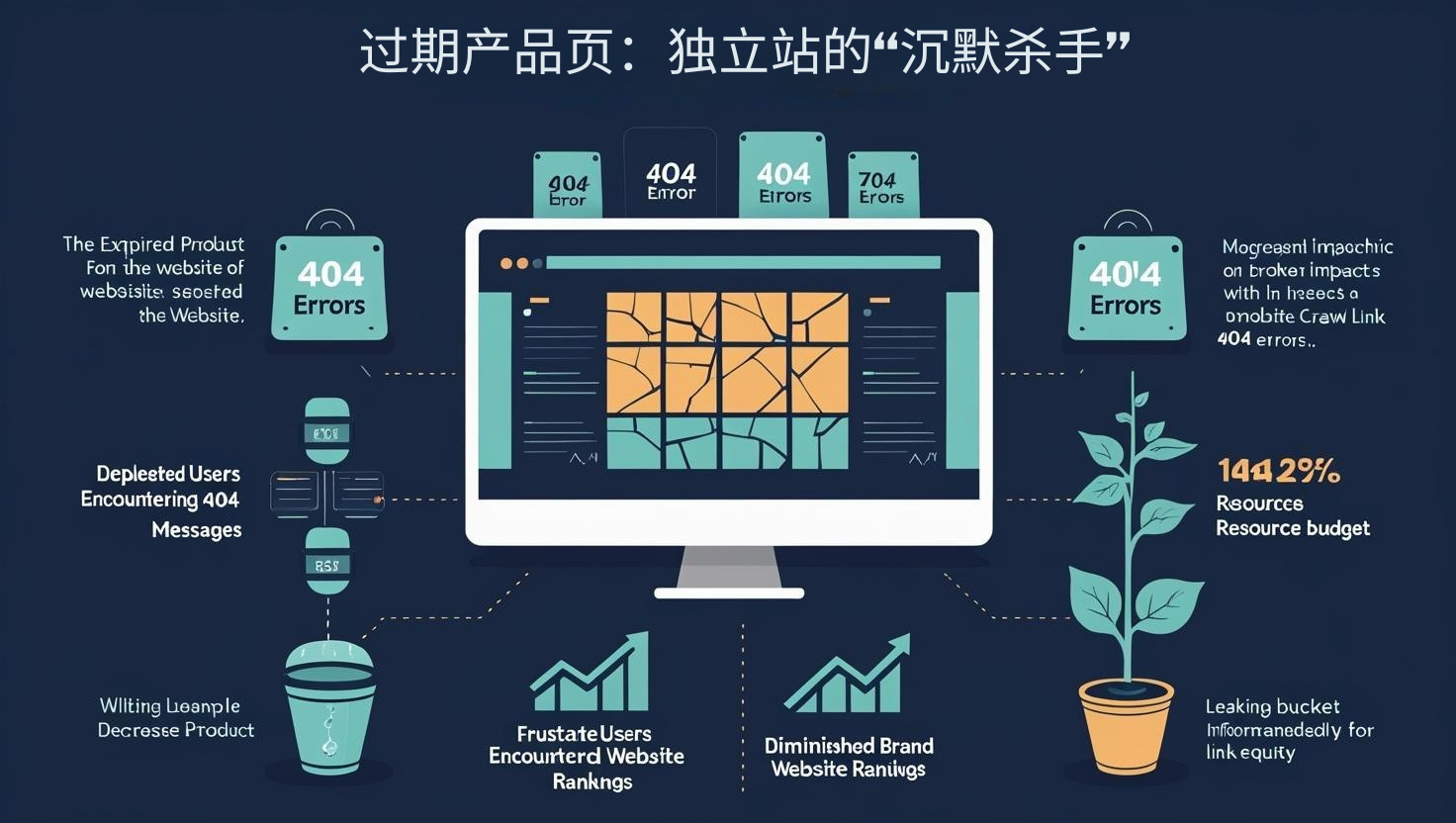

Expired product pages: The silent killer of independent websites

  • Dilution of authority and inefficient crawling: Search engines allocate a limited "crawl budget" to each website. A large number of worthless, outdated pages depletes resources that could be used to crawl important new content, reducing overall indexing efficiency. As emphasized in Google Search Central , optimizing website structure and removing low-quality content are key to effectively utilizing crawl budget.
  • A surge in 404 errors is ruining the user experience: Users eagerly click on a link only to encounter a "Page Not Found" (404 error), leading to frustration. Negative signals like high bounce rates and low dwell time are picked up by search engines, lowering website ratings. If this problem occurs in multiple language versions of an independent website for international trade, it can further undermine the trust of international customers.
  • Outdated content undermines professional authority: Displaying discontinued products or outdated information will cause visitors to seriously question the timeliness and professionalism of your independent website, weakening brand credibility.
  • Internal link "poisoning": If other pages on the site link to these expired pages, valuable link equity will flow into a "black hole" and cannot be effectively transferred to valuable pages, wasting SEO accumulation.
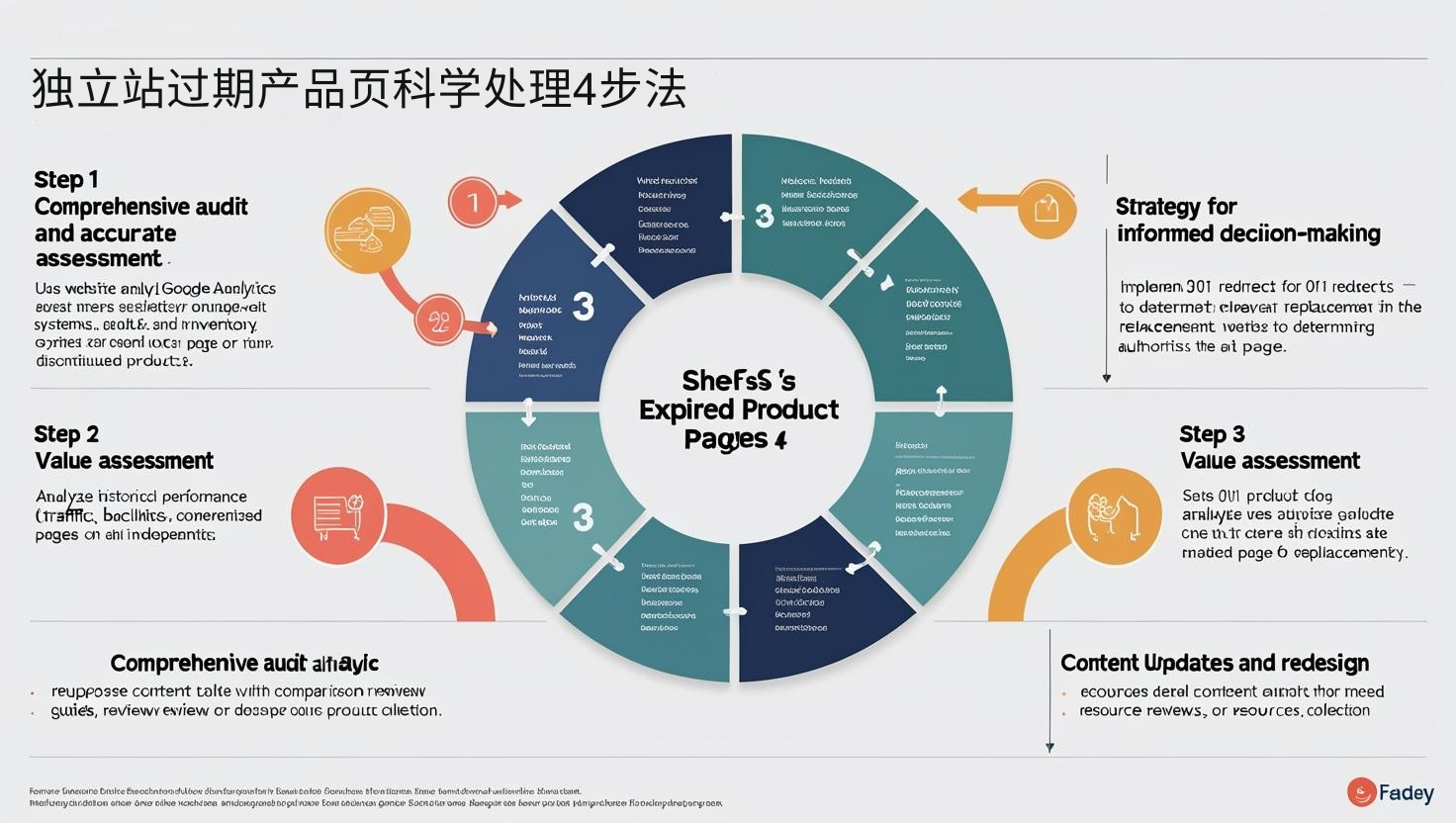
4-step method to scientifically handle expired product pages on independent websites

  1. Comprehensive audit and precise assessment:

    • Identify your targets: Use website analytics tools (such as Google Analytics 4) to screen out old product pages with no traffic or very low conversion rates. Integrate with your inventory management system to identify products that have been removed from shelves, discontinued, or significantly updated.
    • Value Judgment: Analyze each expired page's historical performance (traffic, backlinks, conversions), current internal link count, and target keyword competitiveness. Tools like Ahrefs Site Audit are highly effective for this task, as their extensive index clearly demonstrates the value of a page's backlinks.
  2. Develop strategies for informed decision-making:

    • 301 Redirect (Preferred): If you have a highly relevant alternative product, category, or new version of a page, a permanent 301 redirect is essential . This is the gold standard for seamlessly transferring the old page's authority and traffic to its new location. Moz research clearly demonstrates that properly implemented 301 redirects transfer the vast majority of link authority, making them an SEO best practice.
    • Content update and redesign: For pages that still have information value or long-tail traffic (such as classic products and industry knowledge), the content can be completely updated and transformed into guides, comparison reviews, or resource collection pages, and the original product status can be clearly marked.
    • 410 Gone (Explicitly Gone): When the page content is completely deleted and there is no suitable replacement, the 410 status code is returned. This tells search engines more clearly than 404 that the resource is permanently gone, prompting it to be removed from the index more quickly.
    • The "Noindex" meta tag (use with caution): Used only as a temporary or special case alternative, it allows the page to exist but prevents indexing. It does not address link equity or user experience issues.
  3. Efficient execution and attention to detail:

    • Redirect accuracy: Ensure that the 301 redirect target page is highly relevant to avoid linking to inaccurate locations such as the homepage, which can harm user experience and SEO. For independent foreign trade websites, pay special attention to the corresponding redirection relationships for multiple language/regional versions.
    • Update content depth and value: Recreated content must provide unique value beyond the original product page and solve users' deeper problems in order to attract and retain traffic.
    • Internal link update: Comprehensively check and update all links pointing to expired pages on the site, pointing to new target pages (or deleting invalid pages (or deleting invalid links).
    • XML sitemap updates: Submit updated sitemaps to platforms like Google Search Console promptly to speed up search engine processing.
  4. Continuous monitoring and iterative optimization:

    • Use Google Search Console: Closely monitor the Coverage report to see if 404 errors are decreasing and indexing is normal. Observe changes in traffic and rankings for the target pages after 301 redirects.
    • Traffic and ranking tracking: Use analytical tools to track changes in overall organic traffic, keyword rankings, and target conversion rates to evaluate the effectiveness of the cleanup.
    • Establish a regular review mechanism: Incorporate expired content review into the daily operation and maintenance process of the independent station to prevent problems before they occur.
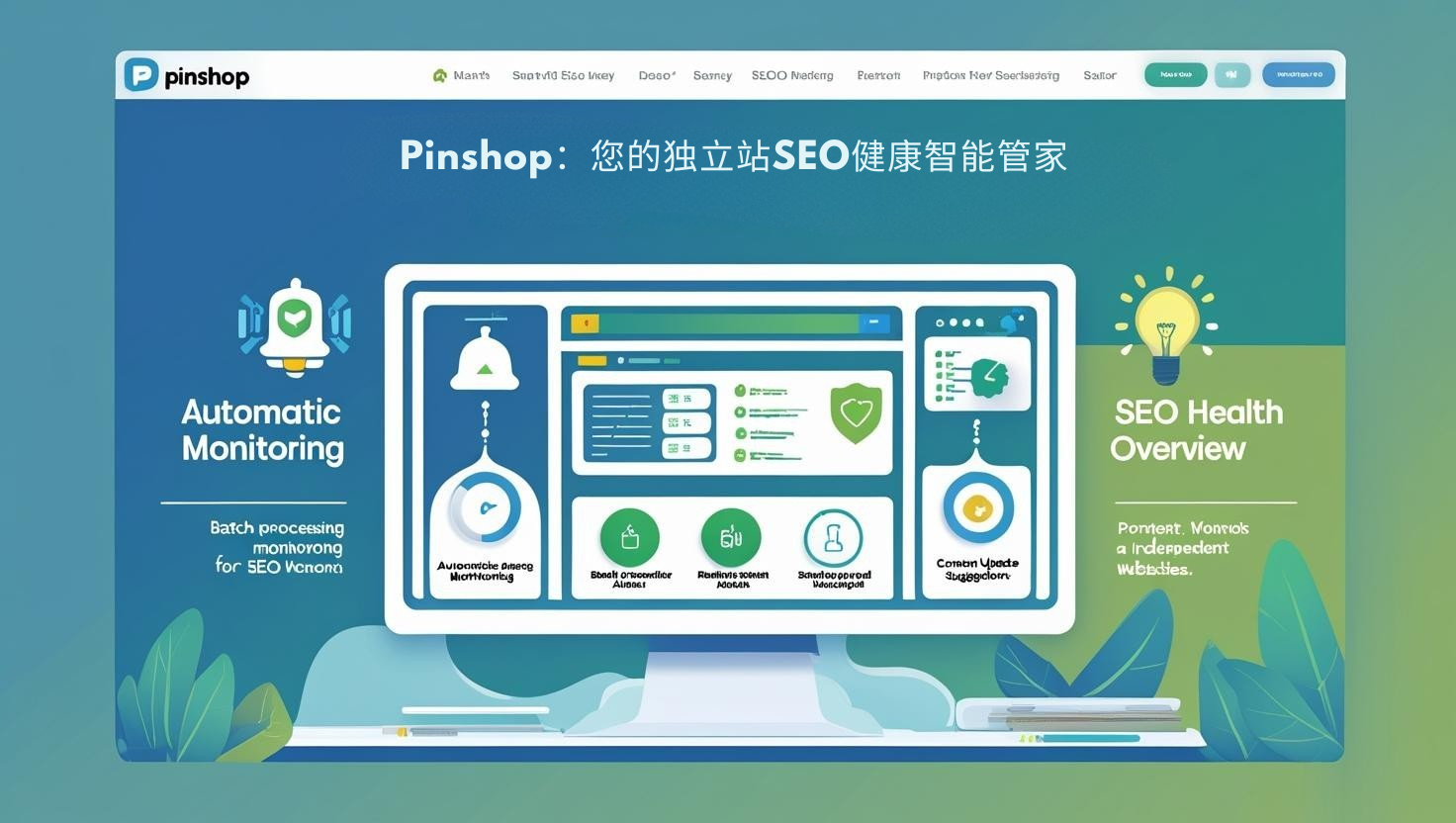
Pinshop: Your independent website SEO health smart steward

Dealing with expired product pages is a key part of independent website SEO maintenance. However, with a large number of products and frequent updates, manual management is time-consuming, labor-intensive, and prone to errors. Pinshop e-commerce SaaS platform understands the pain points of independent website sellers and provides intelligent solutions:

  • Automatic monitoring and early warning: Intelligently identify slow-selling and delisted product pages, and promptly warn of SEO risks.
  • Batch processing and redirection management: supports efficient batch setting of 301 redirection rules, associating new products or categories, and ensuring lossless transfer of weight.
  • SEO health overview: Provides an intuitive SEO dashboard to centrally monitor key indicators such as 404 errors and index status.
  • Content update suggestions: Based on data, provide content redesign suggestions for old pages with potential.

Try Pinshop for free now, start your independent website SEO smart hop, and start your independent website SEO smart maintenance journey >> https://pinshop.com

Sustainable focus value:

Sustainable Focus Value:**

  • Long-term strategy: The four-step approach provided in this article is a sustainable operations and maintenance framework, not a one-time technique.
  • Pay attention to industry trends: Search engine algorithms are constantly updated. Pay attention to the impact of Google core updates and Baidu algorithm trends on independent sites.
  • Technological evolution: The application of AI in content recognition and automatic optimization (such as the intelligence of Pinshop) is the future trend.
  • Data-driven: Emphasizes long-term monitoring and data-based decision optimization.

Scientifically managing expired content isn't simply about deleting it; it's a strategic optimization of your website's core assets. Through systematic evaluation, decision-making, and execution, you can not only mitigate SEO risks but also enhance user experience, strengthen your website's authority, and maximize the value of every bit of traffic. By incorporating content maintenance into your daily routine, your website will thrive in the digital age.


特色博客
GEO optimizes low-cost layout, React native architecture foreign trade independent station

GEO optimizes low-cost layout, React native architecture foreign trade independent station

Overseas procurement relies on price comparison with large models such as ChatGPT to acquire customers, and GEO optimization is essential. Traditional WP sites must pay for revisions and reconstruction of AI semantics after 1-2 years of operation, and the loss of orders due to shutdowns is huge. pintreel React+Next integrates the native underlying layer with a full set of llms.txt and JSON-LD price comparison semantics pre-embedded, and the website can be built to adapt to global large models at once.

The daily operation of the site improves the quality and efficiency, and millisecond-level response. The independent foreign trade station significantly reduces the global visitor churn rate.

The daily operation of the site improves the quality and efficiency, and millisecond-level response. The independent foreign trade station significantly reduces the global visitor churn rate.

Overseas B-side procurement has huge network differences across continents. Page loading delays are the largest source of traffic loss for independent sites. Millisecond-level sites significantly reduce bounce rates. At the same time, they fully provide GEO large model price comparison semantics and improve AI inquiries. Pintreel is based on React+Next native static architecture to achieve TTFB≤200ms global response, fully automatic material lightweight linkage SEO/GEO tag updates.

Integrated operation of building materials industry and trade, high-expansion foreign trade independent station seamlessly connects factory ERP and customer CRM management system

Integrated operation of building materials industry and trade, high-expansion foreign trade independent station seamlessly connects factory ERP and customer CRM management system

Under the integrated model of building materials industry, trade, production and sales, the separation of website, ERP inventory, and CRM customer data is a core operational pain point. Overseas procurement relies on the GEO generative engine to retrieve real-time building materials inventory and production capacity. Old sites cannot link back-end systems, resulting in gaps in AI exposure. Pintreel React+Next's high-expansion independent station's native two-way API seamlessly connects factory ERPs and foreign trade CRMs such as Kingdee and UFIDA. Building material specifications, inventory, and inquiries are synchronized in milliseconds. The bottom layer automatically captures back-end data to generate a full set of GEO price comparison semantics, realizing an integrated closed loop of Google + AI dual-line customer acquisition, automatic customer profile creation, and workshop production scheduling.

Large-scale machinery foreign trade track, React+Next.js independent foreign trade station relies on hard-core SEO to seize the global procurement search seat

Large-scale machinery foreign trade track, React+Next.js independent foreign trade station relies on hard-core SEO to seize the global procurement search seat

Overseas procurement of global large-scale machinery and equipment has the core industry characteristics of high customer price, long decision-making cycle, and high barriers to professional keywords. The first step for overseas engineering buyers must be to search for professional industrial keywords on Google to screen suppliers. Hard-core industrial SEO rankings directly determine whether heavy industry factories can join the global procurement candidate pool. At present, AI tools such as ChatGPT and Google SGE have become the core channels for horizontal comparison of equipment parameters, production capacity, and quality assurance. GEO (Generative Engine Optimization) has become a necessary supporting layout for incremental large-scale inquiries in the machinery industry. Most machinery foreign trade companies still use cheap WordPress and old PHP templates to build their websites. High-definition large images of large amounts of equipment are slow to load. Core Web Vitals indicators are unqualified across the board. Professional heavy industry keywords have been ranked low for a long time. At the same time, the industrial equipment-specific llms.txt index and price comparison JSON-LD structured data are missing. The large AI model is completely unable to capture equipment information, and the search and AI dual-line traffic are both disconnected. Pintreel is deeply involved in the large-scale machinery track. React+Next.js native independent station customization and development. The underlying architecture is deeply adapted to the product display logic of long pictures and texts, multi-working conditions, and multi-parameters in the heavy industry. It simultaneously embeds an industrial-specific global SEO system and a complete GEO equipment semantic knowledge map.

The first stage of buyer search: High-ranking foreign trade independent websites take the lead in entering the buyer's candidate list based on SEO

The first stage of buyer search: High-ranking foreign trade independent websites take the lead in entering the buyer's candidate list based on SEO

Overseas B-side procurement has formed a standardized hierarchical decision-making link. Active search and screening of suppliers is the first decision-making stage for buyers. Google SEO natural ranking directly determines whether the foreign trade independent website can enter the buyer's preliminary candidate list. It is also the prerequisite for subsequent negotiations, price comparisons, and in-depth cooperation. At present, a large number of foreign trade merchants use old PHP and WordPress templates to build websites. There are problems such as redundant code, inefficient rendering, confusing tags, and substandard Core Web Vitals (CWV) indicators. Even if they lay out a large number of keywords, it is difficult to obtain a stable and high ranking in the buyer's search results, and they will be eliminated directly in the first step of customer acquisition. At the same time, most traditional websites only deploy basic SEO and do not link with GEO (Generative Engine Optimization) for global traffic coordination, further missing out on overlapping customer sources.

Seize the digital voice in the AI ​​era, and the independent foreign trade station natively adapted to GEO enters the global large model knowledge base

Seize the digital voice in the AI ​​era, and the independent foreign trade station natively adapted to GEO enters the global large model knowledge base

The AI ​​wave is sweeping across the global foreign trade field. Mainstream large models such as ChatGPT, Google SGE, and Gemini have become the core entrance for overseas buyers to obtain supplier information, compare products, and verify brands. GEO (Generative Engine Optimization) has become the core starting point for foreign trade brands to compete for digital voice and enter the global large model knowledge base. A large number of traditional WordPress and PHP foreign trade sites rely on third-party plug-ins, use old rendering architecture, lack llms.txt, and standardized JSON-LD global semantic system, and cannot be included in the global AI knowledge base. Brand information, product parameters, and corporate strength are largely lost in large model retrieval. Even if they have strong offline capabilities, it is difficult to reach the massive potential customers through AI channels.