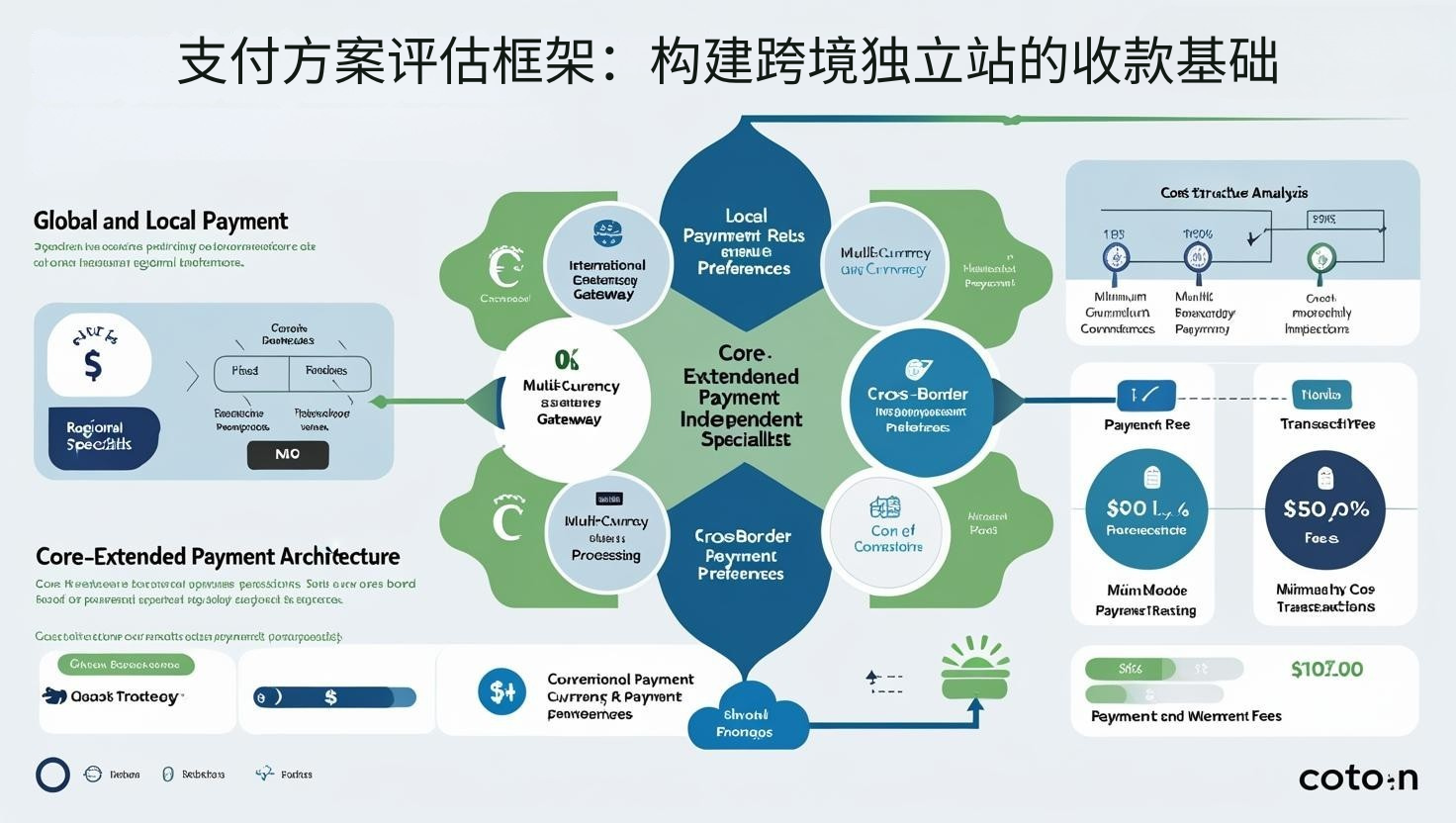
 Payment Solution Evaluation Framework: Building a Payment Collection Foundation for a Cross-Border Independent Website
Payment solution selection directly impacts conversion rates. According to Stripe research, an optimized payment process can increase conversion rates by up to 35.62%, making it one of the fastest ways to increase revenue.
Build a Comprehensive Payment System Evaluation System
-
Global and Local Payment Balance Assessment: Analyze the mainstream payment preferences and usage in target markets; assess the global coverage and localization depth of different payment service providers; compare the advantages of international payment gateways versus regional payment specialists; examine multi-currency processing capabilities and dynamic currency conversion services; research cross-border payment fee structures and optimization potential; assess the payment service provider's brand trust and market recognition; and pay special attention to the unique payment needs and trends in emerging markets. One strategic approach is a "core-extended payment architecture," selecting one or two core global payment methods and complementing them with local methods where necessary in target markets. Research shows that this balanced strategy can cover over 90% of consumer preferences while keeping implementation complexity manageable.
-
Cost Structure and Business Model: Systematically analyze the fee structures and billing models of different payment service providers; compare the cost-effectiveness of fixed fees, percentage rates, and hybrid models; evaluate additional fees and foreign exchange conversion costs for cross-border transactions; examine the impact of minimum fees and monthly fees on small transactions; study the thresholds and discounts for volume-based tiered pricing; analyze settlement cycles and capital utilization costs; and pay special attention to the combined impact of different payment methods on profit margins. Research shows that refined payment cost management can reduce overall payment costs by 15-30%, having a direct impact on profit margins, which is particularly critical for small and medium-sized foreign trade companies.
-
Technical and User Experience Considerations: Evaluate the payment gateway's API flexibility and integration complexity; analyze the mobile payment experience and responsive design support; examine the payment page's customization and brand consistency; research one-click payment and the ability to store payment information; evaluate the conversion rate impact of multi-step vs. single-page checkouts; consider the payment system's page load speed and stability; and pay special attention to compatibility across different devices and browsers. A key strategy is a "flexible payment interface," which automatically optimizes the payment flow based on the user's device, location, and history. Research shows that this intelligent adaptation can increase mobile payment completion rates by 28%, significantly higher than static interfaces.
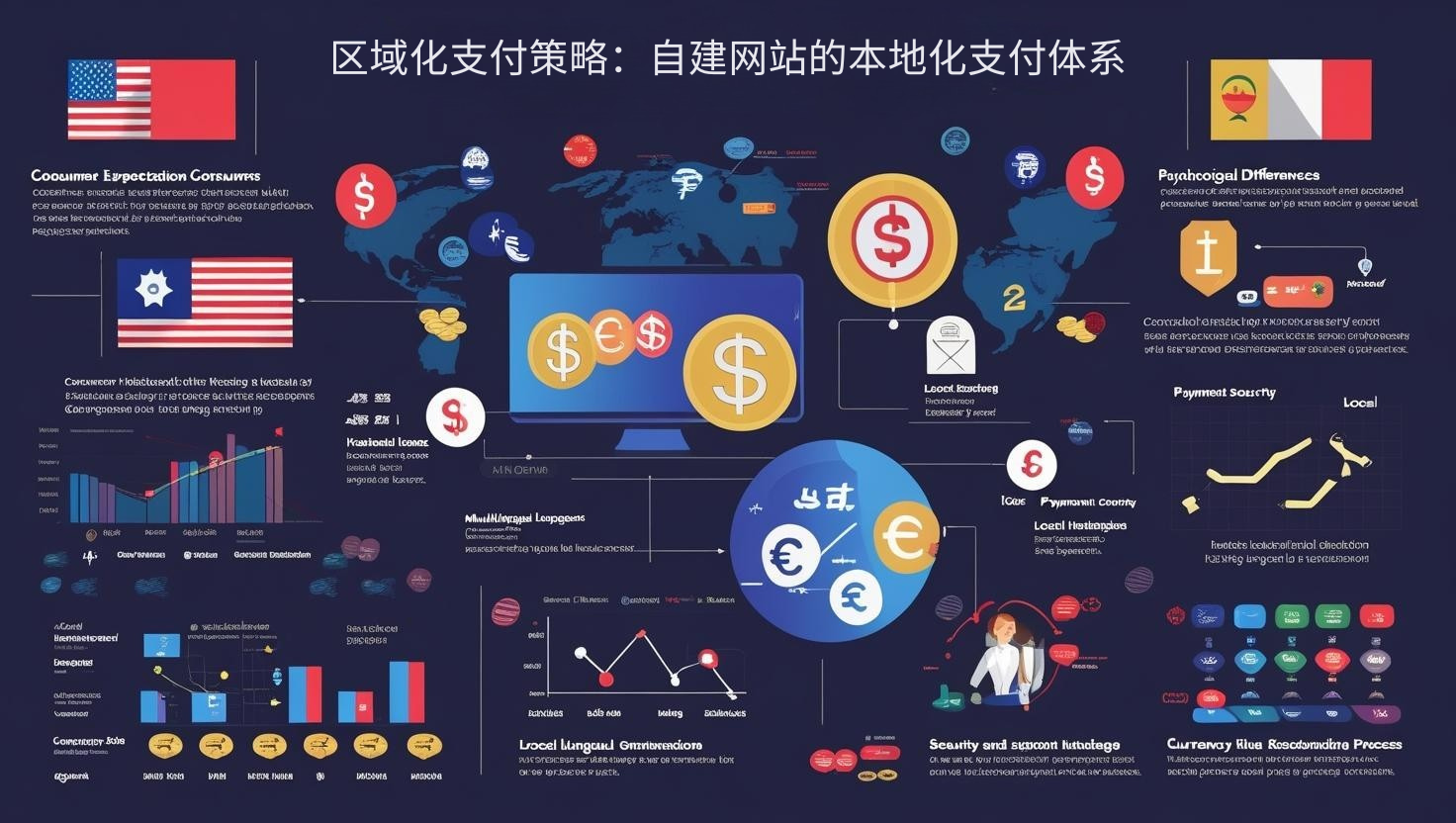 Regionalized Payment Strategy: Localized Payment System for Self-Built Websites
Regional payment strategies determine user engagement. According to Adyen research, offering preferred local payment methods can increase conversion rates by an average of 28% in a given market, making it a key factor in expanding market share.
Designing a Market-Driven Payment Strategy
-
Analysis of Payment Characteristics in Major Market Regions: North America - Credit cards dominate (accounting for nearly 65%), with Visa/Mastercard having the widest coverage and PayPal having high penetration; Europe - Significant country-by-country variations, with Germany preferring bank transfers (42%), the UK favoring credit cards, and Northern Europe promoting local payment apps; Asia-Pacific - Mobile payments dominate (with Alipay/WeChat Pay accounting for over 70% in China), with unique payment systems prevalent in Japan and South Korea; Latin America - Installment payments and cash payments are highly important, with local methods such as Boleto (Brazil) and OXXO (Mexico) essential. Special attention should be paid to the unique payment ecosystems and rapidly evolving trends in emerging markets. An effective strategy is a "market payments matrix," allocating payment resources based on sales proportion and growth expectations. Research shows that this targeted approach can increase the return on investment for payment integration by approximately 35%.
-
Localization Challenges for Cross-Border Payments: Analyze payment processing regulations and consumer expectations in different countries; consider the psychological impact of local currency display and pricing; assess regional differences and adaptations in payment verification processes; research regional differences in consumer perceptions of payment security; examine the need for multilingual payment interfaces and customer service; establish local payment issue resolution processes and response mechanisms; and pay special attention to managing the impact of currency fluctuations on cross-border payments. Research shows that fully localized payment experiences generate 23% higher user satisfaction than those that only involve currency conversion, demonstrating the profound value of localizing the payment experience.
-
Addressing Emerging Payment Methods and Trends: Assess the penetration and growth of Buy Now Pay Later (installment payments) in different markets; analyze the regional acceptance and regulatory environment for cryptocurrency payments; examine regional adoption trends and user acceptance of biometric payments; research the importance and integration value of built-in payments on social media; assess the application prospects of QR code payments in different markets; consider the regional development of Open Banking; and pay special attention to the adoption cycle and integration timing of payment innovations in each market. One forward-looking strategy is an "Innovation Payment Testing Matrix," testing emerging payment methods in secondary markets. Research shows that this incremental approach can reduce the risk of integrating innovative payment methods by approximately 40% while maintaining the cutting-edge nature of the payment system.
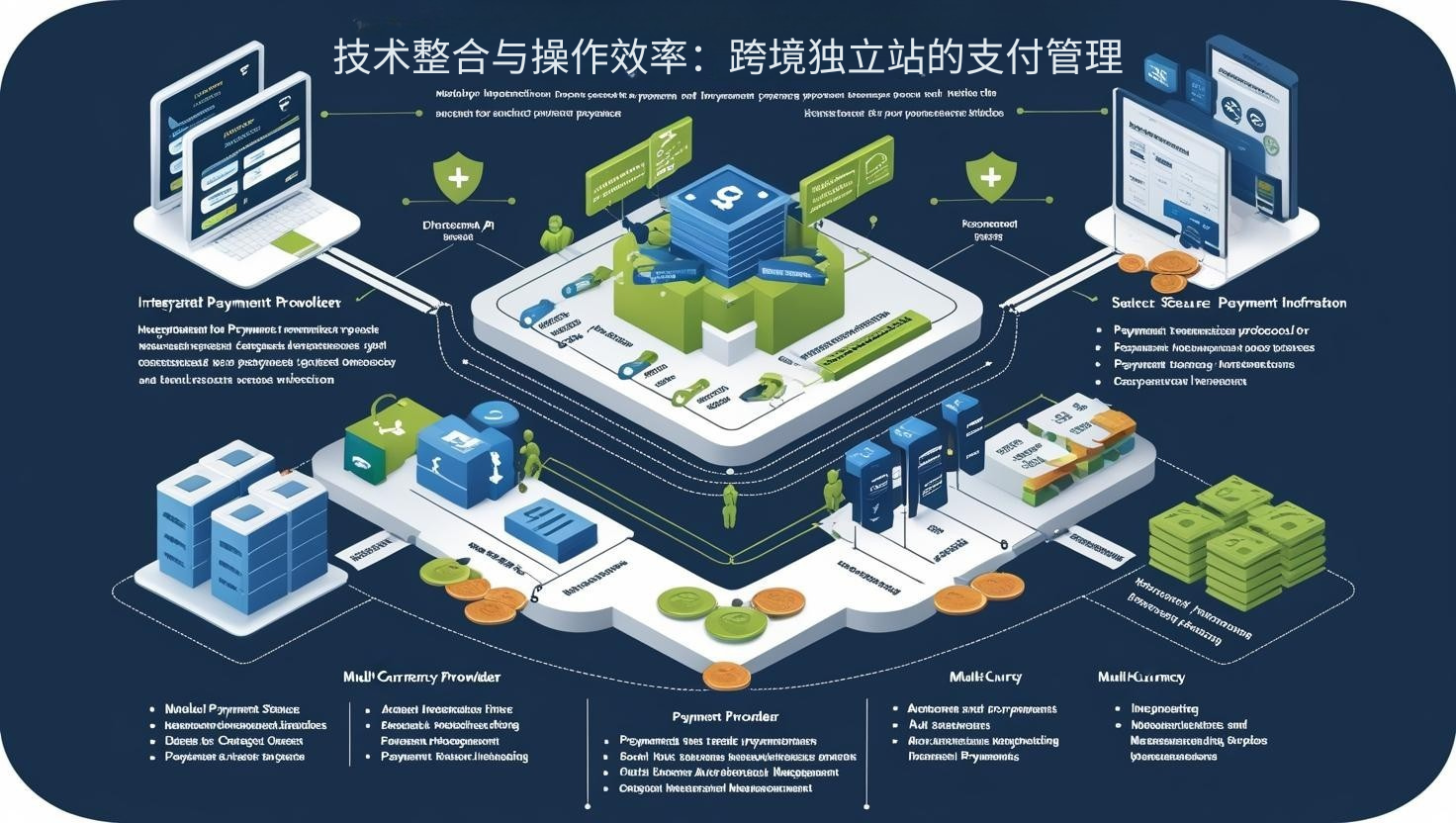 Technology Integration and Operational Efficiency: Payment Management for Cross-Border Independent Websites
Technology integration determines operational efficiency. According to McKinsey research, optimized payment system integration can reduce payment-related operating costs by up to 43% while significantly improving order processing speed.
Building an Efficient Payment Technology System
-
Payment System Technical Architecture Design: Evaluate the pros and cons of different payment integration models (direct API, payment gateway, hosted page); analyze the complexity and compatibility of integrating the payment system with the e-commerce platform; consider secure transmission solutions for payment data and customer information; research real-time synchronization of order management systems with payment status; assess the complexity of concurrently managing multiple payment providers; design automatic retry and recovery mechanisms for payment failures; and pay special attention to the potential impact of system upgrades on the payment process. An effective architecture is a "modular payment system," managing multiple payment providers through standardized interfaces. Research shows that this flexible architecture can reduce the integration time of new payment methods by approximately 65%, significantly improving market responsiveness.
-
Order Management and Financial Reconciliation: Design an automated synchronization mechanism for payment and order status; create a unified financial view and reporting for multi-currency transactions; consider processes for refunds, partial payments, and order modifications; develop standardized processes for managing payment disputes and chargebacks; establish a funds reconciliation and write-off system across payment channels; adjust payment processing capacity to account for seasonal fluctuations; and pay special attention to payment processing and customer service response in different time zones. Research shows that an automated payment-order reconciliation system can reduce financial processing time by approximately 37% and reduce human error by nearly 85%, significantly improving operational efficiency.
-
Data Analysis and Optimized Decision-Making: Establish a tracking and analysis system for payment success and abandonment rates; create conversion comparisons and cost-benefit analyses for different payment methods; conduct data mining based on user payment behavior patterns and preferences; develop an A/B testing framework to optimize payment interfaces and processes; design early warning monitoring for payment anomalies and fraud patterns; analyze the impact of seasonal factors and promotions on payment choices; and pay special attention to differences in payment behavior across different markets and customer segments. One data-driven strategy is the "Payment Performance Dashboard," which monitors key payment metrics in real time and automatically generates alerts. Research shows that this proactive monitoring can reduce payment issue resolution time by approximately 48%, significantly improving customer satisfaction.
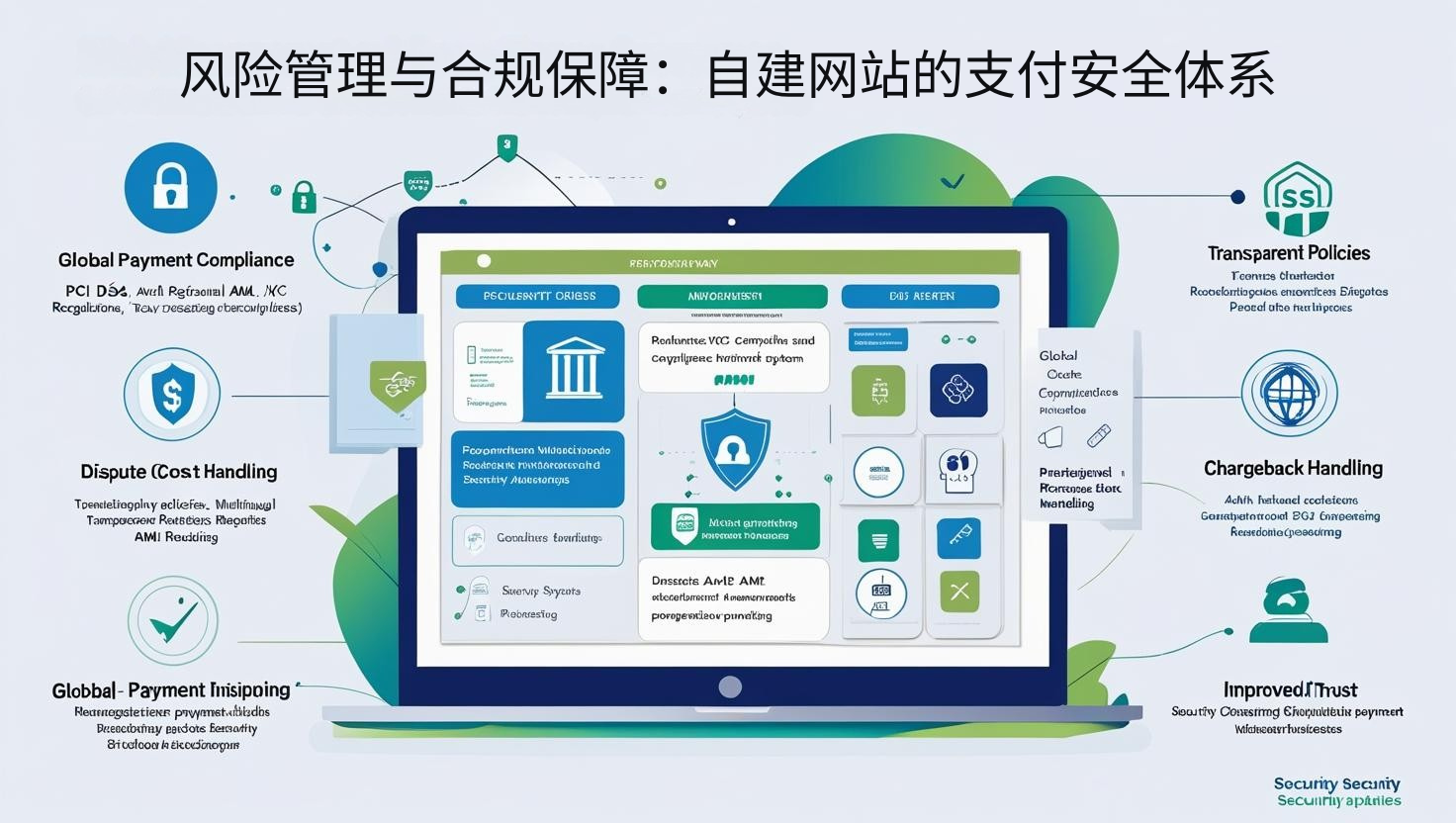 Risk Management and Compliance Assurance: Payment Security System for Self-Built Websites
Payment security determines brand trust. According to Cybersource research, optimized payment risk management can simultaneously reduce fraud losses by 82% and increase legitimate order approval rates by 31%.
Build a Secure and Compliant Payment Protection System
-
Payment Security and Fraud Protection: Implement a layered payment security architecture and multi-factor authentication system; evaluate the value of implementing 3D Secure 2.0 and next-generation payment authentication; consider the balanced application of rule-based and AI-based fraud detection systems; develop manual review processes and standards for high-risk transactions; establish specialized risk models and detection mechanisms for cross-border transactions; design a real-time response and intervention system for payment anomalies; and pay special attention to fraud patterns and risk characteristics in different markets. One balanced strategy is "adaptive risk screening," which dynamically adjusts authentication strength based on transaction characteristics. Research shows that this intelligent approach can simultaneously reduce fraud rates by approximately 37% and increase conversion rates by approximately 18%, resolving the traditional conflict between security and user experience.
-
Global Payment Compliance and Data Protection: Analyze payment regulatory requirements and compliance standards in different markets; consider PCI DSS compliance and security measures for payment card data processing; assess the impact of GDPR and global data protection regulations; research tax treatment and reporting requirements for cross-border payments; consider regional differences in anti-money laundering (AML) and know-your-customer (KYC) procedures; establish a regular audit and update mechanism for payment compliance; and pay special attention to the unique compliance needs of highly regulated markets. Research shows that proactive compliance management reduces compliance-related costs and risks by an average of 59% compared to reactive approaches, while significantly improving brand trust.
-
Dispute Handling and Customer Trust Building: Design transparent payment processing and refund policies; create multilingual payment issue resolution processes and communication templates; consider proactive communication mechanisms for payment failures and errors; develop standardized processes for chargeback response and evidence collection; establish a rapid response system for payment-related customer complaints; consider cultural differences in payment dispute handling; and pay special attention to payment security and trust-building for high-value orders. One trust strategy is a "transparent payment experience," providing full visibility into payment status and processing information. Research shows that this open approach can reduce payment-related customer service inquiries by approximately 34% while increasing first-time payment success rates by approximately 22%, creating a win-win situation.
With increasingly fierce global e-commerce competition, optimized payment systems have become a core competitive advantage for cross-border companies in improving conversion rates and user experience. Through systematic payment solution evaluation, regionalized local payment strategies, efficient technology integration, and comprehensive risk management, companies can build a truly convenient and secure global payment system, increase payment conversion rates, reduce transaction fees, and earn customer trust. The key is to view payments as a strategic asset rather than a simple technical tool. Through continuous optimization and local adaptation, the payment experience can be transformed into a true competitive advantage.
Related article recommendations: https://pinshop.cn/zh-Hans/blog/what-is-independent-site-for-business