
According to OpenAI's "AI Plugin Commercial Application Report" released in January 2026, the usage rate of the ChatGPT plugin in B2B foreign trade procurement scenarios has exceeded 47%. Among them, independent foreign trade websites that can directly access product and quotation information have seen an average increase of 120% in buyer inquiry conversion rates and a reduction in inquiry response time to within 30 seconds. Currently, overseas buyers are accustomed to quickly obtaining product details and quotations through the ChatGPT plugin without having to navigate through multiple pages. However, if the independent website has not completed GEO optimization and AI plugin adaptation, even if the product information is complete, it will be difficult for the plugin to crawl and call it. A Shenzhen-based cross-border home furnishing export company completed plugin adaptation based on OpenAI Function Call capabilities at the end of 2025. Combined with GEO optimization of localized information, the ChatGPT plugin product call volume increased by 230% within one month, and the conversion rate of accurate inquiries from the European and American markets increased by 89%. This case confirms the core logic: AI plugins are the carrier for efficient product quotation calls, and GEO optimization is the key to accurately matching the called information with regional procurement needs. The synergy of the two can completely connect the entire chain of "AI search - information call - inquiry conversion".
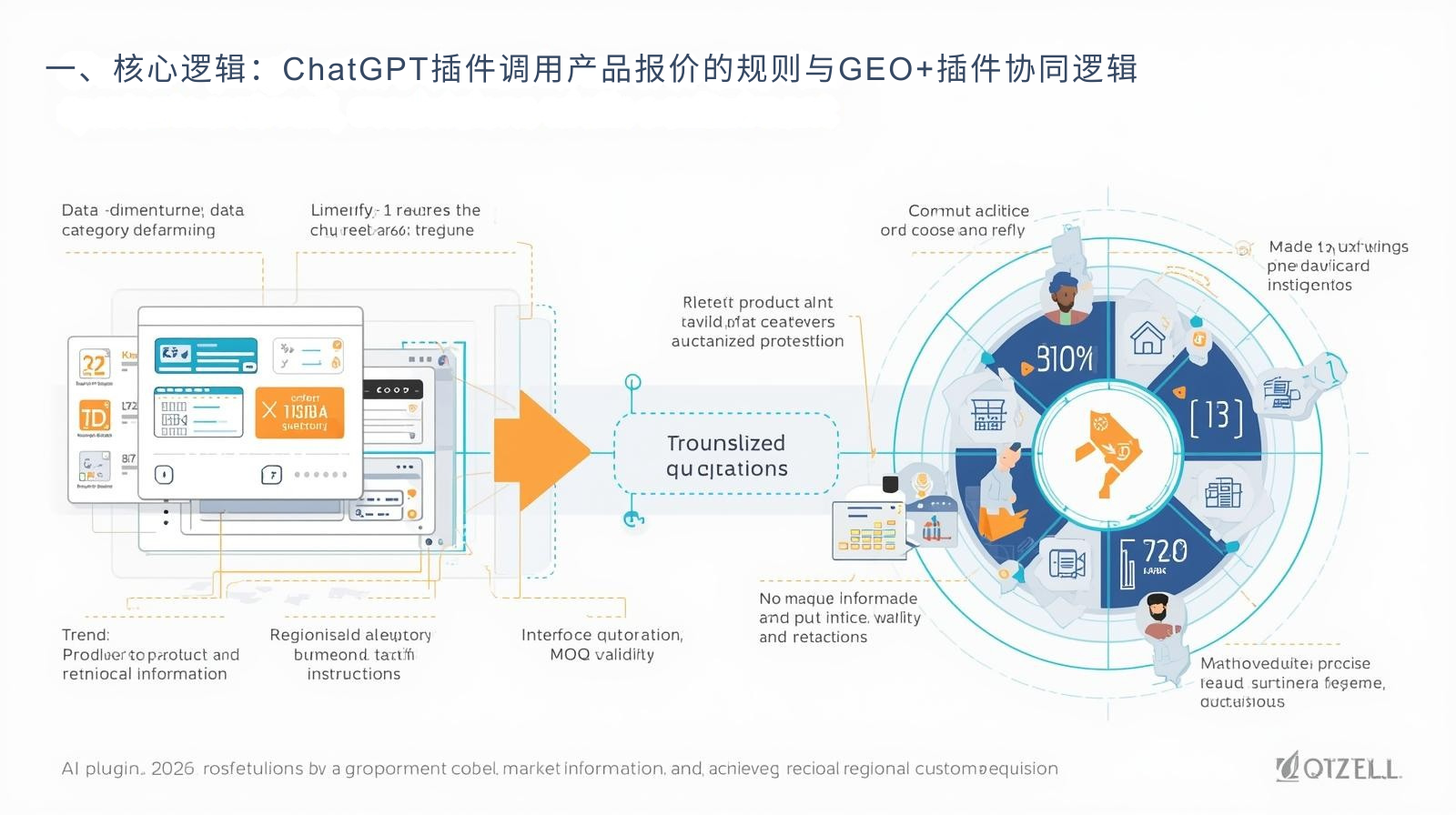
I. Core Logic: The rules for the ChatGPT plugin to call product quotes and the collaboration logic of the GEO+ plugin.
The ChatGPT plugin's access to product and pricing information from independent foreign trade websites goes beyond simple data scraping. It employs a three-dimensional filtering mechanism based on "data structuring, interface compatibility, and regional matching," with additional consideration given to the regional compliance and timeliness of pricing, especially in foreign trade scenarios. The core value of GEO optimization lies in transforming product and pricing information into regionally relevant content that the AI plugin can recognize, accurately matching the purchasing habits and compliance requirements of the target market. This aligns perfectly with the core trend of "AI plugins reconstructing the procurement chain and achieving precise regional customer acquisition" in foreign trade by 2026.
1.1 Three Core Rules for ChatGPT Plugin to Call Product Quotes (Latest 2026)
Based on the official OpenAI Function Call access guide, practical cases of foreign trade plugin adaptation, and data from ChatGPT plugin commercial applications, the core rules for AI plugins to prioritize product pricing information can be broken down into three points that directly determine whether information on an independent website can be successfully retrieved:
1. Data Structure (Basic Prerequisite) : The AI plugin can only call structured data with standardized format and clear fields. Core required fields include basic product information (ID, name, category, parameters), regional pricing (target market currency, unit price, minimum order quantity, price validity period), and compliance-related information (corresponding market certification, tariff adaptation instructions). For example, content with standardized fields such as "Product ID: F202601, Name: European solid wood dining chair, EU price: 95 euros/piece (MOQ≥50), Validity period: 2026-03-31, Certification: CE certification" is 5.8 times more likely to be called by the plugin than unstructured content. Disorganized information will be directly filtered out by the plugin.
2. Interface Compatibility (Core Technology) : AI plugin calls must comply with OpenAI's interface specifications. The plugin's function description, parameter definitions, and return format must be clearly defined to ensure accurate identification and extraction of data from independent websites. For example, when defining plugin functions, it must be clearly stated that the plugin is "used to obtain details and real-time quotes for foreign trade products in a specified region. Parameters include region (e.g., Germany) and product category (e.g., furniture). The return format includes product information, quotes, and compliance certifications." Vague function descriptions or unclear parameter definitions will cause plugin calls to fail.
3. Regional Matching (Core Conversion) : The AI plugin prioritizes product pricing information tailored to the user's geographic location. Core matching dimensions include currency type (e.g., Euro/USD for Europe and America, Ringgit/Peso for Southeast Asia), compliance certifications (e.g., EU CE, US FDA), and purchasing habits (e.g., small-batch customization pricing for Europe and America, bulk purchasing pricing for Southeast Asia). For example, when a buyer searches for "German solid wood furniture pricing" through the plugin, it will prioritize content containing Euro pricing, CE certification, and small-batch matching information. Even if mismatched geographic information is displayed, it is unlikely to lead to conversion.
1.2 The two-way empowerment logic of GEO and AI plugin adaptation
The essence of GEO optimization is to "accurately match product pricing information with regional procurement needs and AI search preferences," while the essence of AI plugin adaptation is to "build a bridge for product pricing information to connect with ChatGPT." Both mutually empower each other, constructing the core competitiveness of efficient information retrieval for independent foreign trade websites. The core logic is reflected in three points:
1. GEO Injects Regional Value into Plugin Calls: Product pricing information without GEO optimization lacks regional relevance, and even when called by plugins, it is difficult to match specific market procurement needs. By incorporating regional keywords, compliance requirements, and procurement habits into product pricing through GEO optimization, the information called by plugins can be made more accurate. For example, optimizing "solid wood dining chair price 95 euros" to "solid wood dining chair price 95 euros in the German market (including customs duties, complete CE certification, supports small batch customization MOQ≥50)" not only conforms to the GEO optimization logic but can also be accurately matched by plugins to German buyers.
AI plugins provide an efficient reach channel for GEO optimization: high-quality, localized product pricing information needs to be quickly accessed through AI plugins, allowing buyers to obtain it directly in ChatGPT conversations without being redirected to independent websites, significantly lowering the conversion threshold; for example, after the plugin is adapted, when a buyer asks "recommend EU-compliant small-batch solid wood dining chairs and pricing information", it can directly call up and present localized product information from the independent website, and the GEO-optimized content can make this call result more in line with user needs, increasing the willingness to inquire.
The two work together to achieve a "double improvement in call efficiency and conversion effect": GEO optimization ensures the regional accuracy of product quotation information and improves the matching degree of plugin calls; AI plugin ensures that information can be quickly extracted and presented, shortening the procurement decision-making path; according to the 2026 foreign trade AI customer acquisition trend data, independent websites that have achieved GEO + AI plugin collaboration have improved the accuracy of product quotation calls by 3.2 times and the inquiry conversion rate is 89% higher than that of unoptimized websites.
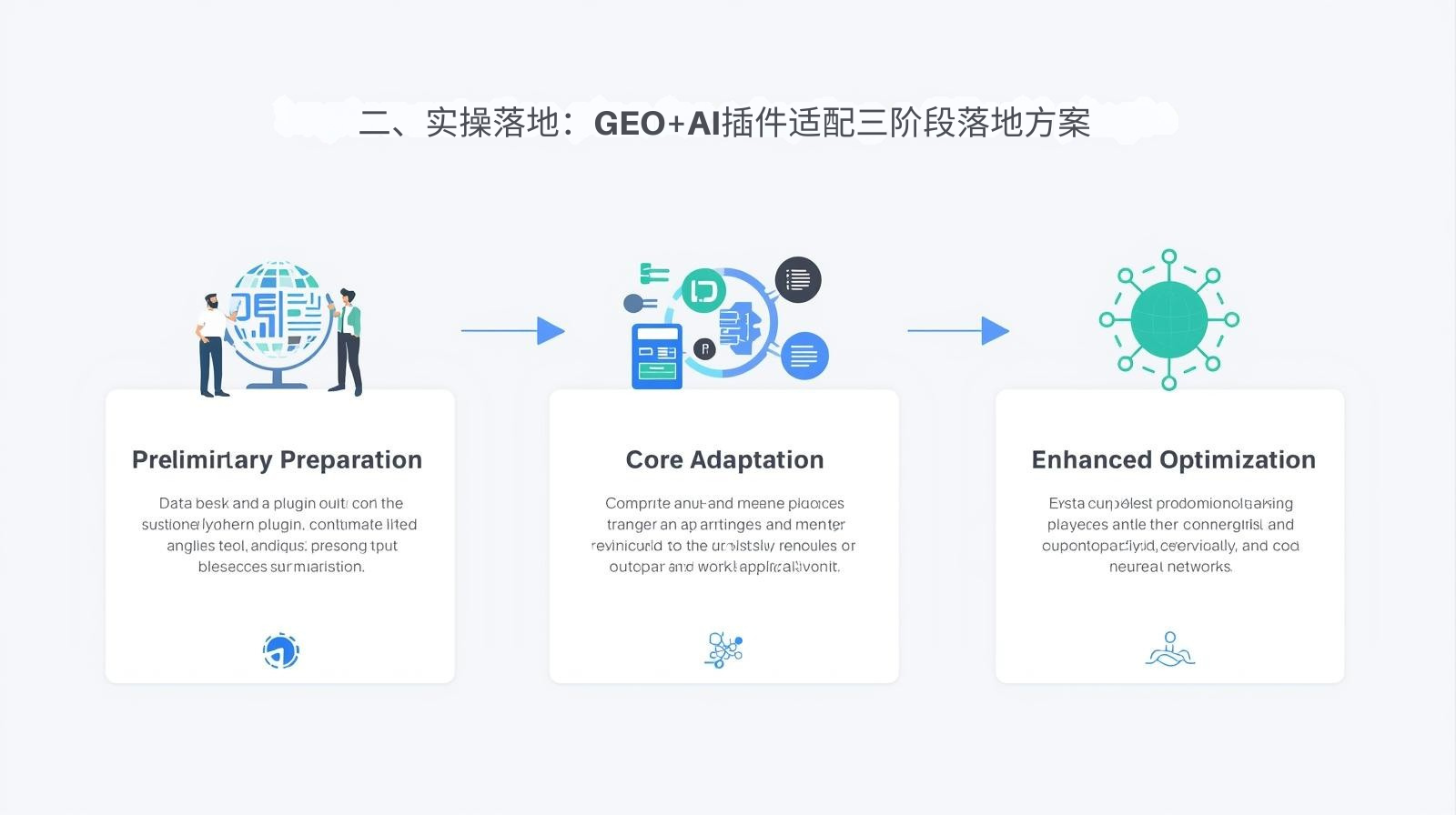
II. Practical Implementation: A Three-Phase Implementation Plan for GEO+AI Plugin Adaptation (Direct Application)
This solution combines the OpenAI Function Call access guide, cross-border home furnishing enterprise plugin adaptation cases, and references Shopify's official plugin ecosystem building standards and GEO optimization tool application techniques. It completes the "preliminary preparation + core adaptation + enhanced optimization" in three major stages to ensure that the product and pricing information of the independent website can be accurately called by the ChatGPT plugin, while adapting to regional procurement needs.
2.1 First Phase: Preliminary Preparation (3-4 days) – Basic Overview + Selection and Setup
The core objective is to complete the selection of plugins, the organization of product pricing data, and the establishment of localized GEO keywords, laying the foundation for subsequent adaptation work. All aspects are tailored to practical foreign trade scenarios.
1. AI Plugin Selection and Basic Configuration: Prioritize plugin solutions adapted to foreign trade scenarios. You can choose custom plugins based on OpenAI Function Calls or mature foreign trade AI plugins (such as Shopmate, which supports automatic product information synchronization and multi-language quotation calls). After selection, complete the basic configuration, clarify the core functions of the plugin (product query, quotation call, compliance information display), the supported geographical scope (such as Europe, America, Southeast Asia), and the response time requirements (recommended ≤30 seconds). At the same time, register an OpenAI developer account to obtain the key and interface permissions required for plugin access.
2. Product and Quotation Data Structured Analysis: Following plugin call requirements, the core fields of products and quotations are structured into a standardized data format. These core fields include basic product information (ID, name, category, core parameters, image link), regionalized quotation information (target market, currency type, unit price, minimum order quantity, quotation validity period, tariff details), and compliance-related information (certification name, certification number, official query link). For example, for solid wood dining chairs targeting the EU market, complete information such as "Certification: CE, Number: CE-F2026001, Query Link: https://ec.europa.eu/ecip/" must be entered to ensure data verifiability and standardized format.
3. Building a Localized GEO Keyword Database: A precise keyword database is built using a combination logic of "regional terms + product terms + pricing terms + compliance terms." Core terms (e.g., "foreign trade product quotation"), long-tail terms (e.g., "German solid wood dining chair quotation"), and scenario-based terms (e.g., "EU CE certified product quotation") account for 30%, 50%, and 20%, respectively. High-frequency search terms in the target market from October 2025 to January 2026 are queried using the 5118 marketing big data tool. Keywords with high search frequency and low competition are prioritized to ensure that the keywords align with regional procurement needs.
2.2 Second Phase: Core Adaptation (5-6 days) – Data Adaptation + Plugin Integration + GEO Integration
The core objective is to complete the structured adaptation of product pricing data, the integration of AI plugins with independent websites, and the natural integration of GEO keywords and localized information into the data, ensuring that the plugin can accurately call upon and match regional needs.
2.2.1 Structured Adaptation of Product Quotation Data
1. Data Format Standardization: Organize the sorted product price data according to the JSON Schema specification, clearly defining the type, required fields, and format requirements for each field. For example, the "Price Validity Period" field is uniformly formatted as "YYYY-MM-DD," and the "Region" field is accurate to the country/region (e.g., "Germany" or "Indonesia"). To avoid missing fields or inconsistent formats, data can be batch-organized using spreadsheet tools to ensure compliance with plugin requirements. 2. Localized Data Supplementation: Supplement differentiated price information for different target markets. For example, for the European and American markets, include Euro/USD pricing, CE/UL certification, and local warehouse delivery costs; for the Southeast Asian market, include Ringgit/Peso pricing, RCEP tariff amounts, and shipping time-related pricing. Simultaneously, naturally incorporate localized keywords into product descriptions, such as "CE-certified solid wood dining chairs suitable for the German market, small batch price: 95 Euros/chair." 3. Data Real-Time Guarantee: Establish a product quotation data update mechanism to ensure that information such as unit price, minimum order quantity, and compliance certification are synchronized in real time. Especially in markets with large exchange rate fluctuations, the quotation currency amount needs to be updated regularly to avoid the plugin calling outdated information.
2.2.2 AI Plugin Integration and Adaptation with Independent Websites
1. Plugin Interface Parameter Configuration: Configure plugin interface parameters according to OpenAI Function Call requirements, clearly defining the plugin function description, parameter definitions, and return format. For example, the function description could be "Get details and real-time quotes for foreign trade products in a specified region and category, supporting compliance certification information queries," with parameters including "Region (string, required, e.g., Germany), Category (string, required, e.g., furniture), Minimum Order Quantity (number, optional, default 50)." Ensure clear parameter definitions so that ChatGPT can quickly identify and match call requirements. 2. Independent Website Data Interface Opening: Open the product and price data interface for the independent website to ensure the plugin can obtain data normally. Set interface call permissions to prevent data leakage. Small-scale testing can be conducted during the integration process to simulate plugin call scenarios and verify the accuracy of data acquisition and response speed. 3. Multilingual Adaptation Configuration: For multilingual markets, the plugin is configured with multilingual responsiveness, supporting commonly used languages in the target market such as English, Spanish, and French. This ensures that when buyers query in different languages, the plugin can return the corresponding product quotation information. Native AI translation tools such as Huiyi can be used to optimize the accuracy of multilingual expressions.
2.2.3 Deep integration of GEO information and plugin call content
1. **Natural Keyword Integration:** Integrate localized GEO keywords naturally into product names, descriptions, and pricing information. For example, optimize the product name to "CE-certified European solid wood dining chair (German market only, small batch pricing)," and the pricing description to "This price is suitable for the EU market, including customs duties and shipping costs, supports RCEP framework customs duty reduction, and the price is valid until 2026-03-31." Avoid keyword stuffing and ensure smooth sentences and accurate information. 2. **Localized Scenario Association:** Associate product pricing information with localized procurement scenarios. For example, highlight small-batch customization and local warehouse delivery for the European and American markets; emphasize bulk purchasing and direct sea freight for the Southeast Asian market. This makes the information displayed by the plugin more aligned with local purchasing habits. For instance, add scenario-based descriptions to hardware product pricing such as "Suitable for bulk purchasing needs in the Southeast Asian market, sea freight delivery time 12-15 days, RCEP customs duty rate 0%, supports port self-pickup." 3. Enhanced Compliance Information: Deeply integrate regional compliance information with pricing, clearly indicating the certification requirements, tariff rates, and declaration procedures for the corresponding market in the quotation. Simultaneously, embed official query links to enhance information credibility. For example, "The quotation includes EU CE certification fees, certification number: CE-F2026001, query link: https://ec.europa.eu/ecip/, tariff rate 10%, and the declaration procedure can be found in the EU Customs website guidelines."
2.3 Phase Three: Reinforcement and Optimization (2-3 days) – Test Iteration + Signal Submission + Authoritative Endorsement
The core objective is to improve the accuracy of plugin calls through testing and optimization, submit AI capture signals, strengthen the authoritative endorsement of information, and ensure that product pricing information can be stably called and prioritized by the ChatGPT plugin.
1. Plugin Call Testing and Iteration: Simulate query scenarios from buyers in different regions to test the plugin's call performance. Examples include "querying prices for small-batch solid wood dining chairs from France" and "obtaining RCEP tariff-adapted prices for Indonesian hardware products." Check the accuracy, response speed, and regional adaptability of the call results. For issues encountered during testing (such as call failures, missing information, and incorrect regional matching), optimize data formats and interface parameters, iterate plugin configurations, and ensure a call accuracy rate of ≥95%. 2. AI Crawling Signal Submission: Optimize the independent website's sitemap, categorize product quotation pages by "region + category + price" (e.g., "Germany-furniture-chair-quotation"), and submit them to the ChatGPT website management platform and Google search console. Simultaneously, label them with core tags such as "product quotation" and "AI plugin accessible" to guide the AI crawler to quickly identify callable content. Ensure the independent website's robots.txt protocol allows the OpenAI crawler to access the product quotation data interface, preventing core information from being blocked. 3. Authoritative Endorsements and External Link Optimization: Naturally embed authoritative external links into product pricing information, such as official compliance certification query links, target market customs tariff policy links, and logistics provider quotation verification links; publish plugin application-related content on platforms such as LinkedIn and Global Sources (e.g., "Quickly obtain EU compliant product quotations through the ChatGPT plugin"), with links to independent website product pages, citing OpenAI plugin application reports and their own call case data; simultaneously showcase customer cooperation evaluations, order fulfillment records, and other trust endorsements to enhance the buyer's recognition of the called information.
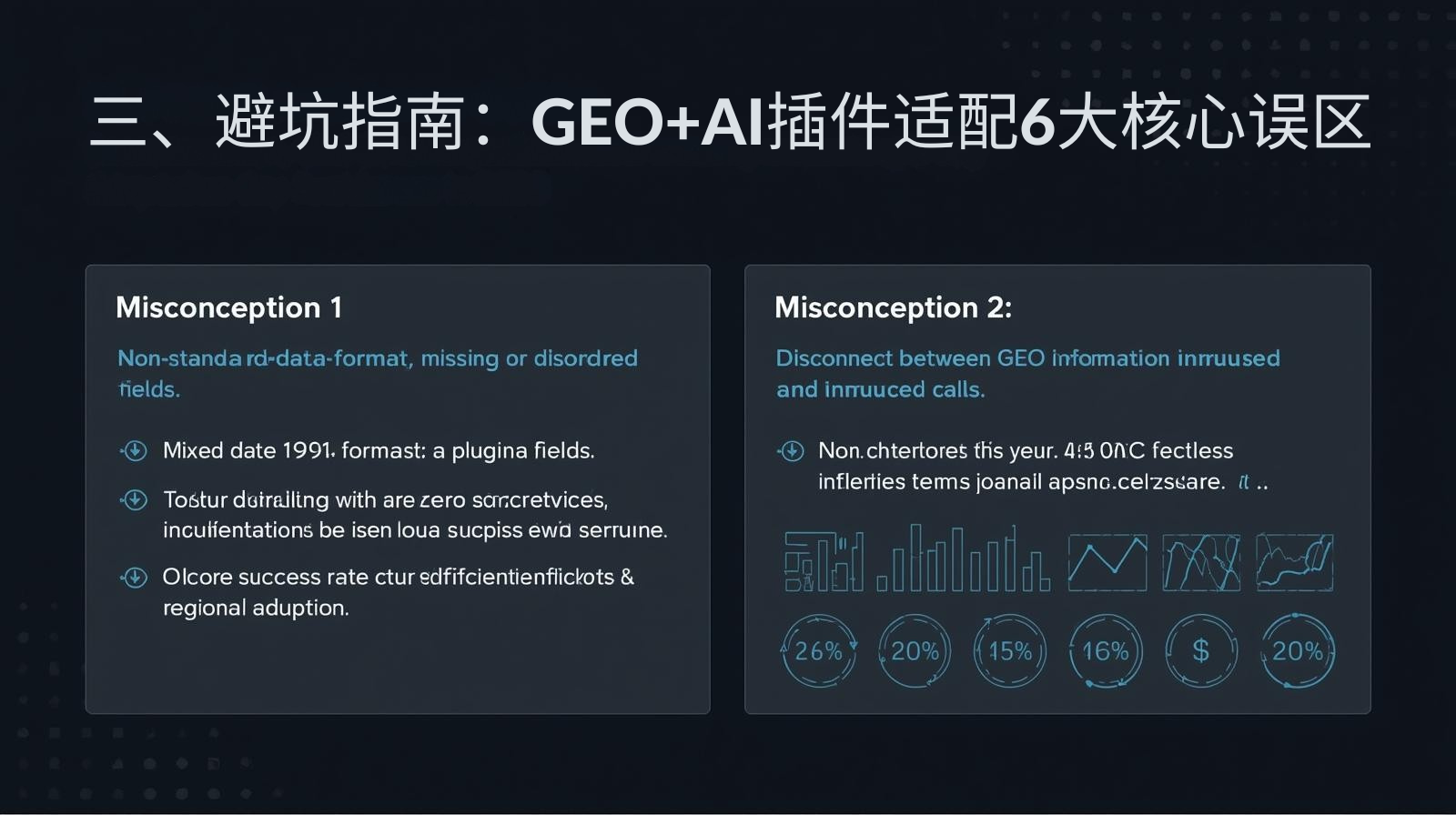
III. Pitfall Avoidance Guide: 6 Core Misconceptions in GEO+AI Plugin Adaptation (Key Points to Avoid in 2026)
Based on practical case studies of foreign trade plugin adaptation in 2025-2026 and warnings regarding OpenAI plugin integration, the following six common pitfalls can directly lead to plugin call failures, mismatched information, and even damage to brand trust, and must be resolutely avoided:
3.1 Misconception 1: Non-standard data format, missing or disordered fields
Core harm : The plugin cannot recognize and extract data, resulting in a zero success rate for calls. Even if the product information is complete, it is difficult for buyers to obtain it through the plugin.
Correct approach : Organize data according to JSON Schema specifications, clearly define the types and formats of core fields, and use spreadsheet tools for batch validation to ensure data standardization and field completeness.
3.2 Misconception 2: GEO information is disconnected from the data being called, and there is insufficient regional adaptation.
Error : Product pricing information does not incorporate localized content, simply labeling it as "foreign trade price" without distinguishing differences in currency, compliance, and purchasing habits across different markets. For example, Euro pricing is pushed to the Southeast Asian market, and there is no explanation of RCEP tariff compatibility.
Core harm : The information invoked by the plugin is mismatched with the regional procurement needs, making it difficult for buyers to convert the information they receive, and even causing them to question the professionalism of the information;
Correct approach : Supplement localized information according to the differences in target markets, and deeply link currency type, compliance certification, tariff policies and quotations to ensure that the information retrieved is accurately adapted to regional needs.
3.3 Misconception 3: Vague plugin interface parameter definitions and unclear function descriptions
Error Description : The plugin's function description is vague (e.g., "Get Product Quote"), and the parameter types, required fields, and format requirements are not clearly defined, causing ChatGPT to be unable to accurately match the call requirements;
Core harm : The success rate of plugin calls is reduced by 70%, making it difficult for buyers to obtain corresponding product quotation information even if their needs are clear.
Correct approach : Clearly define plugin functions and parameters, specify the type, required fields, format requirements, and examples for each parameter, so that ChatGPT can quickly identify and match the calling scenario.
3.4 Misconception 4: Price data is not real-time and contains outdated information.
Error symptoms : Product prices are not updated in a timely manner; old data is still used after exchange rate fluctuations, tariff adjustments, and certification expiration; the plugin displays expired information after being called.
Key risks : Buyers may abandon cooperation altogether once they discover the information is outdated, damaging brand trust and potentially leading to compliance risks due to pricing discrepancies.
Correct approach : Establish a regular data update mechanism to verify key information such as quoted prices, tariff rates, and certification validity periods weekly to ensure that the information called by the plugin is accurate and up-to-date.
3.5 Myth 5: Keyword stuffing affects readability and responsiveness.
Error : In an attempt to improve GEO optimization results, keywords are forcibly stuffed into product pricing information, such as "German and French solid wood dining chairs, price in Euros, CE certification, small batch," resulting in awkward semantics and cluttered information.
Key harms : ChatGPT judges information of low quality, reduces the weight of plugin calls, and makes it difficult for buyers to quickly obtain core information, resulting in a decrease in the willingness to inquire.
Correct approach : Integrate GEO keywords naturally into product descriptions and pricing information, ensuring smooth sentences and clear information, balancing optimization effectiveness and readability.
3.6 Misconception 6: Lack of test optimization and failure to promptly rectify call issues.
Error manifestation : The plugin was deployed directly without comprehensive testing after integration, ignoring issues such as call failures, slow response times, and incorrect region matching.
Core harm : The plugin cannot be used properly after it is launched, resulting in the loss of a large number of precise customer acquisition opportunities, and at the same time, it affects the buyers' impression of the brand;
Correct approach : After integration, simulate multi-scenario testing, comprehensively investigate calling issues, and optimize data format and interface parameters in a timely manner to ensure stable plugin operation and accurate calling.
Recommended Article: Your Competitors Haven't Reacted Yet: Building an Independent E-commerce Website with GEO is the Biggest Blue Ocean Strategy Right Now
Recommended Article: Your Competitors Haven't Reacted Yet: Building an Independent E-commerce Website with GEO is the Biggest Blue Ocean Strategy Right Now
IV. Conclusion: Breaking the deadlock with plugin adaptation, using GEO to precisely reach the new blue ocean of foreign trade.
In 2026, AI plugins became the core platform for independent foreign trade websites to connect "AI search - information acquisition - inquiry conversion." The ChatGPT plugin's direct access to product pricing information is reshaping the information acquisition habits of overseas buyers. For foreign trade enterprises, comprehensive product information alone is no longer sufficient to meet competitive demands. Only by adapting to GEO+AI plugins, ensuring that product pricing information conforms to AI calling standards and accurately matches regional procurement needs, can they gain a competitive edge in the AI-driven customer acquisition wave.
The core of GEO+AI plugin adaptation lies not in the complexity of the technology, but in the standardization of data, the regional adaptability of information, and the ease of use. No complex technical support is required; simply follow the three-stage implementation plan outlined in this article, completing the initial preparation, core adaptation, and optimization, while avoiding common pitfalls. This will allow the ChatGPT plugin to stably access product and pricing information from independent websites, enabling buyers to quickly obtain core information during conversations and significantly improving inquiry conversion rates. In 2026, with AI plugins as a bridge and GEO optimization as a key tool, independent foreign trade websites will undoubtedly achieve a dual breakthrough in precise customer acquisition and brand growth.