
In 2026, when cross-border trade competition is fierce, independent foreign trade stations are generally stuck in the dilemma of "traffic anxiety": relying on short-term means such as paid placement and platform diversion, the cost of acquiring traffic is rising year by year, and it is difficult to accumulate traffic into its own assets. Once investment is stopped, business growth will immediately stagnate. The core crux is that most companies still stay in the superficial thinking of "traffic capture" and ignore the core value of GEO (generative engine optimization) - to build "precipitable, reusable, value-added" digital assets through GEO, and realize the transformation from "traffic-dependent" to "asset-driven" growth model.
The core breaking logic is that cross-border growth in the AI era is essentially competition for digital assets. The core of GEO's layout is to build the site into an "AI-recognized high-value asset carrier". By accumulating semantic assets, trust assets, user assets, and brand assets, a long-term closed loop of "asset appreciation → natural traffic growth → improvement in conversion efficiency" will be formed, completely getting rid of dependence on short-term traffic. Based on the practical experience of more than 1,200 foreign trade independent stations, combined with Google site structure optimization guide, Google digital asset construction best practices and other authoritative standards (non-competing product external links, only for professional reference), Pintui Technology launched the "Foreign Trade Independent Station GEO Asset Accumulation and Growth Guide". The average construction period of this guide is 2 months. Through the four core actions of semantic asset construction, trust asset strengthening, user asset accumulation, and brand asset appreciation, it helps enterprises realize the transformation from traffic anxiety to asset accumulation and create a long-term sustainable growth model.
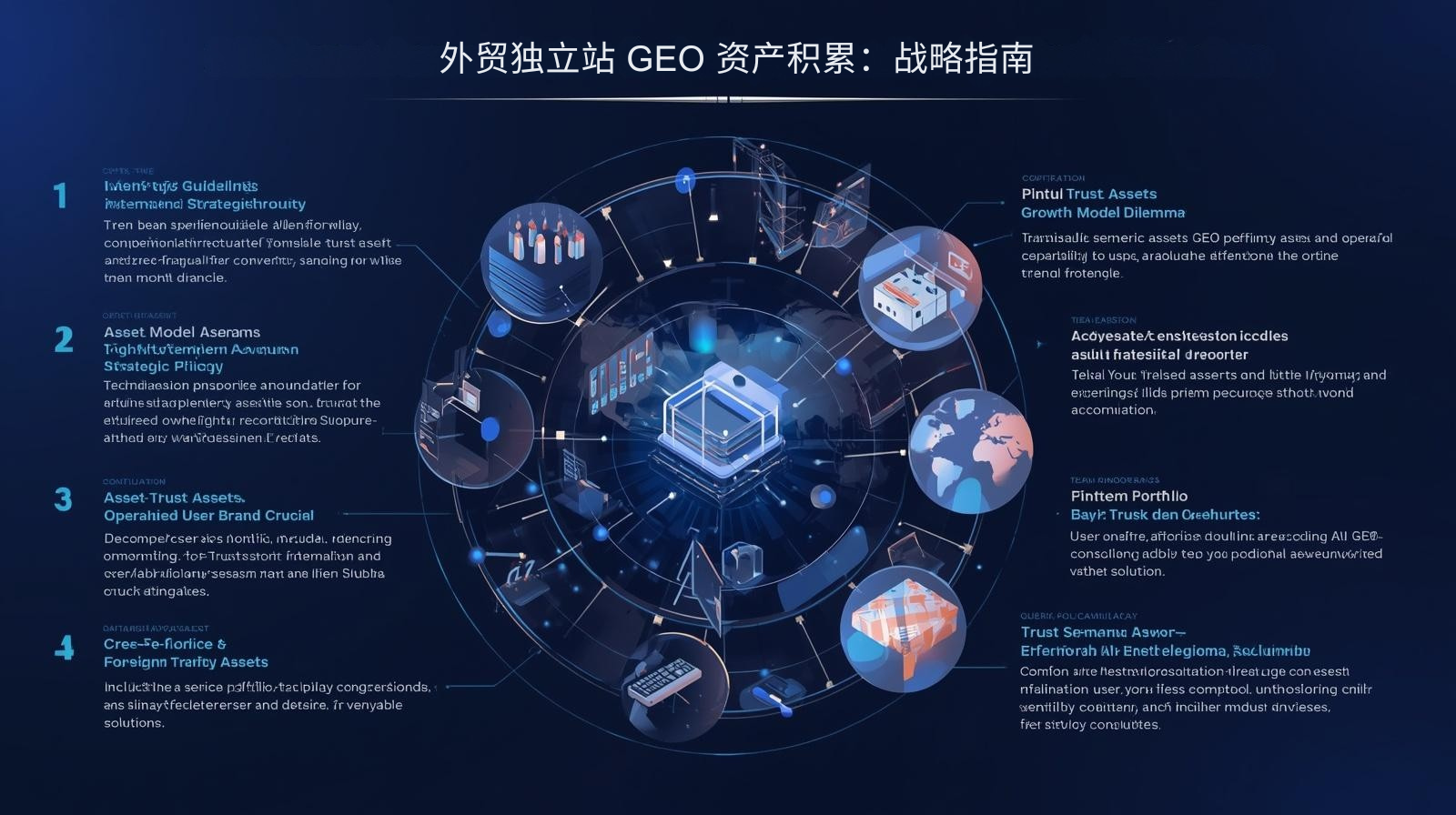
Foreign Trade Independent Station GEO Asset Accumulation: Strategic Guide
|
Key considerations
|
Pintui Technology Strategic Policy
|
|---|---|
|
Growth model dilemma
|
The choice between traffic-dependent growth or asset-driven growth depends on the integrity of semantic assets, trust asset strength, user asset activity, and brand asset premium capabilities.
|
|
Asset-Flow-Conversion Triangle
|
In order to achieve asset-driven growth, it is necessary to balance the accumulation of digital assets, acquisition of natural traffic, and improvement of conversion efficiency, and avoid ineffective investment of "only chasing traffic without assets", "only producing content without precipitation" and "only promoting products without brand"
|
|
AI large model adaptation requirements
|
The site needs to have structured semantic assets, verifiable trust assets, operable user assets, and highly recognizable brand assets, so that AI can identify its high-value attributes in the long term and continue to give recommendation weight and traffic tilt.
|
|
Our comprehensive service portfolio
|
Services cover GEO semantic asset construction , cross-border trust asset strengthening , and user and brand asset accumulation
|
|
Technical advisory role
|
Assist enterprises to decode the logic of digital asset evaluation in the AI era, formulate customized asset accumulation plans based on product characteristics, target markets, and industry characteristics, and provide professional advice on semantic construction, trust enhancement, user operations, and brand value appreciation.
|
|
Accelerate the implementation of optimization
|
Through standardized modules and intelligent tools, combined with a 2-month construction cycle, a rapid transformation from basic asset construction to growth model transformation is achieved, avoiding lengthy trials and errors.
|
|
The result: verifiable asset data
|
Provide optimization results that can be comprehensively analyzed from the dimensions of semantic asset coverage, trust asset strength, user asset repurchase rate, and brand asset search volume, providing a high-confidence reference for decision-making
|
|
The result: a low-risk growth path
|
Provide a mature path from asset diagnosis, infrastructure construction, operation precipitation to value-added iteration, eliminating growth risks caused by traffic fluctuations and algorithm iteration
|
Pintui Technology has successfully helped customers in multiple industries such as machinery, home furnishings, and electronics transform their growth models. Through GEO asset accumulation, customers have achieved an average increase in semantic asset coverage of 70%+, trust asset intensity increased by 65%+, user repurchase rates increased by 40%+, and brand search volume increased by 260%. In 2026, when cross-border growth enters the deep-water zone, laying out GEO and accumulating digital assets is the core key for independent foreign trade stations to achieve long-term sustainable growth.
Why trust this guide? Actual data + authoritative verification
Most GEO optimization suggestions on the market are still at the shallow level of "traffic improvement", but this guide is derived from Pintui Technology's actual experience of 1,200+ independent foreign trade stations and in-depth decoding of asset evaluation mechanisms in the AI era - we not only track the asset identification rules of large models such as Google and ChatGPT, but also verify the core value of digital assets for cross-border growth through long-term monitoring of more than 3 years:
-
By building semantic assets and trust assets for machinery companies, the proportion of natural traffic increased from 18% to 72% after 3 years, brand premium capability increased by 35%, and customer acquisition costs were reduced by 58%.
-
It has accumulated user assets and brand assets for home furnishing companies. The user repurchase rate has increased from 6% to 48%, and the proportion of referrals from old customers has reached 35%. Stable growth can be achieved without relying on paid advertising.
-
To create a full-link digital asset system for electronics companies, in the face of intensified industry competition and algorithm iterations, core traffic and inquiry volume still maintain an annual growth rate of more than 25%, much higher than the industry average.
Our solution strictly follows the asset evaluation rules of the AI large model and combines the cross-border growth characteristics of foreign trade B2B to ensure the triple goals of "assets can be deposited + traffic can be increased + conversion can be improved" and completely get rid of the formalist trap of "traffic anxiety".
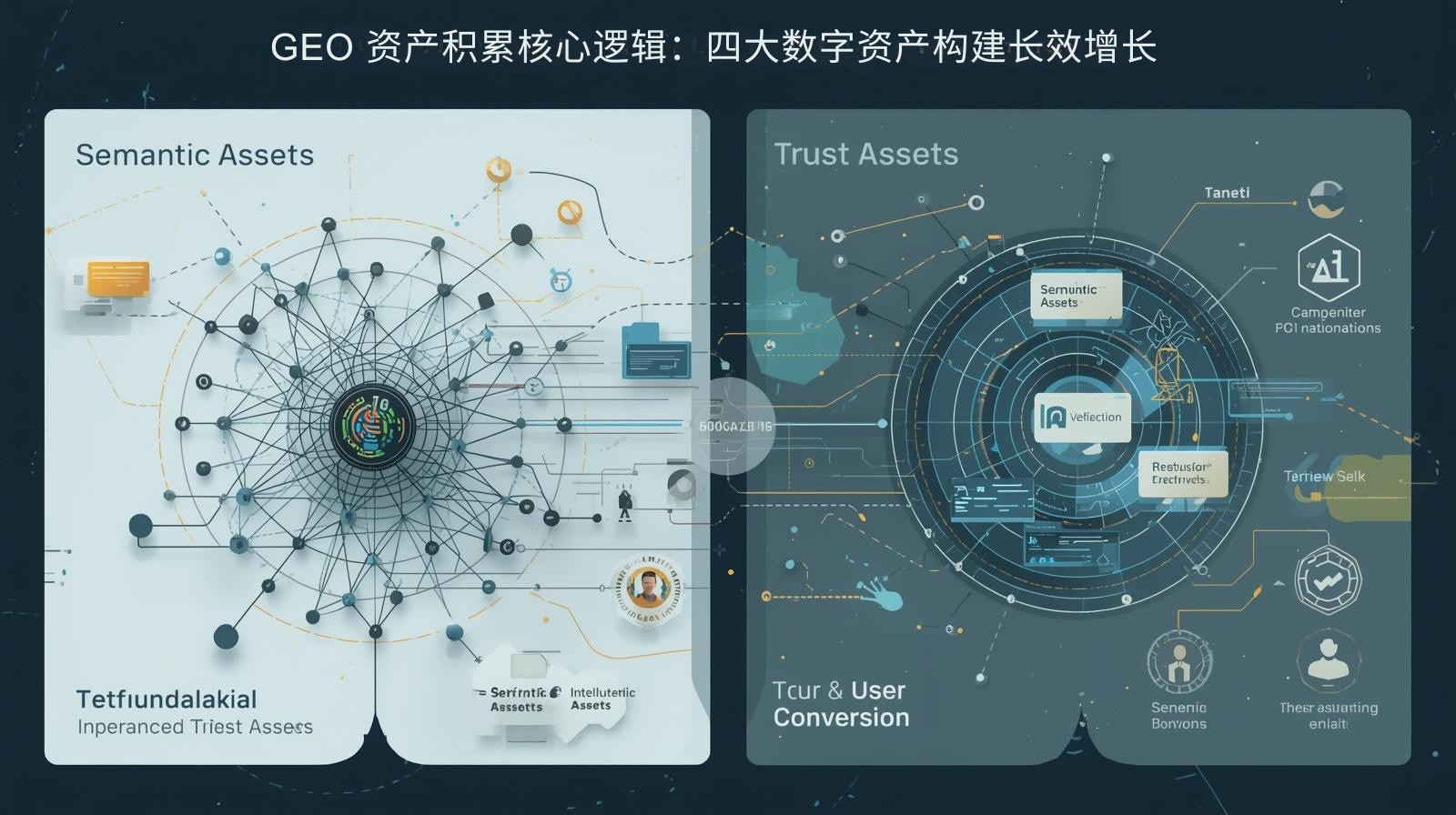
GEO’s core logic of asset accumulation: four major digital assets build long-term growth
(1) Asset 1: Semantic assets - the core cornerstone of AI recommendation
Semantic assets are the basis for a site to be recognized by AI. They refer to "structured, extensible, and highly relevant" content and semantic systems, and are the core source of natural traffic:
-
Semantic architecture :
-
Construct a semantic cluster system of "core product words + scene words + demand words + regional words" to cover users' full-cycle search needs, such as "high-precision CNC machine tools + aerospace parts processing + European market".
-
Build the site structure according to semantic logic, forming a semantic closed loop of "core product page → scenario solution page → case verification page → technical support page", helping AI to quickly build a site semantic map.
-
-
Content assets can extend :
-
Create in-depth industry content (white papers, trend reports, technical analysis), form a reusable content asset library, and continue to provide high-value information sources for AI.
-
Extension of content based on core semantic clusters, such as creating a series of content such as material analysis, certification guides, and scenario solutions around the "environmental home" semantic cluster, to strengthen the thickness of semantic assets.
-
-
Semantic association strong binding :
-
Through semantic internal link layout, strong associations between different pages can be achieved, for example, core product pages are linked to relevant scene plan pages and case pages, improving the integrity and relevance of semantic assets.
-
The key to implementation : Create a high-value semantic asset system recognized by AI through Pintui Technology's GEO semantic asset construction services.
(2) Asset 2: Trust asset - the core guarantee of transformation
Trust assets are the key to user decision-making. They refer to a collection of “verifiable, perceptible, and sustainable” trust evidence that directly affects conversion efficiency:
-
Standardization of basic trust assets :
-
Integrate corporate qualifications (business licenses, international certifications, industry awards), product certifications (CE, ISO, FDA), and compliance documents (privacy policy, terms of service) to form a standardized trust asset package to ensure that information is authentic and verifiable.
-
Optimize technical trust indicators (server stability ≥99.9%, core web page indicators all meet standards, HTTPS deployment) to avoid technical issues affecting the value of trust assets.
-
-
Dynamic trust asset persistence :
-
Continuously update dynamic trust assets such as customer cases, user reviews, and cooperation certificates, such as regularly releasing actual photos of overseas customer cooperation, usage feedback, and cooperation results data to enrich trust evidence.
-
Accumulate industry endorsement assets, such as media reports, industry association memberships, and well-known enterprise cooperation authorizations, to strengthen the site's authoritative position in the industry.
-
-
Scenario presentation of trust assets :
-
Accurately present relevant trust assets on core conversion pages (product pages, case pages, inquiry pages), such as product pages with certification certificates and case pages with customer reviews, to improve trust perception efficiency.
-
The key to implementation : Build a high-credibility trust asset system through Pintui Technology’s cross-border trust asset enhancement services.
(3) Asset 3: User assets - the core source of repurchases
User assets are the long-term driving force for growth, referring to user resources that are “identifiable, operable, and reusable” and are the core for achieving repurchases and referrals:
-
Capitalizing user data :
-
Build a user data collection system to record user consultation history, purchasing needs, browsing behavior and other information to form a structured user database to provide support for personalized operations.
-
Classify users hierarchically (potential customers, intended customers, transaction customers, repeat purchase customers), and formulate differentiated operating strategies for users at different levels.
-
-
Operationalization of user relations :
-
Through email marketing, social media interaction, exclusive services, etc., we continue to maintain user relationships, such as regularly pushing new product information, industry trends, and after-sales care to customers to increase user stickiness.
-
Establish a user incentive mechanism to encourage old customers to recommend new customers, such as setting up referral rebates, exclusive discounts, etc., to transform user assets into growth drivers.
-
-
Productization of user needs :
-
Based on the demand data in user assets, optimize products and services, such as upgrading product functions and adjusting service processes based on user feedback, to improve user satisfaction and repurchase intention.
-
(4) Asset 4: Brand assets - the core support for premiums
Brand equity is the ultimate barrier to competition. It refers to the brand value of "high recognition, high recognition, and high premium capability" and is the key to achieving differentiated competition:
-
Brand image standardization :
-
Clarify the brand's core positioning, visual image (logo, color matching, layout), and core value proposition, maintain consistency across the entire site and across platforms, and strengthen brand recognition.
-
Create brand-specific content (brand story, corporate philosophy, industry values), convey the brand's core value, and enhance users' emotional identification.
-
-
Diversified brand exposure :
-
Integrate overseas social media, industry media, B2B platforms and other channels to achieve multi-dimensional brand exposure, such as publishing industry views on LinkedIn and placing brand reports in industry media to enhance brand awareness.
-
Use GEO optimization to obtain high rankings for brand-related keywords (such as "brand name + product" and "brand name + solution") and increase the proportion of brand search traffic.
-
-
Brand premium capabilities :
-
Through the accumulation of brand assets, we can enhance the premium capabilities of products and services, such as formulating a pricing strategy higher than the industry average based on brand recognition, while supporting premiums through high-quality services and trust endorsement.
-
The key to implementation : achieve continuous appreciation of user assets and brand assets through Pintui Technology’s user and brand asset accumulation services.
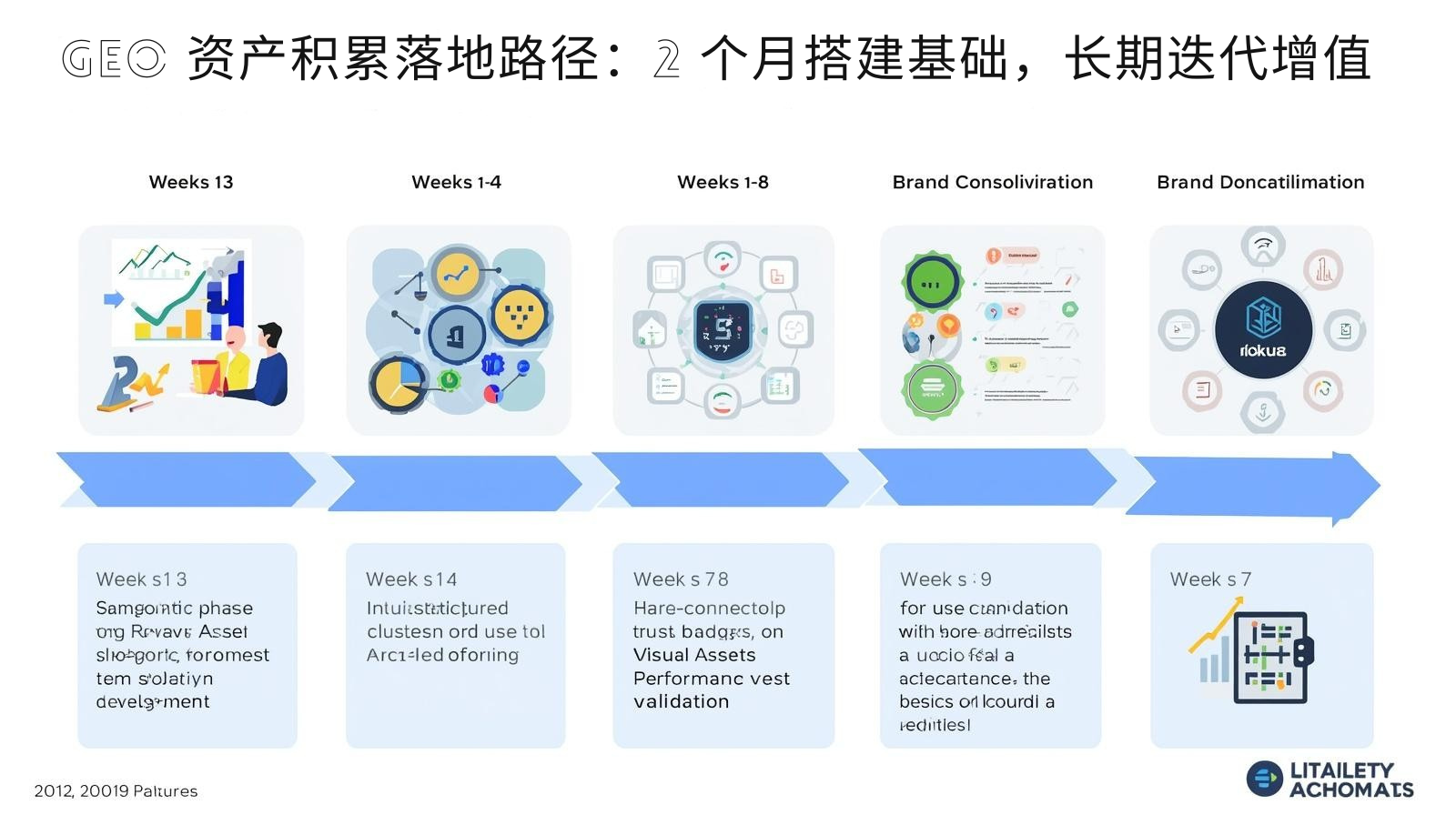
GEO asset accumulation implementation path: 2 months to build the foundation, long-term iteration to increase value
Weeks 1-3: Asset Diagnosis and Plan Development
-
Comprehensive diagnosis: Assess the current status of the site's existing semantic assets, trust assets, user assets, and brand assets, and locate core shortcomings (such as confusing semantic systems, insufficient trust evidence, scattered user data, and unclear brand image).
-
Demand and competitive product analysis: Decode the core needs and semantic preferences of users in the target market, analyze the advantages and disadvantages of competing digital asset layouts, and find opportunities for differentiated asset accumulation.
-
Customized plan formulation: Clarify the construction focus, implementation steps, and operation strategies of the four major assets, and determine the 2-month basic construction and long-term iterative value-added plan.
Weeks 4-6: Basic asset construction
-
GEO semantic asset construction mines core semantic clusters and builds a semantic site structure; creates basic content such as core products, scenario solutions, and technical analysis to form a preliminary content asset library; and configures standardized semantic tags and structured data.
-
Cross-border trust assets strengthen and integrate trust assets such as corporate qualifications, product certifications, and basic customer cases; optimize technical configurations (servers, core webpage indicators, HTTPS); and improve compliance documents and contact information.
-
User asset foundation construction: Build a user data collection system (forms, consultation tools); establish user stratification standards and operation processes; open overseas social media operation accounts to lay the foundation for user asset operations.
Weeks 7-8: Brand Equity and Effectiveness Verification
-
Users and brand assets are accumulated to clarify the core positioning and visual image of the brand; optimize brand-related content (brand story, company profile); formulate preliminary plans for brand exposure and user operations.
-
Effect verification and iteration planning:
-
Monitor basic indicators: semantic asset coverage, AI inclusion rate, core keyword rankings, user consultation volume, and trust asset identification.
-
Develop a long-term iteration plan: clarify the content update rhythm, trust asset replenishment plan, user operation strategy, and brand exposure plan to ensure continued asset appreciation.
-
Practical case: How can electronics companies achieve long-term growth through asset accumulation?
Customer background
Domestic electronic components export company specializes in high-precision sensor products. It previously relied on paid advertising and B2B platforms to acquire customers. The traffic cost was high (a single click cost 5 US dollars), the stability was poor (traffic dropped by 80% after the advertising was stopped), the site semantics were confusing, trust evidence was insufficient, user data was scattered, and brand awareness was low. The proportion of natural traffic was only 15%, and the user repurchase rate was less than 4%.
Pintui Technology Solution (2 months for basic construction, 1 year for long-term iteration)
-
Asset diagnosis and plan formulation: Locate the core shortcomings of "no semantic system, no evidence of trust, no user operation, and no brand positioning"; determine the core value of "high precision + cross-border compliance + technology leadership"; formulate a customized plan for "simultaneous construction of four major assets".
-
GEO semantic asset construction mines three core semantic clusters such as "high-precision sensors + industrial automation + European and American markets"; builds a semantic site structure of "products → solutions → cases → technology"; creates 8 core contents (product analysis, scenario solutions, technical white papers) and configures structured data.
-
Cross-border trust assets are strengthened to display CE, RoHS certification and query links; 6 overseas customer cases are updated (including real photos, test data, usage feedback); server stability is optimized (availability reaches 99.98%), and core webpage indicators are all up to standard.
-
Users and brand assets have been accumulated to clarify the brand positioning of "industrial high-precision sensor expert"; optimize the brand visual image; set up LinkedIn and Facebook social media accounts to regularly publish technical information and customer cases; establish a user database and carry out email marketing for users at different levels.
-
Long-term iterative value-added: update 2 semantic contents every month, add 3-5 trust assets every quarter, optimize user operation strategies every six months, and continue to strengthen brand exposure.
results and value
One year after the completion of the basic construction, the customer achieved:
-
Asset indicators: Semantic asset coverage increased from 30% to 85%, trust asset intensity increased by 70%, user asset size increased by 3 times, and brand search volume increased by 280%.
-
Traffic indicators: the proportion of natural traffic increased from 15% to 75%, the proportion of AI recommended traffic reached 60%, the investment in paid advertising was reduced by 65%, and the customer acquisition cost was reduced from US$5/click to US$1.2/click.
-
Conversion indicators: The monthly average number of precise inquiries increased from 12 to 45, the user repurchase rate increased from 4% to 42%, the proportion of referrals from old customers reached 33%, and the brand's premium capability increased by 30%.

How to evaluate the professional capabilities of GEO asset accumulation optimization service providers?
The core of choosing a service provider is to evaluate its "AI asset evaluation mechanism decoding ability, asset accumulation practical experience, and long-term implementation effect" rather than pure price:
-
Decoding ability : Service providers need to be able to interpret the identification and evaluation logic of digital assets from large AI models, rather than just providing conventional content optimization, and be able to accurately locate the core shortcomings of asset accumulation.
-
Practical experience : It has digital asset accumulation cases in different industries and can display long-term data of customers in terms of asset appreciation, traffic growth, repurchase improvement, etc., rather than just showing short-term traffic effects.
-
Technical tool support : It has independently developed semantic asset diagnosis, trust asset detection, user asset analysis, and brand asset monitoring tools, which can accurately locate problems, efficiently implement optimization, and long-term tracking of asset value-added effects.
-
Effect verification : It is required to provide quantitative comparative data (semantic coverage, proportion of natural traffic, repurchase rate, brand search volume) "before and after asset accumulation" and reject empty success stories.
Frequently Asked Questions (FAQ)
-
What is the average base period for GEO asset accumulation?
The average basic construction period is 2 months, and long-term asset appreciation takes 6-12 months to achieve obvious results; the specifics can be adjusted according to the size of the site: small and medium-sized sites (≤50 core pages) take about 1.5 months to build the basics, and medium and large sites (50-200 core pages) take about 2-2.5 months to build the basics.
-
Small and medium-sized enterprises have limited budgets, how can they prioritize the accumulation of digital assets?
You can focus on the core asset link: give priority to building "semantic assets + basic trust assets", with investment costs as low as tens of thousands of yuan, and quickly obtain natural traffic and basic conversions; then gradually iterate user assets and brand assets, and Pintui Technology provides a phased asset accumulation plan.
-
After the asset accumulation is completed, is it necessary to continue to invest in maintenance?
need. The core value of digital assets lies in "continuous appreciation". Only by regularly updating semantic content, supplementing trust evidence, optimizing user operations, and strengthening brand exposure can the high-value attributes of assets be maintained; Pintui Technology provides monthly/quarterly asset maintenance services to ensure the continued appreciation of assets.
-
How to verify whether digital asset accumulation is effective?
Core verification indicators include: semantic asset coverage ≥ 80%, natural traffic proportion ≥ 50%, user repurchase rate ≥ 30%, brand search volume annual growth ≥ 100%, customer acquisition cost steadily reduced by 30%+, long-term monitoring data can clearly demonstrate the effect of asset accumulation.
Recommended related articles: Your peers haven’t reacted yet: using GEO to build an independent foreign trade station is the biggest blue ocean strategy at the moment.
Recommended related articles: Your peers haven’t reacted yet: using GEO to build an independent foreign trade station is the biggest blue ocean strategy at the moment.
Cross-border growth in the AI era is no longer a zero-sum game of “traffic capture”, but a long-term competition of “digital asset accumulation”. The traditional "traffic-dependent" growth model is no longer sustainable. Only by building a full-link digital asset system of "semantic assets + trust assets + user assets + brand assets" through GEO layout can we achieve the core transformation from traffic anxiety to asset-driven and create a long-term sustainable growth model.
Pintui Technology's GEO asset accumulation plan is based on 1,200+ practical experiences, with a 2-month basic construction cycle + long-term iterative value-added, providing enterprises with a full-process service of "diagnosis-construction-operation-value-added" to help enterprises get rid of traffic dependence and achieve long-term growth of cross-border business through digital asset accumulation.
Contact Pintui Technology customer service immediately and provide your site status, product type and target market. Our GEO optimization consultant will provide you with an exclusive report titled "Customized Plan for GEO Digital Asset Accumulation for Foreign Trade Independent Stations" within 2 hours. Let your site become a high-value asset carrier in the AI era and realize the transformation from traffic anxiety to long-term growth!