According to Gartner's 2026 Global B2B Trade Technology Report, mainstream AI platforms (ChatGPT 4.0, Google Gemini Advanced, etc.) have adopted vector retrieval technology as their core matching engine. When overseas buyers search for products using AI, the accuracy of the match between their needs and products is directly determined by the vector retrieval's suitability. However, the current situation is that over 85% of independent foreign trade websites have not performed targeted vector retrieval optimization, relying solely on traditional keyword stuffing. This prevents AI from deeply understanding the semantic relationship between the product's core value and the buyer's needs. Even if a product highly matches the needs, it struggles to enter the AI's precise matching recommendation list. A Zhejiang-based cross-border outdoor products company, through GEO generative engine optimization and vector search adaptation, saw its ChatGPT ranking for core demand matching such as "outdoor camping gear exporter" and "outdoor camping equipment foreign trade supplier" jump from 27th to 2nd within 3 months. AI-driven precise matching resulted in a 245% increase in high-quality inquiries and a 48% improvement in the conversion rate between demand and product matching. This case fully demonstrates that the core of GEO + vector search optimization is enabling AI to understand the semantic features of products and the core demands of procurement needs, achieving a precise match between "product value" and "pain points of demand," making independent websites a priority option for AI matching recommendations.
I. Core Understanding: The Value Logic of Vector Search Optimization and the Principle of GEO Adaptation
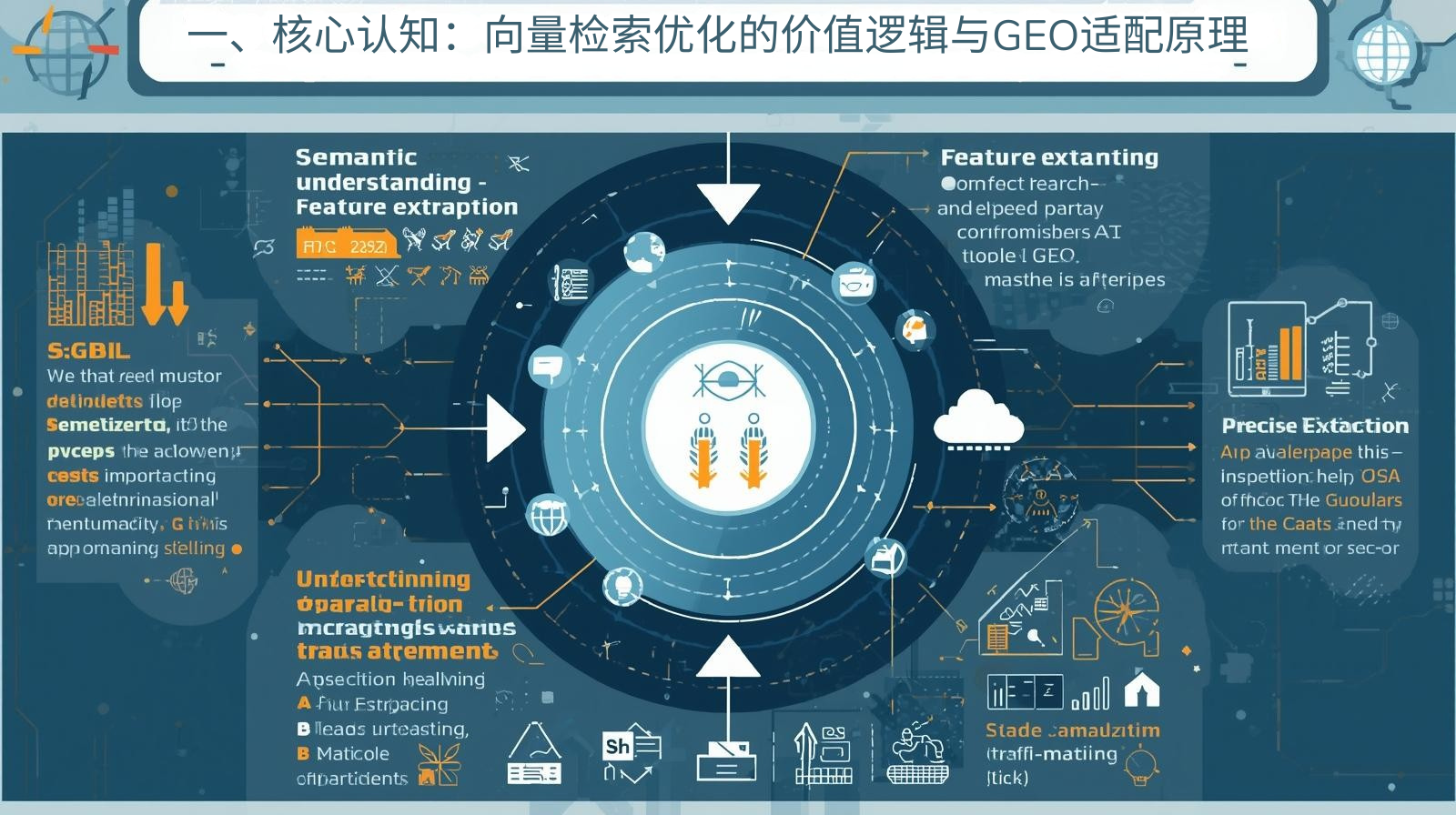
The core of GEO + Vector Search Optimization for independent foreign trade websites revolves around the core logic of AI platform vector search: "semantic understanding - feature extraction - precise matching." GEO optimization organizes core semantic information of products (functions, scenarios, advantages, adaptation needs, etc.) and presents it in a structured manner according to vector search adaptation standards. This allows AI to quickly extract product semantic features and form an efficient association with the semantics of buyer needs. Consequently, when buyers initiate product searches or inquiries, the system accurately matches and prioritizes recommendations. This model breaks through the traditional "keyword-dependent" matching dilemma, achieving a closed loop of "AI deep understanding - precise matching - efficient reach," and is the core optimization direction for AI-driven customer acquisition for independent foreign trade websites in 2026.
1.1 Why is vector retrieval optimization the core of AI-based accurate matching?
Traditional keyword optimization can only achieve "literal matching," while vector retrieval technology can achieve "semantic matching." This is the core of how AI platforms improve the accuracy of matching procurement needs with products. Its core value in acquiring customers in foreign trade is reflected in three dimensions, which can be clearly demonstrated by industry data from 2026:
1. Adapting to the core needs of AI semantic understanding: The core advantage of vector retrieval lies in its ability to capture the "semantic relationship" between products and needs, rather than simply literal overlap. For example, if a buyer searches for "lightweight and durable outdoor tent," traditional keyword optimization can only match content containing the literal words "lightweight," "durable," and "outdoor tent." However, vector retrieval can identify semantically similar product information such as "portable camping tent with strong material." According to Statista's 2026 data on AI matching in foreign trade, websites that optimized for vector retrieval achieved 3.6 times higher AI semantic matching accuracy than websites that only optimized for keywords.
2. Addressing the Pain Point of Vague Procurement Needs and Improving Conversion Efficiency: Overseas buyers, especially small and medium-sized enterprises (SMEs), often have vague requirements (e.g., describing only "storage products suitable for outdoor scenarios" without specifying the category). Vector search can match suitable products such as "outdoor storage boxes" and "camping storage bags" through semantic association, an effect that traditional keyword optimization cannot achieve. The "2026 White Paper on Foreign Trade Buyer Demand Behavior" shows that suppliers who can match vague needs through vector search have a 62% higher inquiry conversion rate than suppliers optimized using traditional methods.
3. Strengthen AI Trust Weighting and Enhance Recommendation Priority: One of the core standards for AI platforms to determine the quality of product information is the semantic completeness and structure of the information. Vector retrieval optimization makes product information semantically clearer and its features more prominent. Combined with authoritative supporting evidence (certifications, case studies, etc.) from GEO optimization, it can significantly improve AI's trust assessment of the site. For example, product information optimized through vector retrieval contains a complete semantic chain of "function-scenario-material-certification-adaptation requirements," which AI will determine as "high-quality information with high matching value," significantly increasing its recommendation priority.
1.2 The core of GEO and vector retrieval optimization: enabling AI to "understand" the semantic value of products
Many foreign trade companies mistakenly believe that "optimizing keywords is equivalent to adapting to AI matching." However, without combining GEO (Geometric Oriented Search) optimization with vector retrieval, AI can only extract basic semantic features and cannot deeply connect with procurement needs and pain points, resulting in significantly reduced matching accuracy. The core of GEO and vector retrieval optimization is to enable AI to not only "understand" product semantics but also "connect" with procurement needs through "semantic information completeness + content structure standardization + authoritative signal reinforcement." This core logic can be broken down into two points:
1. Complete Semantic Information: By optimizing and organizing the product's semantic information across all dimensions—"core functions, application scenarios, materials and processes, compliance certifications, adaptation needs, and core advantages"—through GEO, fragmented semantic information is avoided. For example, the optimized product semantic description is "This outdoor camping tent (core product) is made of 210D Oxford cloth (material), has waterproof and windproof functions (function), is suitable for outdoor camping and hiking scenarios for 3-4 people (scenario), has passed EU REACH certification (certification), can meet the bulk purchase and customized labeling needs of small and medium-sized buyers (adaptation needs), is 30% lighter and 50% more durable than competitors (advantages), and is suitable for outdoor product retailers in Europe and North America (target customers)", rather than simply labeling it "outdoor tent, waterproof, for camping".
2. Content Structure Standardization: Based on vector retrieval adaptation standards, complete semantic information is presented in a structured manner (e.g., divided into sections, using standardized titles, and lists/tables as aids), enabling AI to quickly extract core semantic features. At the same time, combined with the natural layout of keywords optimized by GEO, dual adaptation of "semantic matching + keyword matching" is achieved. For example, product information is presented in sections such as "product overview - core functions - application scenarios - compliance certification - adaptation requirements", with each section labeled with standardized H3 titles, and core semantic information presented in a clear list.
II. Practical Implementation: Three-Step Collaborative Optimization to Achieve Precise AI Matching
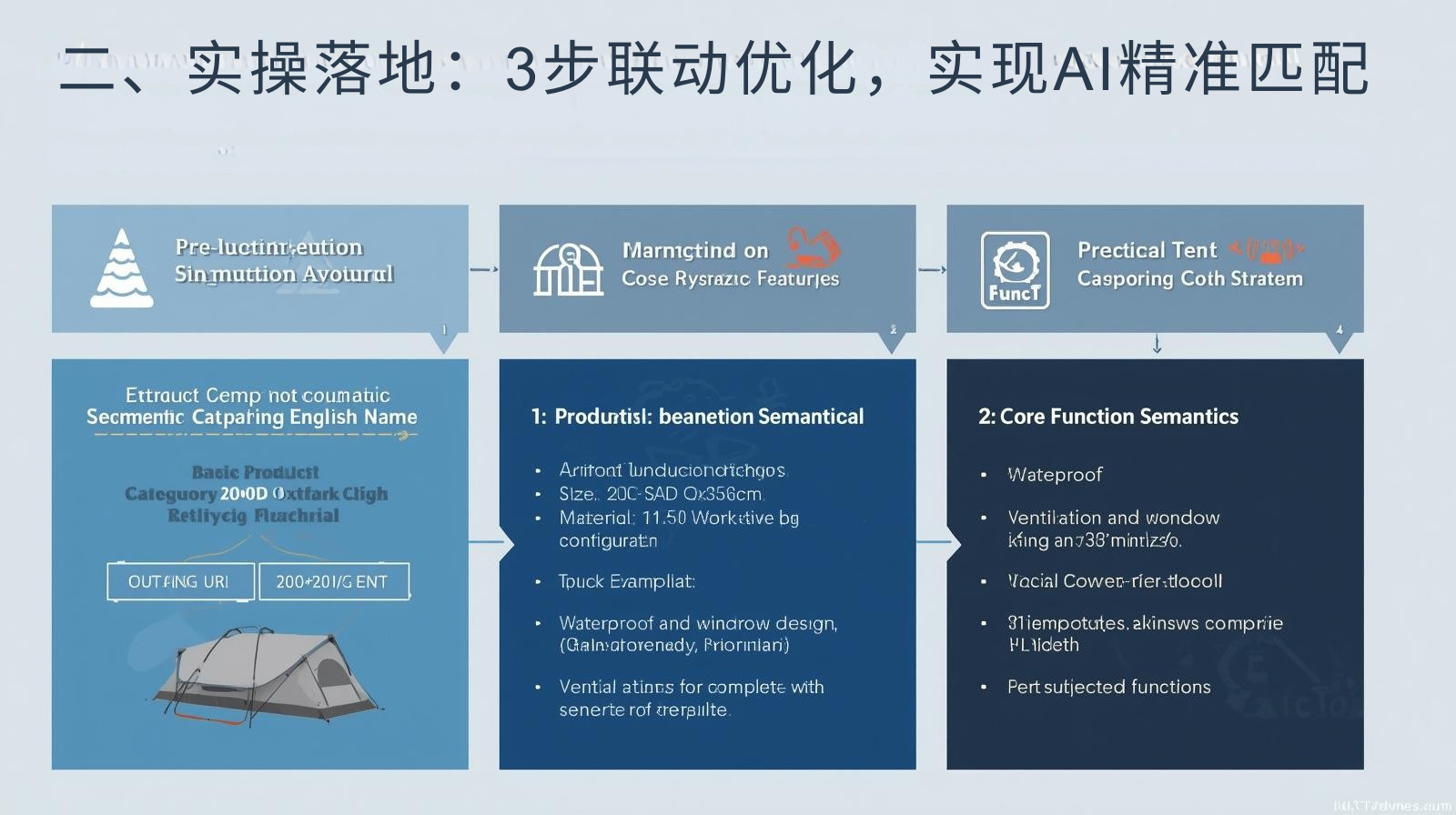
Based on practical cases of cross-border outdoor products companies in Zhejiang, as well as the 2026 AI platform vector retrieval rules and GEO optimization core points, a three-step core practical solution is summarized: "product semantic information sorting - GEO + vector retrieval adaptation optimization - AI matching signal enhancement". Each step has clear implementation details and execution standards, which can be directly applied to achieve AI accurate matching and efficient customer acquisition.
2.1 Step 1: Comprehensive Analysis of Product Semantic Information (7-10 days) – Building a Vector Retrieval Semantic Matrix
The core objective is to comprehensively analyze the product's semantic information across all dimensions, focusing on the "semantic extraction" requirements of vector retrieval, and extract core semantic features that can be recognized by AI. This lays the foundation for subsequent adaptation and optimization. The core practical steps are as follows:
1. Core Semantic Dimension Analysis (3-5 core semantic points extracted from each dimension): Combining the characteristics of foreign trade products with the pain points of buyers' needs, product semantic information is analyzed according to six core dimensions to ensure that each semantic point has a clear target and can be extracted by AI: ① Basic Product Semantics: Core category, core name (Chinese and English), core parameters (size, material, performance, etc.), for example, "Outdoor camping tent (category) | Camping Tent (English name) | Size: 200*250cm, Material: 210D Oxford cloth, Waterproof rating: PU3000mm"; ② Core Functional Semantics: Core function, additional function, functional advantages, for example, "Core function: Waterproof and windproof, quick setup (completed in 3 minutes); Additional function: Ventilation window design, storage bag configuration; Functional advantages: Windproof rating ≥6, waterproof performance can cope with moderate to heavy rain"; ③ Application Scenario Semantics: Core application scenario, target audience, and target region, for example, "Core scenario: outdoor camping, hiking, picnic parties; Target audience: family users, outdoor enthusiasts, outdoor equipment retailers; Target region: Europe (Germany, France), North America (United States, Canada)"; ④ Compliance Certification Semantics: Target market certification, certification standard, and certification number, for example, "EU market: REACH certification (standard: REACH Regulation (EC) No 1907/2006, certificate number: REACH-2026-OD012, query link: https://ec.europa.eu/chemicals/reach_en); US market: CPSIA certification (standard: 16 CFR Part 1303, certificate number: CPSIA-2026-OT008, query link: https://www.cpsc.gov/)"; ⑤ Adaptable Needs Semantics: Purchase Quantity (MOQ), Customization Needs, and Supporting Service Needs, such as "Purchase Quantity: MOQ ≥ 50 pieces, bulk purchases ≥ 500 pieces enjoy an 8.5% discount; Customization Needs: Support logo printing and color customization; Supporting Services: Provide English product manuals and after-sales repair parts"; ⑥ Core Advantages Semantics: Differentiated Advantages (price, quality, service, etc.), such as "Price Advantage: Factory direct supply, no intermediaries, 15%-20% lower than competitors; Quality Advantage: Passed 1000 wear resistance tests, service life ≥ 3 years; Service Advantage: 24-hour English after-sales response, delivery cycle to Europe and America 7-12 days"
2. Semantic Information Supporting Materials Compilation: Authoritative supporting materials are prepared for each core semantic point to enhance the credibility of semantic information and assist in AI trust assessment: ① Qualification Supporting Materials (certificates, test reports, with official query links); ② Physical and Scenario Supporting Materials (product photos, functional test videos, application scenario diagrams); ③ Data and Case Supporting Materials (performance test data, overseas customer cooperation cases, customer reviews), for example, "From January to February 2026, we supplied 2000 camping tents to an outdoor equipment retailer in the United States. Customer review: The tent is lightweight, durable, and easy to set up, which is very popular with our customers."
3. Semantic Keyword Analysis (Adapted to Dual Matching): Analyze the Chinese and English keywords (core words + long-tail words) corresponding to the core semantics of the product, taking into account both vector search semantic matching and traditional keyword matching. For example, the core words are "outdoor camping tent" and "Camping Tent", and the long-tail words are "lightweight waterproof outdoor camping tent", "lightweight waterproof camping tent for 3-4 people", "EU compliant outdoor tent export supplier", etc. These can be obtained through ChatGPT (enter "high-frequency keywords for overseas buyers searching for outdoor camping tents") and Google Keyword Planner (latest data in 2026).
2.2 Second Step: GEO+ Vector Retrieval Adaptation and Optimization (15-20 days) – Enabling AI to Efficiently Extract Semantic Features
The core objective is to structure and standardize the product semantic information through GEO optimization, adapting it to the semantic extraction and matching logic of AI vector retrieval, while improving the reading experience for buyers. The core practical steps are as follows:
2.2.1 Semantic Structured Layout of Core Pages (Adapting to AI Crawling Priority)
Prioritizing AI crawling (Homepage > Product Details Page > Product Category Page > FAQ Page), we precisely lay out product semantic information to ensure that core semantic features are extracted by AI first: ① Homepage (Core semantics first, strengthening first impression): The first-screen banner highlights the product's core semantic advantages, such as "Outdoor camping equipment foreign trade supplier | Lightweight, waterproof, EU REACH certified, supports customization"; a "Product Core Semantic Matrix" module is set below the banner, using icons + text + data to structurally display the four core semantic dimensions of "Function - Scenarios - Certification - Adaptation Requirements", such as "Function: Waterproof, windproof, quick to set up", "Scenarios: Camping/Hiking/Picnic", "Certification: REACH/CPSIA full coverage", "Adaptation: Small batch purchase + customization", with supporting evidence entry points for each dimension (e.g., clicking "Certification" to view the complete certification certificate); the footer includes core certification links, after-sales contact information, and target market adaptation information to strengthen semantic integrity; ② Product Details Page (Semantic information presented in all dimensions, core adaptation vector retrieval): The product page title incorporates core semantic keywords (combined Chinese and English), such as "3-4 Person Outdoor Camping Tent | 3-4 Person Lightweight" The page content is structured logically according to the headings "Waterproof Camping Tent | EU REACH Certification". Each section is clearly labeled with an H3 title, and core semantic information is presented in a list (for easy AI extraction). For example, the core function section is labeled with an unordered list: "Waterproof and windproof: PU 3000mm waterproof rating, ≥6 level windproof capability; quick setup: can be set up by a single person in 3 minutes; breathable and comfortable: double-sided ventilation window design to reduce stuffiness". At the same time, product function test videos and certification certificate images are embedded, naturally integrating core semantic keywords.
2.2.2 Semantic optimization of product category pages and FAQ pages (strengthening the relevance of demand matching)
Product category pages and FAQ pages are core pages for AI to connect products and needs, and semantic adaptation optimization is crucial: ① Product category pages: Categorize by semantic dimensions such as "application scenarios" and "adaptation needs" (rather than simply by product category). For example, set category tags such as "camping tents (3-4 people)," "portable hiking tents," and "bulk purchase custom tents." Category titles should incorporate core semantic keywords, such as "bulk purchase custom tents | Supports logo printing MOQ≥50 pieces." Product descriptions under each category should extract core semantic highlights (function + scenario + adaptation needs), such as "This tent is suitable for bulk purchase needs, MOQ≥50 pieces, supports logo printing customization, waterproof and windproof, suitable for outdoor product retailers." ② FAQ Page: Categorized by frequently asked buyer needs, presented in a Q&A format to strengthen the connection between product and demand semantics. For example, "Q: Are your camping tents suitable for retail in the European market? A: Yes! Our camping tents are REACH certified (certificate number: REACH-2026-OD012, query link: https://ec.europa.eu/chemicals/reach_en), and their materials and functions meet European outdoor product retail standards. We support small-batch purchases (MOQ≥50 pieces), with a delivery cycle of 7-12 days in Europe. English product manuals and after-sales support are available."; "Q: Can you customize the tent's color and logo? A: Yes! We support color customization (10 basic color options) and logo printing customization. Customization does not incur additional mold fees, only requiring a purchase MOQ≥50 pieces. The sampling cycle is 3-5 days, and mass production delivery is available 7-10 days after sample confirmation."
2.2.3 Semantic Representation and Format Optimization (Improving AI Extraction Efficiency)
Optimize the semantic expression and presentation format of page content to ensure that AI can quickly and accurately extract core semantic features, while improving the buyer experience: ① Semantic expression optimization: Adopt the expression logic of "semantic point + specific explanation + supporting evidence" to avoid vague and colloquial wording. Place the core semantic information at the beginning of the paragraph. For example, before optimization, "Our tents are of very good quality, suitable for outdoor use, and can also be customized." After optimization, "This outdoor camping tent is suitable for 3-4 person camping and hiking scenarios. It is made of 210D Oxford cloth (which has passed 1000 abrasion resistance tests), supports color and logo customization (MOQ≥50 pieces), and has passed EU REACH certification, allowing direct entry into the European retail market." ② Natural keyword layout: Naturally integrate core semantic keywords into the page title, first paragraph, subheadings, and body content. The keyword density is controlled at 2%-3%, avoiding keyword stuffing (AI will judge this as cheating and reduce the matching weight), while ensuring that keywords and semantic information are highly matched. ③ Format optimization: Use formats that AI can easily recognize, such as unordered lists, ordered lists, and tables, to present semantic information instead of large blocks of messy text; use standardized H1-H3 headings to distinguish page levels and clearly define the boundaries of core sections; add alt text (semantic descriptions, such as "3-4 person lightweight waterproof camping tent - EU REACH certification" or "Tent waterproof function test video - Outdoor product foreign trade supplier") to images, videos, and other materials, so that AI can recognize the semantic information of the materials.
2.3 Step 3: AI-matched signal enhancement push (starts in 3-5 days, continues long-term) – Improves the weight of accurate matching
The core objective is to proactively convey the key signals of "product semantic completeness, information authenticity and credibility, and suitability for procurement needs" to the AI platform, accelerating the collection of semantic information and improving the matching weight of vector retrieval, so that the product is prioritized for matching and recommendation when buyers search for products. The core practical steps are as follows:
1. Site Signal Optimization: Optimize the site map, separately label core pages such as the homepage, product detail pages, product category pages, and FAQ pages, and submit them to the ChatGPT webmaster platform and Google Search Console according to "product semantic dimensions" (functions, scenarios, certifications, etc.) to proactively guide AI crawlers to crawl semantic information; ensure that core semantic information can be accessed without logging in, do not use robots.txt to block AI crawlers, and avoid placing core semantic information in JavaScript (which AI crawlers cannot recognize); regularly update the site's semantic content, such as adding product semantic points (e.g., adding adapted scenarios), updating certification information, and supplementing customer cases to increase the frequency of AI crawler access and strengthen the site's semantic activity signal.
2. External Signal Push: ① AI Platform Signal Submission: Submit a "Product Semantic Information Update and Vector Retrieval Adaptation Application" through the official ChatGPT website administrator portal, highlighting that "this site focuses on the foreign trade of outdoor camping equipment, with complete core product semantic information (covering functions, scenarios, certifications, adaptation requirements, etc.), all information is authentic and verifiable, adapting to the precise needs of overseas buyers, and supporting small-batch purchases and customized services," to accelerate AI's extraction and matching of product semantic features; ② Authoritative Platform Signal Supplementation: Publish product semantic introductions, functional test videos, overseas customer case studies, etc. (e.g., "Must-Read for European Outdoor Product Procurement: Analysis of Core Semantic Features of Compliant Camping Tents") on overseas social media platforms such as LinkedIn and Twitter, highlighting core semantic keywords and links to the core pages of the independent website, embedding real product photos and certification certificate images; on industry vertical platforms (e.g., Outdoor Industry)... Association and Global Outdoor Products Trade Network publish professional articles to enhance the semantic authority of products; on B2B platforms such as Alibaba International Station and Global Sources, improve product semantic information, mark the identity of "AI vector search optimization and adaptation supplier", upload semantic product information and supporting materials, and link the core pages of independent websites to form a linkage of semantic signals inside and outside the site.
3. Data Monitoring and Iterative Optimization: Monitor core data metrics monthly and optimize adaptation strategies in a timely manner: ① Matching-related metrics: AI platform core semantic keyword matching ranking, visitor volume and inquiry volume brought by semantic matching; ② Semantic adaptation metrics: Page dwell time, click depth of core semantic sections, and product semantic information viewing rate; ③ Iterative optimization actions: Based on buyer feedback, supplement high-frequency demand semantic points (such as adding semantic adaptation for "environmentally friendly materials"); optimize the layout of semantic keywords with lower rankings; update expired semantic information (such as certification validity period and customer cases); regularly analyze changes in AI matching logic (refer to ChatGPT and Google's 2026 matching rule update announcement) and adjust semantic optimization strategies.
III. Avoiding Pitfalls: 3 Core Misconceptions in Vector Search and GEO Optimization
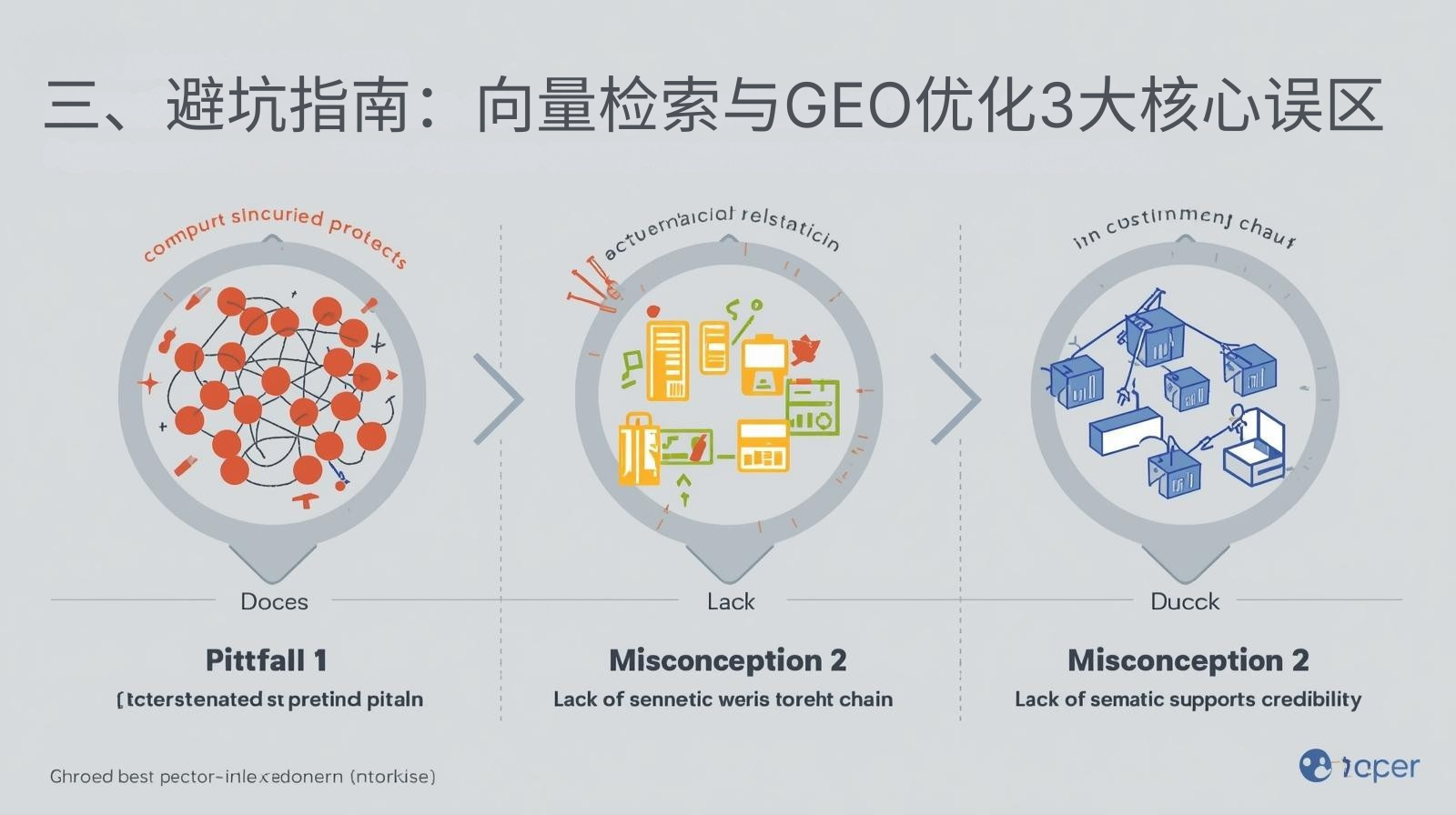
Based on practical case studies from 2025-2026, foreign trade companies are prone to falling into three major pitfalls during the GEO+ vector search optimization process. These pitfalls lead to AI's inability to accurately extract product semantic features, low matching accuracy, and even missing out on high-quality customers. These pitfalls must be resolutely avoided:
3.1 Misconception 1: Semantic information is fragmented and lacks a complete semantic chain.
Errors include : only scattered semantic points of the product (e.g., only listing functions without mentioning scenarios or adaptation requirements); semantic information lacking logical connection (e.g., functions are disconnected from scenarios, and it is not explained which scenarios the function adapts to); inconsistent semantic information across different pages (e.g., the homepage states that customization is supported, but the product page does not mention customization requirements).
Key harms : AI cannot extract complete product semantic features and cannot form a deep connection with the needs of buyers, resulting in a significant decrease in matching accuracy; buyers cannot fully understand the value of the product, and the bounce rate soars to over 90%; due to fragmented semantic information, a certain outdoor products company in Dongguan consistently ranked below 30th in AI core demand matching in January 2026, resulting in the loss of 55% of high-quality inquiries.
Correct approach : Organize the complete semantic chain according to the logic of "basics-functions-scenarios-authentication-adaptation-advantages"; unify the semantic information of all pages and check and update it regularly; ensure that each semantic point is logically related to form a complete product value statement.
3.2 Misconception 2: Ignoring semantic corroboration, resulting in insufficient information credibility.
Errors include : only stating semantic features of the product (such as "certified by the EU, durable material") without providing supporting evidence such as certification certificates, test reports, or customer case studies; the supporting materials lack official query links, making it impossible to verify their authenticity; and making false or exaggerated semantic information (such as claiming "super waterproof" without waterproof test data).
Key risks : AI determines that the semantic information of a product is "questionable in its authenticity," reduces the weight of semantic matching, and may even refuse to include it in the matching recommendation list; buyers may abandon cooperation directly because they cannot verify the authenticity of the information; according to Gartner's 2026 Foreign Trade AI Matching Report, the priority of AI matching for semantic information without authoritative verification is 83% lower than that for information with verification.
Correct practice : Each core semantic point should be accompanied by authoritative supporting materials and marked with official query links; expired supporting information (such as certification certificates and test reports) should be updated regularly; false and exaggerated semantic statements should be resolutely avoided, and all information should be true and verifiable.
3.3 Misconception 3: Confusing keyword stuffing with semantic optimization, resulting in misaligned matching logic
Errors include : reliance on traditional keyword stuffing (meaningless repetition of "tent, outdoor tent, camping tent, waterproof tent...") without semantic information analysis; mismatch between keywords and semantic information (e.g., the keyword is "lightweight tent," but the semantic description emphasizes "heavy and durable"); and colloquial and vague semantic expressions that cannot be accurately extracted by AI.
Key harms : AI cannot accurately extract the core semantic features of products, and can only achieve low-quality literal matching with low accuracy; keyword stuffing will be judged as cheating by AI, reducing the overall weight of the site; a Shenzhen home furnishing company had a core demand matching inclusion rate of only 38% in February 2026 due to confusing keywords with semantic optimization, and the conversion rate of inquiries brought by matching was less than 10%.
Correct approach : Abandon keyword stuffing and comprehensively analyze product semantic information; ensure that keywords and semantic information are highly matched and naturally integrated into the content; adopt standardized and professional semantic expressions to facilitate AI's accurate extraction of core features.
Recommended Article: Your Competitors Haven't Reacted Yet: Building an Independent E-commerce Website with GEO is the Biggest Blue Ocean Strategy Right Now
Recommended Article: Your Competitors Haven't Reacted Yet: Building an Independent E-commerce Website with GEO is the Biggest Blue Ocean Strategy Right Now
IV. Conclusion: Semantic Adaptation + Precise Matching – Seizing the New High Ground in AI-Powered Foreign Trade Customer Acquisition in 2026
In 2026, AI-powered customer acquisition in foreign trade has moved from the "keyword matching era" to the "semantic matching era." The widespread adoption of vector retrieval technology allows AI to deeply understand procurement needs and product value. The core of GEO+ vector retrieval optimization is to make independent websites "high-quality information sources" for precise AI matching. For foreign trade enterprises to stand out in the fierce market competition, the key lies not only in product quality but also in enabling AI to understand the semantic value of products and achieve precise matching between "products and needs."
The value of vector retrieval and GEO optimization lies not in the "quantity of content," but in the "semantic completeness, the credibility of the information, and its ability to be accurately extracted and matched by AI." By comprehensively analyzing product semantic information, structurally optimizing page content, and continuously strengthening AI matching signals, independent websites can stand out in the demand matching of AI platforms, allowing overseas buyers to discover, recognize, and choose them first when searching for their needs. Practical cases from Zhejiang cross-border outdoor product companies have proven that as long as the right optimization direction is found and practical actions are precisely implemented, it is possible to leverage the trend of AI semantic matching to achieve a double breakthrough in both inquiry volume and conversion rate.
In 2026, AI vector retrieval technology will continue to iterate, further improving the accuracy of semantic matching. Foreign trade companies that proactively optimize for GEO+ vector retrieval and deeply adapt to AI semantic matching logic will undoubtedly gain a competitive edge in the AI-driven customer acquisition race, achieving long-term stable development of their cross-border business. Take action now! Organize your product's core semantic information, build an AI-friendly semantic presentation system, and let AI accurately match your products with overseas procurement needs, making every search a new starting point for high-quality cooperation.