
The common dilemma faced by foreign trade companies when building independent websites is that they invest a lot of time in building the site, but they still cannot get rid of the vicious cycle of "no traffic, no inquiries, and no conversion" - a site that seems to be fully functional, but in fact is reduced to "digital decoration" due to the lack of underlying logic. The core crux is that the fundamental problem is not solved before building the website: What is the core value of the independent website? Who is served? How to continue to create value? Most companies skip the bottom-level thinking and get directly into the details of "template selection and function stacking", which ultimately leads to deviation and waste of resources.
PinShop is based on the practical experience of over 1200+ independent stations from 0 to 1, please refer to Google independent station operation core principles , international cross-border website establishment authoritative framework and other global standards, extract three core issues that must be clarified before building a website. Each problem is equipped with a closed-loop system of "pain point dismantling-core logic-technical path-quantitative verification" to help you clarify the direction from the root cause, avoid 90% of ineffective investment, and enable the independent station to acquire customers from the beginning.
Core question 1: Who is the core service target of your independent station? (Locating the underlying logic)
The essence of an independent station is to "accurately reach target users", and vague positioning is the starting point of all failures. Most companies fall into the misunderstanding of "casting a wide net" and try to serve all markets and all users, which ultimately leads to the inability to find core users and the continuous loss of non-target users - just like a sensor bracket with accurate static dimensions but unstable dynamics, which seems to meet the standards but cannot solve actual needs.
Core principles and technical paths for independent station positioning
|
Positioning dimensions
|
core goals
|
Technology implementation path
|
Quantitative verification standards
|
|---|---|---|---|
|
Target market focus
|
Target core markets with high demand and medium competition
|
1. Keyword spectrum analysis: Use Google Keyword Planner to capture the search volume and competition of core purchasing words in the target market
2. Competitive product environment mapping: analyze the market coverage, user feedback, and conversion paths of the top 10 competing products |
The average monthly search volume of related keywords in the core market is ≥5,000, and the core pain points of competing products are not covered by ≥30%.
|
|
User type definition
|
Clarify B2B/B2C core user attributes
|
1. Procurement behavior modeling: Distinguish between bulk procurement (long decision-making cycle, focus on qualifications) and retail procurement (short decision-making cycle, focus on cost-effectiveness)
2. Demand pain point mining: Extract users’ unmet core demands through overseas forums and social media comments |
Output clear user portrait cards, including three key pieces of information: procurement model, decision-making process, and core pain points
|
|
Market adaptation optimization
|
Fit the user habits of the target market
|
1. Browsing behavior adaptation: Design the site according to the characteristics of European and American users who prefer simple architecture, and Southeast Asian users who pay attention to logistics timeliness.
2. Build a trust system: configure the trust module according to the target market certification requirements (such as European and American CE/ISO, local payment certification in Southeast Asia) |
The site adapts to the browsing habits of target market users, and the trust module coverage rate is 100%
|
Positioning and implementation tools and practical verification
-
PinShop positioning diagnosis system : Integrate keyword analysis, competitive product mapping, and user modeling functions to output a visual positioning report within one week to clarify core markets, user types, and adaptation strategies;
-
Closed-loop verification process : Convert the positioning results into a draft of the site's core architecture, and pass overseas user testing (3-5 potential customers in the target market). If the architecture recognition is ≥80%, it is considered valid, otherwise it will return to the optimized positioning dimension.
Core question 2: What irreplaceable value can your independent website provide? (Core of competitiveness)
The competitiveness of independent websites does not lie in "having products", but in "having unique value". Most websites only list product parameters and do not convey the core logic of "why users choose you", resulting in users having no intention to take action after browsing - just like a bracket that has not been dynamically optimized, it only meets basic installation needs, but cannot solve core pain points such as vibration and thermal deformation.
Core values create technology system
|
value type
|
Applicable scenarios
|
Technical implementation path
|
Quantify deliverables
|
|---|---|---|---|
|
product value differentiation
|
Have exclusive supply, patented technology or ultimate cost-effectiveness
|
1. Structural refining of selling points: packaging the core selling points through the three-layer logic of "user pain points - technical advantages - actual benefits"
2. Visual presentation: Use 3D product display, scenario-based application cases and other forms to strengthen differential recognition |
Output 3 irreplaceable product selling points, supporting visual display materials, user memory point test pass rate ≥70%
|
|
Scenario-based service value
|
Strong customization capabilities, fast after-sales response or complete local support
|
1. Service process modularization: dismantle customization cycle, after-sales response, local support and other services into visual processes
2. Make the guarantee system explicit: clarify service commitments (such as 7-day customized delivery, 24-hour overseas after-sales) and breach of contract compensation mechanism |
Build 3 core service modules, and make key information such as service response timeliness and guarantee scope 100% explicit.
|
|
Authoritative content value
|
Rich industry knowledge reserves can provide reference for decision-making
|
1. Knowledge system construction: Output purchasing guides, product tutorials, etc. around the user purchasing decision-making process (cognition-consideration-decision-making)
2. Semantic optimization: optimize content structure according to generative engine crawling rules and improve AI recommendation priority |
Establish 5 core content columns and produce 2-4 original articles every month. The semantic coverage of core keywords is ≥80%.
|
Value verification and internal link adaptation
-
Dynamic verification method : Convert the core value into a "user benefit statement" (such as "the customization cycle is 50% shorter than competing products, and the after-sales response does not exceed 2 hours"). Through a small-scale launch test on overseas social media, the click conversion rate ≥ 3% is considered effective;
-
Service adaptation path : If the core value is "customized service + fast after-sales", priority will be given to docking Inquiry-type independent station customization service , strengthen value delivery through exclusive modules and achieve a closed loop of "value proposition-user needs-conversion path".
Core question 3: What resources can you continue to invest in independent stations? (Sustainability Guarantee)
An independent website is a "long-term project" rather than a "one-time construction". Most companies underestimate the subsequent operating costs. After the site is launched, it is gradually eliminated by search engines due to lack of time, funds or ability support - just like completing prototype production without establishing a mass production consistency system, the initial effect is acceptable but cannot be stable in the long term.
Resource investment and independent station adaptation system
|
Resource type
|
Investment dimension
|
Hierarchical adaptation scheme
|
risk control mechanism
|
|---|---|---|---|
|
time resources
|
Content updates, inquiry responses, optimization iterations
|
1. Basic level (≤10 hours per week): Choose modular website building + automated content tools to lower the operating threshold
2. Advanced level (10-20 hours per week): equipped with semi-managed optimization services, focusing on core content creation 3. Depth level (≥20 hours per week): full-process independent operation + customized optimization to create brand differentiation |
Establish a weekly operation ledger. When the core indicators (content update volume, inquiry response time) do not meet the standards, an early warning will be triggered and the adaptation plan will be adjusted.
|
|
financial resources
|
Optimization services, advertising placement, content creation
|
1. Basic file (≤1,000 yuan per month): basic GEO optimization + free social media traffic
2. Advanced level (1,000-5,000 yuan per month): in-depth keyword optimization + small-amount advertising testing 3. Flagship level (≥5,000 yuan per month): brand content marketing + multi-channel precise delivery |
Set the ROI monitoring threshold. When the cost of a single inquiry exceeds 150% of the industry average, the corresponding investment will be suspended and the strategy will be optimized.
|
|
Capability resources
|
English copywriting, operational skills, customer docking
|
1. Insufficient capabilities: choose fully managed services and are only responsible for core business (product supply, customer docking)
2. Basic capabilities: semi-managed services + operational training, gradually mastering core operational skills 3. Professional capabilities: independent operation + tool support to maximize cost-effectiveness |
Conduct capability assessments every quarter, adjust service dependence based on improvement progress, and reduce long-term operating costs.
|
Resource matching tools and long-term guarantee
-
PinShop resource evaluation system : input time, funds, capabilities and other information, automatically generate an adapted website construction and operation plan, and clarify the core investment and expected output at each stage.
-
Sustainability verification : Simulate resource consumption for 6 months of operation to ensure that key investments (such as optimization, content updates) are without risk of interruption, otherwise the complexity of the solution will be adjusted - a priority for newbies in the early stages Beginner-friendly website building package , verify the market with the lowest cost, and then gradually upgrade.
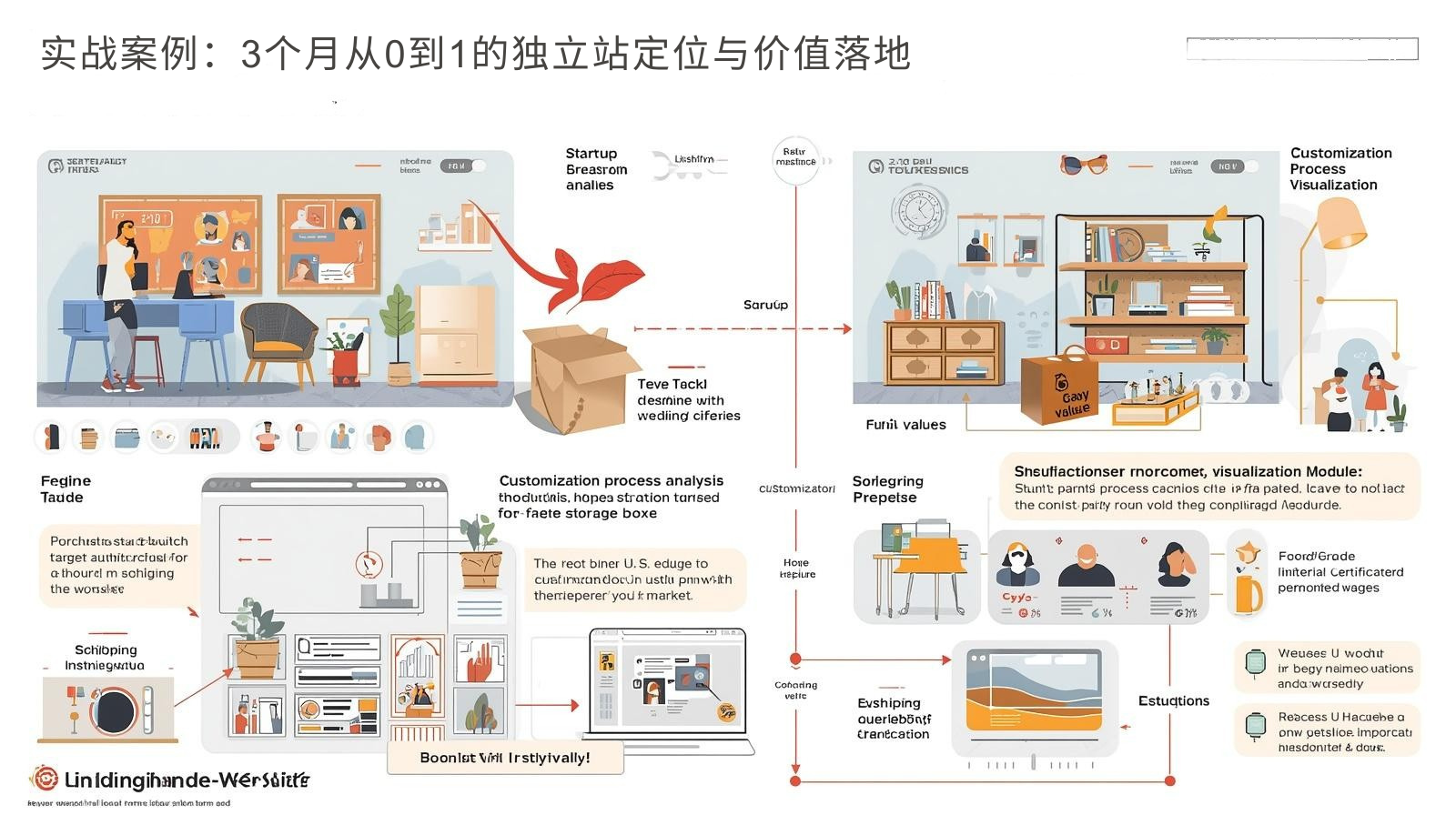
Practical case: independent station positioning and value implementation from 0 to 1 in 3 months
The following case is based on the actual practice of a start-up foreign trade company served by PinShop, clearly showing the implementation process and effects of three core issues, and verifying the effectiveness of the "positioning-value-resources" closed-loop system.
Customer background (typical novice scenario)
-
Enterprise type: Start-up home furnishing foreign trade enterprise, no foreign trade experience.
-
Core product: customized home storage box.
-
Initial status: only clear product, no target market, no core value positioning, limited resources (10 hours per week, 800 yuan per month).
Implementation and technical execution of 3 core issues
-
Question 1: Clarify the service target
-
Positioning process: Through the PinShop positioning diagnosis system, we analyzed the keyword spectrum in European, American and Southeast Asian markets, and found that the monthly search volume for "custom home storage box" in the U.S. market was more than 8,000. Most of the competing products focused on standardized products, and the demand for customization was not met.
-
Positioning results: The core market is locked in the United States, and the service targets are B2C small-volume purchasers + individual consumers. The core pain point is "standardized products cannot adapt to the personalized space."
-
-
Question 2: Create core values
-
Value extraction: core value = "quick customization + food-grade materials + 7-day delivery", aiming at the dual needs of American users for personalization and safety.
-
Implementation: Build a "customization process visualization module" to display the 3-step customization (select size-select material-confirm plan), complete with food-grade material certification report and 7-day delivery guarantee commitment to strengthen value perception.
-
-
Question 3: Matching resource investment
-
Resource adaptation: Choose a novice-friendly website building package + basic GEO optimization, and invest time to focus on replying to inquiries (1 hour a day) and monthly content updates (2 articles on storage tips).
-
Risk control: Set a single inquiry cost threshold (≤50 US dollars), verify traffic quality through small Google Ads testing (5 US dollars per day), and adjust keyword strategies in a timely manner.
-
final effect
Three months after going online, the site achieved:
-
Traffic indicators: monthly average accurate UV 210, AI recommended traffic accounts for 35%, and the core keyword "custom food-grade storage box" ranks in the top 30.
-
Conversion indicators: an average of 8 accurate inquiries per month, and a form submission rate of 2.3%, of which 3 inquiries resulted in small batch orders (50-100 pieces).
-
Resource efficiency: The cost of a single inquiry is US$38, which is 42% lower than the industry average, verifying the effectiveness of "precise positioning + value delivery + resource matching".
An extension of 3 questions: How to establish long-term competitive barriers?
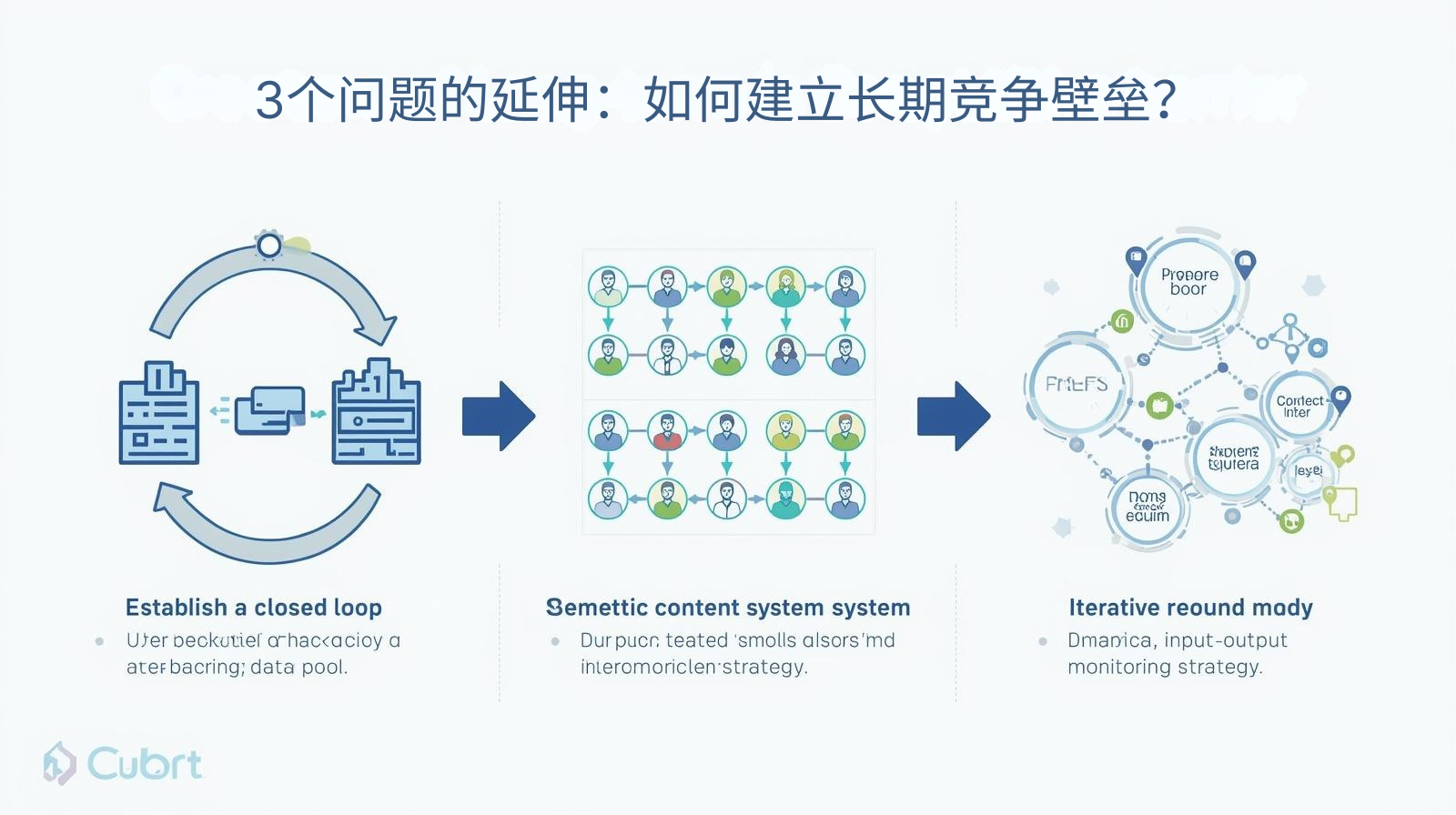
After clarifying the three core issues, it is necessary to establish long-term competition barriers through scientific methods to avoid falling into the vicious cycle of "homogeneous competition-price war-profit loss". The following are 3 key actions verified by PinShop in practice:
1. Establish a closed loop of user data
-
Technical path: Build a user behavior monitoring system to track core page dwell time, click paths, and inquiry trigger points to form a user demand data pool.
-
Application scenarios: Optimize value delivery based on data feedback (if users frequently click on “Customized Cases”, this module will be strengthened) to continuously improve conversion efficiency.
2. Build a semantic content system
-
Technical path: According to the generative engine crawling rules, create a content matrix of "core keywords - long-tail keywords - semantic related words" to improve the priority of AI recommendations.
-
Application scenario: Focusing on the user's purchasing decision-making process, output multi-level content such as "Question Answers - Product Comparison - Purchasing Guide" to become a "purchasing reference library" for target users.
3. Iterative resource investment strategy
-
Technical path: Establish an input-output dynamic monitoring model and regularly evaluate the ROI of each channel and each optimization action.
-
Application scenario: Increasing resource allocation for high-efficiency investments (such as certain types of keyword advertising), and adjusting inefficient investments (such as general traffic diversion) in a timely manner to maximize resource efficiency.

Frequently Asked Questions (FAQ)
-
After thinking through these three questions, how long will it take to launch an independent website?
Depending on the complexity of the solution, the launch cycle is 2-6 weeks: 2-3 weeks for the novice basic package (modular construction + basic optimization), 3-4 weeks for the inquiry-based customized package (value module enhancement + in-depth adaptation), 4-6 weeks for the in-depth customized package (branded design + full-process optimization). PinShop delivers by node to ensure controllable progress.
-
How to refine core values without falling into "self-pleasure"?
The core value must meet the three conditions of "user pain points + lack of competing products + own advantages". You can refer to PinShop's core value copywriting template, express it in language that is easy for overseas users to understand, and avoid vague expressions (such as converting "product quality" into "food-grade safe material with 5-year durability").
-
With a limited budget, which solution should be prioritized?
Prioritize investment in "core value refining", choose a basic website building package that highlights value, and then support basic GEO optimization - value is the core of attracting users, avoid spending money on "good-looking but non-converting" functions, and make every investment serve value delivery.
-
If you have already built an independent website, will it still be useful to think about these three questions again?
it works. Existing sites can be reconstructed based on three issues: repositioning target users, strengthening core value delivery, and matching sustainable resource investment. PinShop provides free site diagnosis services, finds core issues (such as vague positioning, and lack of outstanding value) through data analysis, and outputs targeted optimization plans.
Recommended related articles: Your peers haven’t reacted yet: using GEO to build an independent foreign trade station is the biggest blue ocean strategy at the moment.
Recommended related articles: Your peers haven’t reacted yet: using GEO to build an independent foreign trade station is the biggest blue ocean strategy at the moment.
Before setting up an independent website, the most important thing is not to "select a template or buy a domain name", but to clarify the three core issues of "who to serve, what value to provide, and what resources to invest". Ambiguous positioning, unclear value, and mismatched resources are the three main causes of failure for novices to build websites. Based on 1,200+ practical experiences, PinShop transforms the abstract underlying logic into a closed-loop system of "technical path + quantitative standards + case reference" to help you clarify the direction from the root and avoid ineffective investment.
Use the PinShop positioning diagnosis system immediately to start a journey of sorting out the three core issues, so that your independent website has the ability to accurately acquire customers from the beginning, and truly becomes the core engine of foreign trade growth!