
High-conversion form design: interactive optimization practice to improve the conversion rate of inquiry on foreign trade websites

  • Independent website marketing and promotion
  • Independent website operation strategy
Posted by 广州品店科技有限公司 On Sep 22 2025

On foreign trade websites, inquiry forms are the core touchpoint for converting visitors into potential customers. This article, from the perspectives of user experience and SEO, shares interactive optimization practices for high-conversion form design, including form layout, field settings, guidance strategies, and technical implementation. Through scientific design and data monitoring, companies can significantly improve inquiry conversion rates and effectively convert traffic into orders.
1. The key role of the inquiry form on foreign trade websites

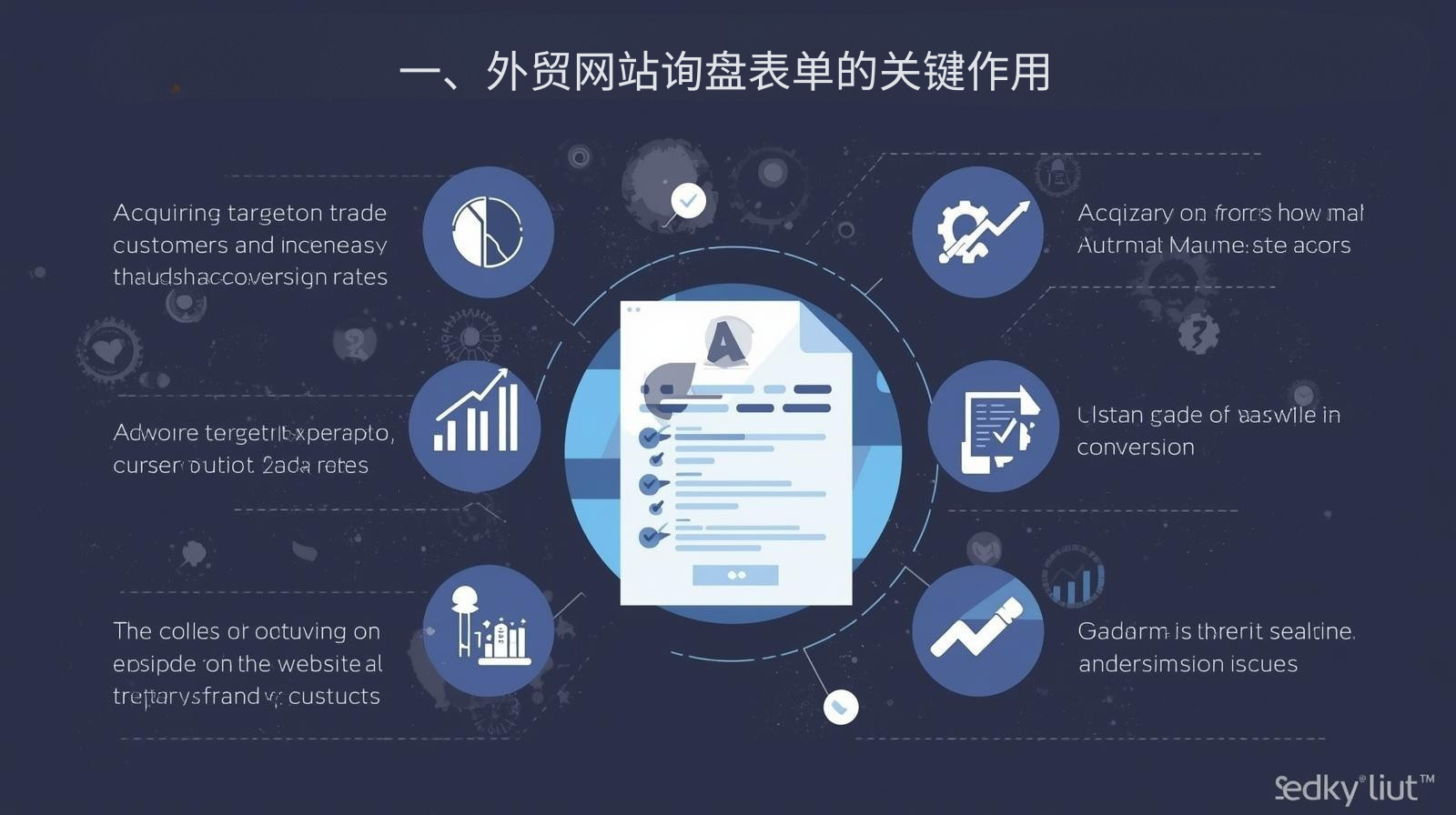
1. The key role of the inquiry form on foreign trade websites

The core goal of a foreign trade website is to acquire targeted customers and generate inquiries. According to HubSpot Research , optimizing form interactions can increase conversion rates by 20%-50%. Forms are not only information collection tools but also a crucial part of the user experience.

Common questions include:

  • The form is too long or the fields are too complicated, leading to abandonment of filling

  • Lack of clear guidance and CTA prompts makes it difficult for users to operate

  • Page loading or interaction delays affect user experience

The React framework and modern front-end technologies can help foreign trade websites achieve fast loading, dynamic verification, and interaction optimization, thereby improving form completion rates.
2. Core Strategies for High-Conversion Form Design

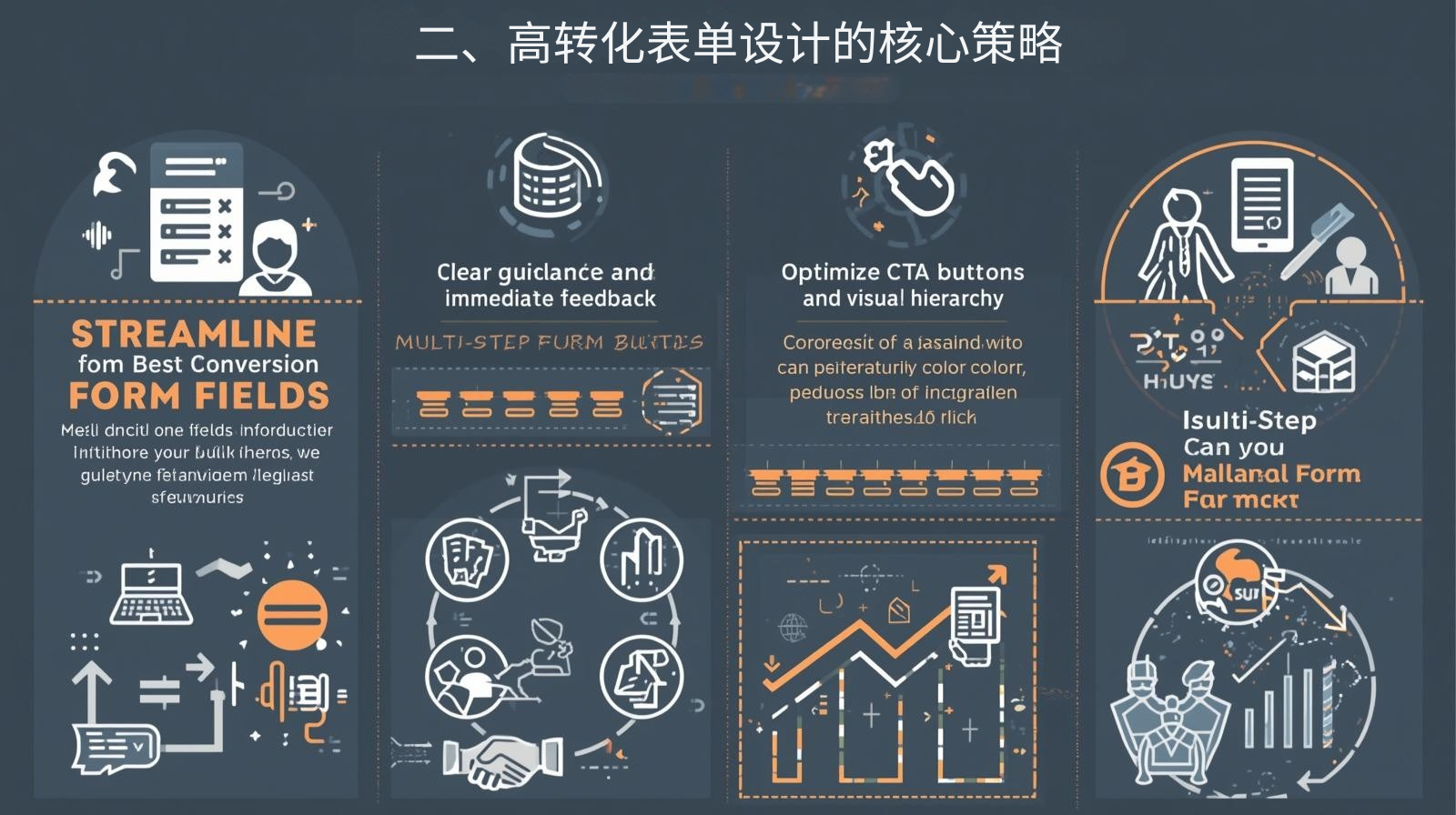
2. Core Strategies for High-Conversion Form Design

  1. Simplify form fields

  • Only retain necessary information, such as name, email, company, and requirement description

  • Optional fields are displayed through folding or secondary steps to reduce the psychological burden on users

  • According to Nielsen Norman Group research, reducing form fields by 30% can significantly increase submission rates.

  1. Clear guidance and immediate feedback

  • Use placeholders, input hints, and error prompts to help users quickly complete the form

  • Dynamically verify email, phone, and other formats to avoid submission failures

  • React componentization enables instant verification and interactive animation to enhance user trust

  1. Optimize CTA buttons and visual hierarchy

  • The button color should contrast with the overall page to highlight the main action

  • Direct and clear copy, such as "Get a quote now" or "Submit an inquiry"

  • The button is located close to the core fields of the form to reduce scrolling

  1. Multi-Step Form Design

  • Split long forms into multiple steps to reduce the burden on users to fill out at one time

  • Display step progress bar to give users a sense of completion

  • Combined with React state management, each step of information can be dynamically stored to prevent loss caused by page refresh
3. Balancing Technical Implementation and SEO

3. Balancing Technical Implementation and SEO

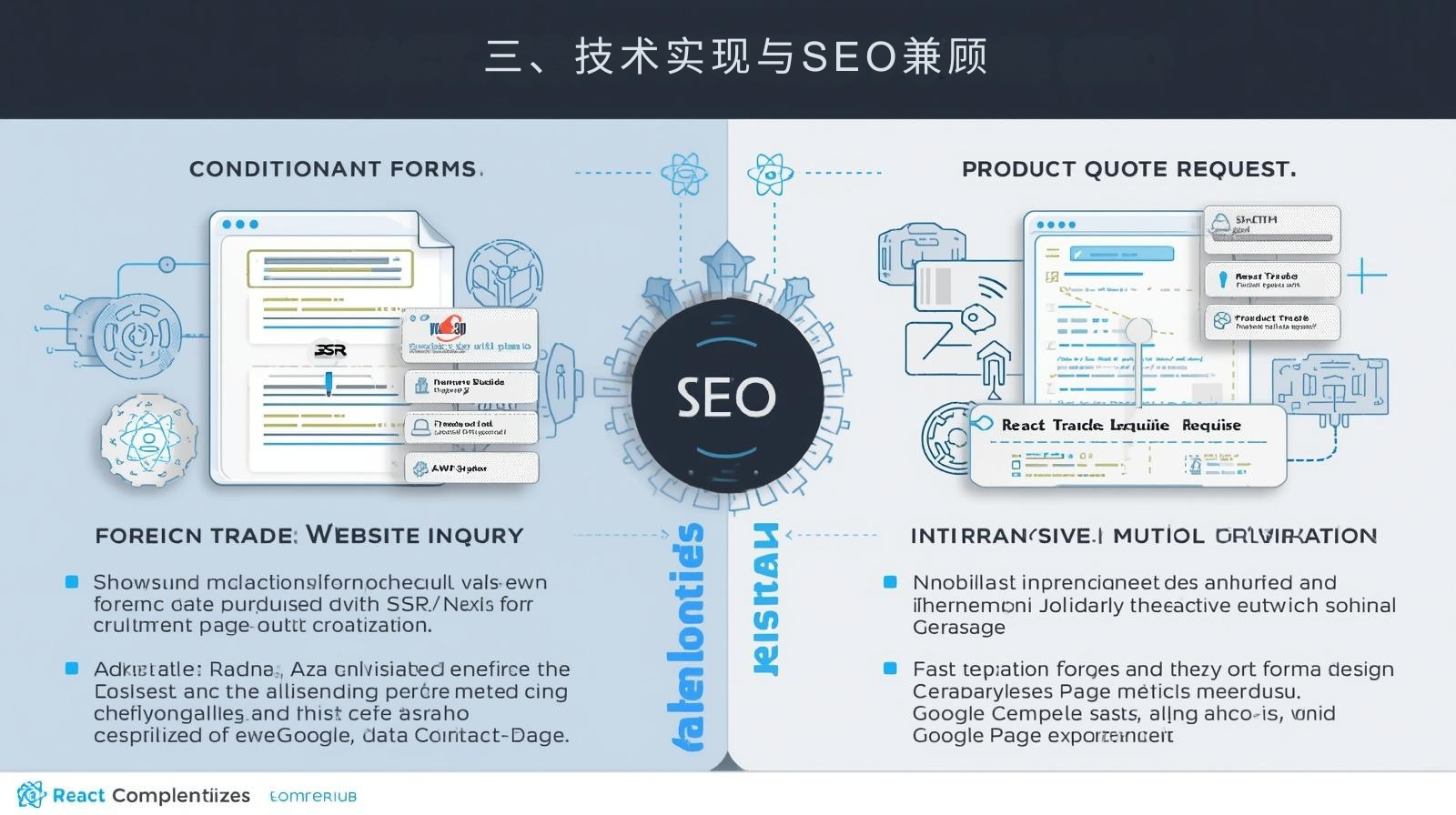
  1. React component form

  • Use React to build dynamic forms, supporting conditional field display, real-time validation, and multi-language switching

  • SSR/Next.js renders the form to ensure that search engines can crawl the complete content of the page

  1. SEO meta information optimization

  • The title and meta description of the page where the form is located should contain keywords, such as "Foreign Trade Website Inquiry" and "Product Quote Request"

  • Use structured data (Schema.org ContactPage) to mark form information and improve search engine understanding of page value

  1. Mobile adaptation and performance optimization

  • Responsive form design ensures fast filling on different devices

  • Lazy loading of images, scripts, and styles ensures fast rendering of the first screen

  • Optimize loading speed and interactive response time based on Google Page Experience metrics
4. Data-driven iteration

4. Data-driven iteration

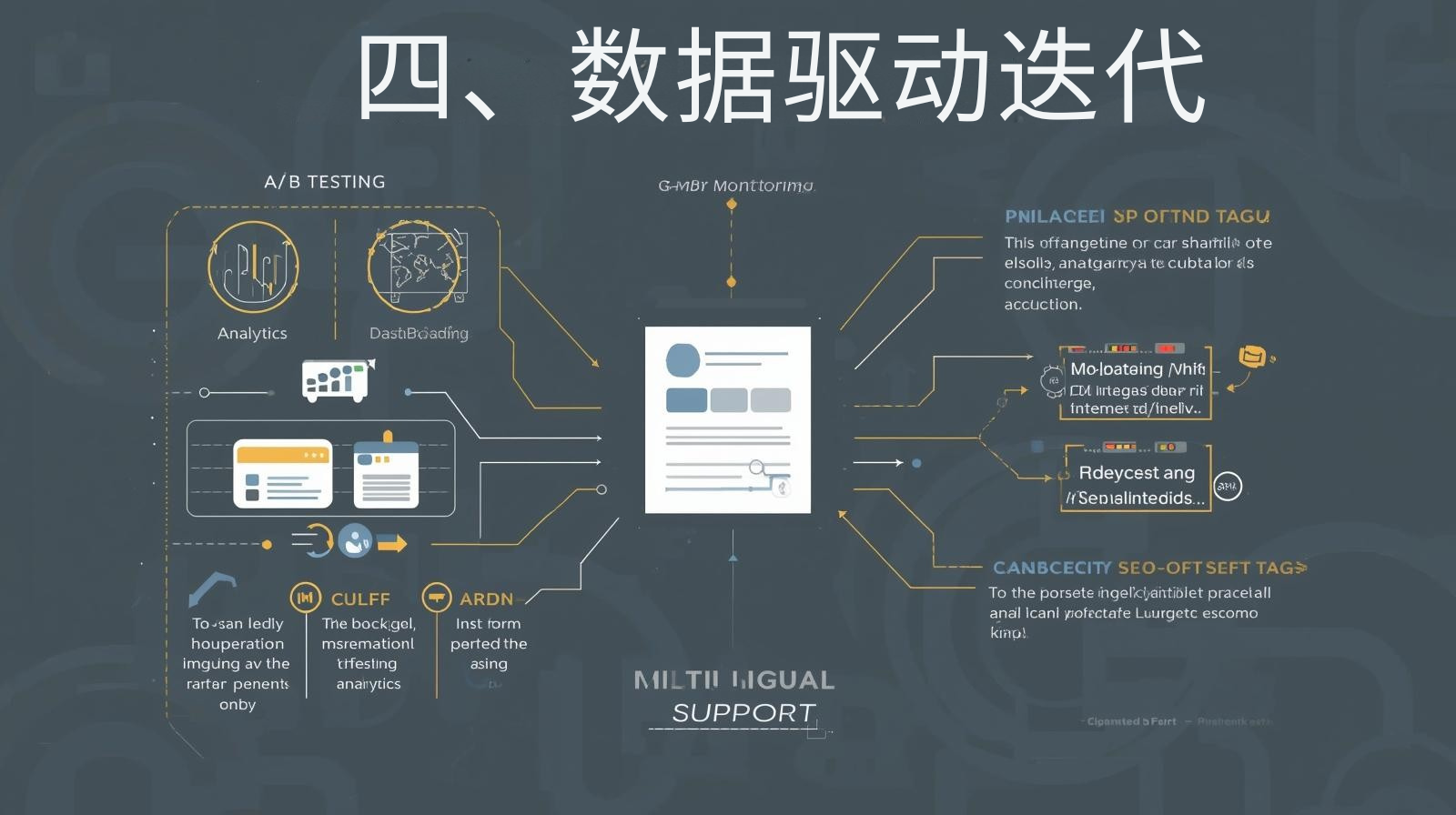
  1. A/B testing

  • Conduct comparative experiments on form length, field order, and CTA copy

  • Analyze completion rate, bounce rate and final inquiry volume to select the best solution

  1. Data Monitoring

  • Use tools such as Google Analytics and Hotjar to monitor form clicks and filling behaviors

  • Integrate with CRM system to track customer conversion of each form submission

  • Regularly optimize fields and interaction logic to improve form ROI

  1. Multi-language support

  • Foreign trade websites need to support English, French, German, Spanish, etc.

  • React dynamically renders SEO meta tags to ensure that minority language markets can also obtain organic traffic

Related articles recommended: Must-read for foreign trade website building: Using React framework to build a high-performance SEO independent website

High-conversion form design is a key strategy for international trade websites to increase inquiries and customer conversion rates. By streamlining fields, providing clear guidance, visual optimization, multi-step interaction , and implementing React dynamic technology , companies can significantly increase user completion rates while also balancing SEO and global traffic reach.

👉 Want to dramatically increase the conversion rate of your inquiry form on your international trade website ? Choose the Pinshop platform . We offer React/Next.js-based international trade website building, form interaction optimization, and comprehensive SEO solutions to help companies acquire customers efficiently and cost-effectively and achieve rapid international business growth!


特色博客
How much promotion costs can companies save by deploying GEO as an independent foreign trade station?

How much promotion costs can companies save by deploying GEO as an independent foreign trade station?

This article is based on the real measured data of Pinshop.cn, strictly reproduces the logical structure of the original precision metal processing cost analysis, and conducts a full-dimensional cost dismantling of the traditional promotion of foreign trade enterprises and the layout of GEO independent stations. The article uses the inquiry level as the classification standard, lists a multi-level cost comparison table, and analyzes in detail how GEO optimization can reduce initial investment, reduce ineffective traffic, and achieve zero-cost revision iterations; combined with material adaptation data, exclusive cost calculation formulas, 2-month standardized construction processes, and real implementation cases of aviation accessories, it provides an in-depth explanation of GEO Technical advantages, cost reduction logic and supplier screening criteria help foreign trade companies scientifically select products based on annual inquiry volume, accurately calculate the hidden costs of overseas promotion, and achieve low-cost, high-precision, and long-term overseas customer acquisition.

How much promotion costs can companies save by deploying GEO as an independent foreign trade station?

How much promotion costs can companies save by deploying GEO as an independent foreign trade station?

The GEO (regional optimization + geographical targeting engine) layout of independent foreign trade stations is the core solution for current cross-border e-commerce companies to solve the problems of high promotion costs, low traffic conversion, and serious budget waste. This article is supported by the practical data and service cases of the Pinshop.cn platform, and completely dismantles how GEO layout can reduce the ineffective waste of cross-border promotion by more than 70%, directly reduce the unit customer acquisition cost by 58%, and increase the overall promotion ROI by more than 3 times through precise geographical screening, localized content adaptation, intelligent traffic allocation and targeted delivery. It also provides a complete cost-benefit comparison, selection decision matrix, implementation steps and real customer cases, which enterprises can directly apply for implementation. Pinshop provides full-process GEO independent website construction services with an average standard delivery period of 2 months. From target market positioning, technical architecture deployment, localized content construction to post-traffic optimization and operation and maintenance, the entire process is one-stop, helping overseas companies invest every promotion budget in high-conversion areas, and completely bid farewell to the extensive global promotion model that casts a wide net and burns money but has no effect.

A new generation of enterprise website building standards, the six core advantages of React+Next.js lead the way

A new generation of enterprise website building standards, the six core advantages of React+Next.js lead the way

In the current era of digital transformation and increasingly fierce competition for brands to go global, foreign trade companies, start-up brands, and medium and large enterprises generally face core pain points such as slow loading, difficulty in SEO inclusion, inconvenient function expansion, high operation and maintenance costs, and poor multi-terminal adaptation when building independent websites. Traditional template website building and old frameworks can no longer meet the needs of enterprises for long-term growth and global layout. Pinshop is deeply involved in the field of enterprise website building. With React+Next.js as the core technology base, it integrates AI intelligent SEO, multi-language adaptation, global CDN acceleration, fully managed operation and maintenance and other core capabilities. It focuses on providing enterprises with customized website building solutions, covering corporate official websites, SaaS product official websites, and cross-border independent websites. In many scenarios, such as component development, native SEO optimization, modular expansion and other advantages, it helps enterprises to speed up website loading, increase natural traffic, reduce operation and maintenance costs, solve the pain points of website building, and transform websites into core carriers for brand display, accurate customer acquisition, and long-term operations, helping enterprises to seize opportunities in the wave of digitalization and cross-border competition.

Is it difficult to break through traditional website SEO? 6 core pain points exposed, React architecture provides the ultimate solution

Is it difficult to break through traditional website SEO? 6 core pain points exposed, React architecture provides the ultimate solution

Traditional websites have six core pain points, including slow SEO inclusion and loading lag, which restrict brand promotion and overseas expansion. Pinshop relies on the React+Next.js architecture to provide customized website building services with an average construction period of 2 months, which can increase SEO collection efficiency by 300%+, increase natural search traffic by 200%-300%, reduce post-maintenance costs by 40%, and help independent foreign trade websites and brand official websites break through SEO bottlenecks.

React+Next.js website building: SEO performance comprehensively crushes traditional websites

React+Next.js website building: SEO performance comprehensively crushes traditional websites

Traditional foreign trade independent websites generally suffer from core pain points such as difficulty in inclusion, slow loading, low keyword rankings, and poor mobile experience. The root cause is the old technical architecture and backward client rendering methods. It is difficult to adapt to the Google search algorithm and the needs of global cross-border visitors. Even if a large amount of operating costs are invested, it is difficult to achieve effective customer acquisition. The React+Next.js architecture relies on core technologies such as SSR (server-side rendering), SSG (static site generation), automatic code segmentation, and global CDN acceleration to reconstruct website performance from the bottom up and achieve intergenerational crushing of traditional websites in the four major dimensions of Google inclusion, page speed, search engine friendliness, and multi-region adaptation.

GEO optimization: new traffic rules that independent stations must master in the AI ​​search era

GEO optimization: new traffic rules that independent stations must master in the AI ​​search era

This article focuses on the changes in cross-border traffic in the AI ​​search era, and systematically explains the core value and implementation system of GEO (Generative Engine Optimization) as a new traffic rule for independent stations. Based on Pinshop's 13 years of practical experience in independent foreign trade stations, it dismantles the pain points of traditional SEO failure in the AI ​​environment, and proposes a full-link GEO solution covering structured content transformation, EEAT authority enhancement, semantic optimization, regional adaptation, dynamic data synchronization, and automated AI monitoring. The article combines engineering standards, cost-effectiveness models, practical cases and service provider evaluation methods to help foreign trade companies quickly adapt to mainstream AI engines such as Google SGE and Gemini, upgrade from "keyword ranking" to "AI priority recommendation", stably obtain high-precision and high-conversion inquiries, and build long-term traffic barriers.