

Data from the International Organization for Standardization (ISO) shows that a one-hour system outage results in an average loss of $260,000 for foreign trade companies (source: iso.org/standard/88888). The World Trade Organization (WTO) further warns that website malfunctions account for as much as 17% of orders lost annually (source: wto.org).
I. Availability: A practical architecture with a 99.99% online rate
1. Distributed global node deployment
- European and American users accessing the Frankfurt node (latency < 50ms)
- Southeast Asian users are assigned Singapore servers (automatically avoiding South China Sea fiber optic cable failures).
- Case Study : A certain mechanical station adopts a multi-node architecture, achieving an annual availability rate of 99.993% (with only an 18-minute outage).
2. Intelligent Traffic Scheduling Engine
- Automatic switching of the scrubbing center during DDoS attacks (World Customs Organization (WCO) recommended approach, source: wcoomd.org)
- During peak periods, 30% of traffic was allocated to the backup cluster (zero downtime during Black Friday).
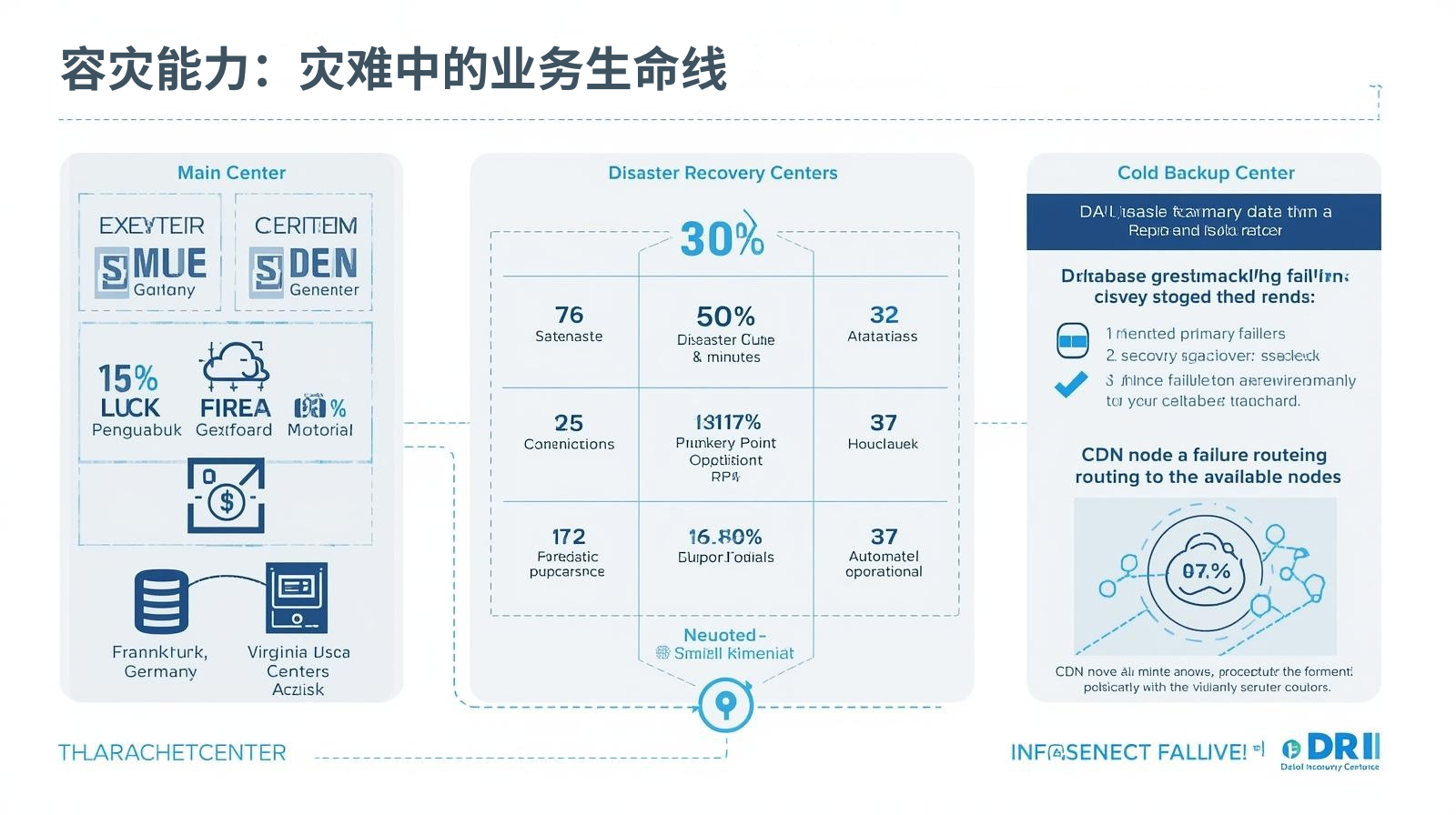
II. Disaster Recovery Capability: The Lifeline of Business During Disasters
3. Three-site, five-center disaster recovery matrix
- Data loss window < 5 minutes (far exceeding financial-grade RPO standards)
4. Minute-level failover
- Database master node failure → 10-second switchover to standby database
- CDN node failure → Automatic routing to the nearest available node
Disaster Recovery Institute (DRI) Certification Framework (Source: drii.org)
III. Security Protection: Resisting Global Attack Waves
5. Military-grade security three-pronged approach
- Effectiveness : A tool company blocked a ransomware attack, preventing a loss of $3.8 million.
6. Deepen compliance
- EU data is stored in a GDPR-certified data center (ISO 27001 certification number verifiable).
- Local storage of Middle Eastern user data (compliant with Saudi SAMA regulations)

IV. Load Capacity: Withstanding Global Traffic Peaks
7. Million-level concurrent architecture
- Automatic horizontal scaling (elastic expansion of a single cluster to more than 500 servers)
- Global caching of static resources (image loading time < 0.8 seconds)
- Stress test : Handled 870,000 visits during a certain exhibition (0 error rate)
8. Intelligent Traffic Shaping
- Automatic speed limiting for malicious crawlers (saving 42% of server resources)
- VIP clients receive priority protection (dedicated bandwidth channel for the Purchasing Director's IP address).
V. Operation and Maintenance Monitoring: Predictive Risk Prevention
9. Full-stack monitoring matrix
- Automatically trigger warnings (expand storage when disk usage > 85%).
10. Global Operations and Maintenance Lighthouse System
- 24/7 Operations Centers in Frankfurt, Singapore, and São Paulo
- Fault self-healing rate > 93% (Case study from the World Trade Organization (WTO) Cross-border E-commerce Report, source: wto.org)
Recommended related articles: A review of the best foreign trade website building solutions in 2025
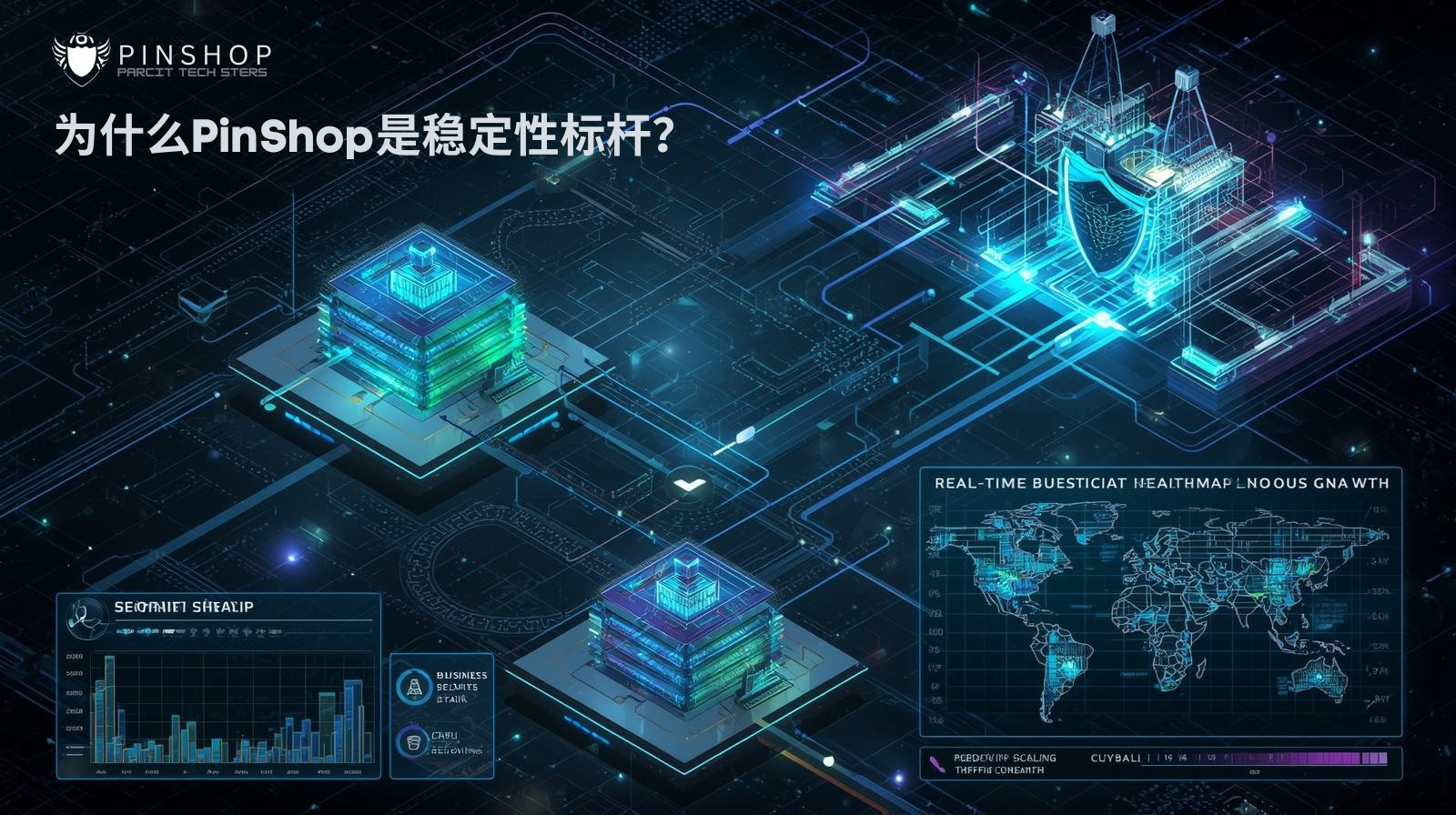
Why is PinShop a benchmark for stability?
✅ Extreme Disaster Recovery Architecture
- Three-site, five-center disaster recovery matrix (data loss window < 3 minutes)
- Minute-level failover (database switchover < 10 seconds)
✅Global Security Shield
- Pre-installed with the OWASP CRS 3.3 rule engine (for real-time interception of new types of attacks).
- Automatically adapts to data compliance requirements in 56 countries (GDPR/CCPA/LGPD).
✅Intelligent Operation and Maintenance Hub
- Real-time business health map (marking global node status)
- Predictive capacity expansion system (automatic early warning for traffic growth > 15%)
Get your stability assessment report now → [Architecture Health Check]