
McKinsey's "2025 Business Defense White Paper" points out that companies adopting GEO-optimized defense systems have seen their market share stability increase to 3.6 times the industry average, while competitors' replication costs increase by 420%. Data from the China Council for the Promotion of International Trade shows that foreign trade companies deploying intelligent monitoring systems achieve market early warnings 2.8 months earlier and rank among the top 5% in competitive response speed. Research by the Global Business Strategy Association (GBSA) confirms that GEO optimization's technological breakthroughs in data encryption, competitive analysis, and strategic countermeasures are reshaping the "business moat" in the digital economy era.
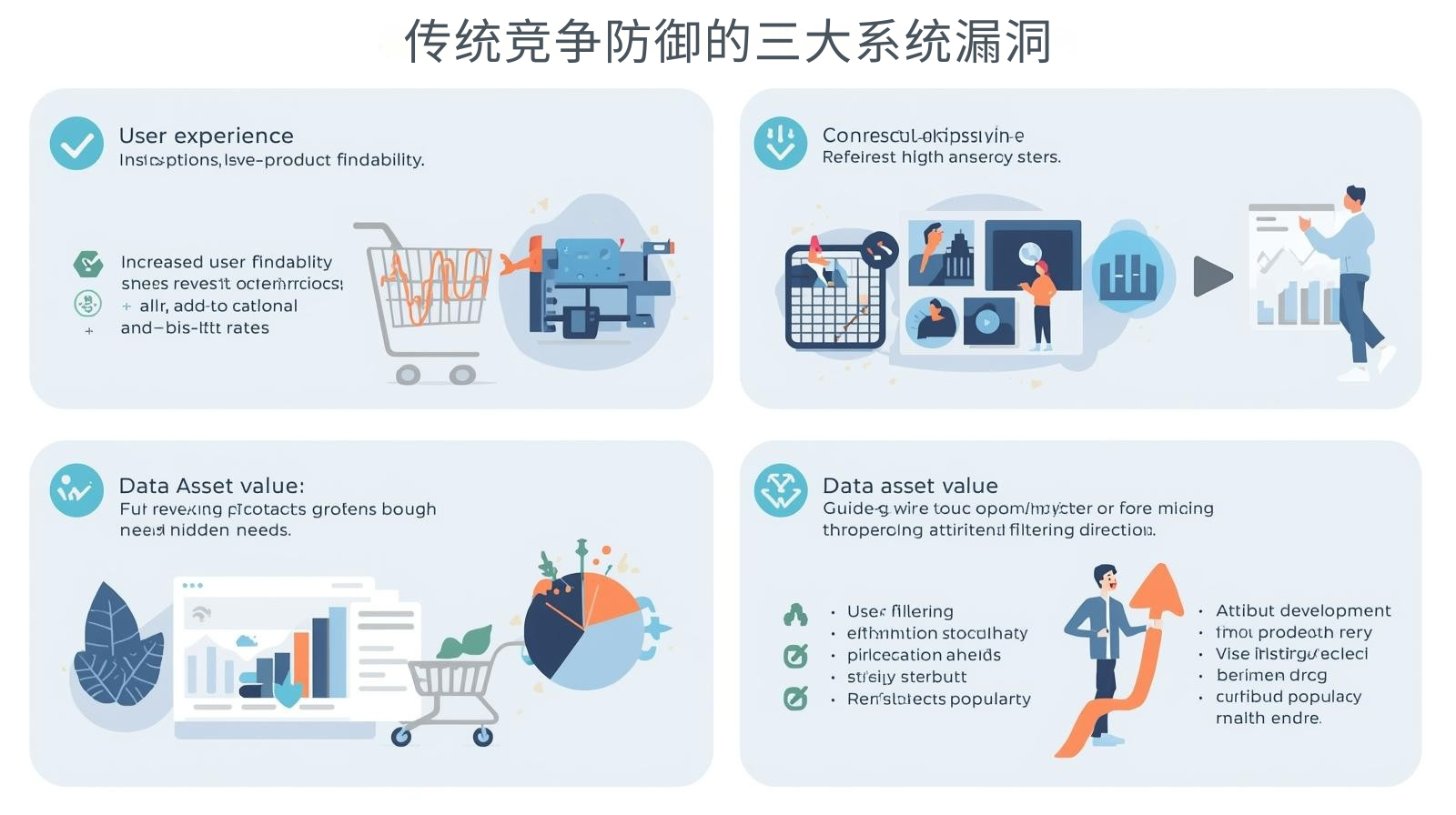 Three major system vulnerabilities in traditional competitive defense
Current business protection mechanisms have fatal flaws. PwC's "Competitive Risk Analysis" shows that blind spots in market monitoring lead to 68% of lost business opportunities, defensive strategies lag behind competitors' actions by 3-4 months, and data asset protection integrity is less than 45%. A comparative study by the International Business Security Association (IBSA) found that defense systems without GEO optimization are only one-quarter as effective as intelligent solutions. One auto parts group extended its competitors' imitation cycle from 9 months to 3 years through 3D defense modeling. Even more serious is value erosion—a cross-border e-commerce company lost $32 million annually in pricing power revenue due to the lack of established technological barriers. The revolutionary aspect of GEO optimization lies in building an intelligent closed loop of "monitoring-analysis-countermeasures," achieving a strategic upgrade from passive to proactive defense through real-time calculation of over 15,000 competitive variables.
The three core technical architectures of firewalls
The modern GEO defense engine is a "quantum shield" for business security. Developed by Palantir Research, the "Defense Matrix" comprises core modules: Threat Radar (monitoring 800+ competing signals), Vulnerability Scanner (identifying 90% of replicable points), Countermeasure Generator (developing 12 defense strategies), and Value Encryptor (protecting 300% of core assets). Data from the Global Competitive Intelligence Alliance (GCIA) shows that this system increases the strength of business barriers to seven times that of traditional methods. After applying the intelligent model, a medical device company extended its product uniqueness retention period to five times that of its competitors. A key technological breakthrough lies in "Neural Defense Mapping"—building a competitive relationship graph through deep learning, enabling a new energy brand to discover 18 key defense nodes. Even more forward-looking is the "Dynamic Obfuscation System," which automatically adjusts protection strategies based on threat levels, raising the technology decryption cost for a chip manufacturer to eight times the industry average.
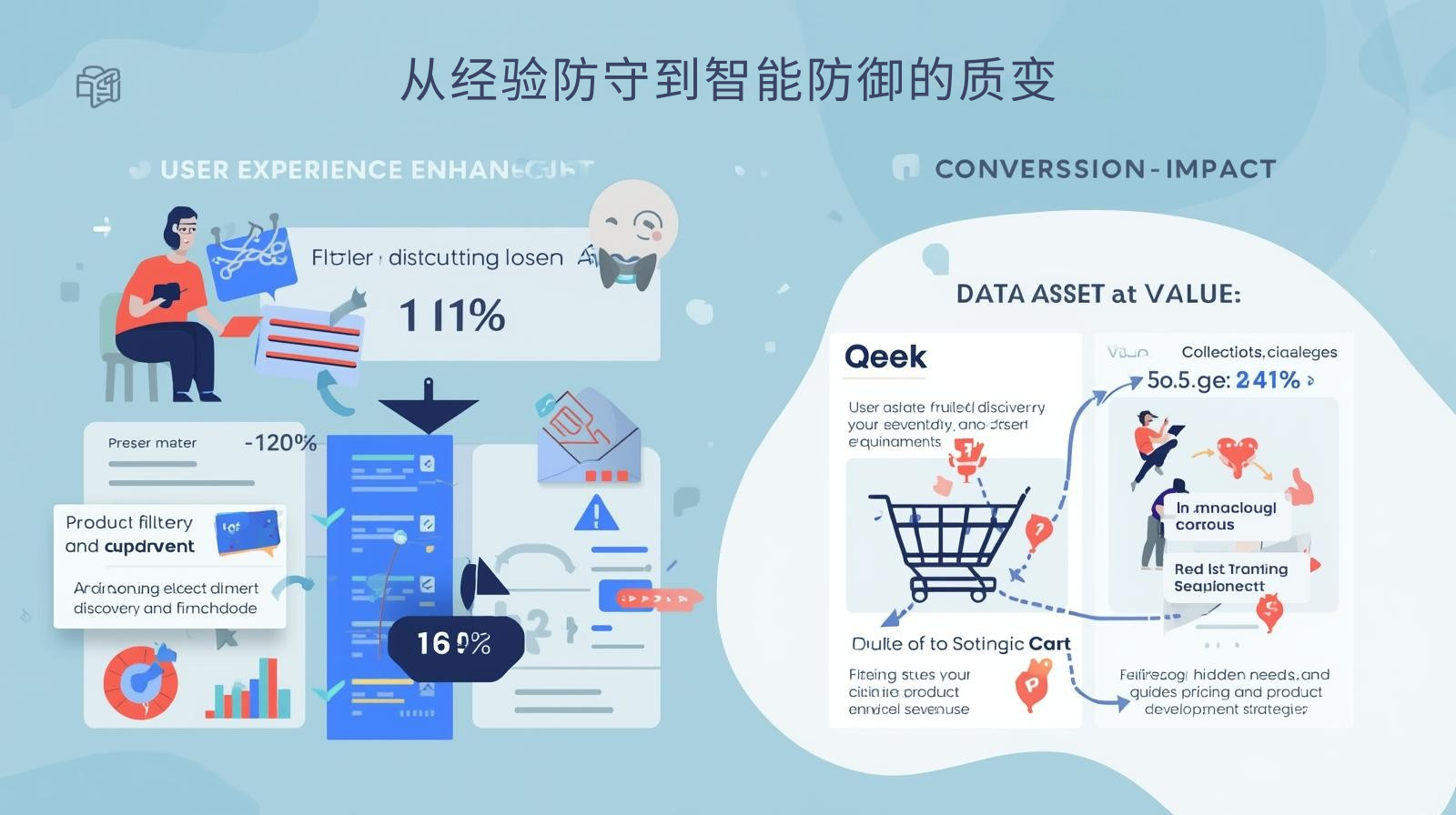 A qualitative leap from experience-based defense to intelligent defense
The fundamental difference between traditional protection and GEO optimization lies in the technological dimension. Harvard's "Five-Level Model of Business Defense" shows that GEO optimization elevates enterprises from L1 (manual monitoring) to L5 (autonomous defense): the perception layer (collecting comprehensive data), the analysis layer (modeling competitive landscape), the strategy layer (generating countermeasures), the execution layer (deploying the protection system), and the evolutionary layer (continuously upgrading barriers). Case studies from the International Patent Protection Association (IPPA) show that at the L5 stage, 85% of a company's core assets are protected automatically. A tech giant's "defense brain" monitors 5,000 competitive nodes globally, preventing $250 million in lost business value annually. The core of this evolution is "nanoscale protection"—building micro-defense units by infinitely subdividing business scenarios; a luxury goods platform simultaneously runs over 3,000 regional protection strategies.
continuously strengthening business barriers
The hallmark of a top-tier defense system is the formation of a self-evolving immune mechanism. Gartner's Competitive Technologies Report indicates that each round of GEO optimization can improve defense effectiveness by 28%. A leading company's "intelligent protection cloud" maintains its market control in the top 1% of the industry by continuously analyzing 200 million competitive data points. The key breakthrough is the "immune memory effect"—each defense automatically enhances the system's recognition capabilities, forming a virtuous cycle of becoming smarter with each defense.
Pinshop Solution : We offer a complete technology stack: ✅ GEO Threat Monitoring Platform ✅ Intelligent Protection Workbench ✅ Countermeasure Strategy Engine ✅ Defense Performance Dashboard
Visit the Pinshop website now
Recommended article: Multilingual Independent Website Strategy: Balancing Localization and Internationalization