
According to the Content Marketing Institute's "2025 Global Content Efficiency Report", companies that adopt GEO optimization technology can increase their content production efficiency to 8.3 times that of traditional methods, and their long-tail keyword coverage can increase by 15 times. According to data from the China Council for the Promotion of International Trade, foreign trade companies that apply intelligent question and answer systems have experienced an annual growth rate of natural traffic of 320%, and the conversion rate of accurate inquiries has increased to 2.5 times the industry average. Global Search Quality Alliance (SQIA) research confirms that GEO optimization’s technological integration of semantic understanding, intent matching and content generation is redefining the industry standard for large-scale content production.
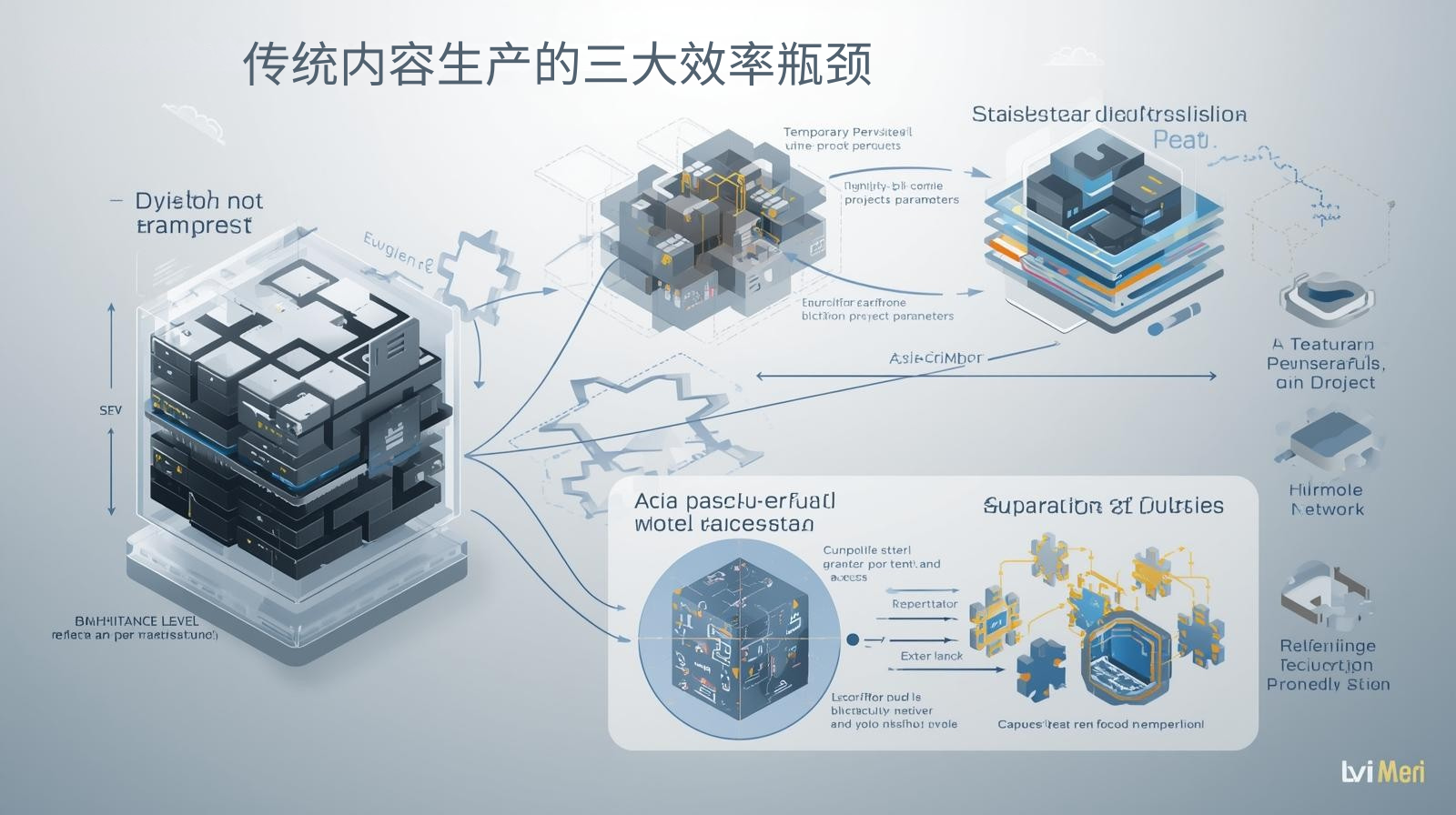 Three major efficiency bottlenecks in traditional content production
The current content strategy faces a systemic output dilemma. Moz's "Content Marketing Cost Analysis" points out that a single piece of content only covers 3-5 long-tail words on average, and manual creation costs account for 65% of the total budget. Errors in regional adaptation lead to 60% of content being ineffective. Research by the International SEO Association (ISEOA) found that for unoptimized batch content, the proportion of users staying for less than 30 seconds is as high as 82%. Through GEO semantic analysis, a machinery manufacturer found that 80% of the industry's procurement issues were not covered by existing content. After adjusting its strategy, its natural search traffic increased by 400%. What's even more serious is the uneven quality - only 15% of the 500 questions and answers from a B2B company received sustained traffic. The breakthrough of GEO optimization lies in the establishment of a "semantic-regional-commercial value" three-dimensional evaluation model, which achieves a perfect balance of efficiency and accuracy by calculating 3000+ content variables in real time.
Four technical pillars of intelligent question answering system
The modern GEO content engine is the culmination of AI and semantic technology. The "Content Matrix" developed by Google NLP Lab includes core components: Intent Miner (identifies 200+ regional search patterns), Question Generator (automatically generates tens of thousands of questions), Value Evaluator (quantifies business potential), and Adaptive Optimization Network (continuously improves rankings). According to data from the Global Content Technology Association (CMT), this system increases the efficiency of high-quality content production to 20 times that of manual work. After a chemical company applied the 3D content model, the TOP3 ranking of professional Q&A accounted for 78%. The key technological breakthrough lies in "neuro-regional semantics" - by optimizing content strategies with spatial features, a medical equipment manufacturer increased the conversion rate of niche technical words to 6 times the industry average. What is even more forward-looking is "dynamic content evolution". The system automatically updates questions and answers based on search trends. A certain building materials brand maintains content freshness above 90 points.
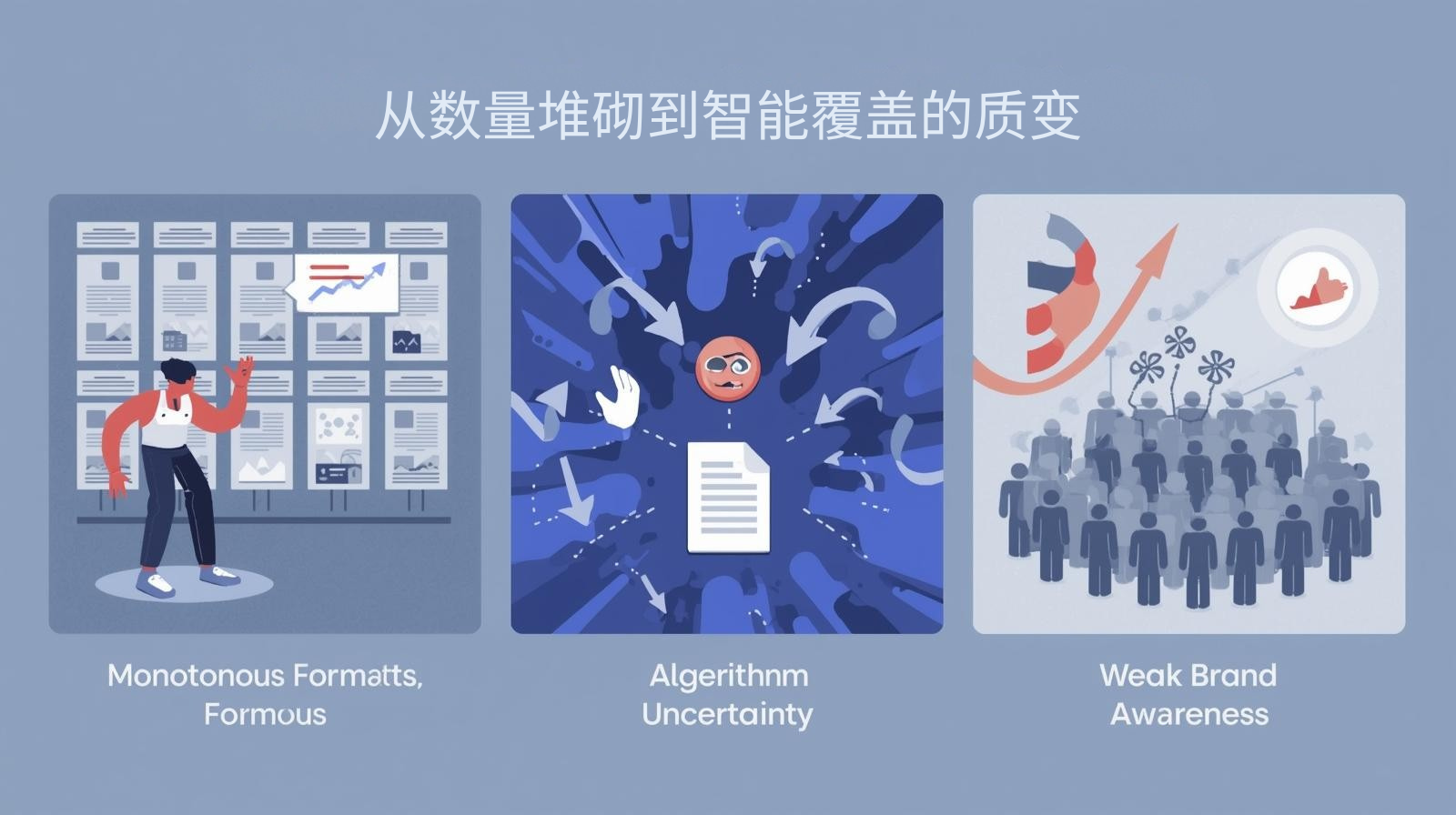 Qualitative change from quantity stacking to intelligent coverage
The essential difference between basic batch and intelligent production lies in the value dimension. The "five-level coverage theory" proposed by Harvard's "Content Science Evolution Model" shows that GEO optimization upgrades practice from L1 (keyword stacking) to L5 (intelligent knowledge network): thesaurus layer (building a semantic map), the intent layer (understanding real problems), the production layer (generating accurate answers), the optimization layer (continuous effect improvement), and the ecological layer (forming a knowledge system). Cases from the International Content Marketing Association (ICM) show that the content ROI of companies in the L5 stage is three times the industry average. The "Q&A Knowledge Cloud" built by an automobile group brings annual incremental sales of $8 million through semantic association of 8,000+ long-tail words. The core of the evolution is "search intent mirroring" technology - accurately replicating the user's thinking path. An instrument manufacturer used this to increase the content conversion rate by 210%. What is even more revolutionary is the "traffic compound interest effect". High-quality Q&A accumulates weight over time. The content of a certain electronic components site still contributed 30% of inquiries three years ago.
Continuously self-optimized content ecosystem
The hallmark of a top-level system is the formation of a growth flywheel. SEMrush's "Content Life Cycle Research" points out that each round of GEO optimization can increase the value of content by 40%. The "content factory" of a multinational retailer has achieved a compound annual growth rate of 45% in natural traffic through continuous optimization of 500,000+ regionalized questions and answers. The key breakthrough is the "intelligent iterative algorithm" - automatically optimizing content based on user behavior data. An industrial brand generates 300+ high-value content variants every week. Together, these technologies build an evolving content system that enables enterprises to manage the value of content like an operational asset.
Pinshop solution: We provide a complete technology stack: ✅ GEO semantic analysis platform ✅ Intelligent question and answer generator ✅ Effect optimization workbench ✅ Value monitoring dashboard
Visit nowPinshop official website
Related article recommendations: Multi-language independent website strategy: the balance between localization and internationalization