McKinsey's "2025 Real-Time Business Decision Report" points out that companies that use GEO to optimize real-time mechanisms can increase their market response speed to nine times that of traditional methods, and their strategy adjustment cycles can be compressed from months to minutes. Data from the China Council for the Promotion of International Trade shows that foreign trade companies that deploy intelligent optimization systems continue to have ROI that is 3-5 times the industry average, and customer acquisition costs are reduced by 62%. Global Business Intelligence Alliance (GBIA) research confirms that GEO optimization’s technological breakthroughs in dynamic perception, algorithm evolution and strategy iteration are redefining the rules of competition in the digital age.
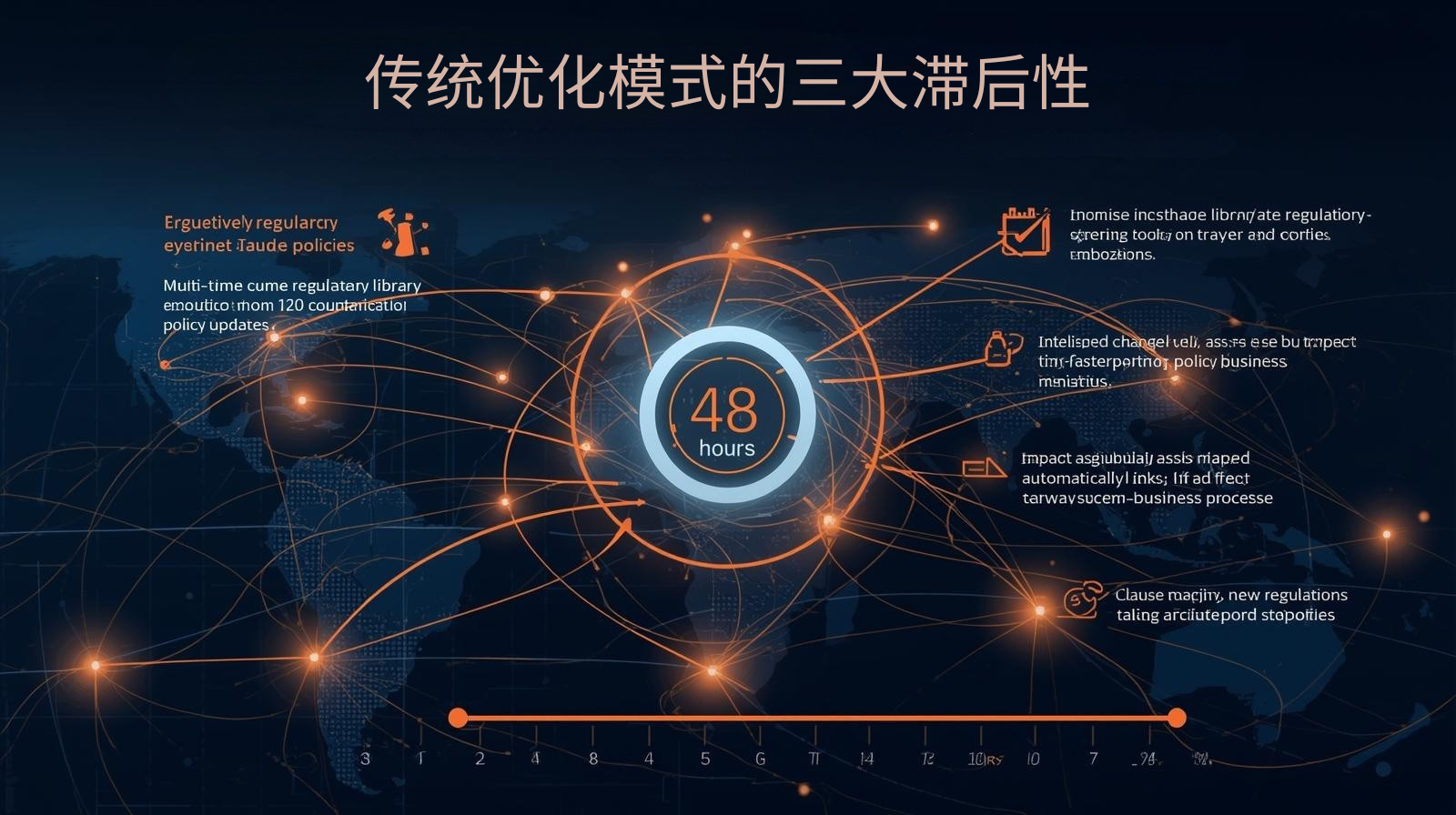 Three major lags in the traditional optimization model
The current market strategy faces serious timeliness flaws. Gartner's "Decision Delay Cost Analysis" shows that 85% of corporate strategies lag behind market changes by 2-3 weeks, the error rate of manual analysis reaches 38%, and static models cannot cope with 68% of sudden market fluctuations. A study by the International Business Analysis Association (IBAA) found that the effectiveness of marketing strategies without real-time optimization decays four times faster than intelligent systems. A machinery manufacturer shortened its price adjustment response time from 72 hours to 15 minutes through real-time GEO optimization, and its quarterly profit increased by 230%. Even more serious is the missed opportunity - an electronics brand lost $12 million in potential sales because it failed to capture the surge in regional demand in time. The revolutionary nature of GEO optimization lies in the construction of a millisecond-level closed loop of "perception-decision-execution", and the sustainable preservation of business strategies through the parallel processing of 5000+ real-time data streams.
The four nerve centers of the real-time evolution system
The modern GEO optimization engine is the AI brain for business decision-making. The "Strategy Matrix" developed by the Stanford Dynamic Decision Laboratory includes core modules: market awareness network (tracking 300+ real-time indicators), anomaly detector (identifying mutation signals), evolutionary algorithm group (generating optimization solutions), and effect verification loop (closed-loop feedback learning). Verification data from the Global Data Science Association (DSA) shows that this system keeps the effectiveness of the strategy in the top 1% of the industry. After a certain car brand applied the real-time evolution system, the ROI of promotional activities stabilized at more than 500%. The key technological breakthrough lies in "neural spatiotemporal modeling" - using deep learning to predict market phase transition points, a chemical company adjusted its supply chain strategy 48 hours in advance. Even more forward-looking is "swarm intelligence optimization". The system automatically generates tens of thousands of strategy combinations and selects the optimal solution. This has enabled a retail brand to increase its inventory turnover rate to 7 times the industry average.
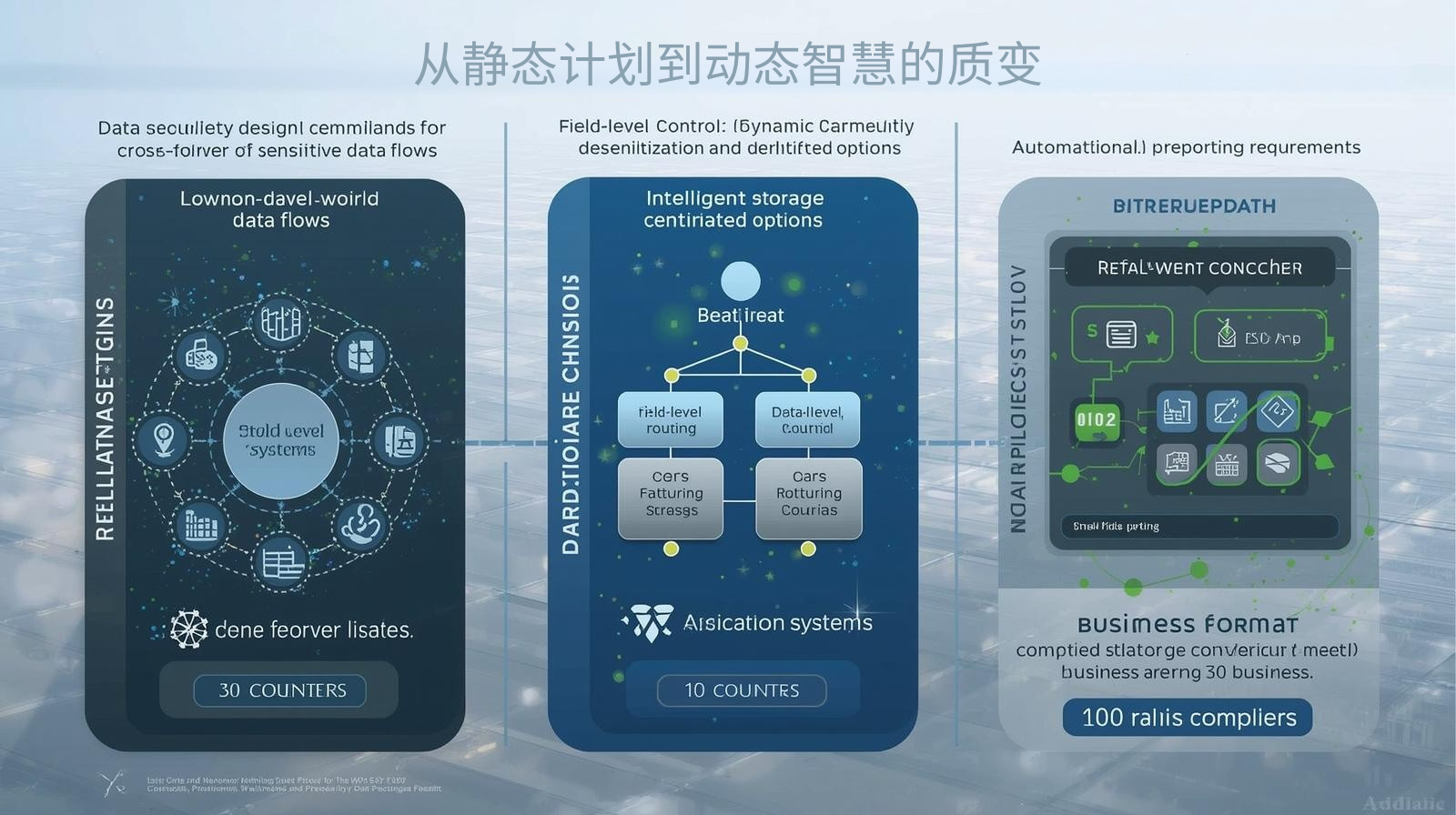 Qualitative change from static plan to dynamic wisdom
The essential difference between regular optimization and real-time evolution lies in the time dimension. The "Five-Level Theory of Evolution" proposed by MIT's "Business Intelligence Evolution Model" shows that GEO optimization upgrades practice from L1 (manual analysis) to L5 (autonomous evolution): monitoring layer (collecting real-time data), analysis layer (identifying change patterns), decision-making layer (generating response strategies), execution layer (automatically implementing adjustments), and evolution layer (continuously upgrading algorithms). The case of the International Institute of Management Sciences (INFORMS) shows that the market agility of enterprises in the L5 stage is 6 times that of competitors. A "commercial weather station" built by a multinational group avoids $90 million in decision-making errors every year by simulating global market changes in real time. The core of evolution is "cognitive enhanced learning" - integrating expert experience and machine intelligence, a medical device manufacturer tripled its product iteration speed. What is even more revolutionary is the "Strategy Gene Bank", in which excellent strategic fragments are permanently preserved and reorganized and evolved, thus forming a unique competitive advantage for a certain FMCG brand.
Never-ending business evolution
The hallmark of a top-tier system is exponential growth. BCG's "Adaptive Enterprise Research Report" points out that each round of real-time optimization can improve the quality of business decisions by 33%. The "intelligent command center" of a global e-commerce platform has increased the anomaly detection accuracy to 99.7% by continuously processing an average of 1 billion+ data points per day. The key breakthrough is "quantum learning" - based on real-time feedback to infinitely subdivide optimization dimensions, a luxury brand manages 8,000+ micro-strategy units at the same time. Together, these technologies build a viable business organism that enables companies to respond to market changes as well as to the environment.
Pinshop solution: We provide a complete technology stack: ✅ GEO perception network ✅ Intelligent decision-making engine ✅ Automatic execution system ✅ Evolution monitoring dashboard
Visit now Pinshop official website
Related article recommendations: Multi-language independent website strategy: the balance between localization and internationalization