
The next stop for foreign trade website building: How does GEO technology end "involution" - the closed-loop answer from traffic to orders

  • Foreign trade stations
Posted by 广州品店科技有限公司 On Nov 05 2025

The end of the independent foreign trade station, is GEO? At least we have seen the answer - written to business owners and foreign trade decision-makers who are still anxious about traffic

"Traffic is getting more and more expensive, inquiries are getting fewer and fewer, and the team is getting smaller and smaller." This was the opening statement of the boss Lao Lin when he poured me tea at an LED factory in Baoan, Shenzhen last week. In the past three years, he has expanded the independent website from 1 language to 6, tripled the advertising budget, but the ROI has dropped from 3.1 to 1.4. The problem is not with the product, nor with the team, but with the “website building idea” itself.

1. Three ceilings for traditional foreign trade website building

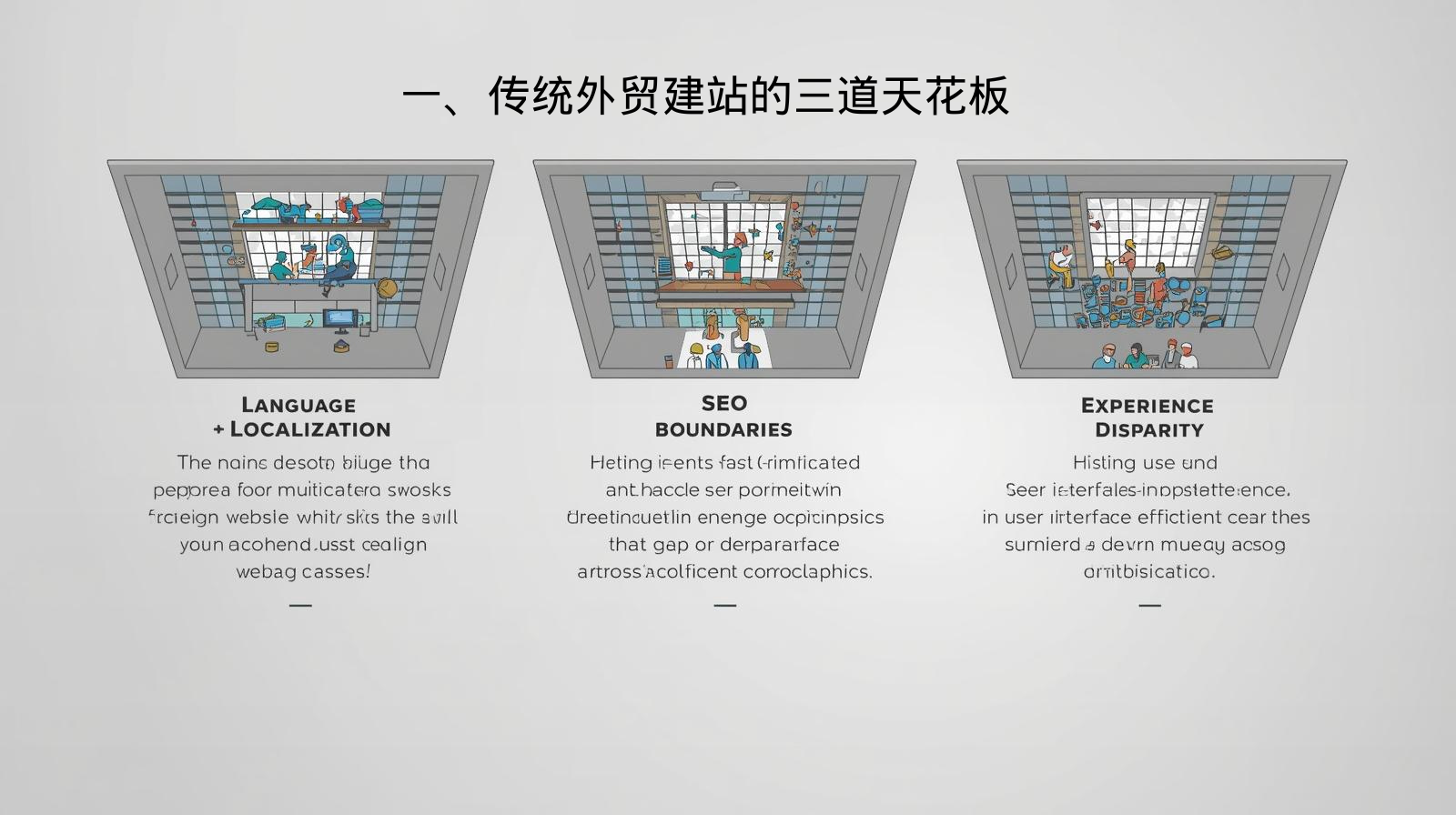
  1. Language ≠ localization: 90% of multi-language sites only translate the copy without adjusting it according to local regulations, culture and payment habits.
  2. SEO boundaries: English keyword competition has reached 78/100, and the small language traffic pool is not enough to support the scale.
  3. Experience gap: The same set of UI is shown to American engineers and Indonesian buyers, and the difference in bounce rate can reach 45%.
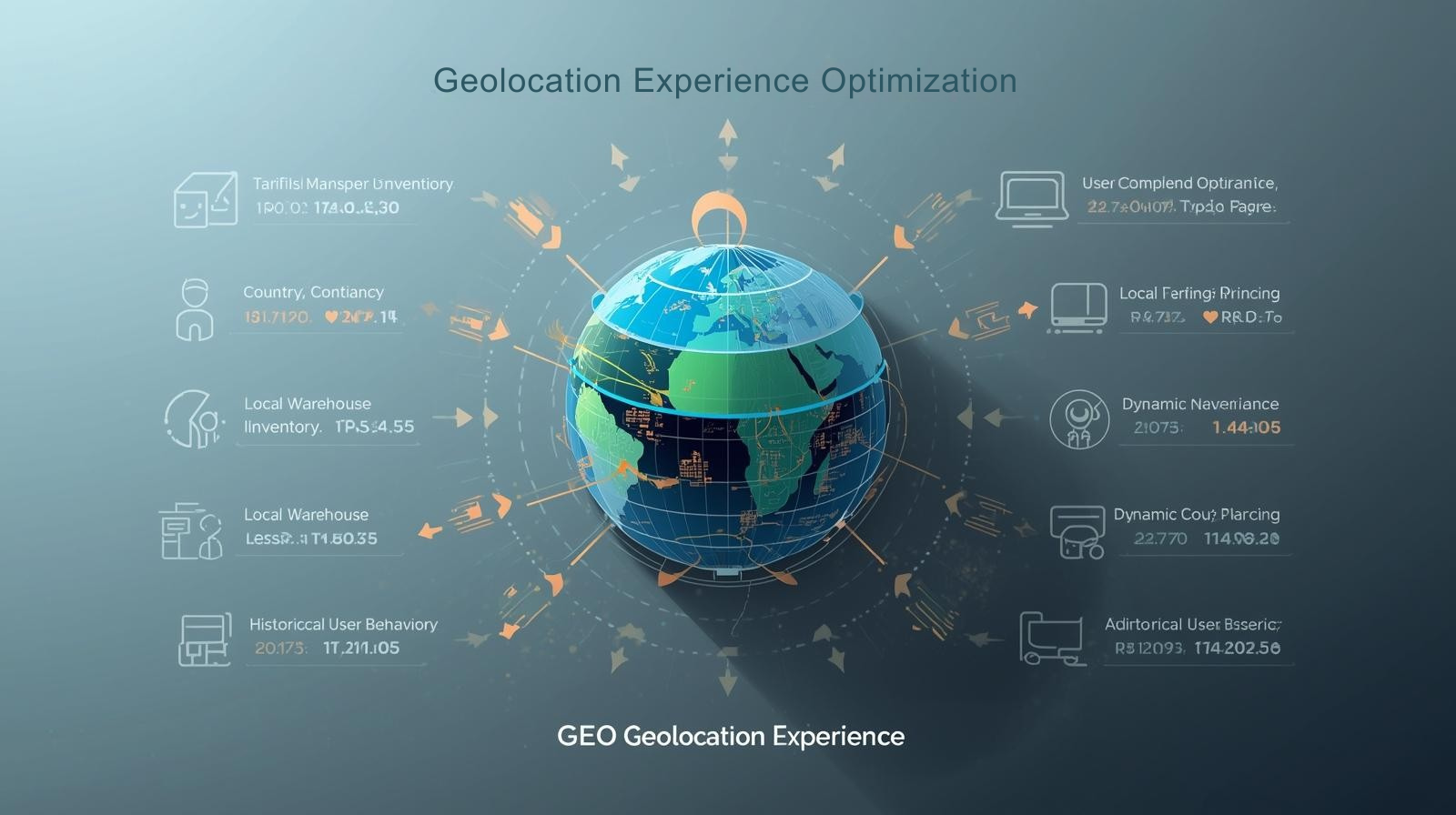

2. Why GEO technology has become the "key to breaking the game" GEO (Geolocation Experience Optimization) is not a simple "IP jump", but writes the three-layer positioning of "country-city-user" into the technology stack of foreign trade website building: • Country level: automatically identifies tariffs and compliance prompts; • City level: calls local warehouse inventory and logistics timeliness; • User level: dynamically displays prices and discounts based on equipment and historical behavior.

UNCTAD, the United Nations Conference on Trade and Development, pointed out in the 2024 "Cross-border E-commerce Facilitation Report" that the average conversion rate of independent stations using GEO technology increased by 2.3 times, and the return rate dropped by 19% (https://unctad.org). This means that for the same advertising fee, you can get 130% more orders.


Three-step "technological slimming" plan

  1. Data baseline: Use the Core Web Vitals indicators recommended by Google's "Retail Acceleration Report" (https://google.com/retail) First give the site a physical check and compress the LCP to less than 1.8 seconds.
  2. GEO engine: Deploy GEO scripts based on Cloudflare Workers on server edge nodes to complete real-time replacement of currency, taxes, and logistics documents within 0.3 seconds.
  3. Continuous iteration: refer to the "rolling AB test" model in China Credit Insurance's "Digitalization Index of Small and Medium-sized Foreign Trade Enterprises" (http://sinosure.com.cn), select two countries every month to conduct price elasticity experiments, and you can run out of the optimal pricing range in 90 days.
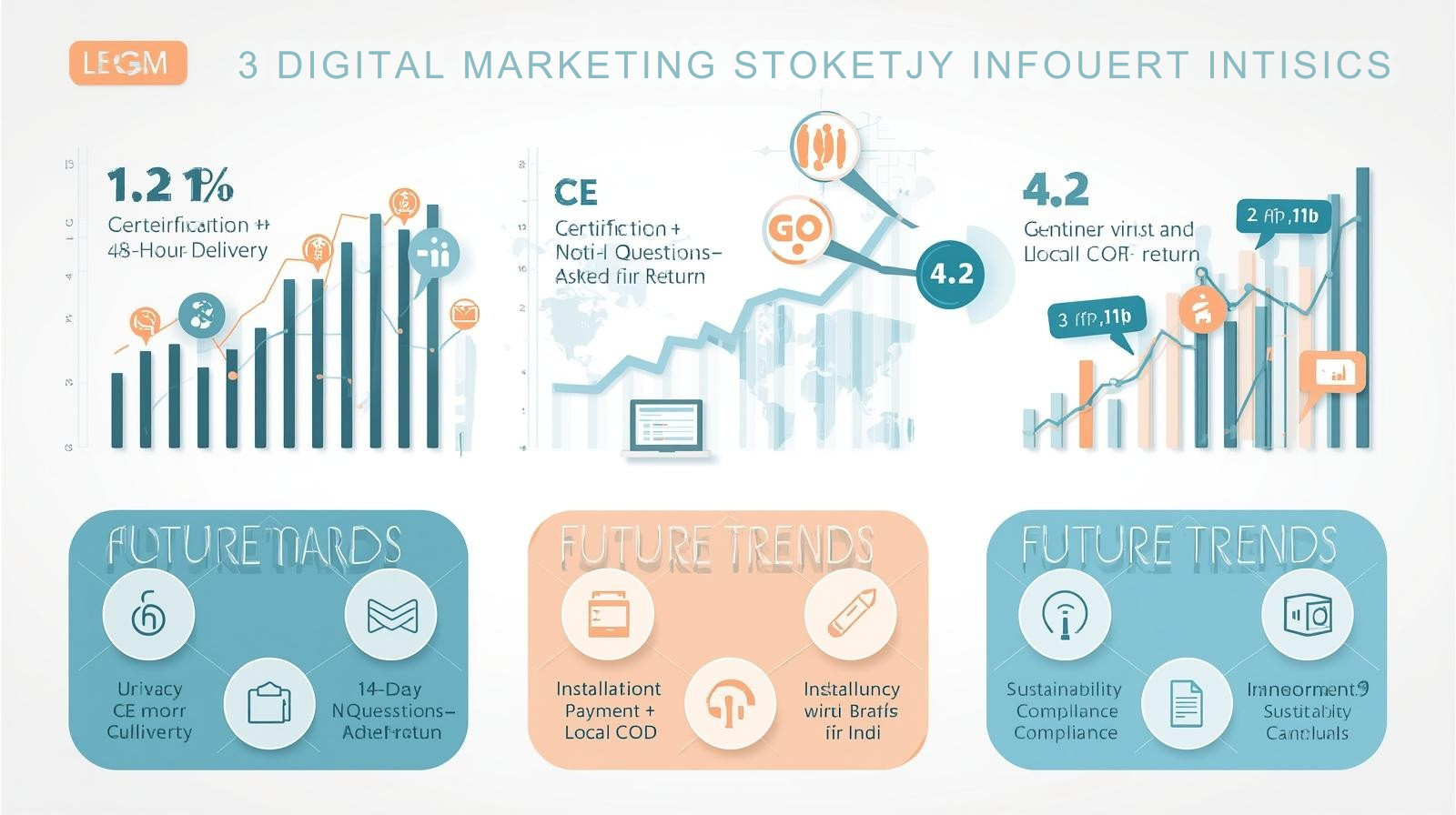

4. Case: 3-month ROI from 1.4 to 4.2 After connecting to GEO, Lao Lin's LED site did three things: • American users directly displayed "UL certification + 48 hours delivery"; • German visitors highlighted "CE certification + 14 days no reason to return"; • Indian traffic automatically switched to "installment payment + local COD". Results: The average price per customer increased by 27%, the advertising CPC dropped by 18%, and the ROI returned to 4.2 after 3 months.

5. Trends to watch in the next 12 months

  1. Privacy Sandbox: Chrome will eliminate third-party cookies in 2025, further amplifying the value of GEO's "first-party data".
  2. AI+GEO: Combined with ChatGPT-style generative content to achieve "thousands of people, thousands of faces" product descriptions.
  3. Sustainable compliance: The EU CSRD requires supply chain carbon emissions to be disclosed starting from 2026, and GEO can dynamically display carbon footprint labels.

Related article recommendations: Redefine "professionalism": In the GEO era, the professionalism of your independent foreign trade station will be judged and presented by A

Conclusion and call to action The end of foreign trade website building is not the exhaustion of traffic, but the use of GEO to turn every click into a precise order. If you also want to copy Lao Lin’s three-month turnaround story, click the link below immediately to make an appointment with Pinshop’s exclusive consultant and get the “GEO Foreign Trade Website Building SaaS Deployment Manual” for free + a 7-day full-featured trial. Don’t let your competitors get to your customers first.

Try Pinshop now →

特色博客
GEO optimizes low-cost layout, React native architecture foreign trade independent station

GEO optimizes low-cost layout, React native architecture foreign trade independent station

Overseas procurement relies on price comparison with large models such as ChatGPT to acquire customers, and GEO optimization is essential. Traditional WP sites must pay for revisions and reconstruction of AI semantics after 1-2 years of operation, and the loss of orders due to shutdowns is huge. pintreel React+Next integrates the native underlying layer with a full set of llms.txt and JSON-LD price comparison semantics pre-embedded, and the website can be built to adapt to global large models at once.

The daily operation of the site improves the quality and efficiency, and millisecond-level response. The independent foreign trade station significantly reduces the global visitor churn rate.

The daily operation of the site improves the quality and efficiency, and millisecond-level response. The independent foreign trade station significantly reduces the global visitor churn rate.

Overseas B-side procurement has huge network differences across continents. Page loading delays are the largest source of traffic loss for independent sites. Millisecond-level sites significantly reduce bounce rates. At the same time, they fully provide GEO large model price comparison semantics and improve AI inquiries. Pintreel is based on React+Next native static architecture to achieve TTFB≤200ms global response, fully automatic material lightweight linkage SEO/GEO tag updates.

Integrated operation of building materials industry and trade, high-expansion foreign trade independent station seamlessly connects factory ERP and customer CRM management system

Integrated operation of building materials industry and trade, high-expansion foreign trade independent station seamlessly connects factory ERP and customer CRM management system

Under the integrated model of building materials industry, trade, production and sales, the separation of website, ERP inventory, and CRM customer data is a core operational pain point. Overseas procurement relies on the GEO generative engine to retrieve real-time building materials inventory and production capacity. Old sites cannot link back-end systems, resulting in gaps in AI exposure. Pintreel React+Next's high-expansion independent station's native two-way API seamlessly connects factory ERPs and foreign trade CRMs such as Kingdee and UFIDA. Building material specifications, inventory, and inquiries are synchronized in milliseconds. The bottom layer automatically captures back-end data to generate a full set of GEO price comparison semantics, realizing an integrated closed loop of Google + AI dual-line customer acquisition, automatic customer profile creation, and workshop production scheduling.

Large-scale machinery foreign trade track, React+Next.js independent foreign trade station relies on hard-core SEO to seize the global procurement search seat

Large-scale machinery foreign trade track, React+Next.js independent foreign trade station relies on hard-core SEO to seize the global procurement search seat

Overseas procurement of global large-scale machinery and equipment has the core industry characteristics of high customer price, long decision-making cycle, and high barriers to professional keywords. The first step for overseas engineering buyers must be to search for professional industrial keywords on Google to screen suppliers. Hard-core industrial SEO rankings directly determine whether heavy industry factories can join the global procurement candidate pool. At present, AI tools such as ChatGPT and Google SGE have become the core channels for horizontal comparison of equipment parameters, production capacity, and quality assurance. GEO (Generative Engine Optimization) has become a necessary supporting layout for incremental large-scale inquiries in the machinery industry. Most machinery foreign trade companies still use cheap WordPress and old PHP templates to build their websites. High-definition large images of large amounts of equipment are slow to load. Core Web Vitals indicators are unqualified across the board. Professional heavy industry keywords have been ranked low for a long time. At the same time, the industrial equipment-specific llms.txt index and price comparison JSON-LD structured data are missing. The large AI model is completely unable to capture equipment information, and the search and AI dual-line traffic are both disconnected. Pintreel is deeply involved in the large-scale machinery track. React+Next.js native independent station customization and development. The underlying architecture is deeply adapted to the product display logic of long pictures and texts, multi-working conditions, and multi-parameters in the heavy industry. It simultaneously embeds an industrial-specific global SEO system and a complete GEO equipment semantic knowledge map.

The first stage of buyer search: High-ranking foreign trade independent websites take the lead in entering the buyer's candidate list based on SEO

The first stage of buyer search: High-ranking foreign trade independent websites take the lead in entering the buyer's candidate list based on SEO

Overseas B-side procurement has formed a standardized hierarchical decision-making link. Active search and screening of suppliers is the first decision-making stage for buyers. Google SEO natural ranking directly determines whether the foreign trade independent website can enter the buyer's preliminary candidate list. It is also the prerequisite for subsequent negotiations, price comparisons, and in-depth cooperation. At present, a large number of foreign trade merchants use old PHP and WordPress templates to build websites. There are problems such as redundant code, inefficient rendering, confusing tags, and substandard Core Web Vitals (CWV) indicators. Even if they lay out a large number of keywords, it is difficult to obtain a stable and high ranking in the buyer's search results, and they will be eliminated directly in the first step of customer acquisition. At the same time, most traditional websites only deploy basic SEO and do not link with GEO (Generative Engine Optimization) for global traffic coordination, further missing out on overlapping customer sources.

Seize the digital voice in the AI ​​era, and the independent foreign trade station natively adapted to GEO enters the global large model knowledge base

Seize the digital voice in the AI ​​era, and the independent foreign trade station natively adapted to GEO enters the global large model knowledge base

The AI ​​wave is sweeping across the global foreign trade field. Mainstream large models such as ChatGPT, Google SGE, and Gemini have become the core entrance for overseas buyers to obtain supplier information, compare products, and verify brands. GEO (Generative Engine Optimization) has become the core starting point for foreign trade brands to compete for digital voice and enter the global large model knowledge base. A large number of traditional WordPress and PHP foreign trade sites rely on third-party plug-ins, use old rendering architecture, lack llms.txt, and standardized JSON-LD global semantic system, and cannot be included in the global AI knowledge base. Brand information, product parameters, and corporate strength are largely lost in large model retrieval. Even if they have strong offline capabilities, it is difficult to reach the massive potential customers through AI channels.