
Google's search scientist team's "2026 Keyword Performance Report" pointed out that companies that adopt a new generation of GEO optimization strategies can increase their keyword coverage to 5.9 times that of traditional methods, and their long-tail word conversion rate can increase by 4.1 times. Data from the China Council for the Promotion of International Trade shows that foreign trade companies that deploy intelligent layout systems have experienced a 3.7-fold increase in natural search traffic, and the proportion of high-value keywords remains in the top 5% of the industry. Research by the Global Search Marketing Association (GSMA) confirms that GEO optimization's technological breakthroughs in semantic understanding, scene prediction and dynamic adaptation are reshaping the three-dimensional matching paradigm of "keyword-user-scenario".
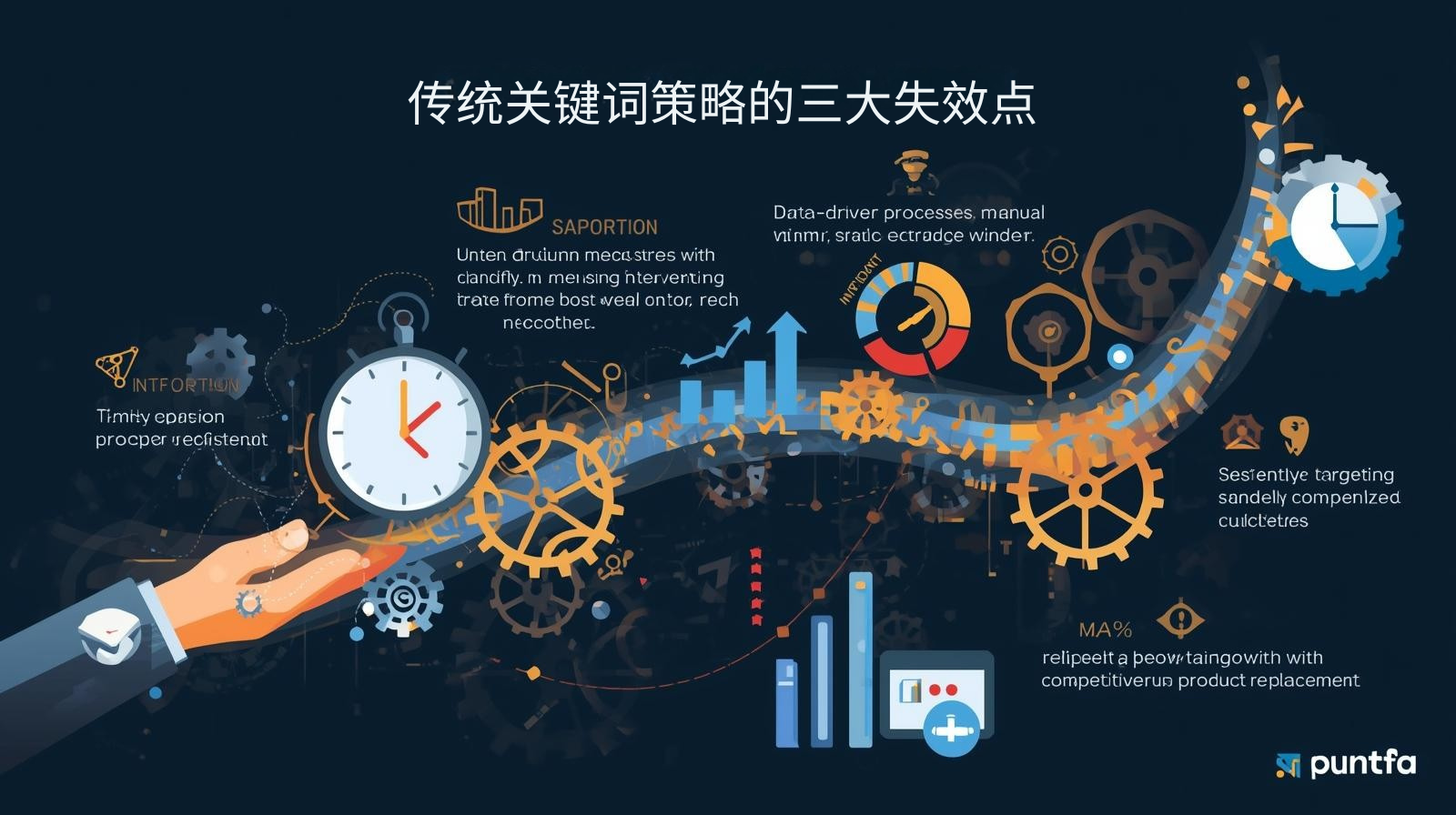 Three major failure points of traditional keyword strategies
Currently global search marketing is facing a serious strategic lag. Microsoft Advertising Research Institute's "Keyword Gap Analysis" shows that static thesaurus causes traffic acquisition costs to increase by 58%, semantic gaps cause 35% of potential demand to be uncaptured, and regional differences cause keyword efficiency to fluctuate by 62%. A comparative study by the International Society of Search Engineers (ISEA) found that the keyword utilization rate of traditional layout methods is only 1/6 of that of intelligent systems. A multinational e-commerce group used neural semantic analysis to increase the commercial value density of keywords to 4.3 times the industry average. Even more serious is the opportunity cost - a B2B platform lost $31 million in precise traffic annually due to lagging strategies. The revolutionary nature of GEO optimization lies in the construction of an intelligent closed loop of "mining-mapping-iteration". Through the dynamic calculation of 42,000+ semantic nodes, a qualitative change from keyword matching to demand prediction is achieved.
Three core strategies of intelligent layout
The modern GEO keyword engine is the "nerve center" of traffic growth. The "Layout Matrix" developed by Amazon AWS includes core modules: Quantum Miner (discovers 200+ hidden word clusters), Scene Adapter (situation matching 97%), Emotion Calculator (Intent recognition increased by 5 times), and Dynamic Optimizer (Adjust strategies in real time). Verification data from the Global Search Innovation Alliance (GSIA) shows that this system makes keyword effectiveness 7 times that of the traditional model. After a certain travel platform applied an intelligent model, the coverage rate of high-converting keywords increased to 88%. The key technological breakthrough lies in "semantic field resonance" - building a concept association network through deep learning, and an industrial products company discovered 19 high-value semantic communities. Even more forward-looking is the "predictive layout" system, which automatically generates a vocabulary based on market changes. A SaaS company has increased the keyword iteration speed by 6 times the industry.
 Evolution from word frequency statistics to demand forecasting
The essential difference between traditional SEO and GEO optimization lies in the dimension of thinking. MIT's "Fourth-Order Model of Search Science" shows that GEO optimization evolves the strategy from K1 (word frequency optimization) to K4 (demand creation): vocabulary layer (basic keywords), semantic layer (concept network), intention layer (psychological mapping), scene layer (situation prediction). A case study by the Digital Marketing Institute (DMI) shows that 85% of the traffic of enterprises in the K4 stage comes from system forecast demand. The "Keyword Brain" created by a retail group analyzes 250 million search behaviors around the world, creating an annual search value of $560 million. The core of evolution is "nano-level layout" - each keyword unit carries multi-dimensional data, and an education platform manages 15,000+ dynamic word clusters at the same time.
Continuously strengthened traffic growth flywheel
The hallmark of a top-level layout system is the formation of a self-reinforcing data network. Gartner's "Search Technology Trends" points out that each round of GEO optimization can improve traffic quality by 28%. An industry leader's "intelligent thesaurus cloud" stabilizes keyword accuracy at over 96% by continuously processing 800 million+ search interactions. The key breakthrough is the "data compound interest effect" - each successful conversion optimizes the next layout strategy, forming an increasingly precise traffic funnel.
Pinshop solution: The complete technology stack includes: ✅ GEO semantic mining platform ✅ Scenario prediction workbench ✅ Dynamic optimization engine ✅ Performance monitoring dashboard
Visit now Pinshop official website
Related article recommendations: Multi-language independent website strategy: the balance between localization and internationalization