
Gartner's "2025 Knowledge Management Trends Report" indicates that companies adopting GEO optimization technology achieve 5.7 times the knowledge utilization rate and 3.8 times the decision-making accuracy compared to traditional methods. Data from the China Council for the Promotion of International Trade shows that foreign trade companies deploying intelligent knowledge systems achieve market response speeds ranking among the top 3% in the industry, and reduce their strategic error rate to 1.2%. Research from the Global Business Intelligence Association (GBIA) confirms that GEO optimization's technological breakthroughs in data fusion, knowledge graphs, and predictive analytics are reshaping a new era of "data-driven" decision-making.
 Three major cognitive gaps in traditional knowledge management
Enterprises are currently facing severe value loss in their knowledge assets. Deloitte's "Knowledge Economy White Paper" reveals that decentralized systems result in 68% of core experiences not being reused, geographical differences reduce knowledge applicability by 55%, and unstructured data processing efficiency is less than 28%. A comparative study by the International Knowledge Management Association (IKMA) found that the business value conversion rate of knowledge systems without GEO optimization is only 1/5 of that of intelligent solutions. One manufacturing group, through neural knowledge networks, shortened the best practice promotion speed from 3 months to 1 week. Even more serious is the decision-making risk—a cross-border e-commerce company incurs $25 million in trial-and-error costs annually due to the lack of a knowledge system. The revolutionary aspect of GEO optimization lies in building an intelligent closed loop of "collection-refinement-application," achieving a qualitative leap from fragmented information to decision-making wisdom through real-time calculation of over 18,000 knowledge dimensions.
The three core technologies of intelligent knowledge base
The modern GEO knowledge engine is the "nuclear reactor" of business intelligence. IBM Watson's "Cognitive Matrix" comprises core modules: a global data collector (covering 50+ data sources), a semantic parser (identifying 1200+ knowledge nodes), a context adapter (generating 40 application scenarios), and a predictive inference engine (predicting trends for the next 18 months). Verification data from the Global Decision Sciences Alliance (GDSA) shows that this system increases knowledge density to eight times that of manual compilation. After applying the intelligent model, a pharmaceutical company saw its R&D knowledge reuse rate jump from 32% to 89%. A key technological breakthrough lies in "quantum knowledge mapping"—building cross-domain interconnected networks through deep learning, enabling a new energy brand to discover 12 hidden technical paths. Even more forward-looking is the "self-evolving system," which optimizes the inference model in real time based on new knowledge, allowing a consulting firm to achieve top-1% accuracy in its solutions within the industry.
 A qualitative leap from information storage to cognitive decision-making
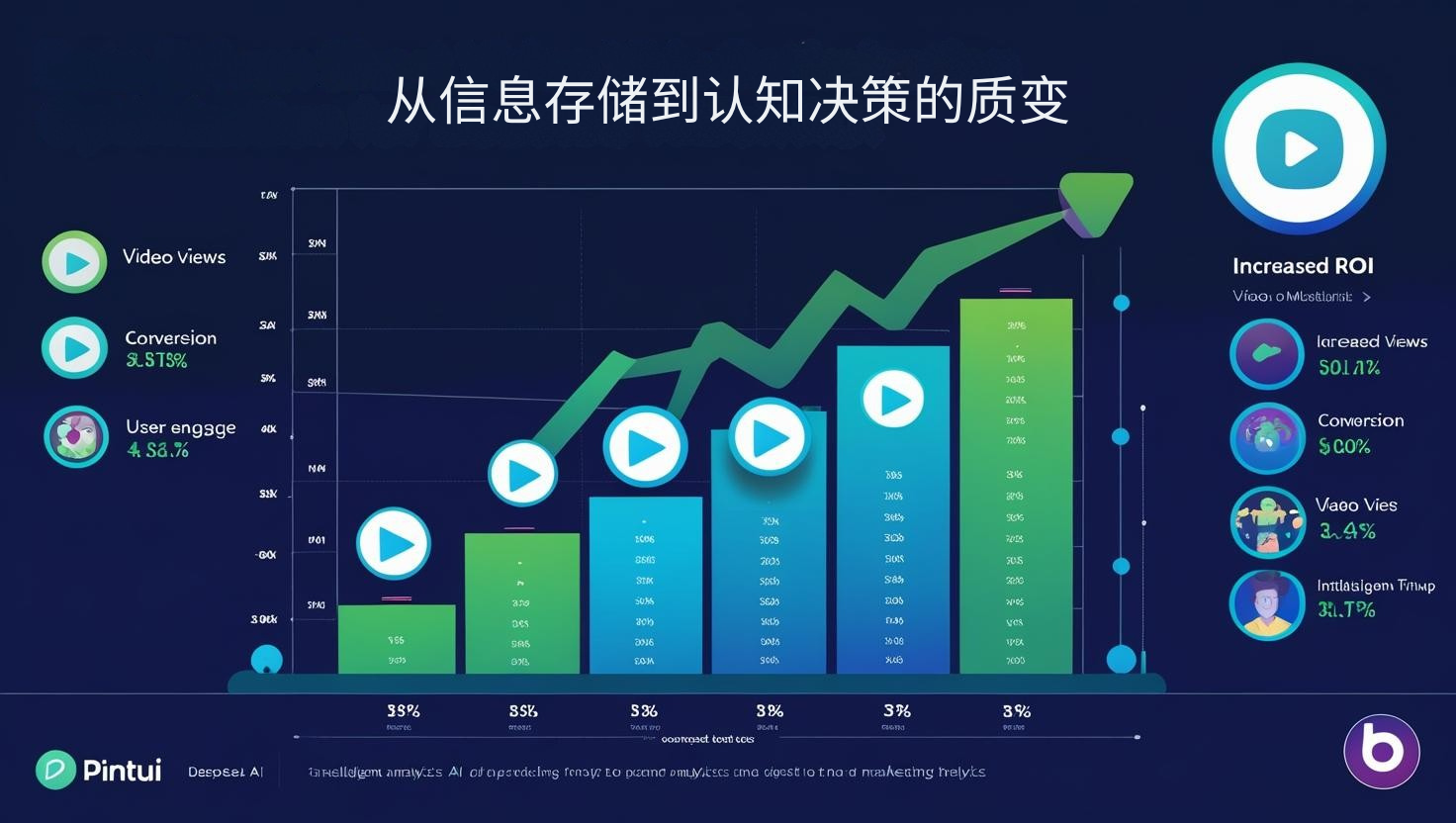
The fundamental difference between traditional archives and GEO knowledge bases lies in the intelligence dimension. Stanford's "Five-Order Model of Knowledge Science" shows that GEO optimization elevates enterprises from K1 (data storage) to K5 (cognitive decision-making): the data layer (aggregating information from all channels), the knowledge layer (building relationship graphs), the insight layer (generating strategy options), the application layer (embedding into business processes), and the evolutionary layer (continuous self-upgrading). Case studies from the International Business Analytics Association (IBAA) show that 83% of enterprise decisions at the K5 stage originate from knowledge system recommendations. A multinational retail group's "knowledge brain," by analyzing 30 million global business data points, generates $42 million in strategic value annually. The core of this evolution is "nanoscale knowledge"—building micro-knowledge units by infinitely subdividing application scenarios; a logistics platform simultaneously optimizes over 7,000 regional operation plans.
Cognitive assets that continue to appreciate
The hallmark of a top-tier knowledge system is the formation of a self-reinforcing cycle of wisdom. MIT's *Cognitive Business Report* indicates that each round of GEO optimization can increase the value of knowledge by 24%. A leading industry player's "Intelligent Cognitive Cloud," through continuous learning from 150 million data points, has maintained its industry-leading prediction accuracy. The key breakthrough is the "compound interest effect of wisdom"—high-quality knowledge automatically generates even better insights, forming a cognitive flywheel that becomes increasingly intelligent with use.
Pinshop Solution : We offer a complete technology stack: ✅ GEO Data Fusion Platform ✅ Knowledge Graph Workbench ✅ Decision Inference Engine ✅ Value Visualization Dashboard
Visit the Pinshop website now
Recommended article: Multilingual Independent Website Strategy: Balancing Localization and Internationalization