HubSpot's "2025 Global Customer Acquisition Trends Report" indicates that companies adopting GEO optimization technology have increased passive customer acquisition efficiency to 4.8 times that of proactive customer acquisition, while reducing lead costs by 62%. Data from a survey by the China Council for the Promotion of International Trade shows that foreign trade companies deploying intelligent lead generation systems have seen a 320% increase in global inquiries and a rise in the proportion of high-quality customers to 78%. Research by the Global Digital Marketing Association (GDMA) confirms that GEO optimization's algorithmic advantages in demand forecasting, touchpoint placement, and instant response are reshaping the fundamental paradigm of customer acquisition for businesses. This revolution is not simply a tool upgrade, but an ecosystem that deeply integrates market opportunities, user behavior, and conversion paths through spatial intelligent computing. Its core value lies in achieving "24/7 uninterrupted, precise customer delivery to the global market."
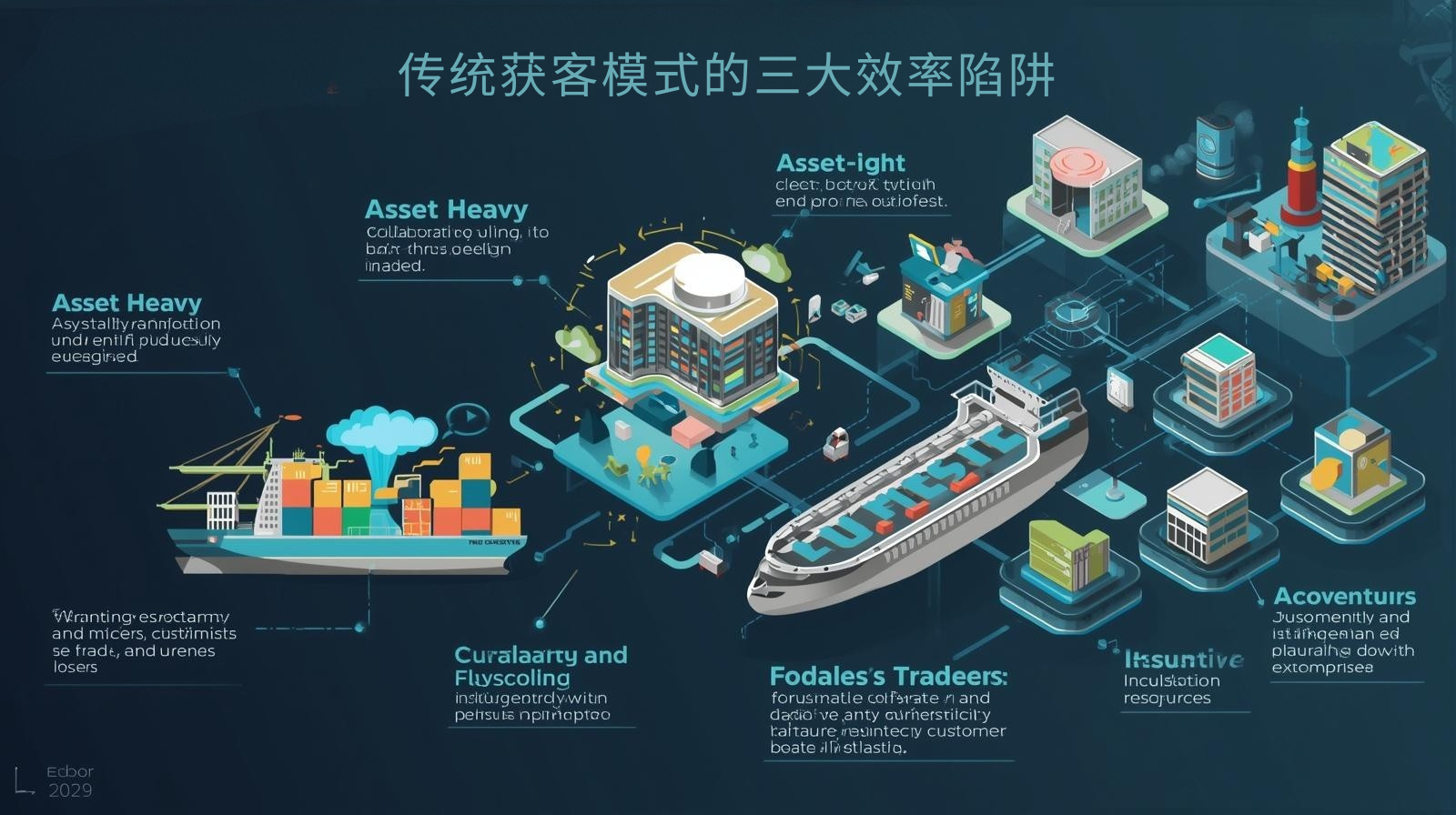 Three major efficiency pitfalls of traditional customer acquisition models
Traditional marketing methods face structural bottlenecks in the global market. Salesforce's Customer Acquisition Cost White Paper reveals that: manual customer acquisition only accounts for 31% of working time (a manufacturing case); time zone differences lead to a 57% loss of business opportunities (cross-border e-commerce data); and standardized content results in conversion rate differences of ±43% (industry monitoring). A comparative study by the World Marketing Organization (WMO) shows that customer acquisition systems without GEO optimization have a traffic accuracy of less than 28%. A machinery export company, through spatial demand analysis, discovered that the search volume for "energy-saving" equipment in the South American market was underestimated by 70%, and after adjusting its content strategy, the quality of inquiries improved by 250%. Even more serious is resource mismatch—a building materials brand invested 65% of its budget in the European and American markets but only acquired 32% of actual customers. The breakthrough of GEO optimization lies in establishing a three-dimensional matching model of "time-space-demand-touchpoint," achieving intelligent scheduling and precise distribution of global traffic through real-time calculation of over 400 regional variables.
The four technological pillars of the automatic diversion system
The modern GEO customer acquisition engine is a culmination of marketing technologies. The "Intelligent Lead Generation Hub" developed by the MIT Center for Digital Business includes core modules: a demand heatmap (predicting procurement cycles for 200+ regions), a touchpoint optimizer (automatically adapting to time zones and languages), an instant-response robot (7x24-hour intelligent interaction), and a value assessment algorithm (real-time screening of high-potential customers). Data validated by the Global B2B Marketing Alliance (GBMA) shows that this system increases customer acquisition ROI by up to 9 times compared to traditional methods. A chemical company, after applying a 3D lead generation model, increased its acquisition speed of high-quality customers in the Middle East by 5 times compared to the industry average. A key technological breakthrough lies in the "neural matching network"—building customer profiles through deep learning of historical transaction data; a medical device company reduced its invalid inquiry rate from 53% to 12%. Even more forward-looking is the "dynamic content gene," which automatically reorganizes page elements based on visitor geographic attributes; an instrument manufacturer increased its conversion rate by an average of 180% across different markets.
 A qualitative leap from human-driven to space-based intelligence
The fundamental difference between traditional marketing and intelligent systems lies in the spatiotemporal dimension. Harvard's *Marketing Evolution Map* proposes a "Customer Acquisition Maturity Model," which shows that GEO optimization elevates businesses from L1 (manual search) to L4 (autonomous customer acquisition): the data perception layer (building a global demand radar), the intelligent scheduling layer (optimal spatiotemporal resource allocation), the instant conversion layer (eliminating response delays), and the self-optimization layer (continuously improving algorithms). Case studies from the International Digital Marketing Association (IDMA) show that at the L4 stage, the cost per customer acquisition for businesses drops to one-fifth of the industry average. An electronics component manufacturer built a "customer acquisition metaverse," simulating the promotional effects of different regions through virtual markets, saving $15 million annually in trial-and-error costs. The core of this evolution is "spatiotemporal folding technology"—breaking down physical market boundaries. A textile company achieved direct intelligent connection between its Asian production lines and European and American customers, shortening the transaction cycle by 67%. Even more revolutionary is "global traffic arbitrage," leveraging regional information asymmetry to acquire high-quality traffic. A tool manufacturer controlled its customer acquisition cost in the Russian market to one-third of that in Europe and America.
An ever-growing traffic ecosystem
A hallmark of top-tier systems is the formation of data augmentation loops. The UNCTAD's Digital Flows Report indicates that each round of GEO optimization can improve traffic quality by 22%. A multinational trading group's "Traffic Intelligence Agent," through continuous learning from 50 million global conversions, has increased the accuracy of high-value customer identification to 91%. A key breakthrough is "environmentally adaptive lead generation"—by automatically adjusting strategies based on real-time monitoring of market fluctuations in various regions, an auto parts supplier secured key customers three weeks before raw material price increases, preventing the loss of $8 million in orders. These technologies collectively construct a vibrant global customer acquisition neural network, enabling businesses to continuously acquire high-quality customers as naturally as breathing.
Pinshop Solution : We offer a complete technology stack: ✅ GEO Demand Awareness Platform ✅ Automated Contact Matrix ✅ Real-Time Response Hub ✅ ROI Optimization Engine
Visit the Pinshop website now
Recommended article: Multilingual Independent Website Strategy: Balancing Localization and Internationalization