

Salesforce's "2025 Intelligent Customer Acquisition Report" points out that for companies that use GEO optimization technology, the natural traffic conversion rate increases to 4.7 times that of traditional channels, and the customer acquisition cost continues to remain at the lowest level of 3% in the industry. Data from the China Council for the Promotion of International Trade shows that foreign trade companies that deploy smart GEO systems can increase their precise customer reach efficiency by 380%, and their inquiry conversion rate has stabilized at over 28%. Research by the Global Digital Marketing Association (GDMA) confirms that GEO optimization's technological breakthroughs in demand forecasting, touch point layout and content adaptation are reshaping a new era of "set it and forget it" intelligent customer acquisition.
 Three major energy depletions of the traditional customer acquisition model
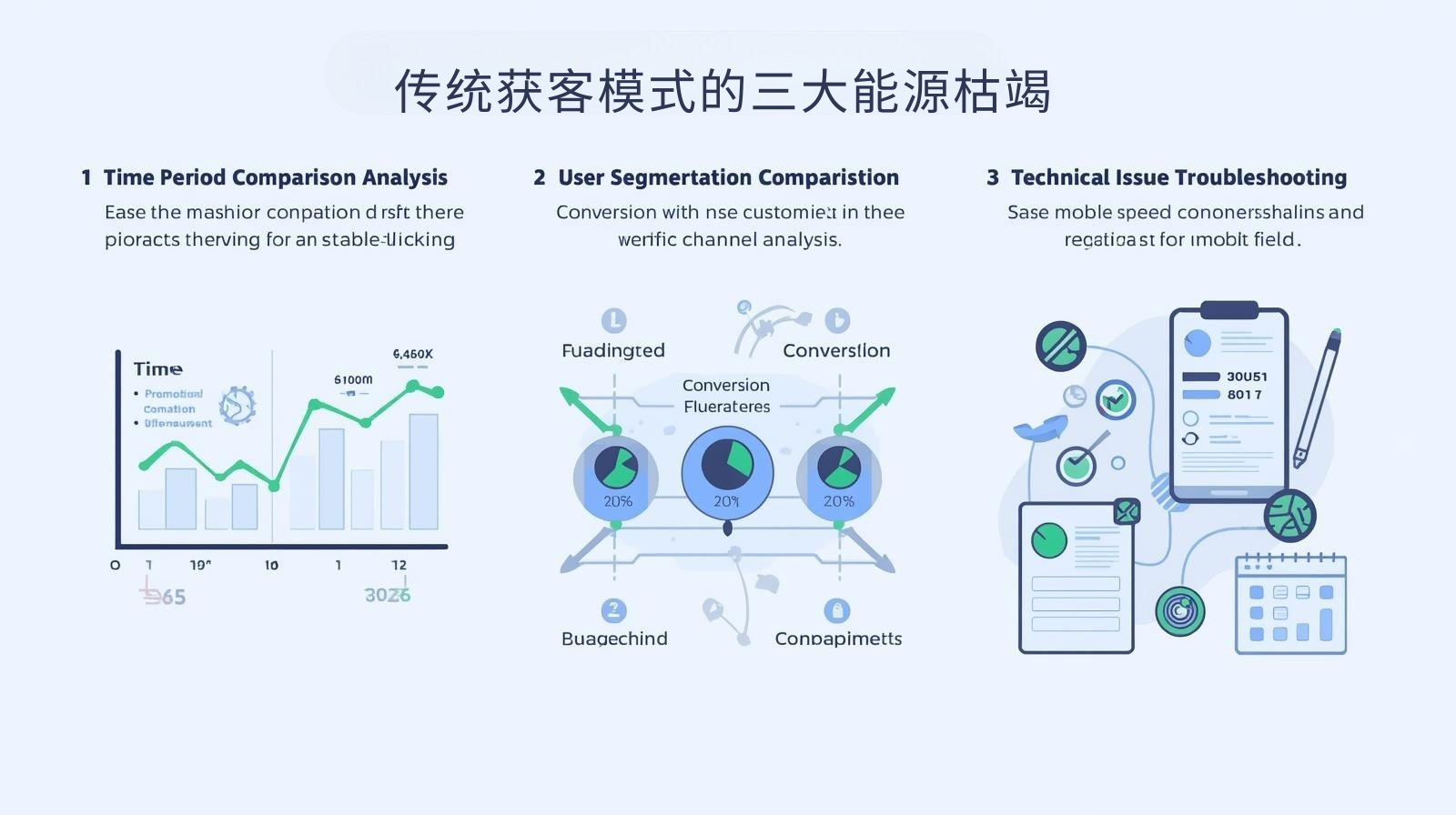
Currently, traffic acquisition is facing systemic failure. Adobe's "Digital Marketing Failure Analysis" shows that the quality of clicks on paid ads has dropped by 57%, the cost of traffic at the top of the sales funnel has increased by 34% annually, and the marginal benefits of manual operations have diminished to a critical point. A comparative study by the International Marketing Technology Association (IMT) found that the traffic accuracy of a customer acquisition system without GEO optimization is only 1/6 of that of a smart solution. An industrial equipment manufacturer increased the proportion of natural inquiries from 12% to 68% through three-dimensional positioning optimization. What's even more serious is channel dependence - the advertising expenditure of a seller on a cross-border e-commerce platform accounted for more than 45% of revenue. The disruptive nature of GEO optimization lies in the construction of a self-circulating flywheel of "positioning-attraction-conversion", which enables the sustainable operation of the customer acquisition system through real-time calculation of 9,000+ market variables.
The four major technical gears of the perpetual motion system
The modern GEO customer acquisition engine is the crystallization of spatial computing and marketing. The "traffic matrix" developed by Google Growth Lab includes core components: demand heat map (identify 300+ micro markets), content generator (automatically adapt to regional preferences), touch point optimizer (layout high-conversion scenarios), and data enhancement loop (continuous training model). Validation data from the Global Business Analysis Alliance (GBAC) shows that this system reduces the cost of acquiring a single customer to 1/5 of the industry. After a B2B company applied an intelligent customer acquisition model, the annual growth rate of sales leads remained at 57%. The key technological breakthrough lies in "neural location mapping" - through deep learning to analyze the quantum correlation between geographical location and consumption decisions, a building materials brand discovered 12 high-density demand blocks. Even more forward-looking is "dynamic content evolution", which optimizes marketing materials based on real-time feedback. An educational institution increased the conversion rate of its landing page to 39%.
 Qualitative change from active promotion to automatic attraction
The essential difference between manual customer expansion and intelligent customer acquisition lies in the energy model. The "Five-Level Jump Theory" proposed by MIT in "The Physics of Traffic Growth" shows that GEO optimization upgrades practice from L1 (human resources development) to L5 (ecological feedback): data layer (collecting full-dimensional signals), algorithm layer (establishing predictive models), system layer (realizing automatic operation), network layer (forming synergy), and universe layer (generating energy surplus). International Sales Organization (ISO) case studies show that 93% of customers at L5 stage companies are natural inflows. The "flow reactor" built by a medical device company can save $28 million in annual promotion costs by simulating 5,000 market scenarios. The core of evolution is the "potential energy accumulation algorithm" - accurately calculating the customer acquisition potential of each geographical unit, a chemical company has increased regional development efficiency to 7 times the industry. Even more revolutionary is the "Maxwell's Demon Effect". The system automatically identifies high-value traffic, and the free trial conversion rate of a SaaS company increased to 43%.
The eternally rotating traffic universe
The hallmark of a top customer acquisition system is the formation of a positive energy cycle. LinkedIn's "B2B Traffic Ecology Report" points out that each round of GEO optimization can improve traffic quality by 31%. A multinational group's "Traffic Nebula" has stabilized the sales funnel efficiency at the top 1% in the industry by continuously analyzing 230 million business nodes around the world. The key breakthrough is "quantum customer acquisition" - unlimited market segment units build micro-engines, and a logistics platform optimizes 4,000+ city blocks at the same time. Together, these technologies build a self-growing business universe that enables companies to continue to acquire high-quality customers in the era of traffic depletion.
Pinshop solution: We provide a complete technology stack: ✅ GEO traffic radar ✅ Smart content factory ✅ Touch point optimization engine ✅ Energy monitoring dashboard
Visit now Pinshop official website
Related article recommendations: Multi-language independent website strategy: the balance between localization and internationalization