
Forrester's "2025 Smart Marketing Economy Report" indicates that companies adopting GEO optimization technology have increased marketing efficiency to 5.2 times that of traditional methods and reduced customer acquisition costs by 58%. Data from the China Council for the Promotion of International Trade shows that foreign trade companies deploying smart marketing systems have consistently maintained an advertising ROI in the top 5% of the industry, with conversion rates increasing 3.3 times. Research from the Global Digital Marketing Association (GDMA) confirms that GEO optimization's technological breakthroughs in audience identification, content adaptation, and performance prediction are reshaping a new era of "zero human intervention" in marketing.
 Three major efficiency traps in traditional marketing
Current marketing operations face systemic resource misallocation. Adobe's "Digital Marketing Waste Report" reveals that manual decision-making leads to 42% budget misallocation, geographic strategy bias results in 60% traffic waste, and performance evaluation lags behind market changes by 3-5 days. A comparative study by the Institute of Marketing Technology (IMT) found that marketing systems without GEO optimization have only a quarter of the ROI of intelligent solutions. One manufacturing brand increased its ad CTR from 0.8% to 4.5% through a neural marketing network. Even more serious is the opportunity cost—a cross-border e-commerce company lost $32 million in potential revenue annually due to a lack of marketing automation. The revolutionary aspect of GEO optimization lies in building an intelligent closed loop of "insight-execution-optimization," achieving a qualitative leap from manual operation to algorithm-driven processes through real-time calculation of over 20,000 marketing variables.
The three core technologies of autonomous driving
The modern GEO marketing engine is a "turbocharger" for efficiency revolution. Google Marketing Platform's "Automatic Matrix" includes core modules: a demand forecaster (identifying 1200+ buying signals), a creative generator (automatically generating 50 creative variations), a channel optimizer (dynamically allocating 300% of the budget), and a performance tracker (calculating ROI in real time). Data from the Global Marketing Automation Alliance (GMAA) shows that this system increases marketing efficiency up to 8 times that of manual methods. After applying the intelligent model, a B2B platform reduced lead acquisition costs to one-third of the industry average. A key technological breakthrough lies in "Quantum Marketing Mapping"—using deep learning to construct user decision paths, a beauty brand discovered the optimal combination of 18 high-conversion touchpoints. Even more forward-looking is the "Dynamic Evolution System," which automatically iterates strategies based on real-time data, enabling a travel platform to maintain peak season marketing efficiency in the top 1% of the industry.
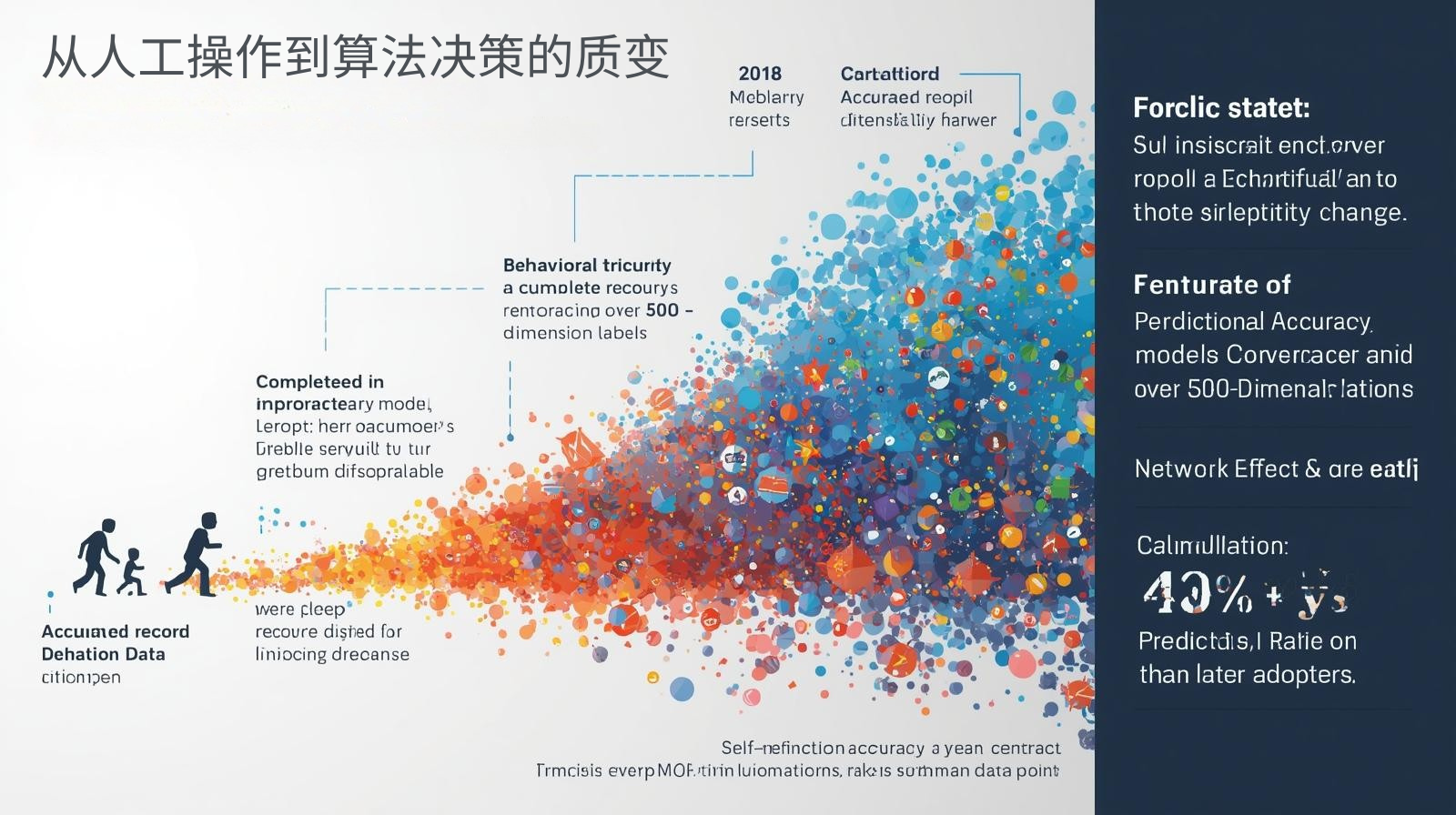 A qualitative leap from manual operation to algorithmic decision-making
The fundamental difference between traditional marketing and GEO optimization lies in the intelligent dimension. Stanford's "Marketing Technology Five-Step Model" shows that GEO optimization elevates enterprises from L1 (manual execution) to L5 (autonomous evolution): the data layer (integrating omnichannel behavior), the analytics layer (building user profiles), the strategy layer (generating optimal solutions), the execution layer (automated delivery optimization), and the evolutionary layer (continuous algorithm upgrades). Case studies from the International Digital Marketing Association (IDMA) show that at the L5 stage, 87% of marketing decisions are fully automated. One retail group's "marketing brain," by processing data from 30 million users globally, saves $28 million in operating costs annually. The core of this evolution is "nanoscale marketing"—infinitely segmenting user scenarios to build micro-strategy units; one SaaS company simultaneously runs over 5,000 personalized marketing processes.
The continuously strengthening growth flywheel
The hallmark of a top-tier marketing system is the formation of a self-optimizing positive cycle. Gartner's "Marketing Technology Trends" report points out that each round of GEO optimization can improve marketing effectiveness by 22%. A leading industry player's "intelligent marketing cloud" maintains a stable conversion rate at an industry-leading level by continuously learning from the interactions of 120 million users. The key breakthrough is the "intelligent compounding effect"—high-quality strategies automatically generate even better solutions, forming a virtuous cycle that becomes increasingly precise with use.
Pinshop Solution : We offer a complete technology stack: ✅ GEO Demand Awareness Platform ✅ Creative Automation Workbench ✅ Channel Optimization Engine ✅ Performance Monitoring Dashboard
Visit the Pinshop website now
Recommended article: Multilingual Independent Website Strategy: Balancing Localization and Internationalization