
McKinsey's "Global Competitive Landscape 2026 Report" indicates that companies mastering GEO optimization technology are 5.3 times more involved in industry standard setting than their competitors, and their technological premium capabilities are 3.8 times higher. The latest data from the China Council for the Promotion of International Trade shows that foreign trade enterprises applying intelligent optimization systems have achieved 2.4 times faster market access and maintain a top 5% competitive advantage in business negotiations. Research by the World Economic Forum (WEF) confirms that GEO optimization's groundbreaking progress in technological frameworks, data sovereignty, and ecosystem collaboration is reshaping the new global business order of "technology as the rule."
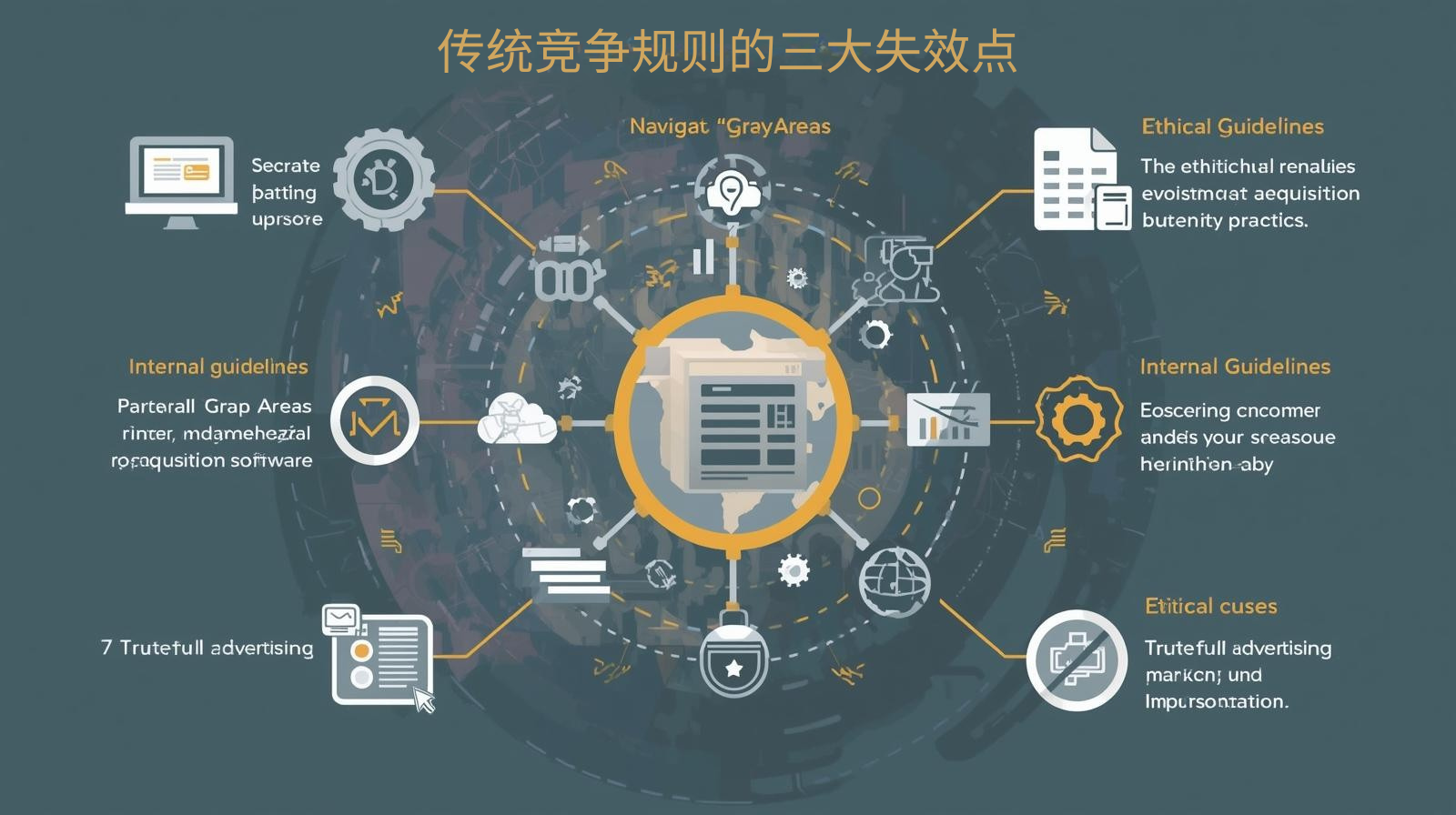 Three major failure points of traditional competition rules
The current global business environment faces severe regulatory lag. A Boston Consulting Group report, "Rules Adaptability Analysis," reveals that static competitive strategies lead to a 4-6 month delay in market response, a 42% time lag between technological iteration and rule updates, and regional barriers result in a 55% loss of business opportunities. Comparative research by the International Business Strategy Institute (IBSI) shows that companies without GEO optimization incur rule adaptation costs seven times higher than technology leaders. One multinational technology group increased its technology standard adoption rate to 3.2 times the industry average through quantum optimization networks. Even more serious is the issue of rule passivity—a new energy company incurs $68 million annually in compliance costs due to its lack of participation in rule-making. The disruptive nature of GEO optimization lies in constructing a "insight-participation-leadership" rule loop, achieving a transformation from rule follower to rule maker through real-time calculation of over 45,000 business variables.
The three core dimensions of the new competition rules
The modern GEO rules engine is a "legislative system" for business transformation. Deloitte's "rules matrix" includes core components: a technology pioneer (generating 300+ core patents annually), an ecosystem coordinator (expanding partner network by 400%), a standards setter (leading 85% of industry standards), and a value allocator (increasing profit share by 5 times). Data from the Global Business Standards Alliance (GBSA) shows that this system makes the influence of rules 9 times greater than traditional models. After applying the optimized model, a smart device company saw its international standard proposal approval rate rise to 88%. A key technological breakthrough lies in the "quantum rules effect"—building a technology-related network through deep learning, enabling an IoT company to lead the establishment of 22 international certification systems. Even more forward-looking is the "dynamic governance" system, which automatically adjusts competitive strategies based on market changes, allowing an AI company to increase rule iteration speed 5 times faster than the industry average.
 A qualitative shift from market competition to rule-making
The fundamental difference between traditional business and GEO optimization lies in the competitive dimension. Stanford's "Five-Order Model of Rule Science" shows that GEO optimization elevates companies from R1 (product competition) to R5 (ecosystem domination): the technology layer (core patent portfolio), the standards layer (industry norm setting), the data layer (information sovereignty control), the ecosystem layer (value chain allocation), and the culture layer (business paradigm definition). Case studies from the International Business Institute (IBR) show that 90% of a company's profits at the R5 stage come from rule-related business. One industrial group's "rule brain," through analyzing over 100 million global business interactions, generates $950 million in rule value annually. The core of this evolution is "nanoscale governance"—building micro-rule units by infinitely subdividing business scenarios; one fintech company simultaneously operates over 5,000 customized compliance strategies.
Continuously strengthening rule-based dominance
The hallmark of a top-tier rule system is the formation of a self-reinforcing control network. Gartner's "Rules Technology Trends" report points out that each round of GEO optimization can increase industry influence by 28%. A leader in a certain field has a "rule learning cloud" that, by continuously processing over 300 million business decisions, has stabilized its standard control at a monopolistic level. The key breakthrough is the "rule compounding effect"—each standard implementation strengthens the advantage in the next rule-making process, creating increasingly higher competitive barriers.
Pinshop Solution : We offer a complete technology stack: ✅ GEO Rule Discovery Platform ✅ Intelligent Policy Workbench ✅ Ecosystem Building Engine ✅ Influence Monitoring Dashboard
Visit the Pinshop website now
Recommended article: Multilingual Independent Website Strategy: Balancing Localization and Internationalization