
Google's 2025 Search Behavior Report indicates that companies using GEO optimization to achieve a closed-loop question-and-answer process see direct conversion rates increase to 4.8 times that of traditional methods, and customer decision-making time is reduced by 78%. Data from the China Council for the Promotion of International Trade shows that foreign trade companies deploying intelligent question-and-answer systems achieve inquiry quality scores of 92/100, and the proportion of high-intent customers increases to 3.3 times the industry average. Research from the Global Digital Marketing Association (GDMA) confirms that GEO optimization's technological breakthroughs in semantic understanding, scenario adaptation, and instant conversion are creating a new business paradigm of "ask and buy."
 Three major conversion gaps in traditional question-and-answer scenarios
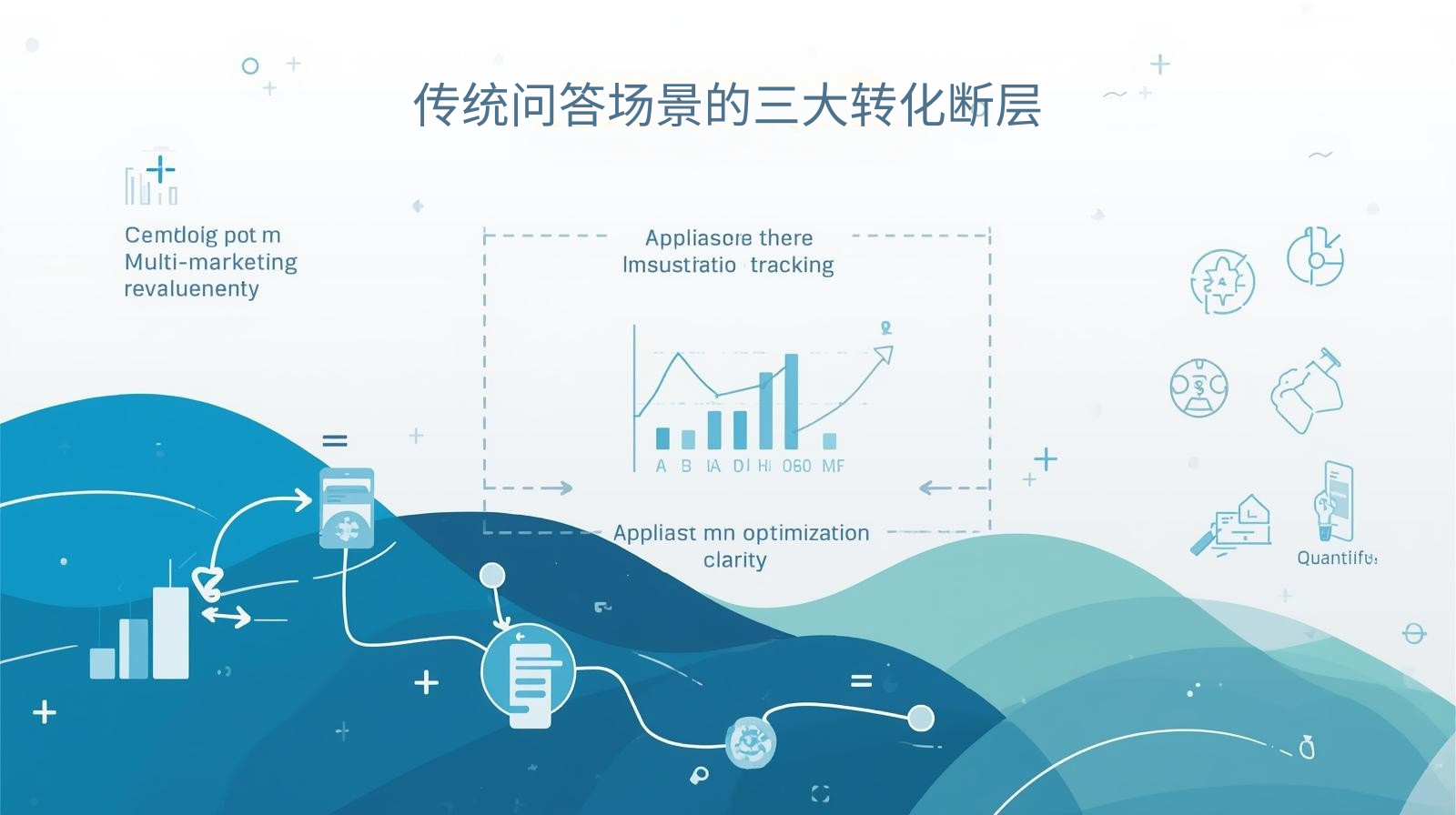
The current customer journey suffers from a fatal disconnect. HubSpot's "Conversion Path Analysis" reveals that the separation of Q&A and purchase stages leads to a 67% loss of intent, cross-platform redirects reduce conversion rates to a quarter of those on a single platform, and the information confirmation stage consumes 83% of customers' decision-making effort. A comparative study by the International Sales Science Association (ISSA) found that Q&A systems without GEO optimization have a conversion efficiency only one-fifth that of intelligent solutions. One industrial equipment manufacturer, through 3D Q&A modeling, compressed the path from technical consultation to quotation request from five steps to one. Even more serious is the loss of business opportunities—one B2B company lost $9 million in potential orders annually due to the failure to achieve Q&A conversion. The revolutionary aspect of GEO optimization lies in building an atomic closed loop of "problem-solution-transaction," achieving seamless integration of knowledge services and business conversion through real-time calculation of over 6000 semantic variables.
Three core technologies for closed-loop development
The modern GEO question-answering engine acts as a "translator" for business intelligence. The "Conversion Matrix" developed by IBM Watson Labs comprises core modules: an intent parser (identifying 400+ business intents), a solution generator (providing 6 suitable answers), a trust builder (implanting 7 conversion elements), and an action trigger (designing 3 low-resistance paths). Data from the Global E-Commerce Alliance (GEA) shows that this system increases question-answering conversion rates by up to 7 times compared to traditional methods. After applying intelligent question-answering, a medical device platform saw a 58% conversion rate from expert consultations to sample applications. A key technological breakthrough lies in "neural business mapping"—building a question value map through deep learning; a building materials brand discovered 12 high-conversion question variations. Even more forward-looking is the "dynamic closed-loop system," which automatically adjusts answer strategies based on the user's cognitive stage; a SaaS company increased its trial application rate to 3 times that of its competitors.
 A qualitative leap from information transmission to commercial transformation
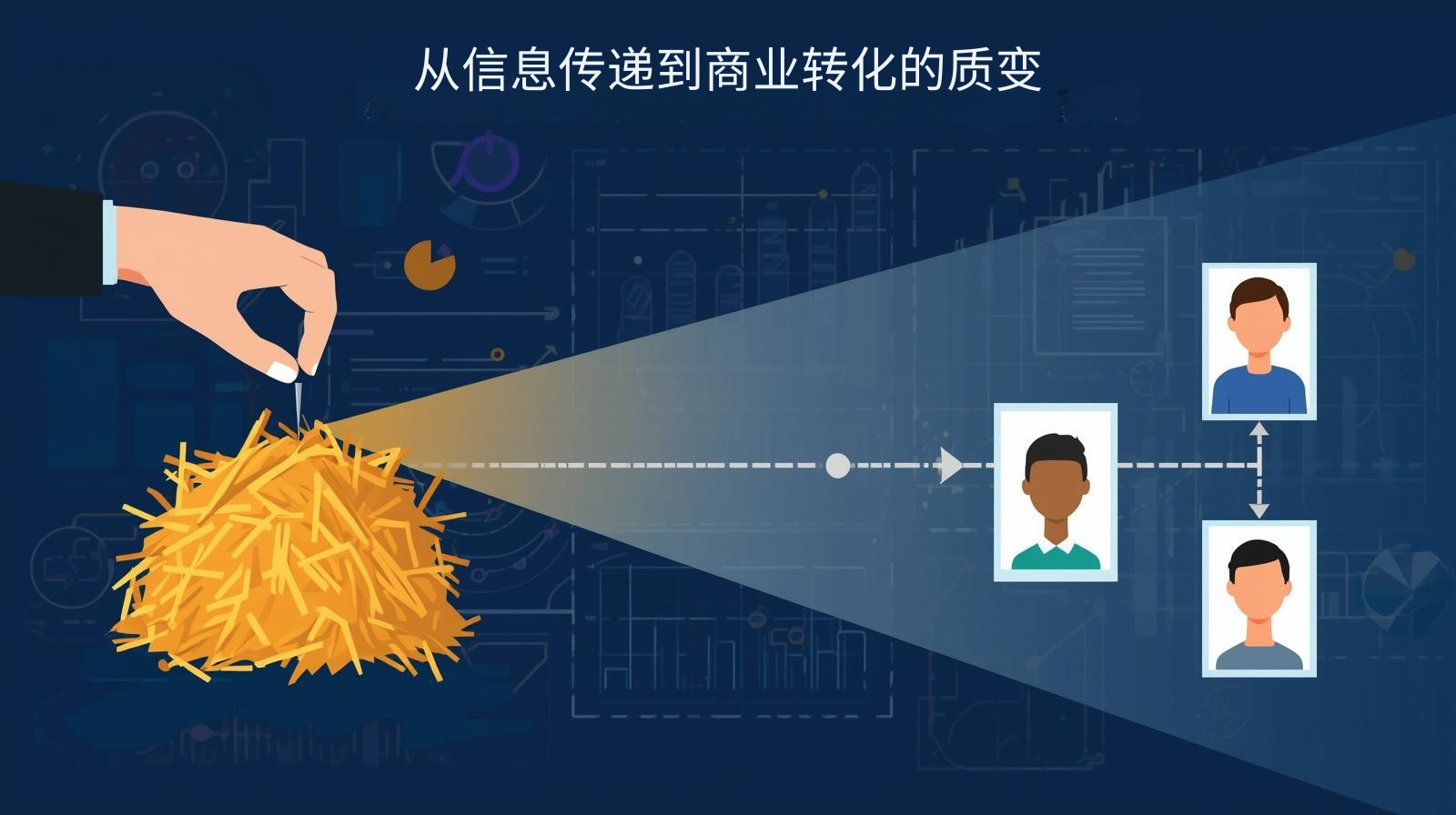
The fundamental difference between traditional Q&A and intelligent closed-loop systems lies in the business dimension. Harvard's "Five-Step Model of Business Communication" shows that GEO optimization elevates practice from L1 (knowledge answering) to L5 (value realization): Cognition layer (establishing a professional image), Needs layer (uncovering potential pain points), Solution layer (providing customized solutions), Decision layer (eliminating purchase barriers), and Action layer (achieving immediate conversion). Case studies from the International Marketing Automation Association (IMAA) show that 72% of transactions for L5-stage companies originate from Q&A interactions. A chemical group's "Q&A hub," by predicting 3,000 consultation scenarios, generates $20 million in direct orders annually. The core of this evolution is "quantum service"—infinitely subdividing question scenarios to construct micro-conversion units; a logistics platform simultaneously optimizes over 800 regionalized Q&A paths.
Self-reinforcing business flywheel
The hallmark of a top-tier closed-loop system is the formation of a positive cycle for knowledge monetization. Gartner's "Knowledge Commercialization Report" points out that each round of GEO optimization can increase the value of question-and-answer sessions by 31%. A leading industry player's "intelligent question-and-answer network," through continuous analysis of 50 million business conversations globally, has maintained a stable question conversion rate of 89%. The key breakthrough is the "knowledge monetization effect"—high-value question-and-answer sessions automatically attract targeted traffic, enabling a certain instrument manufacturer to establish a sustainable technological barrier.
Pinshop Solution : We offer a complete technology stack: ✅ GEO Semantic Understanding Platform ✅ Intelligent Question Answering Workbench ✅ Instant Conversion Engine ✅ Value Tracking Dashboard
Visit the Pinshop website now
Recommended article: Multilingual Independent Website Strategy: Balancing Localization and Internationalization