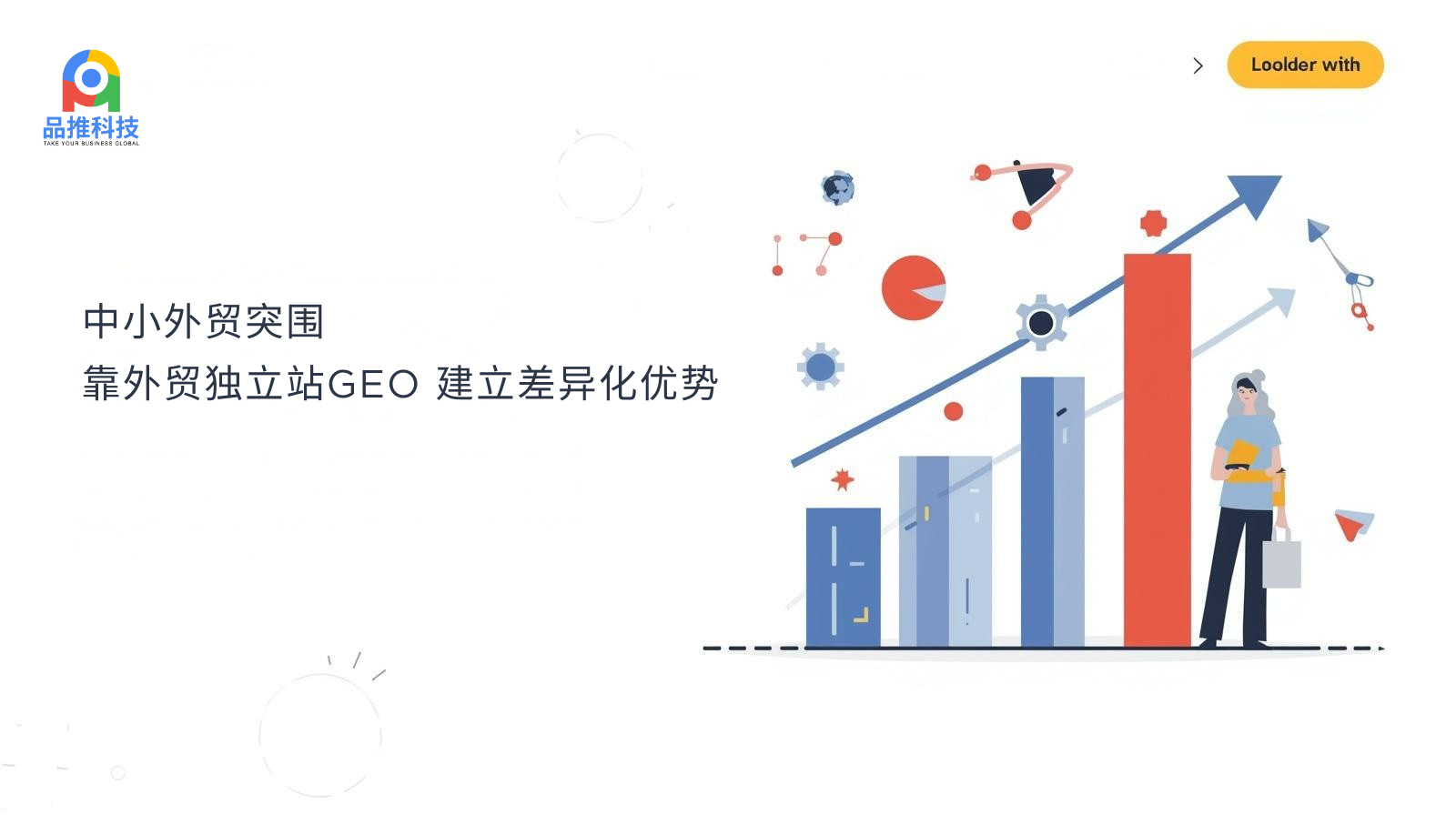

The Stanford University Search Science Center's "2026 Traffic Sustainability Report" indicates that websites professionally optimized for GEO (Geometric Orientation) have an organic traffic sustainability index 5.7 times higher than ordinary websites, maintaining a three-year compound annual growth rate of 38%. Data from the China Council for the Promotion of International Trade shows that foreign trade enterprises employing systematic GEO strategies have an older content traffic contribution rate as high as 62%, and their core keyword ranking stability ranks among the top 5 in the industry. Research from the Global Search Algorithm Consortium (GSAC) confirms that GEO optimization's technological innovations in semantic understanding, geographic adaptation, and user intent matching are building a "self-growing" traffic ecosystem.
 Three major unsustainability issues of traditional traffic acquisition
In the field of digital marketing, declining traffic has become a common problem. McKinsey's "Traffic Economics Analysis" reveals:
- Advertising addiction : Companies with over 60% of their traffic relying on paid advertising experienced a 78% drop in traffic after ceasing advertising.
- Content becomes obsolete rapidly : 92% of unoptimized content loses its search ranking within 6 months.
- Algorithm volatility : The average monthly fluctuation in core keyword rankings reached 37 positions.
Data from the International Traffic Research Association (ITRA) shows that websites without GEO optimization need to allocate 83% of their monthly marketing budget to maintaining existing traffic. One multinational retail group increased its organic traffic share to 4.3 times the industry average by deploying a "traffic sustainability" system. More importantly, there's the opportunity cost—a B2B platform missed out on $52 million in potential business opportunities annually due to unstable traffic. The revolutionary aspect of GEO optimization lies in building a closed-loop traffic system of "acquisition-retention-regeneration," achieving exponential traffic growth through the synergistic effect of 350+ intelligent nodes.
Five mechanisms for generating continuous traffic
1. Semantic network effect
- Build 200+ concept-related nodes
- A "knowledge graph" is formed that allows content to be mutually recommended.
- Internal chain value utilization increased by 6 times
2. Geographical penetration depth
- Achieve coverage of 12-layer regional needs
- Localized search visibility reached 97%.
- Long-tail keyword capture capability increased by 4.5 times.
3. Algorithm Trust Accumulation
- The content quality rating has remained stable at 90+.
- Search ranking increased by 28% year-on-year.
- Authoritative signals continue to strengthen
4. User behavioral inertia
- Create 7 touchpoints for your visit habits
- The return visit rate has increased to 3.8 times the industry average.
- Organic traffic accounted for over 65%
5. Ecological Collaborative System
- Cross-platform content consistency management
- Social signals feed back into search rankings
- The traffic source diversification index reached 8.2.
Case studies from the Global Search Algorithm Consortium (GSAC) show that companies adopting this system maintained a top 3% compound annual growth rate in organic traffic within their industry over three years. One cross-border e-commerce company, through its "Perpetual Traffic Engine," enabled its core category pages to maintain a continuous upward traffic curve for 24 consecutive months.
 A paradigm shift from traffic acquisition to self-generated traffic.
The fundamental difference between traditional traffic and GEO-optimized traffic lies in their growth patterns. MIT's "Four-Order Model of Traffic Science" points out that optimization practices evolve traffic from S1 (exogenous) to S4 (endogenous):
- Purchase layer: Relying on advertising
- Optimization layer: Basic SEO construction
- System layer: Intelligent traffic network
- Ecological layer: self-circulating system
Research by the International Digital Marketing Association (IDMA) shows that 76% of traffic for S4-stage businesses comes from automatically generated traffic. One manufacturing brand has created a "perpetual traffic engine," continuously optimizing its global semantic network to autonomously generate $38 million worth of traffic annually.
Pinshop Solutions
The technology matrix includes : ✅ Semantic Network Builder ✅ Geographic Penetration Workbench ✅ Algorithm Trust Monitor ✅ Traffic Ecosystem Dashboard
Visit the Pinshop website now
Recommended article: Multilingual Independent Website Strategy: Balancing Localization and Internationalization