
How to build customer trust through reviews and word of mouth

  • Independent website operation strategy
  • Foreign trade stations
  • Foreign trade website
Posted by 广州品店科技有限公司 On Sep 15 2025

In the cross-border e-commerce and digital sales landscape, establishing an independent website is not only a window for branding but also a core pillar of customer trust. Customer purchasing decisions on independent websites are often significantly influenced by reviews and word-of-mouth. According to data from the China E-Commerce Research Center , over 75% of consumers consult reviews and feedback from other buyers before making cross-border purchases. This means that the trust structure of an independent website is directly related to conversion rates and customer loyalty.

Compared to third-party platforms, independent websites offer greater autonomy and brand-building capabilities. By meticulously managing reviews and word-of-mouth systems, companies can cultivate a professional and credible brand image while effectively preventing negative information from having a long-term impact on sales. In this process, reviews serve not only as a vehicle for user feedback but also as a symbol of digital trust, enhancing potential customers' purchasing confidence through data-driven presentation.
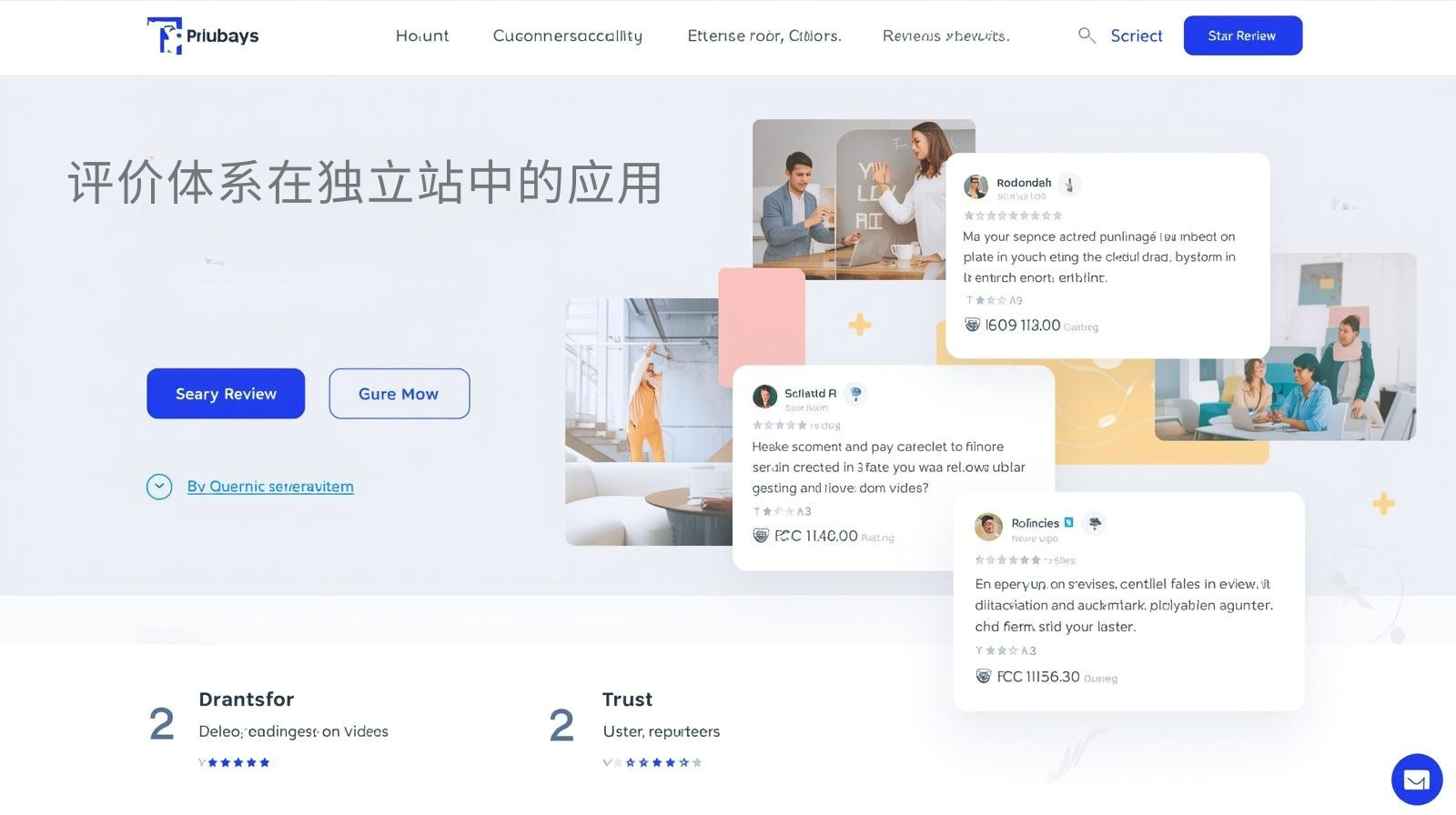
Application of evaluation system in independent stations Application of evaluation system in independent stations

A review system is fundamental to building trust on independent websites. Companies can prominently display user reviews on product pages, including text feedback, ratings, purchase dates, and other information, to foster transparency. Alibaba Research Institute research shows that consumers are more likely to choose products with numerous and detailed reviews before purchasing. This suggests that reviews not only influence trust but also directly drive purchasing behavior.

Companies should ensure that review management is standardized, including preventing fraudulent reviews, ensuring genuine purchasing user participation, and providing diverse display formats on their independent websites, such as images, text, videos, or star ratings. By optimizing review presentation, independent websites not only allow customers to quickly access reliable information but also strengthen the brand's sense of professionalism.

Furthermore, independent websites can leverage intelligent tools for evaluation and analysis, identifying key customer concerns and providing data support for product optimization, after-sales service, and market strategies. This closed-loop management system makes the evaluation system not only a trust tool but also a crucial reference for optimizing business operations.

The strategy and value of word-of-mouth communication

Word-of-mouth communication on independent websites is an accelerator for building trust. Positive reputation on social media and third-party review platforms will in turn drive traffic and conversion rates. According to a report by the China Internet Network Information Center (CNNIC) , over 60% of consumers learn about brand reputation through social media sharing and form purchasing intentions based on this information. Companies can encourage customers to share their purchase experiences through incentive mechanisms or enable simultaneous posting of reviews on their independent websites through social plugins, allowing positive word-of-mouth to automatically amplify brand influence.

At the same time, companies should establish mechanisms to address negative information, demonstrating corporate responsibility and service capabilities by promptly responding to customer feedback and resolving issues. Good word-of-mouth management not only enhances customer trust but also aids search engine optimization (SEO), increasing the weight and visibility of independent websites. Through a systematic word-of-mouth strategy, independent websites can foster a trusted ecosystem through information transparency and social verification, thereby strengthening customer decision-making confidence.
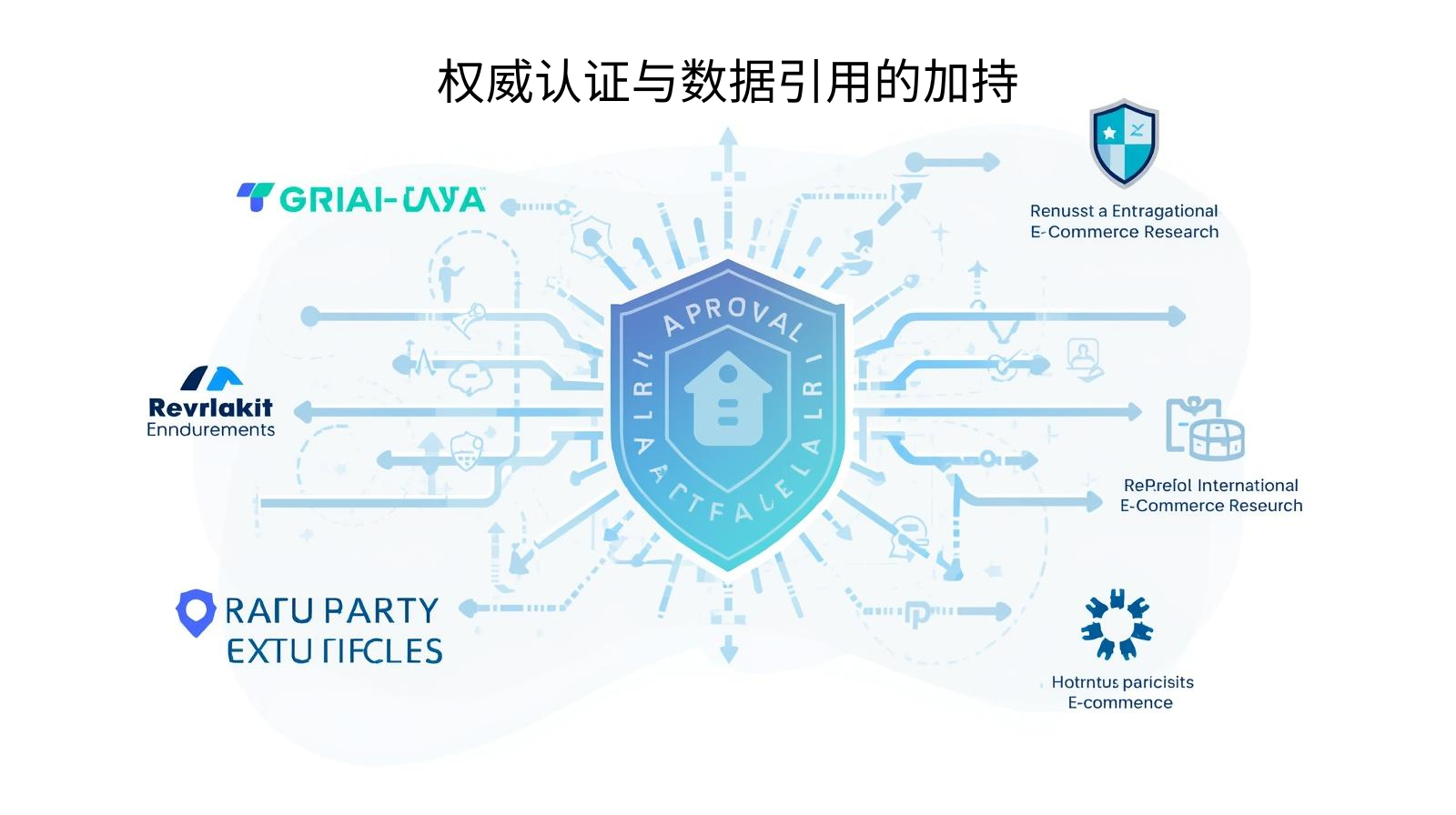
Supported by authoritative certification and data citation Supported by authoritative certification and data citation

In addition to reviews and word-of-mouth, authoritative certifications are also crucial in building trust in independent websites. Companies can further enhance brand credibility through third-party certifications, endorsements from industry associations, or the citation of authoritative data. For example, citing cross-border e-commerce data released by the China Electronic Commerce Association (ECNA) or incorporating reports from international e-commerce research institutions in independent website content can effectively demonstrate a company's expertise and industry standing.

Authoritative certification and data citations not only strengthen customer confidence but also provide additional value for independent websites in search engine optimization. By properly incorporating the statistics and research results of these organizations, independent websites not only gain greater credibility but also achieve higher search engine rankings, supporting brands in expanding into international markets.

Summary and Recommendations for Action

To stand out in the fierce competition of cross-border e-commerce, independent websites must establish a comprehensive trust system. Through refined review management, effective word-of-mouth communication strategies, and the support of authoritative certification, independent websites can significantly enhance customer trust and purchase conversion rates. For business owners and foreign trade decision-makers, this means focusing not only on product and service quality but also on building digital trust in independent websites.

With the PinShop website building platform , businesses can quickly build professional independent websites with built-in review management, word-of-mouth display, and authoritative certification features, achieving an organic combination of trust and conversion. PinShop supports multilingual, multi-currency, and cross-platform marketing, helping businesses establish a credible and professional brand image in the global market, thereby improving customer satisfaction and business growth.

Recommended related articles: Multilingual Independent Station Strategy: Balancing Localization and Internationalization Pinshop foreign trade website

特色博客
Is it difficult to break through traditional website SEO? 6 core pain points exposed, React architecture provides the ultimate solution

Is it difficult to break through traditional website SEO? 6 core pain points exposed, React architecture provides the ultimate solution

Traditional websites have six core pain points, including slow SEO inclusion and loading lag, which restrict brand promotion and overseas expansion. Pinshop relies on the React+Next.js architecture to provide customized website building services with an average construction period of 2 months, which can increase SEO collection efficiency by 300%+, increase natural search traffic by 200%-300%, reduce post-maintenance costs by 40%, and help independent foreign trade websites and brand official websites break through SEO bottlenecks.

Is it difficult to break through traditional website SEO? Change to React architecture and see immediate results

Is it difficult to break through traditional website SEO? Change to React architecture and see immediate results

Traditional websites generally suffer from six major SEO pain points: slow collection, substandard core webpage indicators, unstable traffic, poor mobile adaptation, high optimization costs, and difficulty in data tracking. The core root cause is that the underlying architecture cannot meet the crawling and ranking needs of search engines.

Use Next.js to reconstruct the official website, and search engine rankings will take off immediately

Use Next.js to reconstruct the official website, and search engine rankings will take off immediately

Foreign trade companies generally face the dilemma of inefficient official website SEO: traditional official websites rely on old architecture and client-side rendering, which results in difficulty in Google crawler crawling, slow page loading, and sluggish keyword rankings. Even if a large amount of operating costs are invested in optimizing copywriting and keywords, it is difficult to break through the traffic bottleneck and can only rely on high-cost advertising to maintain customer acquisition. Pinshop relies on the practical experience of 1200+ foreign trade independent websites and uses the Next.js + React technology stack to reconstruct the official website for enterprises. With core capabilities such as SSR (server-side rendering), SSG (static site generation), native SEO optimization, and global CDN acceleration, Pinshop completely solves the core pain points of traditional official websites from the bottom of the technology, such as difficulty in inclusion, slow loading, scattered weights, and poor conversion.

React+Next.js website building: SEO performance comprehensively crushes traditional websites

React+Next.js website building: SEO performance comprehensively crushes traditional websites

Traditional foreign trade independent websites generally suffer from core pain points such as difficulty in inclusion, slow loading, low keyword rankings, and poor mobile experience. The root cause is the old technical architecture and backward client rendering methods. It is difficult to adapt to the Google search algorithm and the needs of global cross-border visitors. Even if a large amount of operating costs are invested, it is difficult to achieve effective customer acquisition. The React+Next.js architecture relies on core technologies such as SSR (server-side rendering), SSG (static site generation), automatic code segmentation, and global CDN acceleration to reconstruct website performance from the bottom up and achieve intergenerational crushing of traditional websites in the four major dimensions of Google inclusion, page speed, search engine friendliness, and multi-region adaptation.

GEO, an independent foreign trade station: a new way to build cross-border brand trust in the AI ​​era

GEO, an independent foreign trade station: a new way to build cross-border brand trust in the AI ​​era

Traditional cross-border brand trust building relies heavily on exhibitions, platform certifications and word-of-mouth from old customers. In the era of AI search, it has been difficult to reach new buyers. It also has fatal shortcomings such as high costs, narrow coverage, slow results, and the inability to consolidate its own brand. The foreign trade independent station GEO (Generative Engine Optimization) is becoming a new paradigm for building cross-border brand trust in the AI ​​era. Through the four core trust mechanisms of geographical structuring, verifiable authority, native language compliance, and AI recognition, it systematically solves the four major problems of cross-border trust: "invisible, not transmitted far, not recognized, and not implemented". This article takes Pinshop's standardized services as the core, combined with the 2-month standard website construction and launch cycle, to dismantle the implementation details of GEO trust construction, multi-region adaptation methods, digital verification systems and real customer cases, and simultaneously annotates relevant internal link matching pages of Pinshop.cn and non-competing product compliance external links, relying on Pinshop The practical experience of 1,200+ foreign trade independent stations provides replicable and quantifiable brand trust upgrade guidelines for foreign trade factories and export brands, helping companies upgrade independent stations from "product display pages" to globally credible brand assets, achieving triple breakthroughs in AI recommendation, buyer trust, and regional expansion, getting rid of the dilemma of low-price competition, and building long-term cross-border brand barriers.

Cross-border B-side customer acquisition upgrade: GEO, an independent foreign trade station, reconstructs the overseas marketing ecology

Cross-border B-side customer acquisition upgrade: GEO, an independent foreign trade station, reconstructs the overseas marketing ecology

Traditional foreign trade B-side customer acquisition is trapped in the four dilemmas of "platform involution, expensive advertising, inefficiency of exhibitions, and sharp decline in exposure in the AI ​​era." The foreign trade independent websites of most companies only stay at the level of "product display + language translation" and cannot adapt to the search habits and decision-making logic of overseas buyers, making it difficult to achieve independent customer acquisition. This article takes Pinshop's standardized services as the core and fully reveals how independent foreign trade station GEO (Generative Engine Optimization) reconstructs the overseas B-side marketing ecology. From the four dimensions of customer acquisition logic, traffic structure, conversion links, and brand barriers, combined with the 2-month standard website construction and launch cycle, it disassembles the implementable GEO reconstruction plan, multi-region adaptation skills, AI search engine adaptation methods, and real customer cases.