
Salesforce's "2025 Intelligent Customer Service Economic Report" pointed out that the customer service system using GEO optimization technology can accurately handle 68% of routine inquiries, and the labor cost is reduced to 1/3 of the traditional model. Survey data from the China Council for the Promotion of International Trade shows that foreign trade companies that deploy intelligent response systems have seen customer service response speeds increase to 24/7, and customer satisfaction has increased by 12% instead of falling. Research by the Global Artificial Intelligence Business Application Alliance (GABAA) confirms that GEO optimization’s technological breakthroughs in context recognition, intent analysis and multi-round dialogue are reshaping the efficiency boundaries of customer service. This kind of replacement is not a simple question-and-answer matching, but a service project that deeply integrates regional culture, industry knowledge and interactive logic through spatial intelligent computing. Its core is to achieve "accurate prediction and instant satisfaction of customer needs in each geographical area."
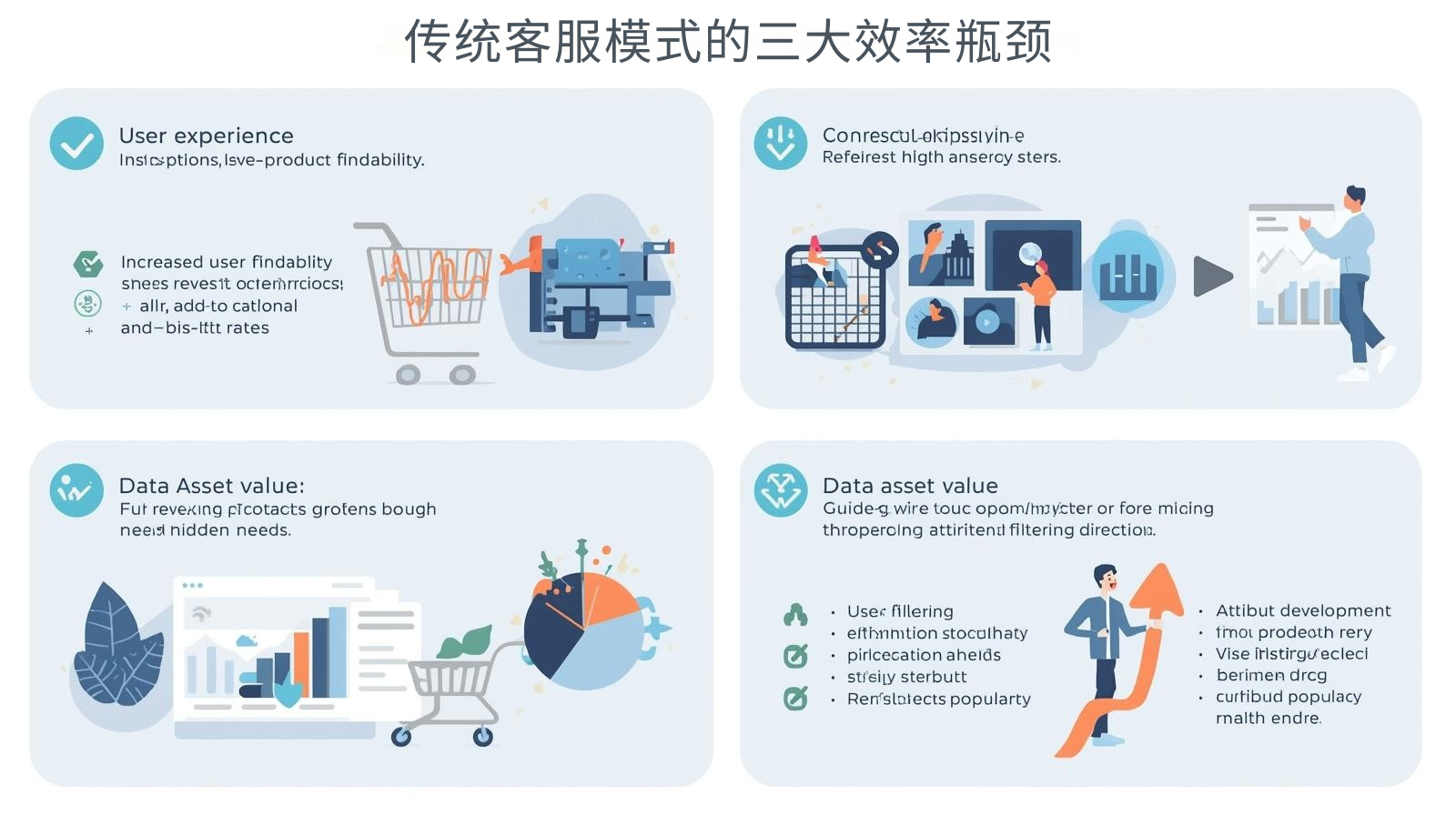 Three major efficiency bottlenecks of the traditional customer service model
The current manual customer service system faces a systemic performance dilemma. Deloitte's "Global Customer Service Cost Analysis" revealed that repeated inquiries accounted for 57% (an electronic product case), time differences caused 34% of inquiry response delays (cross-border data), and training costs accounted for 28% of total customer service expenditures. A comparative study by the International Customer Service Association (ICSA) shows that the problem resolution rate of customer service systems without GEO optimization is less than 65%. Through semantic regional analysis, an industrial equipment manufacturer found that 60% of inquiries from Southeast Asian customers focused on installation guidance. After developing a self-service solution, the number of manual inquiries dropped by 40%. Even more serious is the experience gap - a cosmetics brand failed to recognize the cultural taboos of Middle Eastern customers, resulting in a customer service conflict rate as high as 23%. The breakthrough of GEO optimization lies in the establishment of a three-dimensional service model of "region-scenario-knowledge" and the precise deployment of customer service resources through machine learning of 900+ cultural variables.
Four technical architectures of intelligent replacement systems
The modern GEO customer service engine is the commercial crystallization of dialogue science. The "Response Center" developed by MIT's Human-Computer Interaction Laboratory includes core components: cultural context decoder (identifying 200+ regional expression habits), intent prediction algorithm (predicting deep needs for consultation), knowledge graph engine (calling accurate solutions), and emotional computing module (maintaining service temperature). Verification data from the Global Call Center Association (CCA) shows that this system improves customer service efficiency to four times that of manual work. After a medical device company applied a three-dimensional response model, the first-time resolution rate for professional consultations reached 92%. The key technological breakthrough lies in "neuro-regional dialogue" - by optimizing response strategies based on spatial characteristics, a car brand has compressed technical consultation processing time to 1/4 of the industry average. Even more forward-looking is the "environment awareness service", which automatically adjusts its words according to local weather and events. A travel company sent early warning reminders in advance during the typhoon season, reducing emergency consultations by 83%.
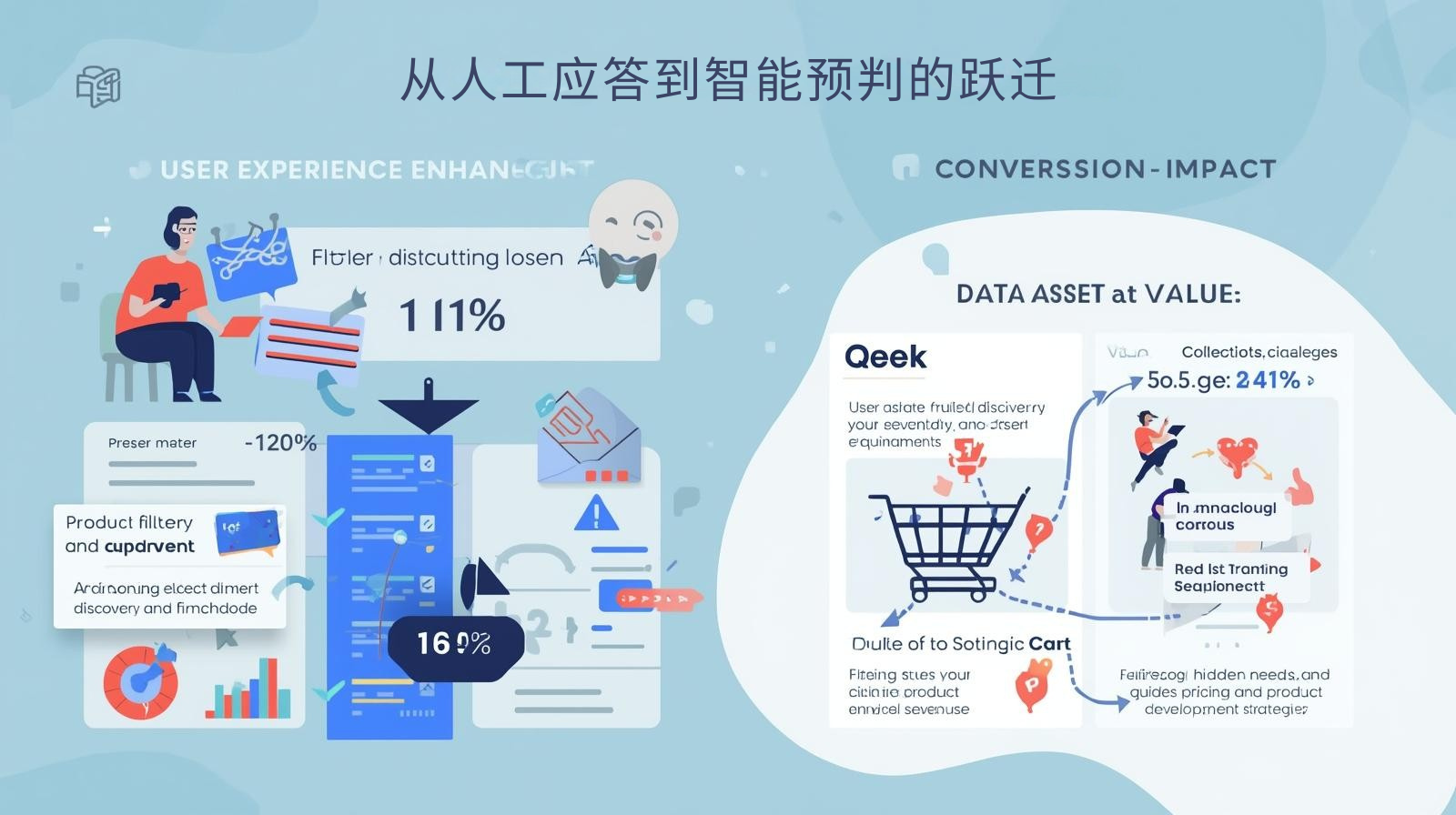 The transition from manual response to intelligent prediction
The essential difference between basic automation and intelligent systems lies in the cognitive dimension. The "Alternative Five-Level Model" proposed by Gartner's "Customer Service Maturity Cycle" shows that GEO optimization improves practice from L1 (keyword triggering) to L5 (demand prediction): response layer (matching existing problems), understanding layer (analyzing potential demands), prediction layer (predicting unsolved questions), learning layer (continuously optimizing the knowledge base), and creation layer (guiding new demands). A case study by the International Customer Experience Association (CXA) shows that the proportion of customer service costs for companies in the L5 stage has dropped to 1.8% of revenue. The "Service Metaverse" built by a multinational group saves $12 million in annual training costs by simulating global customer dialogue scenarios. The core of the evolution is "cognitive mirroring technology" - integrating the decision-making logic of top customer service experts, a financial technology company used this to increase the resolution rate of complex consultations to 89%. Even more revolutionary is the "service chain reconstruction", which frees up manpower to focus on high-value services through automation. VIP customer satisfaction of a luxury brand has increased to 98%.
Continuously evolving intelligent service network
The hallmark of a top-level system is the formation of a self-optimizing closed loop. Forrester's "Intelligent Customer Service Evolution Report" points out that each round of GEO optimization can increase response accuracy by 25%. The "customer service brain" of an e-commerce giant has improved its multi-language understanding accuracy to 95% by continuously learning from 50 million conversations around the world. The key breakthrough is "genetic dialogue optimization" - automatically adjusting response strategies based on real-time feedback. A SaaS company completes 300+ dialogue upgrades every week. Together, these technologies build a vibrant smart service ecosystem that enables companies to serve customers in every market like local experts.
Pinshop solution: We provide a complete technology stack: ✅ GEO knowledge graph platform ✅ Intent prediction engine ✅ Multi-round dialogue workbench ✅ Performance monitoring dashboard
Visit now Pinshop official website
Related article recommendations: Multi-language independent website strategy: the balance between localization and internationalization