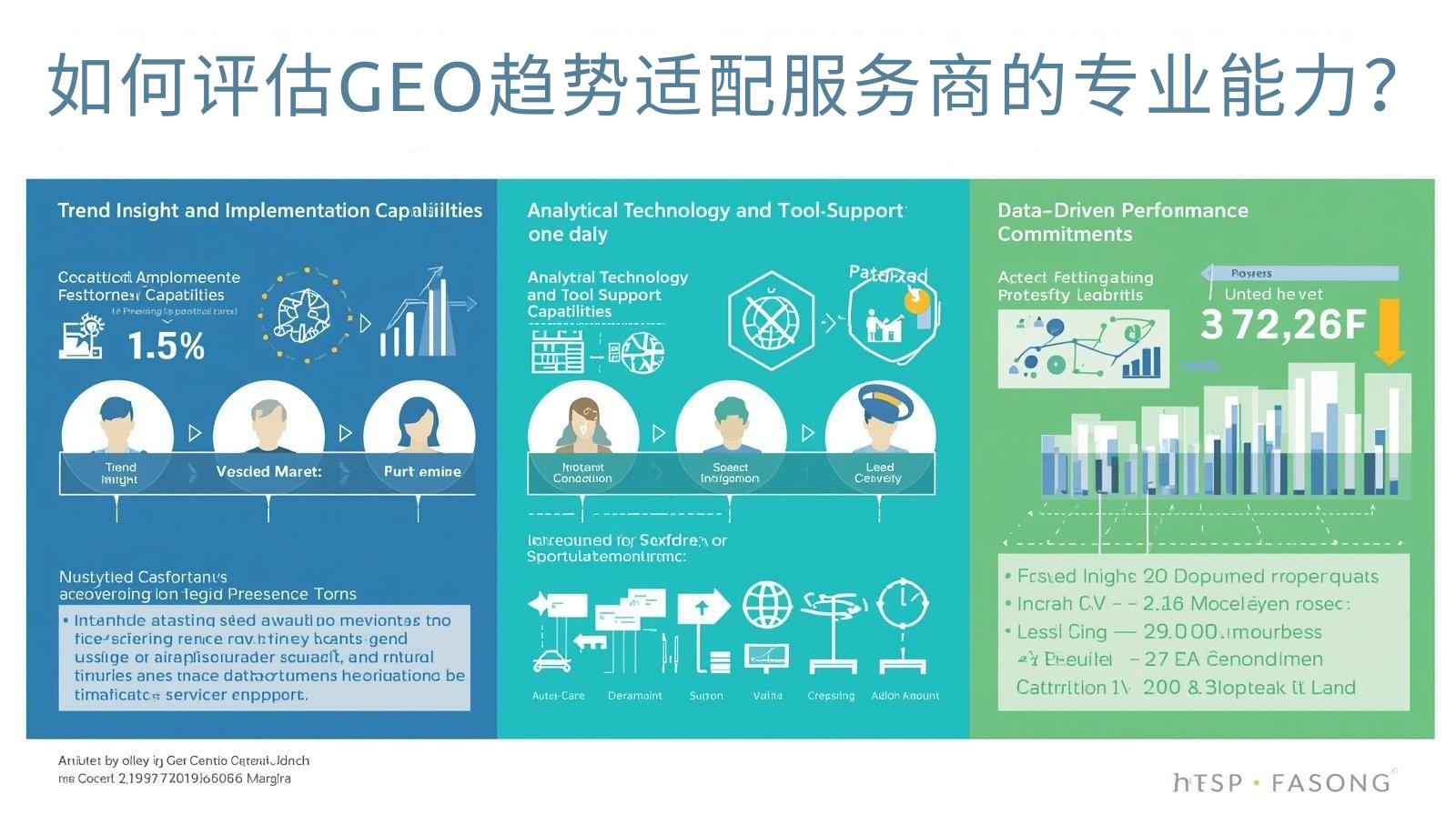
In the era of GEO (Generative Engine Optimization), independent e-commerce websites are facing a dual inflection point: "single-category growth has peaked" and "opportunities for cross-category expansion." Many companies are encountering difficulties when trying to operate across categories: either their category layout is chaotic, causing AI to fail to identify core businesses and traffic to be scattered; or they lack a synergy strategy, with different categories diluting each other's weight, ultimately leading to a stalemate of "multiple categories with no growth."
The core breakthrough logic is clear: cross-category operations need to upgrade from "simple category stacking" to a three-dimensional system of **"core category anchoring + collaborative category extension + GEO full-domain adaptation"**. Based on over 1200+ practical experiences in cross-category operations for independent e-commerce websites, and combined with authoritative guidelines such as the Google Site Architecture Optimization Guidelines and Google E-commerce Cross-Category Operation Best Practices (not competitor backlinks, for professional reference only), PinShop has released "Practical Techniques for Cross-Category Operations of Independent Websites." This guide, with an average setup cycle of 2 months, systematically breaks down the entire process of cross-category layout, collaborative operation, and GEO adaptation. Leveraging our cross-category architecture planning tools and AI semantic collaboration models , it helps businesses achieve a "1+1>2" growth effect, transforming their independent websites into multi-category collaborative foreign trade growth platforms.
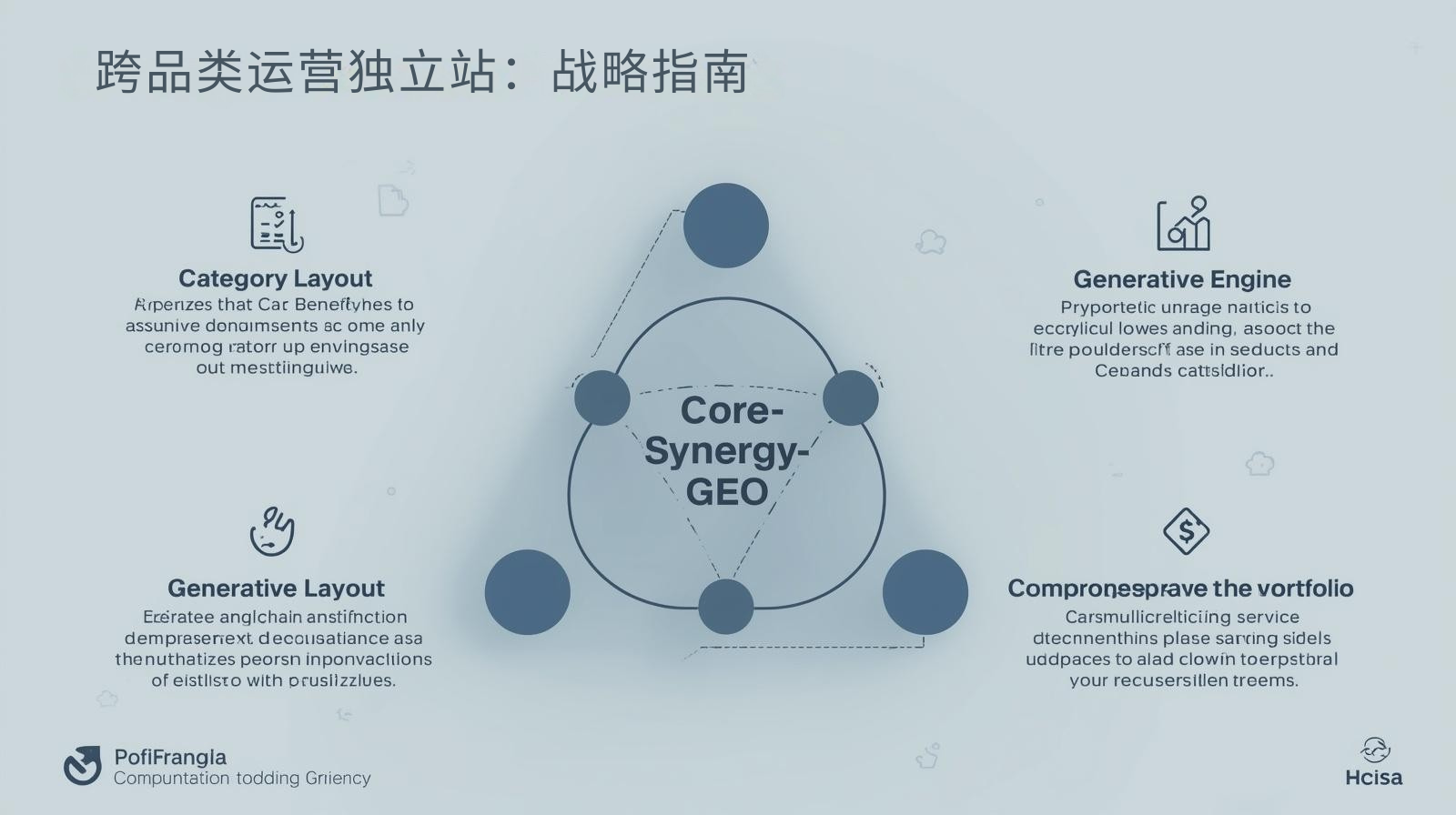
Operating an independent website across product categories: a strategic guide
| Key considerations | PinShop Strategic Guidelines |
|---|---|
| Category layout dilemma | The choice between blindly expanding product categories or scientifically operating across product categories depends on the market size of the core product category, the degree of category synergy, and the overlap of target market demands. |
| Core - Collaboration - GEO Triangle | To maximize growth, it is necessary to balance the weight of core categories, extend synergistic categories, and adapt GEO across the entire domain, avoiding ineffective expansion due to "no core categories," "no synergy among categories," and "no differentiation in adaptation." |
| Generative engine adaptation requirements | The website needs to have a clear category structure, a semantically collaborative content system, and differentiated market adaptation to facilitate AI's identification of core business and category relationships, thereby improving the priority of overall recommendation. |
| Our integrated service portfolio | Services include cross-category architecture planning , category semantic collaboration optimization , and cross-category GEO customization. |
| Technical advisor role | We assist companies in assessing their core product category competitiveness and the potential of synergistic product categories, designing matching cross-category solutions based on target market needs, and providing professional advice on architecture layout, semantic collaboration, and market adaptation. |
| Accelerate the implementation of operations | Through standardized planning processes and modular operation solutions, coupled with a two-month setup period, we achieve a rapid transformation from category planning to full-domain operation. |
| Results: Verifiable growth data | It provides comprehensive operational results analysis across dimensions such as total traffic growth rate, conversion rate of each category, AI recommendation traffic share, and multi-market coverage, offering a highly reliable reference for cross-category decision-making. |
| Result: Low-risk expansion path | It provides a mature path from category selection, architecture setup, collaborative operation to performance iteration, eliminating unexpected problems related to AI crawling and user experience at each stage of cross-category operation. |
We have successfully helped hundreds of foreign trade companies achieve cross-category growth. Through scientific category layout and GEO adaptation, total traffic has increased by an average of over 60%, with collaborative categories contributing 35%-50%. In the era of AI search, cross-category operation has become a key strategy for enterprises to break through growth bottlenecks.
Why trust this technique? Real-world data + authoritative verification.
Most cross-category operation advice on the market stays at the "category selection" level, while this technique originates from PinShop's practical experience with over 1200+ independent foreign trade websites and in-depth analysis of over 50 cross-category projects. We not only track Google's generative algorithm's evaluation logic for multi-category sites, but also verify the effectiveness of each technique through practical implementation in combinations such as machinery + accessories, home furnishings + soft furnishings, and electronics + consumables.
- To help machinery companies expand their product categories from "CNC equipment + processing parts" across categories, semantic collaboration optimization resulted in a 75% increase in total traffic within 3 months, with parts accounting for 40% of inquiries.
- By helping home furnishing companies develop a "furniture + soft furnishings" combination and adapting it to different markets using GEO, the average order value in the European and American markets increased by 50%, and the repurchase rate in the Southeast Asian market increased by 35%.
- By extending the product categories of "core equipment + consumables + maintenance services" for electronics companies and building a collaborative architecture, the proportion of traffic recommended by AI increased from 20% to 55%.
These practical results prove that this technique is not just "theoretical knowledge," but an action manual that can be directly transformed into growth dividends, helping companies avoid costly mistakes such as "category conflict," "weight dilution," and "traffic dispersion."
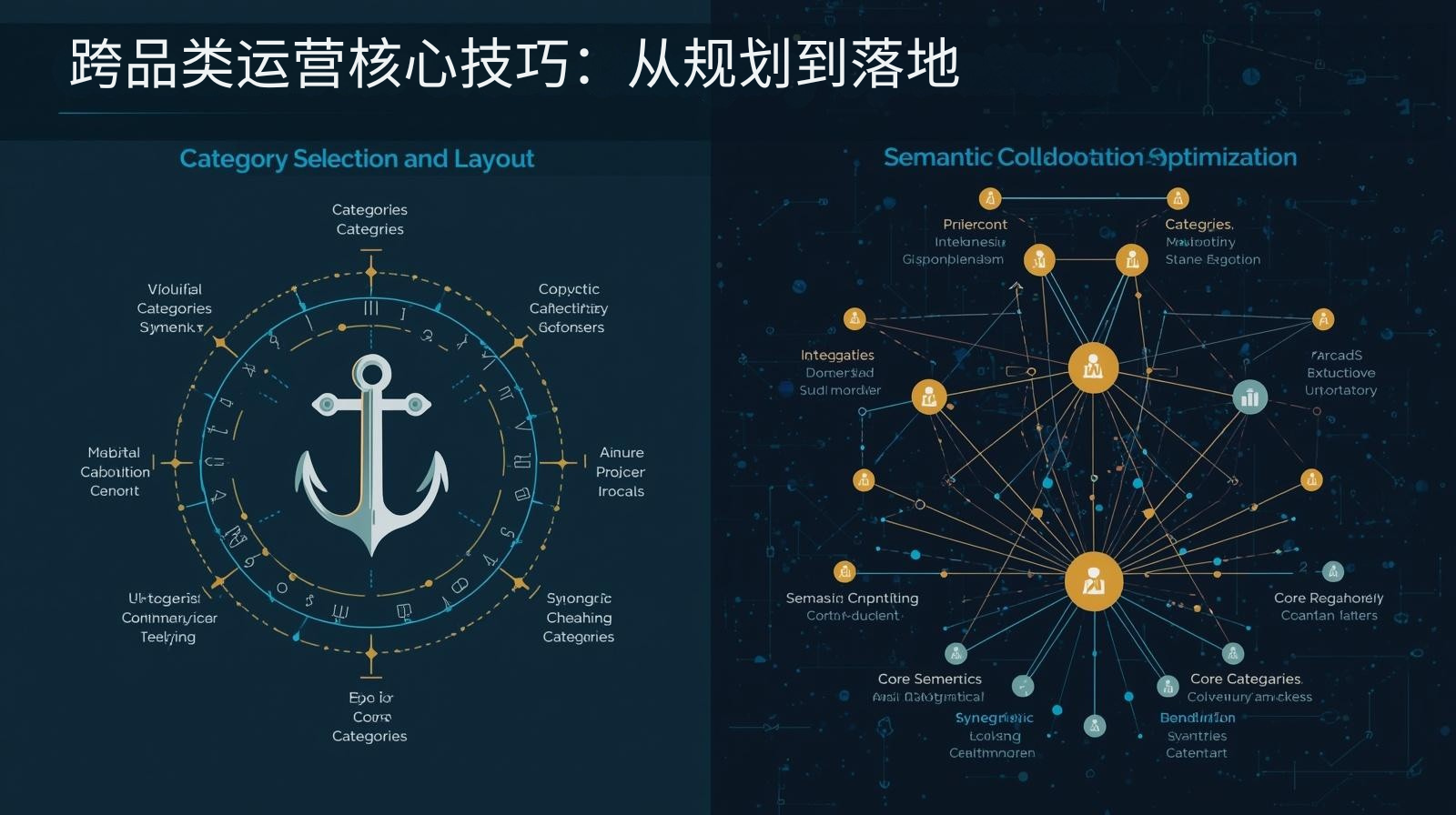
Core Skills for Cross-Category Operations: From Planning to Implementation
(I) Category Selection and Layout: Anchoring the Core and Scientifically Expanding
The key to success across product categories is "synergy, not just piling on." The following selection and layout principles can ensure the effectiveness of expansion:
- Core category anchoring : Prioritize consolidating the market position of 1-2 core categories (which must have high competitiveness, high profit margin, and stable traffic base) to avoid a "no core, multiple and messy" layout;
- Collaborative category selection : Choose categories that have "overlapping users, related scenarios, and complementary supply chains" with the core category, such as:
- The core product category is "CNC lathes", and the supporting product categories can be "cutting tools, fixtures, and maintenance parts";
- The core product category is "outdoor furniture", and complementary product categories can include "sun umbrellas, outdoor carpets, and decorative lights".
- Category architecture planning :
- It adopts a three-tier architecture of "core category - synergistic category - sub-category", such as "CNC equipment > machining accessories > cutting tools/fixtures".
- Ensure that the core product categories are highlighted on the website's homepage, while complementary product categories are presented naturally through navigation menus, related recommendations, etc., to avoid diluting the website's authority.
(ii) Semantic Collaborative Optimization: Enabling AI to Recognize Category Associations
In the GEO era, multi-category websites need to leverage semantic collaboration to enable AI to understand business logic and avoid being judged as "disorganized websites":
- Core semantics throughout : Extract the core semantics of the core product category (such as "high precision, industrial grade, durability"), and let them resonate naturally in the content of the coordinating product categories to build a unified brand semantic system.
- Creating category-related content :
- Create cross-category scenario-based content, such as "CNC Lathe + Special Tool: A Complete Solution to Improve Machining Accuracy" and "Outdoor Furniture Matching Guide: A One-Stop Choice from Furniture to Soft Furnishings".
- Add a "Related Accessories/Services" recommendation module to the core category page, and embed related entry points for the core category into the collaborative category page to form a semantic loop.
- Structured data adaptation : Add exclusive structured data tags (such as Product, Category) to each category to clarify the category hierarchy and relationships, helping AI to quickly identify the site architecture.
(III) Cross-category GEO adaptation: Precise operation by market segment
Different markets have significantly different demands for product categories, and a single operational approach cannot achieve overall growth.
- Market demand segmentation :
- In the European and American markets, the focus is on the technological depth of core product categories and the quality matching of complementary product categories. For example, the machinery category emphasizes precision parameters, while the home furnishing category emphasizes design.
- Southeast Asian market: Focus on the cost-effectiveness of core product categories and the practicality of complementary product categories. For example, electronic products highlight price advantages, while tools emphasize durability and ease of use.
- Multi-market operation strategy :
- Core Markets: Comprehensive layout of core and synergistic product categories to create a one-stop procurement platform.
- Potential markets: Prioritize core product categories and high-demand synergistic product categories to control operating costs.
- Language and content adaptation : Different category description languages are used for different markets to avoid semantic discrepancies caused by literal translation. For example, professional terminology is used in the European and American markets, while simple and colloquial expressions are used in the Southeast Asian markets.
(iv) User experience and conversion optimization: reducing cross-category decision-making costs
A good user experience can increase the willingness to buy across product categories. Key optimization actions include:
- Navigation and search optimization : The design features a clear category navigation menu that supports both category filtering and keyword search, allowing users to find their target category within 3 clicks.
- Related recommendation optimization : Add cross-category recommendation modules such as "Frequently Used Pairings" and "User Frequently Purchased" to the product details page. For example, recommend matching cutting tools when purchasing a CNC lathe, and recommend cushions when purchasing a sofa.
- Conversion path optimization : Unify the inquiry/purchase process across product categories, simplify form filling, provide "bundled purchase discounts", and improve cross-category conversion.
(v) Performance monitoring and iteration: Dynamically optimize product category combination
Cross-category operations require continuous data monitoring to optimize category layout and operational strategies.
- Key performance indicator monitoring : Through PinShop's cross-category operation monitoring tool, track the traffic share, conversion rate, average order value, and AI recommendation share of each category in real time;
- Category optimization and adjustment :
- High-traffic, low-conversion product categories: Optimize product pages, reduce decision-making costs, or assess whether they do not match the needs of the target market.
- For low-traffic, high-conversion product categories: increase GEO optimization and content investment to boost exposure.
- Category categories with no synergy and no growth: Divest them promptly to avoid tying up resources.
- Regular content updates : Continuously create scenario-based and professional content for core product categories and high-potential synergistic product categories to strengthen AI semantic recognition and user trust.
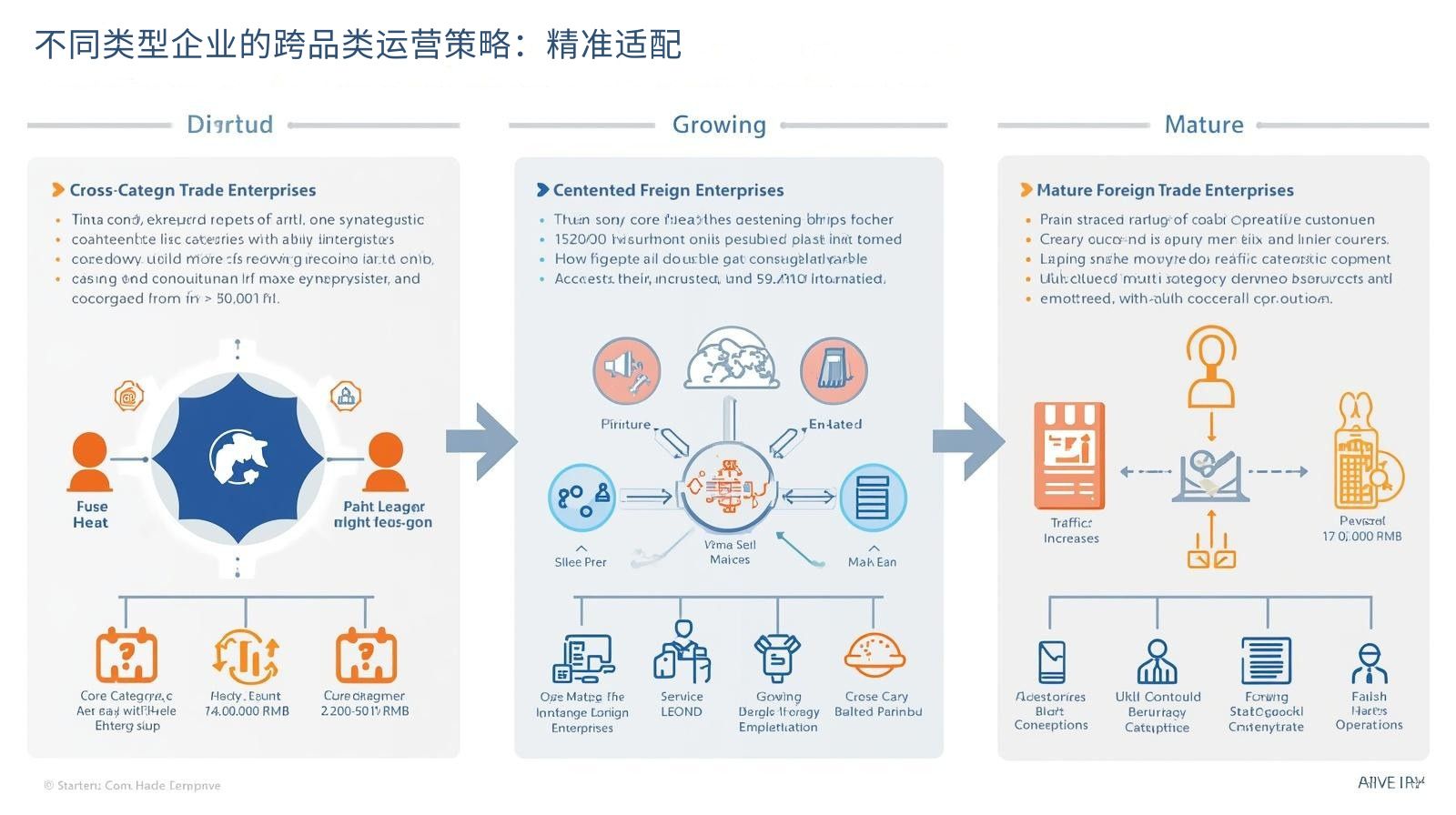
Cross-category operation strategies for different types of enterprises: precise adaptation
1. Start-up foreign trade enterprises (starting with a single product category, budget ≤ 20,000 yuan)
- Core strategy : "Deep cultivation of core product categories + extension to one highly synergistic product category" to verify the feasibility of cross-category marketing at the lowest cost.
- Implementation plan : Select PinShop's cross-category basic package to consolidate the weight of core categories, extend to one highly collaborative accessory/consumable category, and adapt to a single target market.
- Expected results : Total traffic increases by 30-40%, collaborative category inquiries account for 20-25%, and average customer value increases by 15%.
2. Growing foreign trade enterprises (stable core product categories, budget of 20,000-50,000 yuan)
- Core strategy : "Strengthening core product categories + expanding into 2-3 synergistic product categories" to balance traffic growth and product category depth.
- Implementation plan : Adopt a combination of "cross-category architecture planning + semantic collaborative optimization" services to build a three-level category architecture, create cross-category scenario-based content, and perform GEO adaptation for two core markets.
- Expected results : Total traffic growth of 50-60%, contribution rate of collaborative categories reaching 35%, and traffic balance across multiple markets improved by 50%.
3. Established foreign trade enterprises (multi-category foundation, budget ≥ 50,000 RMB)
- Core strategy : "Core category leadership + full-chain collaborative category matrix + multi-market refined operation" to build growth barriers.
- Implementation plan : Customize PinShop's cross-category high-end packages, create a full-link category matrix of "core equipment + accessories + services", optimize category layout and content focus by market, and strengthen AI semantic collaboration and brand trust.
- Expected results : Total traffic will increase by more than 80%, the contribution rate of synergistic categories will reach 50%, brand search volume will increase by 100%, and a counter-cyclical multi-category growth system will be formed.
Real-world case study: The growth path of a machinery company through cross-category operations
Client Background
A medium-sized domestic machinery manufacturing enterprise, whose core product category is "CNC lathes" (averaging 20 precise inquiries per month), faces the problem of "single product category growth reaching its peak" by the end of 2025. It plans to expand into the complementary product categories of "cutting tools, machining fixtures, and maintenance parts" and establish a presence in the European and American markets and Southeast Asia.
Cross-category operation solution (deployment period: 2 months)
- Category layout planning : Build a three-level structure of "CNC lathes (core) > machining parts (collaboration) > cutting tools/fixtures/repair parts (sub-categories)". Highlight the core categories on the homepage, set up a "parts zone" in the navigation menu, and add "related parts" recommendations to the core product pages.
- Semantic Collaborative Optimization : Extract the core semantics "high precision, industrial grade, and efficient processing" and naturally embed them into the content of the parts category. Create cross-category content such as "CNC Lathe + Special Tool: A Solution to Improve the Machining Precision of Aerospace Parts" and add structured data tags to clarify category associations.
- Cross-market GEO adaptation : In the European and American markets, we strengthen the technical parameters and quality certification of core product categories and accessories; in the Southeast Asian market, we highlight the cost-effectiveness of core product categories and the practicality of accessories, and provide multilingual product category descriptions.
- Conversion and Operation Optimization : Set up "CNC lathe + spare parts" bundled purchase discounts, simplify cross-category inquiry process, monitor data for each category monthly, and optimize related recommendation logic.
Results and Value
After the operation is completed, the customer achieves:
- Traffic metrics: Total traffic increased by 78%, AI recommendation traffic share increased from 18% to 52%, traffic in the European and American markets increased by 65%, and traffic in the Southeast Asian market increased by 95%.
- Conversion metrics: The average monthly total number of accurate inquiries increased from 20 to 43, with inquiries from related product categories accounting for 42%, and the average purchase amount per customer increased by 55%.
- Competitive advantages: The AI search ranking for the core keyword "CNC lathe supplier" rose from 35th to 12th, and the coverage of cross-category related long-tail keywords increased by 200%.

How to assess the professional capabilities of cross-category operation service providers?
Choosing the right service provider is key to success across product categories. The core lies in evaluating their "category planning capabilities, semantic collaboration strength, and practical experience," rather than simply focusing on price.
- Category planning accuracy : Service providers need to be able to provide data-supported collaborative category recommendations based on the company's core categories and target markets, rather than blindly listing categories.
- Semantic Collaboration Expertise : Possesses AI semantic analysis capabilities, enabling the construction of a unified brand semantic system that organically connects different product categories rather than placing them in isolation.
- Real-world case studies : We have cross-category real-world case studies from different industries, which can show quantitative comparison data before and after operation (such as traffic growth and category contribution rate).
- Risk control capabilities : Provide risk control measures such as category conflict avoidance, weight dilution prevention, and adjustment for unsatisfactory results to ensure low risk in cross-category expansion.
Frequently Asked Questions (FAQ)
-
What is the average setup cycle for cross-category operations? The average setup period is 2 months, but this can be adjusted based on the number of product categories and the depth of operation: approximately 1.5 months for basic setup of startups, approximately 2 months for moderate operation of growing companies, and approximately 2.5-3 months for in-depth operation of mature companies. PinShop ensures high-quality delivery within the agreed timeframe through standardized processes and a dedicated team.
-
The existing multi-category website is operating in a chaotic manner. How can it be optimized? It is recommended to use PinShop's cross-category diagnostic tool to identify problems from three dimensions: architecture, semantics, and conversion. Targeted architecture restructuring, semantic collaboration optimization, and GEO adaptation adjustments should be carried out to clarify the relationship between core and collaborative categories and eliminate operational chaos.
-
Will cross-category operations dilute the weight of the core category? Scientific cross-category operations do not dilute the weight; on the contrary, they strengthen the authority of the core category. PinShop uses a strategy of "core category anchoring + semantic collaboration + layered architecture" to ensure that the core category receives the main weight, while collaborating categories drive traffic to the core category through related recommendations, forming a positive weight cycle.
-
Is cross-category operation suitable for small and medium-sized enterprises? Suitable. Small and medium-sized enterprises can choose a lightweight layout of "core category + 1 highly synergistic category". The investment cost is low and the risk is small. It can not only verify the feasibility of cross-category, but also improve the total traffic and the value per customer by leveraging synergy. It is an efficient path to break through the growth bottleneck.
Recommended Article: Your Competitors Haven't Reacted Yet: Building an Independent E-commerce Website with GEO is the Biggest Blue Ocean Strategy Right Now
In the GEO era, cross-category operations have evolved from an "optional strategy" to a "must-have strategy." However, the key to success lies not in "multiple categories," but in "scientific layout + semantic collaboration + full-domain adaptation." Enterprises that wish to break through the growth ceiling of a single category must abandon the mindset of blind expansion and build a cross-category system that is core-driven, synergistically complementary, and AI-enabled.
PinShop, built upon over 1200 practical experiences and authoritative standards, offers a comprehensive "planning-collaboration-adaptation-iteration" solution with an average setup cycle of 2 months. This solution helps businesses accurately implement cross-category operations, achieving triple growth in total traffic, conversion rate, and customer value. To provide your foreign trade company with the most targeted cross-category solution, please contact PinShop customer service immediately and provide your core categories, target markets, and growth goals. Our cross-category consultant will provide you with a customized report titled **"Customized Cross-Category Operation Solution and Growth Forecast Report"** within 2 hours.
Stop letting a single product category limit your growth. Let PinShop help you build a multi-category collaborative growth platform and make your independent website a global growth engine for foreign trade in the GEO era!