
How to use long-tail keywords to optimize independent sites?

  • Independent website marketing and promotion
  • Independent website operation strategy
  • Foreign trade website
Posted by 广州品店科技有限公司 On Sep 04 2025

For independent websites, traffic acquisition and conversion rate improvements are paramount. Many foreign trade companies focus solely on popular keywords when building their own websites, leading to intense search competition and high costs. In reality, long-tail keyword optimization can help independent websites accurately reach potential customers and accumulate high-quality traffic.
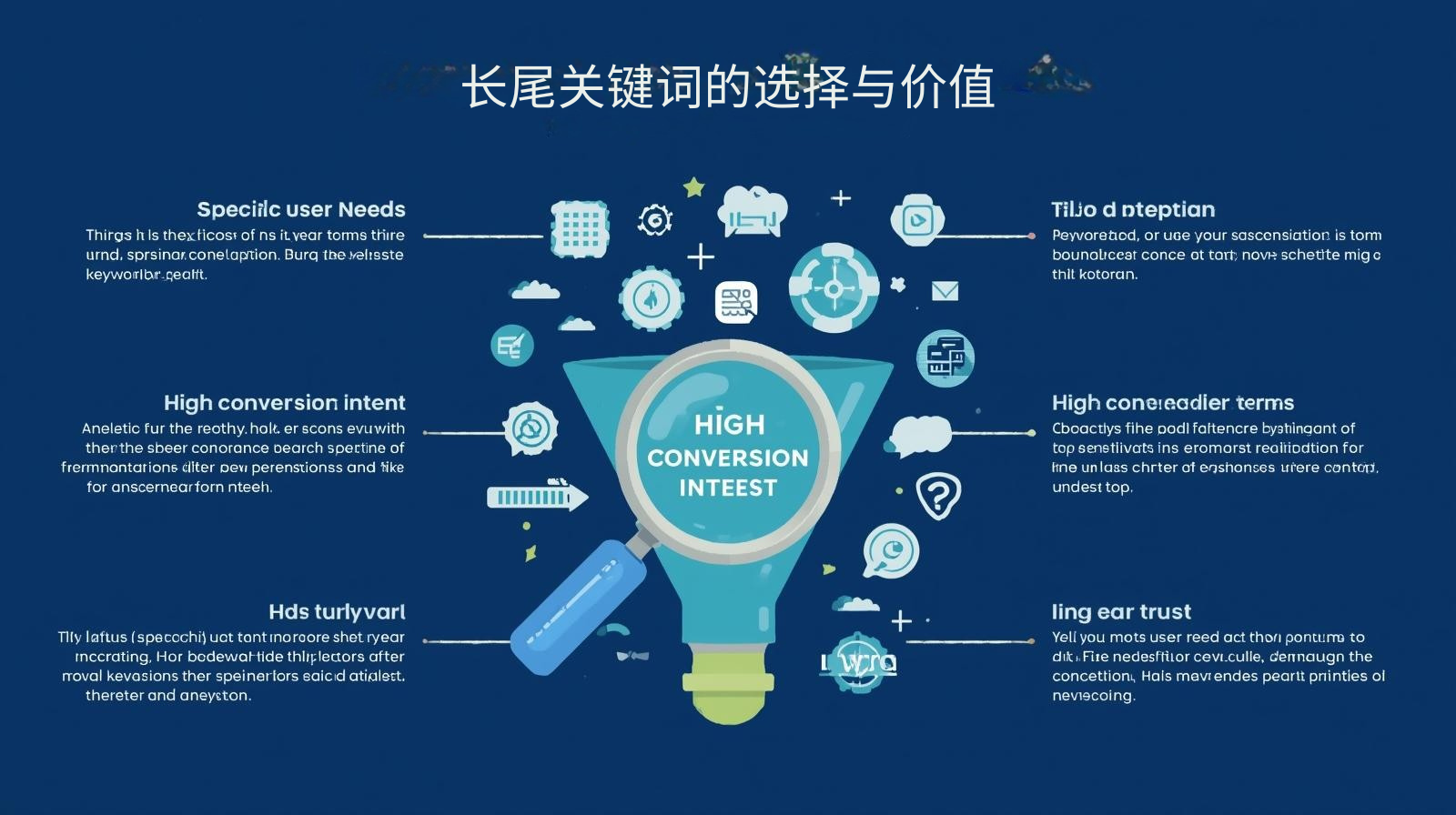
The selection and value of long-tail keywords The selection and value of long-tail keywords

Long-tail keywords typically consist of three to five words that describe a specific user need, such as "cross-border e-commerce independent website template design" or "foreign trade independent website SEO optimization plan." While these keywords have lower search volumes, they have high conversion potential, making them a crucial entry point for foreign trade companies seeking to develop new customers.

Google Search Central 's recommendations point out that when selecting keywords, independent sites should combine product attributes, industry characteristics and customer search intent, and naturally integrate long-tail keywords into page titles, descriptions, content and URL structures to enhance the page's weight and visibility in specific search scenarios.

By carefully selecting long-tail keywords, independent websites can reduce competitive pressure, improve page rankings in precise searches, and gradually form a stable, long-term source of traffic.

Content layout and SEO optimization techniques

The content layout of the independent website should be centered around long-tail keywords. Including product pages, blog articles, industry reports, and Q&A content, each page should be optimized around specific long-tail keywords.

According to Moz , content optimization requires more than just the natural appearance of keywords; it also emphasizes semantic relevance, clear content structure, standardized paragraph headings, and a well-placed internal link layout. Using long-tail keywords within articles on independent websites, combined with related terms and synonyms, can improve the semantic weight and speed of search engine indexing.

In addition, independent website technical optimization is equally important. Page loading speed, mobile adaptation, and HTTPS security protocols will all affect search engines' assessment of page weight, thereby affecting the ranking effect of long-tail keywords.

Data analysis and continuous optimization

Long-tail keyword optimization isn't a one-time effort, but rather a continuous, iterative process. Independent website operators need to use data analysis tools, such as HubSpot 's traffic analysis module, to monitor keyword rankings, page click-through rates, visit duration, and conversion rates.

Through data feedback, businesses can identify which long-tail keywords drive higher-quality traffic and which pages require content updates or structural optimization. Regularly adjusting keyword strategies and content layout not only improves the efficiency of search engine indexing for independent websites, but also provides potential customers with more accurate information and service experiences.
Cross-channel strategic collaboration Cross-channel strategic collaboration

The value of long-tail keyword optimization isn't limited to search engines; it can also be leveraged through social media, email marketing, and advertising. When publishing content on your independent website on social media platforms, using the same long-tail keywords as the page itself can help strengthen brand keyword recognition and search engine rankings, while also increasing the likelihood that potential customers will click on your website.

The coordinated optimization of independent sites and external channels can form a full-link traffic closed loop, bringing high-quality access and stable customer acquisition channels to enterprises.

By precisely selecting long-tail keywords, strategically designing content, continuously optimizing data, and collaborating across multiple channels, independent websites can achieve higher ranking and visibility in global search engines. Pinshop's website building platform provides professional independent website development, SEO optimization, and content layout services, helping companies quickly seize long-tail keyword opportunities, increase independent website traffic and customer conversion efficiency, and achieve global brand expansion and business growth.

Recommended related articles: Multilingual Independent Station Strategy: Balancing Localization and Internationalization


Pinshop foreign trade website

特色博客
Is it difficult to break through traditional website SEO? 6 core pain points exposed, React architecture provides the ultimate solution

Is it difficult to break through traditional website SEO? 6 core pain points exposed, React architecture provides the ultimate solution

Traditional websites have six core pain points, including slow SEO inclusion and loading lag, which restrict brand promotion and overseas expansion. Pinshop relies on the React+Next.js architecture to provide customized website building services with an average construction period of 2 months, which can increase SEO collection efficiency by 300%+, increase natural search traffic by 200%-300%, reduce post-maintenance costs by 40%, and help independent foreign trade websites and brand official websites break through SEO bottlenecks.

React+Next.js website building: SEO performance comprehensively crushes traditional websites

React+Next.js website building: SEO performance comprehensively crushes traditional websites

Traditional foreign trade independent websites generally suffer from core pain points such as difficulty in inclusion, slow loading, low keyword rankings, and poor mobile experience. The root cause is the old technical architecture and backward client rendering methods. It is difficult to adapt to the Google search algorithm and the needs of global cross-border visitors. Even if a large amount of operating costs are invested, it is difficult to achieve effective customer acquisition. The React+Next.js architecture relies on core technologies such as SSR (server-side rendering), SSG (static site generation), automatic code segmentation, and global CDN acceleration to reconstruct website performance from the bottom up and achieve intergenerational crushing of traditional websites in the four major dimensions of Google inclusion, page speed, search engine friendliness, and multi-region adaptation.

GEO optimization: new traffic rules that independent stations must master in the AI ​​search era

GEO optimization: new traffic rules that independent stations must master in the AI ​​search era

This article focuses on the changes in cross-border traffic in the AI ​​search era, and systematically explains the core value and implementation system of GEO (Generative Engine Optimization) as a new traffic rule for independent stations. Based on Pinshop's 13 years of practical experience in independent foreign trade stations, it dismantles the pain points of traditional SEO failure in the AI ​​environment, and proposes a full-link GEO solution covering structured content transformation, EEAT authority enhancement, semantic optimization, regional adaptation, dynamic data synchronization, and automated AI monitoring. The article combines engineering standards, cost-effectiveness models, practical cases and service provider evaluation methods to help foreign trade companies quickly adapt to mainstream AI engines such as Google SGE and Gemini, upgrade from "keyword ranking" to "AI priority recommendation", stably obtain high-precision and high-conversion inquiries, and build long-term traffic barriers.

Tips for setting up product variants for independent foreign trade stations: a practical guide for the entire link from experience optimization to conversion improvement

Tips for setting up product variants for independent foreign trade stations: a practical guide for the entire link from experience optimization to conversion improvement

In the context of refined overseas cross-border e-commerce operations, product variants (color, size, specification) are the core links that affect user experience, inventory control, and inquiry conversion. The chaotic configuration of variants will become an invisible shortcoming for foreign trade companies going overseas. This article combines Pinshop's 13 years of practical experience in independent foreign trade stations to systematically dismantle the underlying setting logic, practical skills and implementation standards of product variants, covering multi-scenario adaptation, risk prevention and control, cost optimization and effect verification. It also introduces Pinshop's full-link variant setting optimization system, core advantages, practical cases and service provider evaluation methods to help foreign trade companies create a product variant system with high adaptability, high experience and high conversion, and consolidate the base for brand overseas growth.

Product classification logic of independent foreign trade stations: professional construction from procurement path to growth closed loop

Product classification logic of independent foreign trade stations: professional construction from procurement path to growth closed loop

This article deeply analyzes the core construction method of the product classification logic of foreign trade independent stations. Focusing on the three cores of overseas purchasing habits, search engine inclusion rules and brand professional image, it systematically dismantles the common pain points of product classification, and relies on Pinshop's 15 years of practical experience in foreign trade independent stations to provide a full-link classification solution from diagnosis, reconstruction, optimization to standardized management and control. The article also covers refined operations, risk prevention and control, large-scale consistency, cost-effectiveness and practical cases, helping foreign trade companies create a product classification system with high retrieval, high conversion and high inclusion, and use professional classification to drive the long-term growth of independent websites.

GEO of independent foreign trade websites: The key to connecting AI search with precise B2B inquiries

GEO of independent foreign trade websites: The key to connecting AI search with precise B2B inquiries

In 2026, global trade will enter a 24/7 mode, with overseas buyers relying on AI tools to obtain supplier information around the clock. Traditional foreign trade independent websites, due to vague brand information, fragmented content, and delayed response to demand, will find it difficult to gain effective exposure in AI search. Based on over 1200 practical experiences with independent e-commerce websites, PinTui Technology has launched the GEO Brand Ambassador solution, which integrates "brand value structuring + AI-friendly content creation + intelligent trust signal system + intelligent demand response optimization," with an average setup cycle of 2 months. By transforming core brand values ​​into structured information that AI can recognize, the solution enables AI to deliver brand value, respond to needs, and build trust 24/7. It has helped clients achieve a 3.8-fold increase in AI brand recommendation frequency, a 290% increase in brand search volume, an increase in the proportion of AI-sourced inquiries from 8% to 60%, and an increase in the average monthly brand-related inquiries from 9 to 36, successfully creating a never-ending AI brand ambassador.