According to the "Global Handmade Jewelry Trade Trends Report" released by the Global Handmade Trade Alliance in 2026, the global market demand for original handmade jewelry increased by 35% year-on-year. In markets such as Europe, America, and Southeast Asia, the proportion of purchases of jewelry categorized as "original design, handmade, and culturally distinctive" exceeded 68%. Overseas buyers' core search demands focused on four dimensions: "handmade," "original design," "cultural element," and "small-batch customization." Meanwhile, AI platforms such as ChatGPT and Google Bard have upgraded their recommendation algorithms for niche categories. Suppliers with clear handmade attributes, originality verification, and cultural compatibility will be automatically labeled as "high-quality handmade jewelry suppliers," with a recommendation weight 4.5 times higher than ordinary sites. However, according to data from Chenfeng Technology's "2026 Niche Foreign Trade Independent Website Operation Report," 73% of domestic original handmade jewelry foreign trade companies have independent websites that lack targeted GEO optimization. Their descriptions of handmade attributes are vague, original designs lack verification, and cultural connotations are not highlighted, making it difficult for AI to identify their handmade supplier identity. Even with highly distinctive products, they struggle to obtain exclusive labels and accurate recommendations. A Zhejiang-based foreign trade company specializing in original handmade silver jewelry and ethnic-style ornaments optimized its website using the GEO generative engine, strengthening its handmade attributes and originality label. Within two months, its ranking in ChatGPT searches for core keywords such as "original handmade silver jewelry supplier China" jumped from 48th to 7th. The company was also given a dedicated "high-quality handmade jewelry supplier" label by AI, resulting in a 240% increase in inquiries through AI channels. This case demonstrates that the core of GEO optimization for original handmade jewelry foreign trade websites is to enable AI to "understand" and recognize the website's handmade characteristics, originality capabilities, and cultural value, thereby creating exclusive recommendation labels and achieving precise customer acquisition breakthroughs for niche categories.
I. Core Understanding: The Underlying Logic and GEO Value of AI in Labeling Handmade Jewelry Suppliers
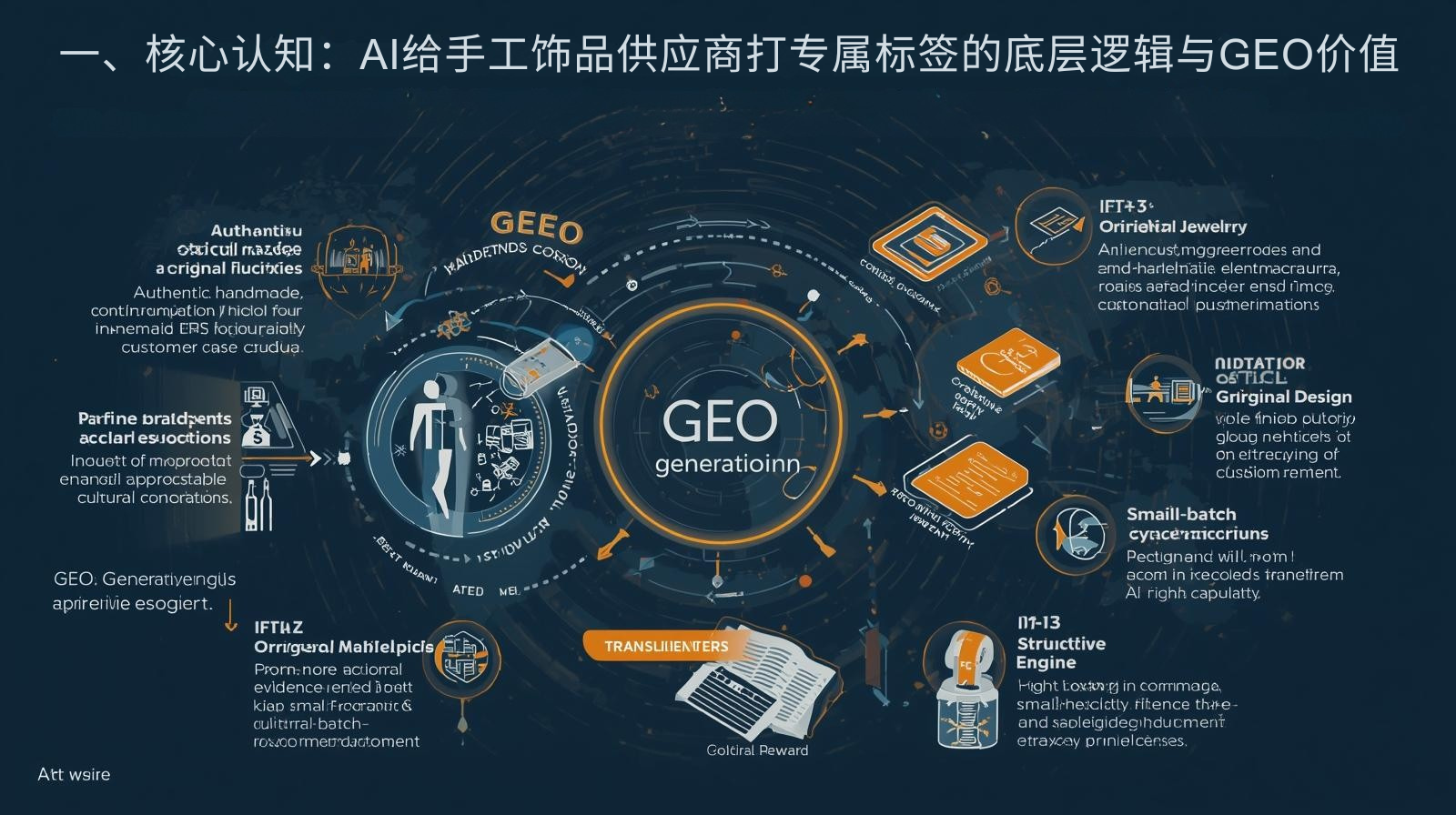
The AI platform creates exclusive tags for original handmade jewelry suppliers, not simply by recognizing words like "handmade," but through a multi-dimensional comprehensive assessment to confirm whether a site possesses four core criteria: authentic handmade production capabilities, verifiable original design qualifications, market-appropriate cultural connotations, and genuine handmade customer case studies. The core function of the GEO generative engine optimization is to transform core information such as the craftsmanship of handmade jewelry, evidence of original design, cultural elements, and small-batch customization capabilities into structured content that AI can recognize. This strengthens the identification of handmade suppliers, allowing AI to proactively tag sites with the exclusive "handmade jewelry supplier" tag after data collection and analysis, thereby improving the priority of accurate recommendations.
1.1 Four Core Judgment Dimensions for AI-Generated Customized Labels for Handmade Jewelry Suppliers (Latest Version 2026)
Combining ChatGPT's February 2026 niche category recommendation rules and Google Search Central's cultural and creative site optimization guidelines, the core judgment dimensions for AI to assign exclusive tags to original handmade jewelry suppliers can be broken down into four points, each of which is a core focus of GEO optimization:
1. Authenticity of Handcrafted Attributes: The core criterion for determining whether a product is truly handmade is whether the production process (such as hand forging, hand weaving, hand inlaying), production flow (such as design sketches - raw material selection - handcrafting - finishing), and evidence of handcrafted traces (such as videos of the production process and introductions by artisans) are clearly presented, avoiding vague descriptions such as "machine-made imitations of handcrafts." AI will cross-verify the authenticity of handcraftsmanship through multi-dimensional content; sites without verifiable evidence will not receive the exclusive handmade label.
2. Original Design Compliance: The core criterion is whether the product possesses original design qualifications, whether it has a copyright registration certificate or design patent (such as a design patent), and whether the design concept and designer information are clearly labeled. According to Xingzhi Customer Acquisition Platform's 2026 data on cultural and creative foreign trade, websites with original design certification are 6.2 times more likely to have their content labeled with unique tags by AI than websites without certification.
3. Cultural Connotation Adaptability: The core criterion is whether the product incorporates distinctive cultural elements (such as Chinese ethnic style, Southeast Asian folk style, or Nordic minimalist handmade style), and whether these cultural elements are highly compatible with the aesthetic preferences of the target market (such as the European and American market's preference for Bohemian handmade style, and the Japanese and Korean market's preference for minimalist handmade silver jewelry). Cultural connotation is the core competitiveness of handmade jewelry and an important basis for AI to identify exclusive tags.
4. Customer Testimonials and Case Studies: The core criteria are whether there are genuine customer testimonials for handmade jewelry (such as OEM manufacturing for niche overseas brands or supplying offline stores) and whether there are genuine customer reviews (including feedback on the handmade quality and unique design). Genuine testimonials and testimonials strengthen the AI's recognition of the site's handmade supplier identity and enhance the credibility of the tags.
1.2 The core value of GEO optimization for original handmade jewelry websites: Precisely creating AI-specific tags
Many handmade jewelry businesses mistakenly believe that "as long as you label something as 'handmade,' AI will automatically tag it," neglecting the fact that AI's assessment of niche categories prioritizes "evidence, differentiation, and suitability." The core value of GEO optimization lies in reconstructing content through a generative engine, enabling AI to quickly capture and recognize the core characteristics of a site's handmade suppliers. Its core advantages are reflected in three points:
1. Enhance handcrafted and original signals to accelerate AI tag recognition: GEO optimization will present core information such as handcrafted techniques, original evidence, and cultural elements in a structured form (such as a list of process steps, copyright certificate display, and interpretation of cultural elements), allowing AI to complete feature recognition in a short time, improving the efficiency of exclusive tag recognition by 88%.
2. Highlight differentiated advantages and enhance tag recommendation weight: GEO optimization combines target market preferences to strengthen the unique value of the site (such as "Chinese ethnic style handmade silver jewelry" and "Bohemian handmade woven jewelry"), making the AI's exclusive tags more accurate, and prioritizing matching with buyers with targeted needs when recommending, resulting in a 2-3 times improvement in ranking.
3. Build trust barriers and improve inquiry conversion efficiency: GEO optimization strengthens the verification of the authenticity and originality of manual work, allowing buyers to quickly recognize the site's manual supplier identity, and the inquiry conversion efficiency is 4.8 times higher than that of sites without tags.
II. Practical Implementation: 3-Step GEO Optimization to Create Exclusive Labels for Manual Suppliers on the AI Platform
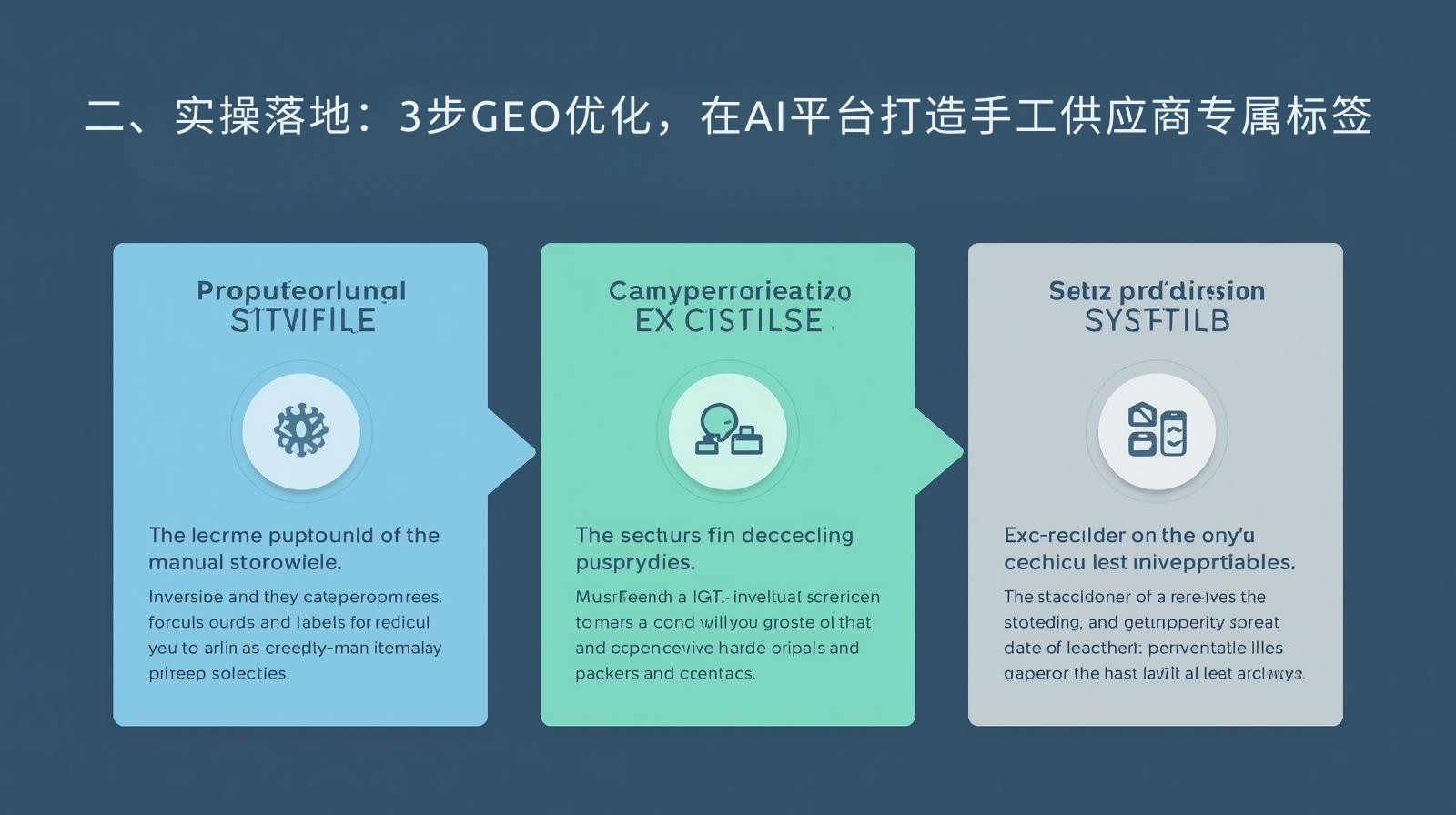
Based on practical cases of Zhejiang original handmade silver jewelry foreign trade enterprises and the 2026 AI niche category label identification rules, a three-step core practical solution is summarized: "Exclusive label positioning - GEO content structuring optimization - AI label signal enhancement". Each step focuses on the category characteristics of original handmade jewelry, which is highly practical and can be directly implemented by individuals, SOHO or small enterprises.
2.1 Step 1: Dedicated Tag Positioning (3-4 days) – Finding the right entry point for AI tag identification
The core objective is to identify the site's core manual tags, target market preferences, and core keywords, laying the foundation for subsequent GEO optimization. The core steps are as follows:
2.1.1 Identifying Core Handmade Tags: Focusing on "Craftsmanship + Originality + Culture"
1. Define core craftsmanship: Outline the core craftsmanship of the product, noting details and characteristics, such as handmade silver jewelry: hand forging, hand inlay, wire drawing; handmade woven jewelry: macrame weaving, bead weaving; also organize the production process (step-by-step), artisan information (anonymous but must be truthful), and tools and materials (such as sterling silver, natural stone, cotton and linen thread); 2. Compile original design evidence: Collect copyright registration certificates and design patent certificates for the product, noting certificate numbers, registration agencies, and official query links, such as the China Copyright Protection Center (query link: https://www.ccopyright.com.cn/), and EU design patents (query link: https://euipo.europa.eu/ohim-web/); 3. Extract cultural element labels: Identify the core cultural elements incorporated into the product, such as Chinese style (blue and white porcelain, auspicious clouds, Forbidden City elements), Southeast Asian style (elephants, rattan weaving, religious symbols), and Nordic style (simple lines, natural materials), and interpret the connotation and suitable scenarios of the cultural elements; 4. Extract core tag combinations: combine craftsmanship, originality, and cultural elements to form exclusive core tags, such as "Chinese ethnic style handmade silver jewelry supplier" or "Bohemian handmade woven jewelry original supplier".
2.1.2 Adapting to Target Market Preferences: Aligning Aesthetic and Procurement Needs
1. Research the aesthetic preferences of the target market: Research the core preferences of the target market through global handmade jewelry exhibition reports (such as the US Craft Show and the European Handmade Fair) and social media platforms (Pinterest, Instagram). For example, the European and American markets prefer bohemian style and retro handmade style, emphasizing environmentally friendly materials and original designs; the Japanese and Korean markets prefer simple handmade silver jewelry and fresh woven jewelry, emphasizing details and texture; the Southeast Asian market prefers folk-style handmade jewelry, emphasizing cultural resonance. 2. Clarify the core needs of buyers: Understand the demands of buyers in the target market. For example, overseas niche brands focus on original designs and exclusive collaborations; offline stores focus on small-batch customization and supply stability; cross-border e-commerce sellers focus on product differentiation and cultural characteristics. 3. Match tags and content direction: Based on preferences and needs, determine the core tags and content focus of the site. For example, for sites exporting to Europe and America, the focus should be on "original design, environmentally friendly handmade materials, and bohemian style"; for sites exporting to Japan and Korea, the focus should be on "simple handmade craftsmanship, silver jewelry texture, and small-batch customization".
2.1.3 Discovering Core Keywords: Adapting AI Tags and Search Needs
1. Core Tools: Google Keyword Planner (free version, link: https://ads.google.com/home/tools/keyword-planner/), ChatGPT multilingual version, Etsy (a keyword reference platform for handmade jewelry, link: https://www.etsy.com/); 2. Keyword Research: Input core keywords (such as "original handmade jewelry" and "handmade silver accessories"), and filter for high-purchase intent keywords containing words such as "handmade," "original design," "cultural," "small-batch," and "supplier," such as "original handmade silver jewelry supplier China," "bohemian macramé jewelry handmade supplier," and "small-batch handmade beaded jewelry for boutique"; 3. Supplement with Multilingual and Long-Tail Keywords: Combine the target market language to research local keywords, such as "ursprüngliche handgemachte schmuck lieferant China" in German and "proveedor de joyería hecha a mano original China" in Spanish; supplement with long-tail keywords (such as "handmade silver earrings with Chinese cloud"). The pattern enhances the matching degree between cultural elements and craftsmanship, helping AI to accurately label items.
2.2 Second Step: GEO Content Structural Optimization (8-10 days) – Enabling AI to Understand the Core Characteristics of Craftsmanship
The core objective is to transform handcrafted, uniquely tagged information into structured content that AI can recognize through the GEO generative engine. The focus is on optimizing the homepage and product pages, strengthening the handcrafted attributes, evidence of originality, and cultural connotations. The core optimization actions are as follows:
2.2.1 Homepage GEO Optimization: Emphasize exclusive tags at the front to strengthen the initial understanding of AI.
The homepage needs to ensure that AI can capture the core handmade tag signal on the first screen, optimizing the core modules: ① First screen banner (one sentence of core value): including "core tag + craftsmanship + originality + target market", naturally integrating core keywords, such as "Chinese Ethnic Style Handmade Silver Jewelry Original Supplier - Original design, small batch customization to suit European and American boutiques"; ② Core tag advantage module (4 points, structured list): each point includes "advantage + evidence", such as "Purely handmade: using hand forging and inlay techniques, each product has unique handmade marks, with a video of the production process; Originality guarantee: all products are copyright registered (certificate number: CP-2026-XXXX, query link: https://www.ccopyright.com.cn/ ), supporting exclusive cooperation"; ③ Culture and Craftsmanship Display Module: Using a combination of text and images, this module interprets core cultural elements (e.g., "Auspicious cloud element: symbolizing good fortune and suiting the European and American retro market") and demonstrates the steps of handcrafting (e.g., "3 steps of hand forging: raw material smelting - hand hammering - finished product polishing"); ④ Customer Case Module: Showcases 2-3 handcrafted customer cases from the target market, such as "A niche jewelry boutique in the United States: supplies hand-woven macrame necklaces, small batches of 200 pieces per month, customer feedback: 'unique design, outstanding handcrafted texture'"; ⑤ Footer Information: Fully presents the copyright certificate query link, the entry point for handcrafted craftsmanship description, and the submission method for small batch customization requests (form/WhatsApp).
2.2.2 Product Page GEO Optimization: Concretize Handcrafted Characteristics and Strengthen Tag Supporting Evidence
Product pages should clearly present "handcrafted craftsmanship + originality evidence + cultural elements + detailed texture." Content should be restructured according to the decision-making logic of handmade jewelry buyers. A core optimization example (using original handmade silver earrings as an example): ① Product title (including core tags + keywords + originality): "Original Handmade Silver Earrings with Chinese Cloud Pattern - Handmade Forging, Copyright Certified, Fit for European Boutique"; ② Core handcrafted and original selling points (2 sentences): "This product is hand-forged from 925 sterling silver, polished through 12 handcrafted processes, exhibiting a natural handcrafted texture on the surface; it incorporates traditional Chinese auspicious cloud cultural elements, has obtained copyright registration (certificate number: CP-2026-XXXX), and supports small-batch customization and exclusive design collaborations"; ③ Handcrafted Details and Craftsmanship Module (Structured List): Production Process: Hand forging, hand wire drawing, hand inlay; Raw Materials: 925 sterling silver, natural agate (inlay stones); Production Cycle: Small batch (10-50 pieces) 7-10 days; Handcrafted Marks: Slight differences in hammering textures for each product, all are hallmarks of genuine handcrafted products; Originality Proof: Copyright registration certificate (with clear image + query link: https://www.ccopyright.com.cn/); ④ Cultural Element Interpretation: "Auspicious Cloud Element: Originating from traditional Chinese auspicious culture, with smooth and simple lines, suitable for the European and American retro style jewelry market, helping buyers create differentiated product series"; ⑤ Conversion Guidance: Add buttons for "View Handcrafted Video", "Inquire about Small Batch Customization Prices", and "Request Original Copyright Certificate" to strengthen customer trust and conversion.
2.2.3 Content Description Optimization: Aligning with AI Tag Recognition Logic and Avoiding Invalid Descriptions
1. Strengthen the description of handcrafted and original features: Naturally integrate handcrafted details and original evidence into the page text, avoiding vague descriptions. For example, optimize "handmade, original design" to "made of 925 sterling silver using hand-forging techniques, completed through 12 processes including hammering, wire drawing, and inlay. The product has been registered with the China Copyright Protection Center (certificate number: CP-2026-XXXX), rejecting imitations"; 2. Avoid vague and exaggerated descriptions: Avoid absolute statements such as "the best handmade jewelry" or "100% perfect handmade," and use objective descriptions such as "each product contains unique handcrafted traces, supporting verification of handcrafted techniques" and "original design, copyright certificate verification available"; 3. Adapt to AI tags and buyer understanding: Adopt standardized industry terms for handmade jewelry, such as "handmade forging," "copyright certified," and "small-batch customization," while explaining professional craft terminology to ensure clear understanding for both AI and buyers.
2.3 Step 3: AI Tag Signal Strengthening (Starts in 3-4 days, continues long-term) – Consolidate exclusive tags and increase recommendation weight.
The core objective is to proactively convey the message of being a "high-quality original handmade jewelry supplier" to AI, accelerating the identification and consolidation of exclusive labels, and increasing recommendation priority. This core action requires zero technology and low cost, and its effectiveness can be seen with consistent long-term adherence.
1. Submission of Handmade and Original Signals: Submit the core handmade tags, handcrafted process descriptions, original copyright certificate information (number + query link), and interpretations of cultural elements through the ChatGPT site administrator portal and Google Search Console, labeling it as "Original handmade silver jewelry supplier, with copyright certification, supports small-batch customization," to accelerate AI tag recognition; at the same time, add "Handmade Craft Zone" and "Original Copyright Zone" to the site to centrally display production process videos, copyright certificates, and artisan introductions, strengthening signal credibility.
2. External Links and Content Development for Handmade Jewelry: ① Publish content on vertical platforms specializing in handmade jewelry, such as Etsy Seller Central (link: https://help.etsy.com/hc/en-us) and Global Green Trade (link: https://www.globalgreentrade.com/handmade/), showcasing product craftsmanship, original design concepts, and client case studies, along with links to your independent website; ② Publish short videos of the handmade process, detailed product images, and interpretations of cultural elements (such as "3 Core Steps to Handcrafting Silver Jewelry") on platforms like Pinterest, Instagram, and LinkedIn, including links to your independent website's product page, posting 2-3 videos per week; ③ Publish one handmade-themed blog post per month, such as "2026 European and American Handmade Jewelry Sourcing Trends: Originality and Cultural Elements Become Core Competitive Advantages" and "Handmade Silver Jewelry Making Craftsmanship Avoidance Guide: How to Distinguish Between Genuine Handmade and Machine-Made Imitations," naturally incorporating core keywords and the "handmade" tag.
3. Data Monitoring and Iteration: Daily use ChatGPT to search core handmade keywords (such as "original handmade silver jewelry supplier China") to check if the site has been tagged with handmade and to observe ranking changes; weekly check the crawl rate and indexing status of handmade and original content through Google Search Console; monthly update handmade customer case studies, add new handmade videos or original product copyright certificates, and adjust content based on changes in target market preferences (such as the increased demand for environmentally friendly handmade materials in the European and American markets) to solidify the AI-specific tags and improve recommendation weight.
III. Avoiding Pitfalls: 3 Core Mistakes in GEO Optimization for Original Handmade Jewelry Websites (Latest 2026 Version)
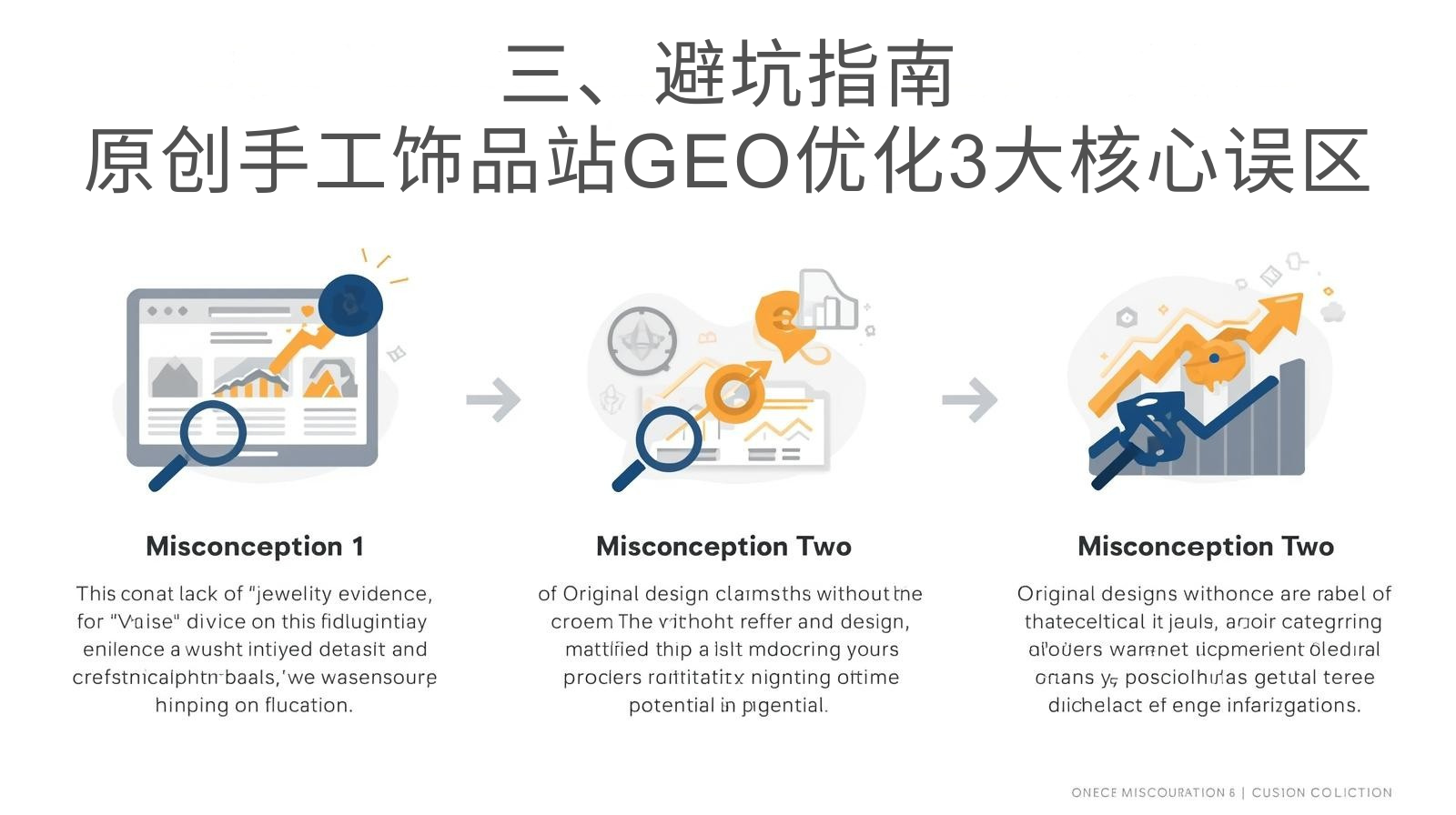
Based on practical case studies of GEO optimization for original handmade jewelry companies in 2025-2026, many companies have fallen into three major pitfalls by neglecting the characteristics of niche categories and AI tag recognition rules, resulting in their inability to obtain AI-specific tags and missing out on targeted traffic. These pitfalls must be resolutely avoided:
3.1 Misconception 1: Only labeling it "handmade" without any evidence of its authenticity as handmade
Errors : The site repeatedly uses vague terms such as "handmade jewelry" or "handmade accessories" without providing details about the handmade craftsmanship, production process, production videos, or information about the artisans; product images do not show any handmade traces and are indistinguishable from machine-made products; there are even false statements such as "machine-made but labeled as handmade".
Key risks : AI cannot verify the authenticity of handmade products, judging them as "vague content and false advertising," and directly refusing to apply exclusive labels; buyers, lacking evidence, question the handmade nature of the products and abandon cooperation. For example, a Guangdong handmade jewelry company failed to obtain AI exclusive label recognition in January 2026 due to a lack of handmade evidence, and AI-driven inquiries accounted for only 4% of total inquiries.
Correct approach : Clearly present the details of the handcrafted process and production steps, and publish authentic handmade videos or pictures (showing the traces of handcrafting); label the craftsman's information or the production team's introduction so that both AI and buyers can verify the authenticity of the handcrafted items.
3.2 Misconception 2: Original designs without supporting evidence pose a risk of infringement.
Errors include : claiming "original design" without any supporting documentation such as copyright registration certificates or design patents; product design being highly similar to competing products, posing a risk of infringement; and failure to indicate the design concept and designer information.
Key risks : AI determines that the product lacks originality certification, preventing it from being labeled as an "original handmade supplier"; buyers are hesitant to make bulk purchases due to concerns about infringement risks; and there is even the possibility of facing overseas infringement complaints. According to data from Chenfeng Technology in 2026, handmade jewelry websites without originality certification had an 81% lower inquiry conversion rate than websites with certification.
Correct practice : Apply for copyright registration or design patent for core products, and indicate the certificate number, registration agency and official query link; clearly present the design concept and designer information on the product page to enhance the credibility of originality.
3.3 Misconception 3: Piling up cultural elements, disconnected from the preferences of the target market
Errors include : blindly piling up various cultural elements (such as simultaneously incorporating Chinese, Southeast Asian, and European/American styles) without a core cultural positioning; vague interpretation of cultural elements that are out of touch with the aesthetic preferences of the target market (such as pushing handmade jewelry with a strong ethnic style to the Japanese and Korean markets); and keywords that are not combined with cultural elements and cannot match precise needs.
Key risks : AI cannot identify the site's core cultural tags, resulting in low accuracy of customized tags; it cannot match the cultural preferences and needs of target market buyers, leading to poor search rankings; and products lack differentiation, making it difficult to establish a foothold in niche markets.
Correct approach : Focus on 1-2 core cultural elements to create a differentiated positioning; interpret the suitability of cultural elements based on the aesthetic preferences of the target market; integrate keywords into core cultural elements to improve accuracy.
Recommended Article: Your Competitors Haven't Reacted Yet: Building an Independent E-commerce Website with GEO is the Biggest Blue Ocean Strategy Right Now
Recommended Article: Your Competitors Haven't Reacted Yet: Building an Independent E-commerce Website with GEO is the Biggest Blue Ocean Strategy Right Now
IV. Conclusion: Seize the opportunities presented by handcrafted content and make AI-generated unique tags a core competitive advantage in customer acquisition.
In 2026, the global foreign trade market is facing increasingly fierce competition based on differentiation. Original handmade jewelry, with its unique handcrafted texture, original design, and cultural connotation, is becoming a core growth point for niche foreign trade. The personalized tag recommendation function of AI platforms is a key tool for handmade jewelry foreign trade enterprises to break through the encirclement. For original handmade jewelry foreign trade enterprises, the key to standing out in the competition is not "just labeling it as handmade," but rather using GEO optimization to allow AI to accurately identify and recognize the handcrafted characteristics, originality, and cultural value of the site, creating personalized recommendation tags to achieve precise customer acquisition.
The core of GEO optimization is to use structured, empirically proven, and differentiated content to align with AI's niche category tagging logic, transforming the site from "passive crawling" to "active recommendation," making the identity of a handcrafted supplier the core basis for AI recommendations. Through a three-step core implementation plan, businesses can quickly strengthen their core advantages of handcrafted and original designs, allowing AI to proactively tag their sites with the exclusive label of "high-quality handcrafted jewelry supplier," accurately matching overseas handcrafted jewelry procurement needs and achieving a double increase in traffic and inquiries. Practical cases from Zhejiang original handcrafted silver jewelry foreign trade enterprises have proven that precise GEO optimization and AI-exclusive tags can give handcrafted jewelry sites an absolute advantage in the niche foreign trade sector, allowing them to seize the global handcrafted trade dividend.
In 2026, handcrafted and original designs will be the core competitiveness of the foreign trade jewelry industry, and AI-generated personalized tags will be key to amplifying this competitiveness. Take action now to launch GEO optimization for your independent website for original handcrafted jewelry, let AI understand the value of your handcrafted items, create personalized recommendation tags for you, and allow more overseas handcrafted jewelry buyers to find you, achieving steady growth in your niche foreign trade business.