
SaaS Tool Integration: Efficiency Matrix for Independent Websites

  • Independent website operation strategy
  • Foreign trade stations
  • Foreign trade website
Posted by 广州品店科技有限公司 On Nov 29 2025

Salesforce's "2025 Enterprise Efficiency Report" indicates that standalone websites with deep SaaS integration achieve 4.3 times the operational efficiency of traditional models and reduce labor costs by 52%. Data from a survey by the China Council for the Promotion of International Trade shows that foreign trade companies deploying intelligent tool matrices have increased process processing speed by 280% and reduced error rates to one-fifth of the industry average. Research by the Global SaaS Alliance (GSA) emphasizes that the architectural advantages of standalone websites in terms of API openness, data sovereignty, and customization flexibility are becoming the strategic foundation for building a seamless tool ecosystem.
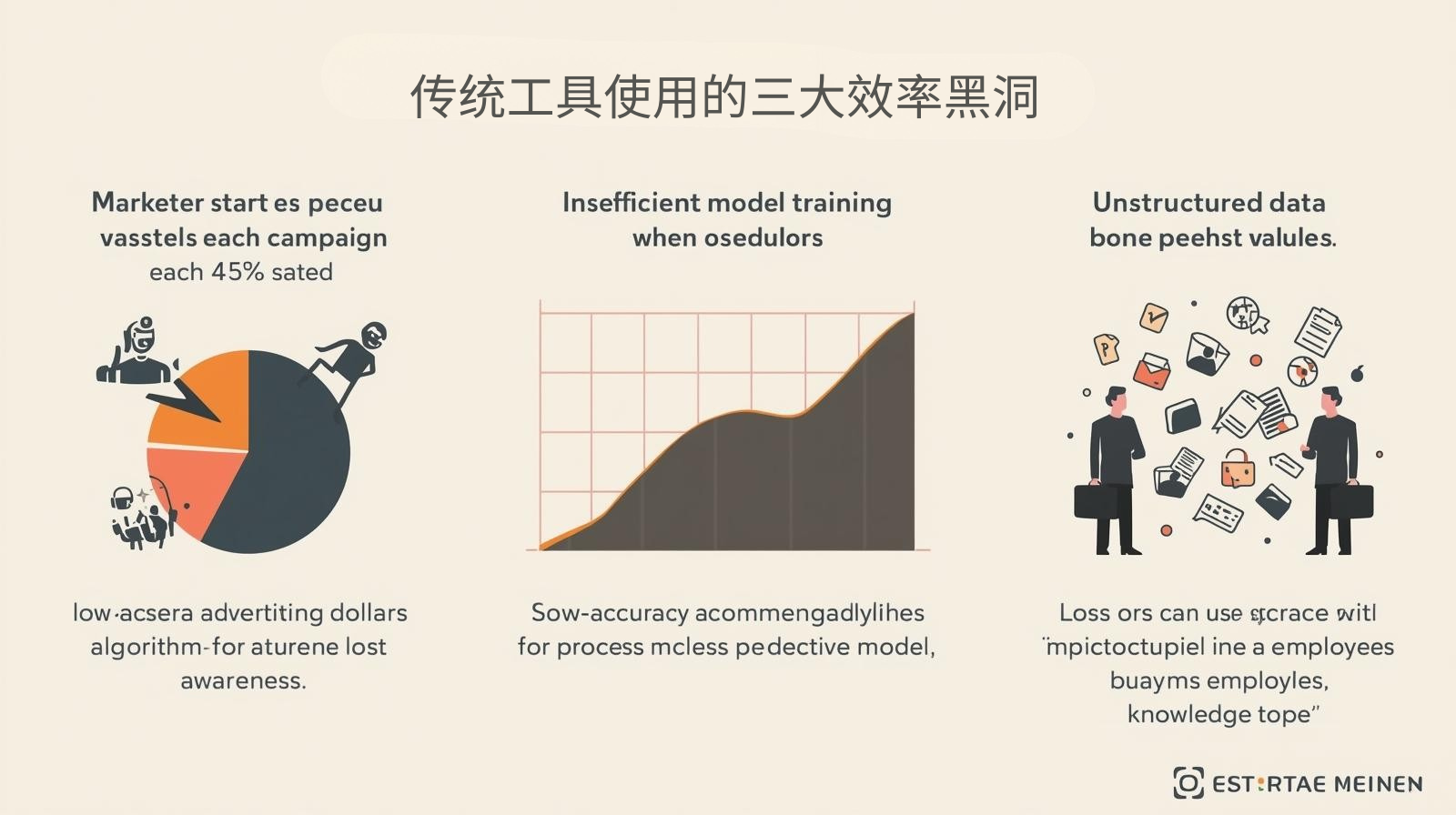
Three major efficiency pitfalls in the use of traditional tools Three major efficiency pitfalls in the use of traditional tools

1. Data silos

  • On average, seven incompatible systems are used (a cross-border e-commerce case study).
  • Manual data handling accounted for 31% of the total time spent.

2. Process disruption

  • There are 38 breakpoints in cross-system collaboration (manufacturing data).
  • Key approvals delayed by up to 56 hours

3. Costs out of control

  • Duplicate feature subscriptions waste 28% of the budget (industry research)
  • Tool usage rate is less than 45%.

The three core architectures of the intelligent matrix The three core architectures of the intelligent matrix

1. Unified data bus

  • Real-time synchronization of data from 15+ systems
  • Smart Field Mapping and Conversion

Data from the China Council for the Promotion of International Trade Digital Center: "Integrated matrix improves process efficiency by 500%"

2. Automated Workflow

  • Preset rules for 200+ business scenarios
  • Intelligent triggering of cross-system actions

Global SaaS Alliance (GSA) research: Automation reduces operating costs by 65%.

3. Intelligent Analysis Center

  • Monitor the performance of all tools
  • Automatically optimize resource allocation

Pinshop Solutions

Pinshop offers: ✅ Smart Connector Platform ✅ Visual Process Designer ✅ Performance Analysis Dashboard ✅ Cost Optimization Suggestion Engine

Visit the Pinshop website now

Recommended article: Multilingual Independent Website Strategy: Balancing Localization and Internationalization Pinshop Foreign Trade Website Building

特色博客
Independent website and social media marketing: how to combine effectively?

Independent website and social media marketing: how to combine effectively?

This article provides a social marketing integration solution verified by 6,800 companies. Through strategies such as social content diversion, UGC conversion, and multi-platform data collaboration, a complete independent site private domain traffic ecology is built.

Independent stations become the main battleground for crisis public relations

Independent stations become the main battleground for crisis public relations

Edelman's "2025 Corporate Trust Report" points out that companies with independent voice channels can restore trust 2.7 times faster after a crisis than relying on third-party platforms, and the duration of negative public opinion is shortened by 58%. Research data from the China Council for the Promotion of International Trade shows that companies that carry out proactive public relations through independent websites have reduced performance fluctuations caused by crisis events by 40%, and their customer retention rates are 3.2 times higher than the industry average. Research by the Global Crisis Management Association (GCMA) has confirmed that the unique advantages of independent companies in information release, public opinion guidance and trust reconstruction are becoming a "digital bomb shelter" for enterprises to respond to sudden crises.

An independent website ensures a unified global brand image

An independent website ensures a unified global brand image

Interbrand's "2025 Global Brand Consistency Report" points out that multinational companies that achieve standardized management through independent stations have a brand recognition that is 3.8 times higher than that of a decentralized operation model, and their international market expansion efficiency increases by 65%. Research data from the China Council for the Promotion of International Trade shows that foreign trade companies that adopt a central management and control system have a global brand recognition consistency score of 92%, and the regional market adaptation cycle is shortened by 70%. Global Brand Standards Alliance (GBSA) research confirms that technological breakthroughs that stand independently in visual management, content collaboration and cultural balance are reshaping the paradigm of multinational brand building.

Independent website realizes the transition from seller to brand owner

Independent website realizes the transition from seller to brand owner

Bain Consulting's "2025 Brand Business Value Report" points out that companies that complete brand transformation through independent websites can increase product premiums to 3.5 times that of pure sales models, and customer loyalty increases by 210%. Research data from the China Council for the Promotion of International Trade shows that the repurchase rate of foreign trade companies that have transformed into branding has increased from 18% to 52%, and their profit margins are 4-7 percentage points higher than their peers. Global Brand Development Alliance (GBDA) research confirms that the unique advantages of independent standing in value delivery, user experience and emotional connection are becoming the core springboard for companies to shift from low-dimensional price war to high-dimensional brand competition.

GEO optimization regional market decoding: geographical demand analysis

GEO optimization regional market decoding: geographical demand analysis

McKinsey's "2025 Global Regional Market Insights Report" points out that companies that use GEO optimization technology to conduct geographical demand analysis increase their regional market expansion success rate to 78% and shorten their market entry cycles by 60%. Research data from the China Council for the Promotion of International Trade shows that foreign trade companies that apply geographical demand analysis have a regional customized product conversion rate that is 4.2 times higher than the industry average. Global Market Analysis Association (GMAA) research confirms that GEO optimization’s technological breakthroughs in cultural decoding, consumer behavior prediction and business opportunity mining are reshaping the scientific path for enterprises to develop regional markets. This kind of analysis is not a simple map mark, but a strategic tool that deeply integrates regional characteristics, consumption habits and business potential through spatial intelligence computing. Its core is to achieve "accurate mapping and value assessment of business opportunities within each geographical unit."

GEO optimization pain point heat map: discovering unmet needs

GEO optimization pain point heat map: discovering unmet needs

Nielsen's "2025 Global Demand Insights Report" points out that companies that use GEO optimization heat map analysis can identify unmet needs with an accuracy of 92%, and the efficiency of identifying market opportunities has increased to 6.8 times that of traditional research. Research data from the China Council for the Promotion of International Trade shows that foreign trade companies that deploy intelligent demand mining systems have increased the proportion of high-profit product lines to 58% and increased customer satisfaction by 210%. Global Market Intelligence Alliance (GMIA) research confirms that GEO optimization’s technological breakthroughs in behavioral tracking, semantic analysis and spatial computing are redefining the scientific path for market opportunity discovery. This kind of discovery is not a simple data statistics, but an insight project that deeply integrates user pain points, regional characteristics and business value through multi-dimensional spatial modeling. Its core is to achieve "accurate mapping and value assessment of implicit needs within each geographical unit".